Why Your Lawn Smells Like Sulfur After Rain (And How to Fix It)
Ever wonder why your lawn reeks like rotten eggs after rain? That stink’s from sneaky sulfur bacteria thriving in soggy, oxygen-poor soil—especially if water pools for days. These smelly little troublemakers, like *Desulfovibrio*, turn sulfates into stinky hydrogen sulfide gas when things get too wet. Poor drainage, compacted soil, or even septic issues can make it worse—yikes! But don’t panic: regrading your yard, adding French drains, or aerating can banish the funk. Stick around, and you’ll uncover how to turn your swampy backyard into a fresh-smelling, happy-plant paradise!
TLDR
- Sulfur-reducing bacteria like Desulfovibrio produce hydrogen sulfide in waterlogged, low-oxygen soil after rain.
- Poor drainage creates anaerobic conditions that promote smelly bacterial growth and persistent foul odors.
- Standing water from compacted soil or improper grading sustains the wet environment these bacteria need.
- Acid sulfate soils may form in saturated areas, releasing sulfur gases and harming plants when disturbed.
- Improve drainage by regrading, installing French drains, aerating soil, and adding compost to prevent odors.
Understanding the Rotten Egg Smell in Your Yard

Ever stepped outside after a spring rain and suddenly wrinkled your nose like you just caught a whiff of a skunk’s secret weapon?
That rotten egg stink in your yard? It’s hydrogen sulfide, my friend!
Tiny bacteria in wet soil produce it when they munch on sulfur, especially after rain floods their low-oxygen world—kind of like their smelly snack time. Providing proper drainage and aeration can help reduce these odors by restoring oxygen levels to the soil and supporting healthy microbial activity.
This natural process can be especially common in areas with high levels of naturally occurring sulfur compounds in groundwater.
How Poor Drainage Leads to Sulfur Odors
You know that gross rotten egg smell in your yard after it rains? Well, when water gets stuck in soggy, poorly drained spots—thanks to clogged drains or compacted soil—it creates a slimy, oxygen-free zone where stinky sulfur-loving bacteria throw a smelly party.
Think of it like a swampy campsite where the trash wasn’t buried properly, except instead of raccoons, it’s tiny bacteria munching on old leaves and pumping out stink gas!
Improving drainage and grading around the soggy spots can help prevent that anaerobic buildup and stop the smell.
Standing Water Causes Odors
When rain rolls through and your yard starts holding onto water like it’s hosting a surprise pond party, that’s your first clue something’s off—puddles that stick around longer than a campfire ghost story, squishy ground underfoot even two days later, or worse, little lakes forming near your foundation, all screaming, “Hey, we’ve got a drainage problem here!”
And let’s be real, standing water isn’t just a bummer for barefoot summers or backyard soccer games—it’s basically a five-star resort for stinky sulfur-producing bacteria that thrive in soggy, oxygen-starved soil.
Anaerobic Bacteria Produce Sulfur
That soggy patch in your yard after a downpour? It’s a playground for sneaky anaerobic bacteria!
When water lingers, oxygen flees, and sulfur-loving microbes like Desulfovibrio throw a party—turning sulfates into stinky hydrogen sulfide (think rotten eggs!).
Poor drainage helps them dominate, creating black layers and funky odors.
Yep, your lawn’s “swamp perfume” is real—and totally fixable!
The Role of Anaerobic Bacteria in Lawn Smells
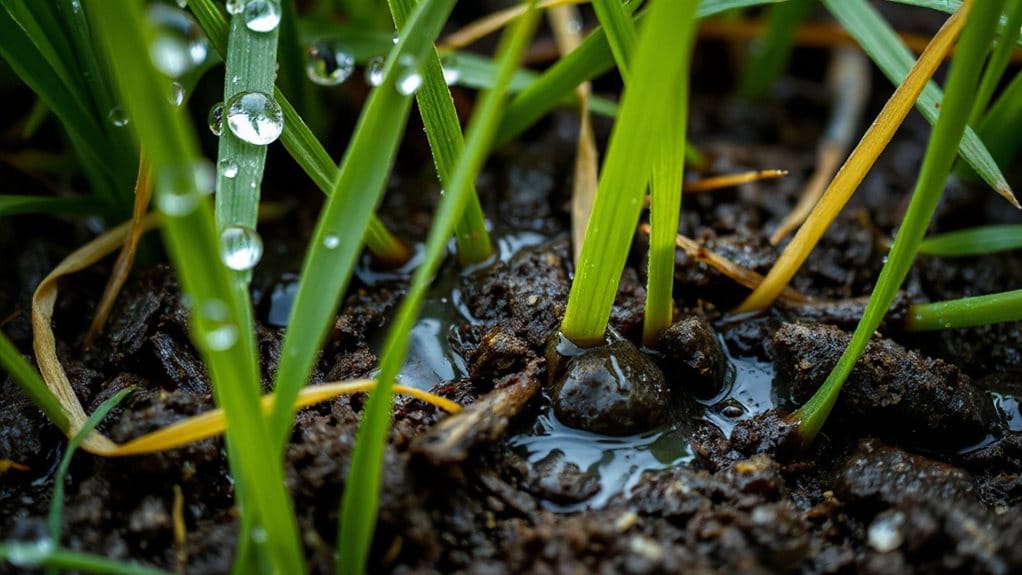
While you’re out there dreaming of camping trips and s’mores under the stars, your lawn might be hosting its own little underground party—one packed with smelly, sulfur-breathing bacteria throwing a rager after every rain.
Yep, anaerobic bacteria like SRB thrive in soggy soil, chomping on sulfates and belching out rotten egg-smelling H₂S.
Not exactly the fresh air you want while flipping burgers outdoors, huh?
This often happens when soil becomes waterlogged and oxygen-poor, creating ideal conditions for anaerobic decomposition that produce foul gases.
Identifying Acid Sulfate Soils and Their Impact
So, you’ve noticed your lawn smells like rotten eggs after rain—yep, that’s sulfur, and guess what? You might actually be standing on acid sulfate soils without even knowing it!
These sneaky soils form when pyrite builds up underwater, like in old swamps or coastal spots, and when they dry out or get disturbed (say, during a backyard BBQ or after a camping trip), they belch out acid and that stinky gas you’re smelling.
If your yard ever looks grayish-blue or gets weird yellow streaks, grab a pH test strip—because this isn’t just a smell issue, it’s a full-on soil science experience!
Improving drainage and reducing prolonged soil saturation can help prevent sulfur odors and acid sulfate formation.
Acid Sulfate Soil Formation
You know that funky, rotten egg smell after rain soaks your backyard? That’s sulfur, and it’s a clue you might’ve acid sulfate soils!
They form when seawater, iron, and organic gunk mix in wet, low-lying areas—hello, coastal camping spots!
Bacteria party on sulfates, creating pyrite underground.
No oxygen? No problem… until you drain it. Then, boom—acid forms, metals leach, and your soil’s in trouble.
Impact on Lawn Odors
If you’ve ever stepped outside after a summer rain and caught a whiff of something that smells suspiciously like rotten eggs wafting up from your lawn, guess what—your backyard might be throwing a not-so-fun chemistry experiment right under your feet!
That stink? Likely hydrogen sulfide gas bubbling up when wet, acidic soils meet air. It’s a classic sign of acid sulfate soils, which can sabotage plant growth and turn your lush lawn into a smelly science fair project. Time to test that pH!
Recognizing Septic System Contributions to Odors
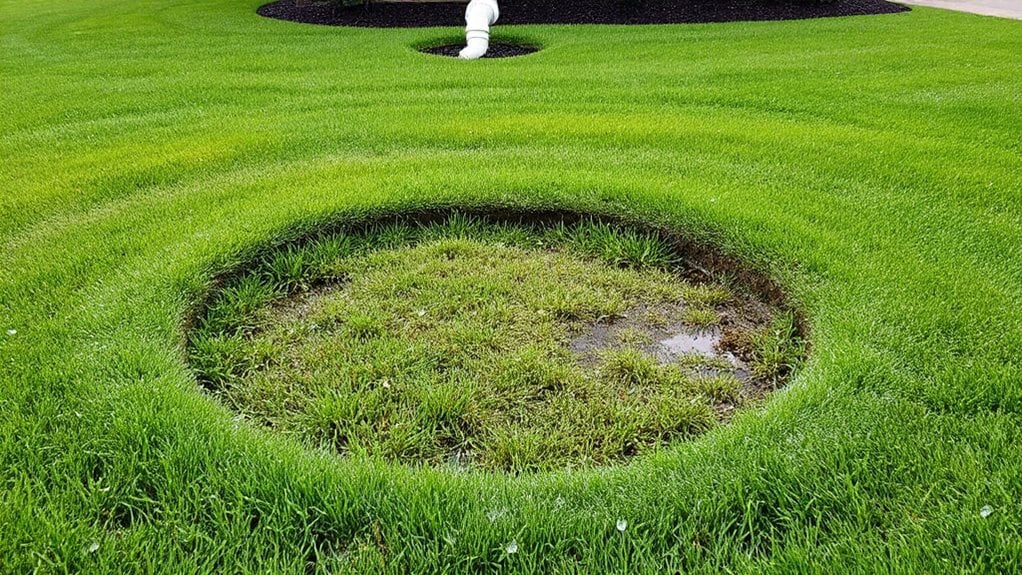
While you’re out enjoying that post-rain freshness in your yard, only to get hit with a whiff of rotten eggs, don’t just blame the weather—your septic system might actually be the sneaky culprit behind that sulfur stink.
If the tank’s full, vents are blocked, or bacteria are struggling, gases escape where they shouldn’t—like your lawn!
Notice soggy spots, loud gurgles, or green patches? That’s your system waving a white flag, begging for help before it turns your backyard into a stink zone.
If utility markings or flags are nearby, contact your local utility locator to avoid accidentally damaging lines when investigating the problem.
Health Risks Associated With Hydrogen Sulfide Exposure
So, imagine this: you’re out in your yard after a nice summer rain, ready to fire up the grill or toss a frisbee around, and suddenly—bam!—the air hits you like a rotten egg sandwich left in a gym bag.
Yikes, right? That’s hydrogen sulfide, and while low levels just stink, higher levels can cause headaches, dizziness, or worse—especially for kids, older adults, or folks with asthma.
If you’re feeling off, get fresh air fast!
Effective Grading and Drainage Improvement Techniques

Okay, let’s get real for a sec—nobody wants to play tag in a swamp, and that funky sulfur stink after rain? Yeah, it’s gross. But guess what? You can fix it!
Tweak your yard’s slope—aim for 1/4 inch per foot—so water ditches the foundation fast. Use a laser level, move soil with a rake, and pack it down. Add compost if your soil’s sad.
Pop in French drains or gravel paths to help water scram. Then, plant grass, give it a drink, and boom—happy yard, no stink!
Differentiating Sulfur Smell From Natural Rain Scents
You know that magical, fresh-earth smell after a summer rain? That’s petrichor—nature’s perfume, thanks to soil bacteria releasing geosmin.
But if your lawn reeks of rotten eggs, that’s hydrogen sulfide from trapped, smelly bacteria in soggy spots. Not exactly the serene backyard vibe you want, right? Spot the difference: one’s earthy and uplifting, the other’s a sour, stinky red flag.
Overall
So, your lawn smells like rotten eggs after rain? Yep, we’ve all been there—nothing kills a backyard campout vibe faster! But now you know it’s usually trapped water, smelly bacteria, or funky soils playing the villain. Fix the drainage, tweak the soil, and boom—your yard’s back to smelling like fresh grass, not a campfire gone wrong. Breathe easy, pitch that tent, and enjoy the great outdoors—right in your own backyard!