Why Are My Plant’s New Leaves Small and Thin?
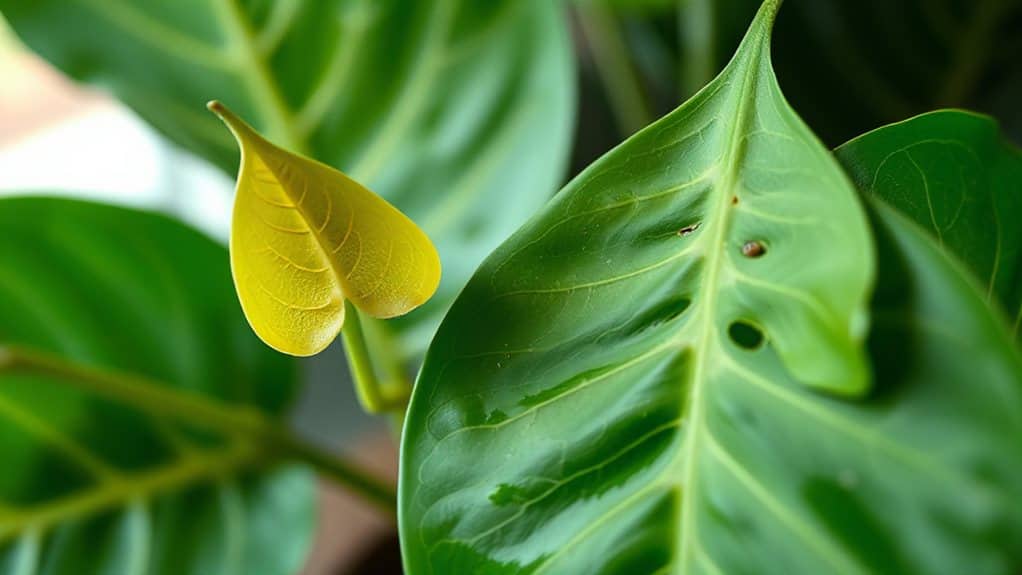
Your plant’s new leaves are small and thin because it’s probably stressed—maybe you’re overwatering (roots hate soggy socks!) or underwatering (hello, drought drama!). Is it getting steady, indirect light, or is it squinting in the sun or stretching like it’s late for camp? Hidden pests, nutrient shortages, salt buildup, or a tiny pot could also be cramping its style—check those roots and give it a lift; you’ll be amazed what comes next if you stick around!
TLDR
- Inconsistent watering disrupts root function, leading to stunted or thin new leaves due to poor nutrient uptake.
- Insufficient or excessive light causes weak, small leaves; provide steady, indirect light for healthy growth.
- Nutrient deficiencies like calcium or sulfur result in pale, distorted, or undersized new leaves.
- Hidden pests such as spider mites or aphids feed on new growth, causing deformation and stunting.
- Salt buildup, root-bound pots, or lack of support restrict development, yielding small, thin leaves.
Inconsistent or Improper Watering Habits
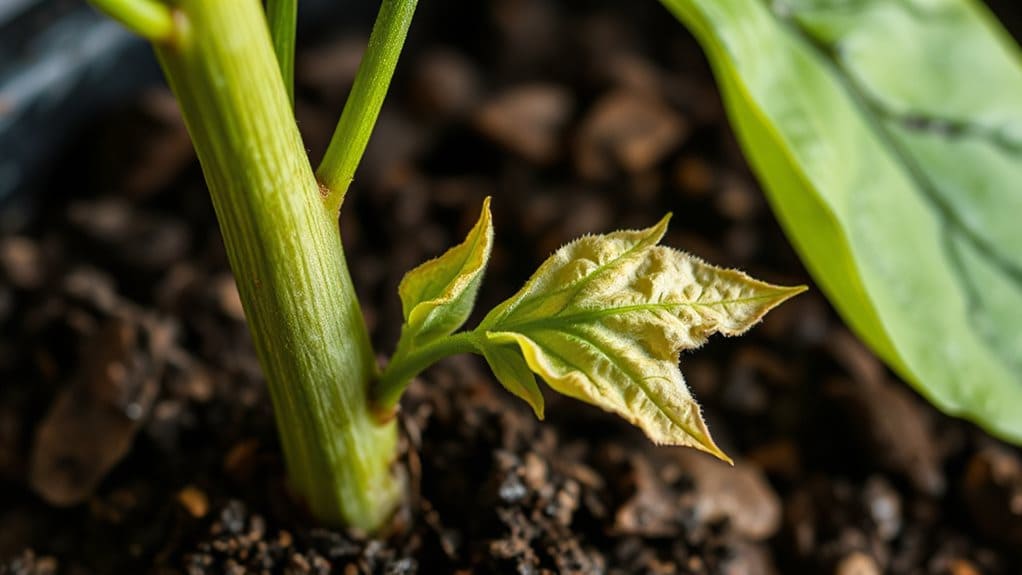
Sometimes, your plant’s tiny, flimsy leaves are basically screaming, “Hey, I’m not getting the right drink schedule!” Yep, inconsistent or improper watering habits are probably the sneakiest culprits behind those sad, stunted new leaves—kind of like forgetting to pack enough water for a hiking trip and suddenly realizing you’re way too far from the next stream. This often happens when roots can’t maintain proper water balance due to erratic watering, impairing nutrient uptake and new growth. Seedlings and young plants need consistently damp, well-draining soil to develop strong roots and avoid issues like root rot from overwatering or stunting from under-watering, so check soil daily and adjust your routine to keep conditions balanced for healthy new growth (consistent moisture).
Inadequate or Excessive Light Exposure
Okay, so you’ve got your watering game down—consistent, just the right amount, no more guessing if your plant’s thirsty like you’re lost on a desert trail without a canteen—but wait… why are those new leaves still coming in looking like they shrank in the wash?
Well, buddy, light’s probably playing tricks on you—too little and your plant stretches like it’s sunbathing in slow motion; too much and it hunkers down, making tiny, stressed-out leaves like it’s bracing for a blizzard.
You’d think it was prepping for a survival trek, not chilling on your windowsill!
Try shifting it to a spot with steady, indirect light—think forest dappled, not desert noon—and watch those new leaves plump up like they’ve found plant paradise. Also keep the leaves dust-free and rotate the plant regularly to prevent uneven growth and legginess.
Essential Nutrient Deficiencies and Imbalances
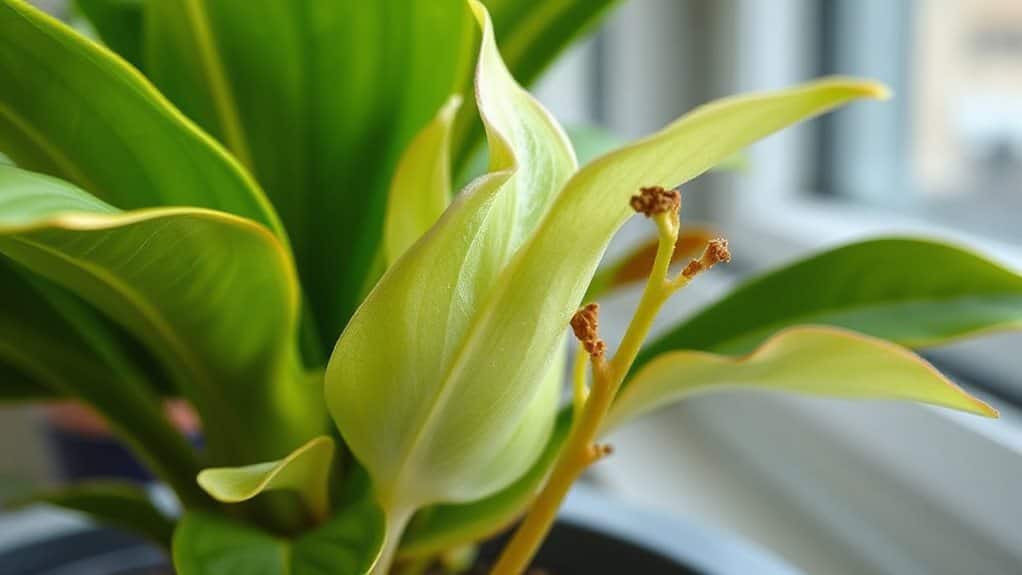
While your plant mightn’t pack a tent or roast marshmallows, it’s still on a survival trek—every nutrient it needs is part of its daily trail mix, and when one’s missing, things start going sideways fast.
If new leaves are small and thin, sulfur or calcium could be low—think pale young leaves or twisted tips.
Don’t panic! A balanced fertilizer or soil test can help you refuel their trek.
You’ve got this—your green buddy’s counting on you!
Consider sending a sample to a mail-in lab for a comprehensive nutrient analysis and tailored recommendations.
Hidden Pest Infestations Damaging New Growth
So you’ve checked the soil, balanced the nutrients, and made sure your plant’s got everything it needs for a happy little excursion—but those new leaves are still coming in small, thin, and kind of sad-looking? Time to play detective!
Tiny pests like spider mites, aphids, or mealybugs might be crashing the party, sucking sap and leaving behind sticky residue, discoloration, or even webbing—talk about uninvited guests!
Grab a magnifying glass, inspect stems and leaf undersides, and look for creepy crawly campers setting up camp on your plant’s tender new growth.
Also remember that early detection through a regular inspection routine helps catch infestations before they severely stunt new growth.
Accumulation of Salts in the Potting Mix
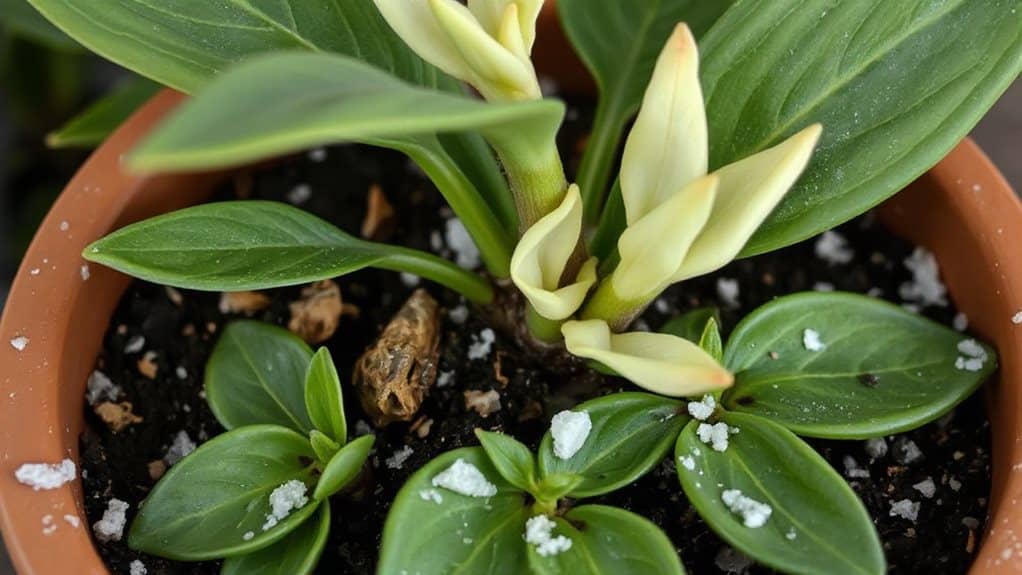
Ever notice those crunchy white rings on your pot like a forgotten potato chip crust? That’s salt buildup throwing a not-so-fun pool party in your plant’s soil, sucking up moisture and leaving new leaves small and sad—kind of like how I felt after my last camping trip when I ran out of clean water.
Flush the soil with three times the pot’s volume in water (think waterfall, not a sad drip) to kick those salty troublemakers out and give your plant a fresh start! Refresh the mix afterward by adding compost or worm castings to restore nutrients and structure.
Salt Buildup Effects
If you’ve ever noticed a weird, crusty white glitter on your pot’s rim or soil surface—kind of like someone sprinkled salt or powdered sugar where it doesn’t belong—you’re not imagining things, and your plant’s definitely not throwing a tiny rave.
That’s salt buildup, and it’s secretly suffocating roots, blocking water, and starving your plant of nutrients—no wonder new leaves come in small and weak!
Time to flush that soil and save your green buddy.
Flushing Soil Solution
That crusty white glitter on your pot’s edge? Yeah, it’s salt buildup, and your plant’s screaming for relief!
Give it a good flush with pH 7.0 water—saturate until 20% runs out.
Use chelating agents to grab excess nutrients, then follow with plain water.
Your plant will perk up fast, like a happy camper after a fresh mountain stream shower—clean roots, better taste, and those new leaves? Finally, thick and strong!
Lack of Physical Support for Climbing Plants
You know how excited you get setting up a tent on a camping trip? Well, your climbing plants feel the same way when you give them a solid trellis to hold onto—without it, they flop around like a sleepy camper with no coffee!
If you’ve noticed new leaves coming in small and thin, especially on vines like ivy or sweet peas, it might be because they’re stretching, straining, and basically throwing a tiny plant tantrum trying to find something to grab onto.
Aerial roots wiggle in the air like curious fingers, but if they can’t latch onto a rough wall or trellis, your plant won’t grow tall and proud—so go ahead, be their escapade buddy and set up a sturdy pole or lattice, because every climber deserves a trusty sidekick!
Need for Structural Support
While your climbing plants might *think* they’re fine lounging on the ground like they’re on a permanent picnic, the truth is, they’re not built for a horizontal lifestyle—no matter how cozy the soil looks.
Give them proper support, and watch them reach for the sky like campers scrambling up a rock wall! Use trellises, wires, or wigwams based on their climbing style; it’s like packing the right gear for a hiking trip.
Without support, they’ll stay stunted, soggy, and sad—definitely not thriving.
Aerial Roots and Leaf Size
Ever notice how some houseplants send out little brownish tendrils that look like they’re reaching for a jungle gym? Those are aerial roots, and they’re not just for show—they help your plant climb toward better light, which means bigger, healthier leaves.
Without support, like a moss pole or wall, your plant stays stunted, producing small, thin leaves. Think of it like camping: no tree to lean your tent on, and everything sags! Give it support, and watch it thrive.
Root System Limitations and Pot Constraints
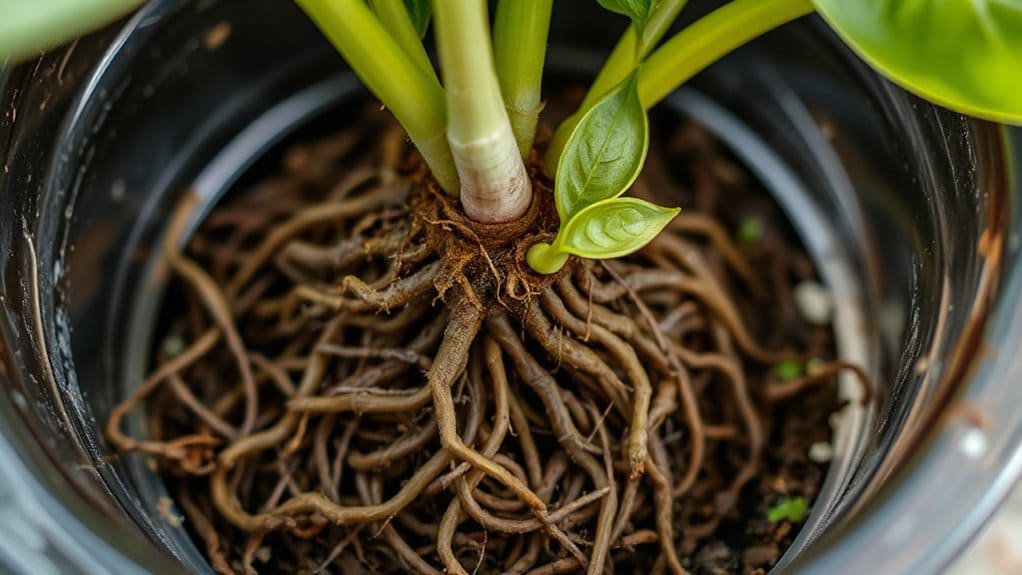
Envision this: you’re out camping, nestled in the woods with your tent pitched just right, and you’ve brought along a little potted plant for company—maybe a spunky basil or a chill aloe vera.
But wait, its new leaves are tiny and thin! Sound familiar? That cramped pot’s likely to blame—roots can’t spread, get tangled, or even circle inward, starving your green buddy.
Just like you’d feel squished in a too-small sleeping bag, your plant’s root system’s screaming for space!
Overall
So, what’s the deal with those tiny, flimsy leaves? Could be your plant’s crying out for consistent drinks, proper light, or a nutrient lift—kinda like how I feel without my morning coffee! Check for sneaky pests, salty soil, or a cramped pot, and don’t forget support for climbers. Fix these, and boom—your green buddy’ll be thriving, just like s’mores over a campfire! You’ve got this!