Why Deck Stairs Rot Faster Than the Deck Surface
You’re not imagining it—your deck stairs take a serious beating from rain, puddles, and morning dew while your deck stays dry and breezy. They’re like the unlucky bouncers stuck at the bottom, soaking up splashes and ground moisture, with tight gaps that trap gunk and shade that slows drying. Add in poor airflow, untreated wood, and hidden rot in stringers, and boom—rot happens fast. One wobbly step could mean trouble, so don’t ignore those sneaky damp spots. You’ll want to stick around to see how to keep your stairs from turning into a mushy surprise.
TLDR
- Deck stairs have poor drainage due to flat treads and tight gaps, causing water to pool and accelerate rot.
- Stair bases contact soil moisture and lack ventilation, leading to prolonged dampness and faster decay.
- Cut stringer ends expose absorbent wood grain, allowing water to penetrate and initiate hidden rot.
- Enclosed designs and limited airflow trap humidity, reducing drying and promoting fungal growth.
- Fewer stringers bear heavy loads, so rot in one component can cause sudden collapse.
Why Deck Stairs Rot Faster Than the Rest
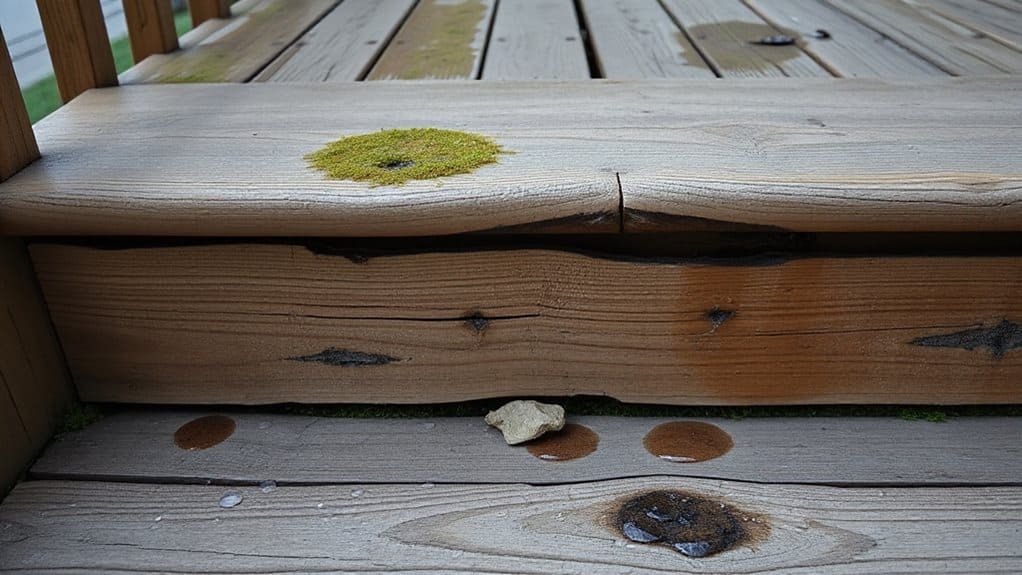
Let’s face it—your deck stairs take a serious beating, and they’re kind of set up to fail from the get-go.
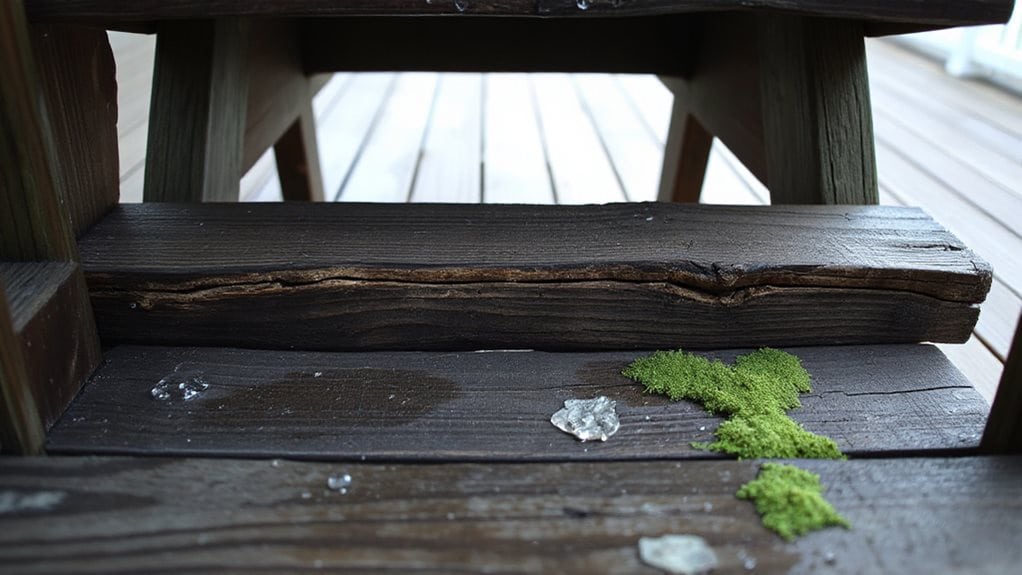
Rain pools on flat treads, debris clogs tiny gaps, and shaded spots slow drying—hello, fungus party!
Heavy footsteps loosen screws, overhangs crack, and those cut stringers? Super absorbent. Also, inadequate board overhangs can leave exposed end grain that accelerates decay, so follow recommended overhang guidelines.
Plus, if you skipped sealing edges or used the wrong wood, well… you’re basically serving rot on a silver platter.
Yikes!
Trapped debris prevents proper drainage and keeps moisture pressed against wood surfaces, creating ideal conditions for structural decay.
How Ground Moisture Attacks Stair Bases First
You know how your tent stays soggy at the campground if it’s not on a tarp? Well, your deck stairs are basically camping *right* in the splash zone, soaking up rain, irrigation runoff, and sneaky ground moisture that just won’t quit.
When water pools at the base—thanks to poor grading or a low spot—it’s like throwing a permanent welcome party for rot, so don’t let your stairs become a swamp club no one signed up for! Drainage problems can speed decay, so address grading and install proper drainage to keep moisture away from stair bases.
Proximity To Soil Moisture
Right where your deck stairs meet the ground, things get *seriously* damp—like, “forgot-to-towel-off-after-a-lake-swim” levels of wet.
That constant moisture, thanks to soil contact and poor airflow, turns stair bases into rot buffets.
You’ve seen it—moldy wood, squishy steps—yikes!
raise stringers, add gravel, or use treated lumber.
Small fixes now save big headaches later, especially when hosting campfire nights or family BBQs!
Standing Water At Base
Down at the bottom of your deck stairs, where no one really looks unless something’s wrong, water loves to throw a pool party—and it never cleans up after itself.
You see, those soggy spots stay wet way longer than the rest of the deck, softening wood, inviting rot, and rusting fasteners you can’t even see.
Ever stepped on a squishy stair tread? That’s not a foot massage—it’s decay sneaking in.
Without airflow or proper slope, moisture just camps out, like uninvited guests who overstay their welcome.
Check those bases regularly, because catching trouble early means fewer surprise repairs later—and more time for real escapades, like camping under the stars instead of fixing your backyard!
Why Poor Tread Gaps Trap Water and Cause Rot
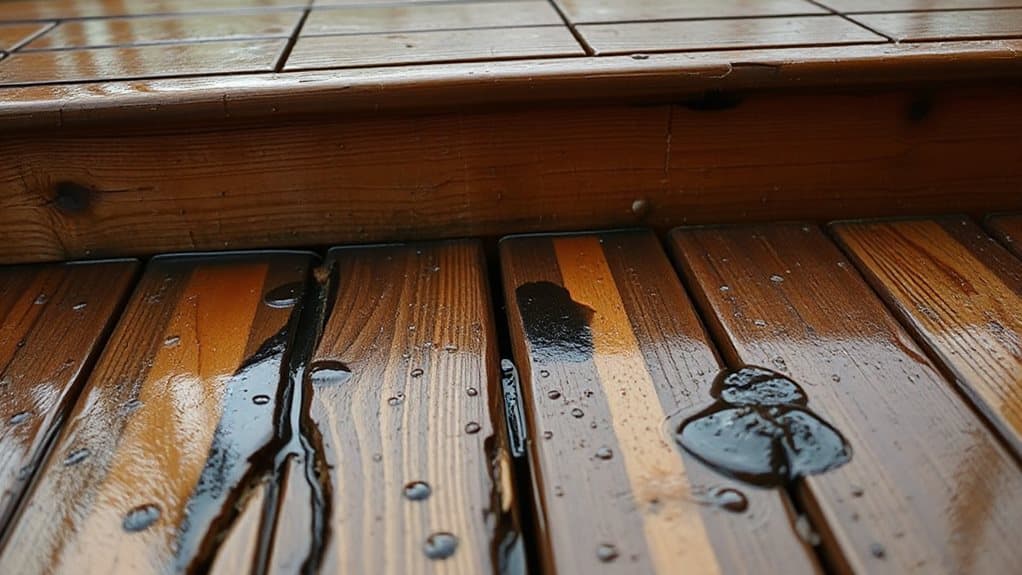
Ever wonder why your deck stairs seem to fall apart way faster than the rest of the deck—like they’ve got a one-way ticket to Rot City while the rest of the structure’s out camping and having fun in the sun?
Tiny gaps between treads trap water, dirt, and gunk, turning each step into a soggy sponge. That trapped moisture? It’s a fungal five-star resort—cozy, wet, and perfect for decay. Capillary action sucks water right in, especially at end grains and joints, while summer humidity and shade slow drying to a snail’s pace.
When wood stays wet too long, it swells, cracks, and warps—inviting even more water in. And once freezing temps hit, that lingering moisture expands, popping open new cracks like nature’s wrecking crew. Poor drainage and trapped moisture accelerate deterioration, so simple fixes like improving drainage and reducing water retention can dramatically slow rot.
How Stringer Design Creates Rot-Prone Weak Spots
While your deck boards might be chilling like they’re on a lazy lakeside vacation, your stringers are down there working overtime—basically the unsung heroes (or victims) of your staircase, getting soaked, stressed, and slowly eaten alive by rot. You cut notches into them, exposing weak end grain that drinks water like a camper at a water station. Fasteners split them, poor supports make them sag, and untreated cuts? Total rot buffets. Proper ventilation and sealing can reduce moisture-related decay by keeping wood closer to its ideal moisture content, so consider improving under-deck airflow and applying a quality sealant to exposed areas like notches and cut ends proper ventilation.
Why Tread Overhangs Let Water Wreak Havoc
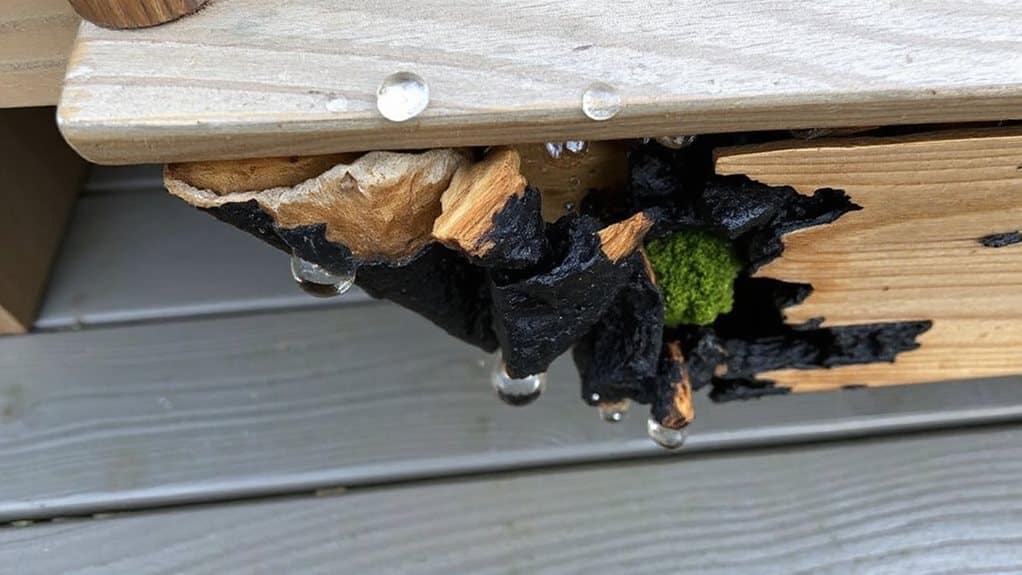
You’ve already seen how those poor stringers get the short end of the stick—hacked up with notches, soaked through, and left to fend for themselves like a campfire marshmallow left too long in the flames.
Now envision your tread overhangs taking constant water hits, trapping moisture underneath, and slowly rotting from below—kind of like socks that never dry after a rainy hike.
Proper installation details like adequate ventilation and correct board spacing help prevent this accelerated decay.
How Enclosed Stair Designs Trap Moisture
You know how cozy it feels to crawl into a tent after a long day of hiking, but what if that tent never got to air out—kind of like your deck stairs when they’re boxed in tight?
Those enclosed stair designs might look clean, but they trap humidity like a sweaty sleeping bag, block breezes that’d help things dry, and keep shadows so deep, even mushrooms would say, “Whoa, it’s damp in here!”
Limited Air Circulation
Ever notice how your tent stays damp forever if you forget to open the vents after a rainy night? Well, your deck stairs are kind of like that—trapped air, no airflow, and bam: rot city.
When you box in stairs with skirts or walls, you’re basically giving moisture a cozy home, slowing drying, inviting mold, and making wood soggy.
Keep it breathable, friend—your stairs will thank you!
Enclosed Spaces Retain Humidity
While your deck stairs might look sleek and finished with those snug side skirts and closed risers, they’re actually pulling a sneaky moisture heist right under your nose—trapping humid air like a mini jungle in there.
Think of it like camping with a wet tent: moisture gets in, but can’t escape, leaving everything damp, musty, and ripe for rot—yuck!
Reduced Sunlight Exposure
Even though your deck stairs might seem like they’re just chilling in the shade, that cool, dark spot underneath is actually throwing a never-ending party for mold and rot—no invites needed!
You see, less sun means slower drying, especially in tight corners and under treads where shadows love to hide.
Those sneaky shaded zones stay damp for days, making it way too easy for fungi to crash the wood’s structural vibe—kind of like when campfire smoke follows you home, but way less fun.
How Shade Speeds Up Rot on Deck Stairs
Envision this: you’re heading out on a weekend camping trip, your backpack packed, boots laced, and that excited knot in your stomach telling you escapade’s ahead—only to realize the deck stairs leading down to the trail are wobbly, squishy, and suspiciously dark in the corners.
Shade keeps wood damp longer, right? That cool, dark nook under your stairs? It’s a rot paradise—fungi feast, mold throws parties, and algae slips you a banana peel.
You’d think it’s just dirt, but nah, it’s a moisture trap hiding decay. Air can’t circulate, sun never visits, and debris piles up like nature’s wet blanket.
Check those shaded spots—you’ll catch trouble before it ruins your next great escape!
Stair Building Mistakes That Cause Rot
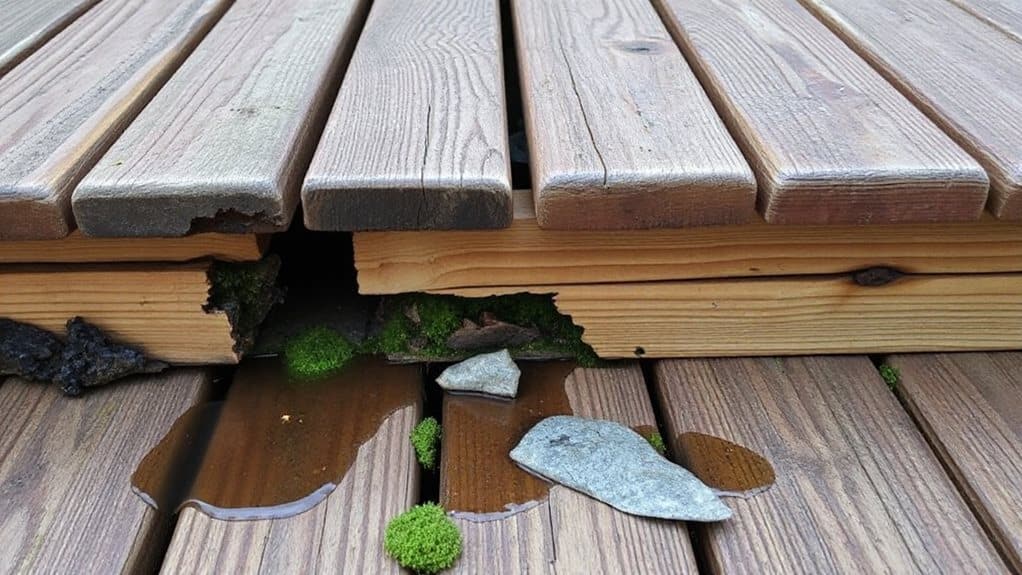
You know how awesome it feels to hike up to a campsite or kick back on your deck after a long day? Well, all that fun can hit a snag if your stairs start rotting from sneaky mistakes like poor drainage that turns each step into a mini swimming pool.
Bet you didn’t think leaving out a little slope or forgetting to seal those cut ends would turn your sturdy stairs into mushy, wobbly traps—kind of like stepping on a squishy trail after a downpour, but way less fun.
Let’s fix those weak spots with better materials, smart flashing, and some clever water-shedding tricks so your stairs last as long as your sense of escapade.
Poor Drainage Design
When water doesn’t know where to go, it just hangs around like an uninvited guest at a campfire—especially under your deck stairs, where poor drainage design turns what should be a quick exit into a long-term soak session.
You wouldn’t pitch a tent in a puddle, so why build stairs that trap water? Slope matters, gaps matter, and airflow? Huge. Fix these, and you’ll keep wood happy, dry, and rot-free—like a well-ventilated sleeping bag after a rainy hike!
Inadequate Material Protection
Okay, so you’ve kicked out the puddles and fixed the drainage—awesome, high five!
But if you’re still using untreated wood or skipping sealant on cuts, rot’s basically throwing a pool party in your stairs. Seriously, end grains suck up water like spaghetti, and unsealed treads? They’re rot buffets. Wrap those stringers properly, seal every cut, and treat your wood like you’d prep a campfire—thoroughly and with love!
Improper Flashing Details
Even if you’ve nailed every other part of your deck build, skipping proper flashing is like forgetting the tent stakes on a camping trip—everything might seem fine at first, but one good storm and *whoosh*, your whole setup’s a soggy mess.
You think water’s just rolling off? Nope—it’s sneaking behind ledgers, soaking stair stringers, and rotting hidden spots. Flashing’s the unsung hero: it’s gotta lap right, slope down, and seal tight.
Skip the tape, miss the drip edge, or botch the angle, and boom—rot’s moving in fast, especially where stairs meet the house. Don’t let your hard work wash away!
Why Stair Wood Degrades Faster Than Deck Boards
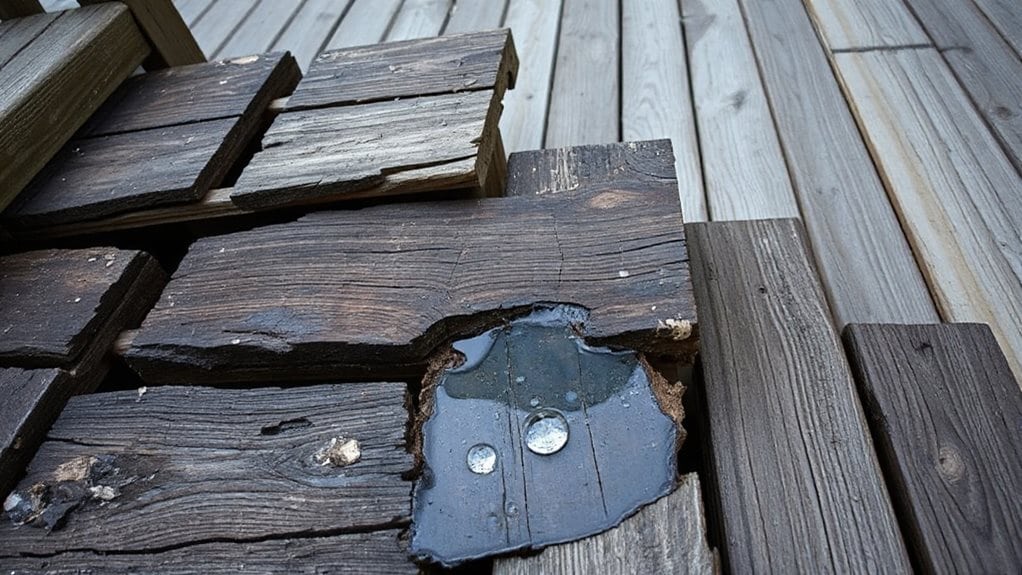
While your deck boards might be chilling under a patio umbrella or hiding beneath a lawn chair, your stairs are out there taking the full force of every downpour, snowstorm, and muddy splash like a champ—only it’s not always *that* heroic when they start falling apart faster than a tent in a thunderstorm.
They soak up water like sponges, get pounded by footsteps, and rot quicker—so check them often, okay?
Why Early Rot in Stairs Leads to Sudden Collapse
You’re out on your deck, maybe heading down to toss another log on the fire pit or grab a cooler from the garage, when—*whoa*—the stairs give way without warning, leaving you mid-step and totally startled.
Why? Because stairs have fewer stringers, so rot in just one can tank the whole system fast—no backup, no sagging, just sudden drop. Think of it like a tent with one pole gone; everything collapses at once, and *nobody* saw it coming!
Overall
So now you know why deck stairs throw in the towel faster than the rest—moisture sneaks in, shade keeps things damp, and bad gaps or overhangs just invite trouble. Think of stairs like soggy trail boots: if they can’t breathe, they fall apart fast! I learned this the hard way during a camping trip when my DIY platform wobbled like jelly. Fix your stairs early, or one day you’ll take a step and—yikes—suddenly you’re in a hole! Stay smart, stay dry, and keep those outings safe!