Why Newly Planted Grass Looks Thin but Isn’t Failing
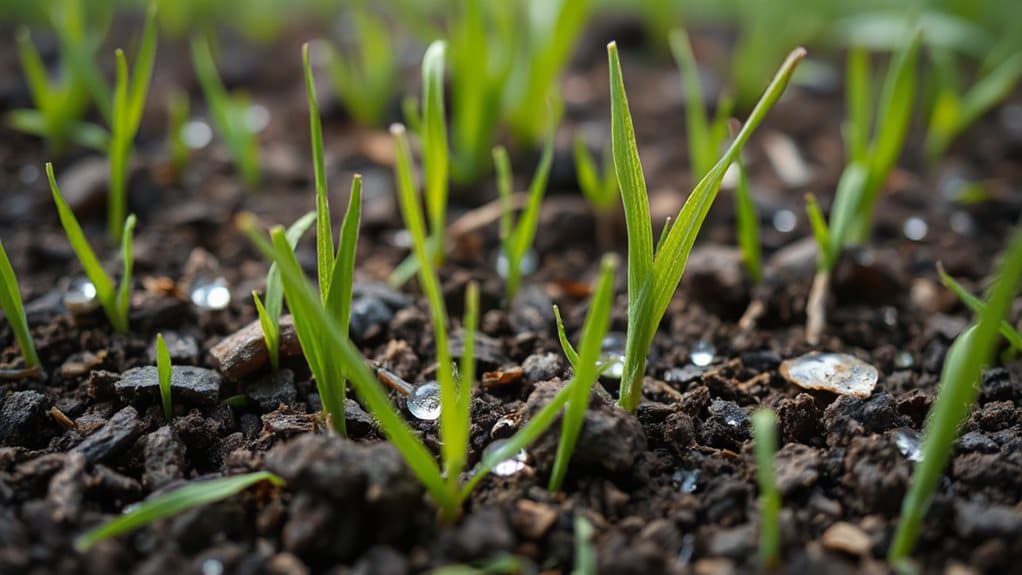
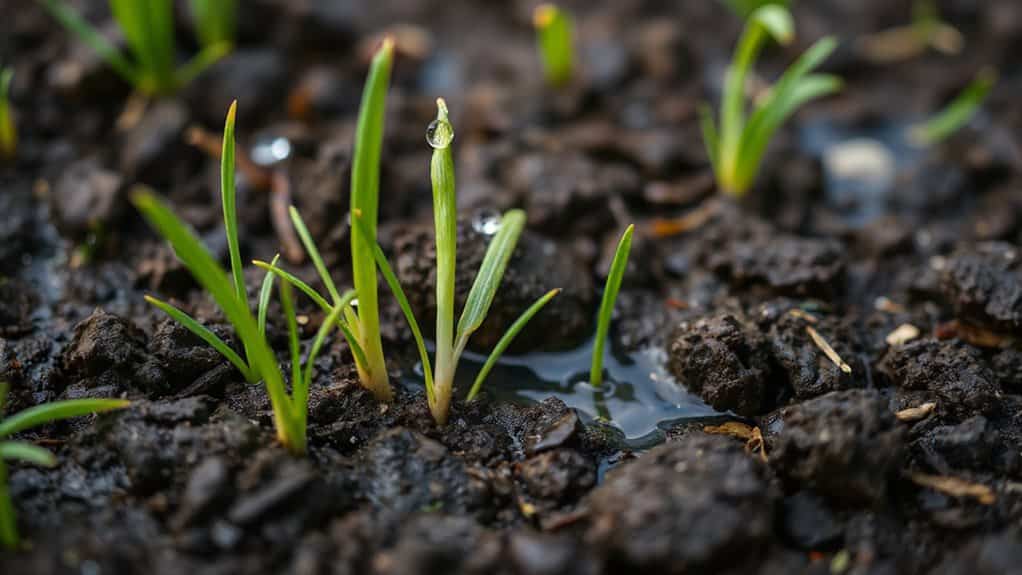
Your new grass looks thin because it’s focused on building strong roots underground—kind of like how you’d pack your camping gear before hitting the trail! Don’t panic if it’s patchy; seeds sprout at their own pace, and that’s totally normal. As long as the soil’s moist, not soggy, and you’re not walking all over it, your lawn’s on the right track—keep going, and you’ll soon see that lush green payoff you’re dreaming of.
TLDR
- New grass naturally appears patchy and thin as seeds germinate at different rates.
- Roots develop first, so slow top growth doesn’t mean the lawn is failing.
- Uneven watering and soil differences can cause sparse spots during early growth.
- Healthy signs include springy texture, tiny roots, and new growth without odor.
- With proper care, thin-looking grass will fill in over weeks to months.
Why Your New Grass Looks Thin (And That’s Okay)
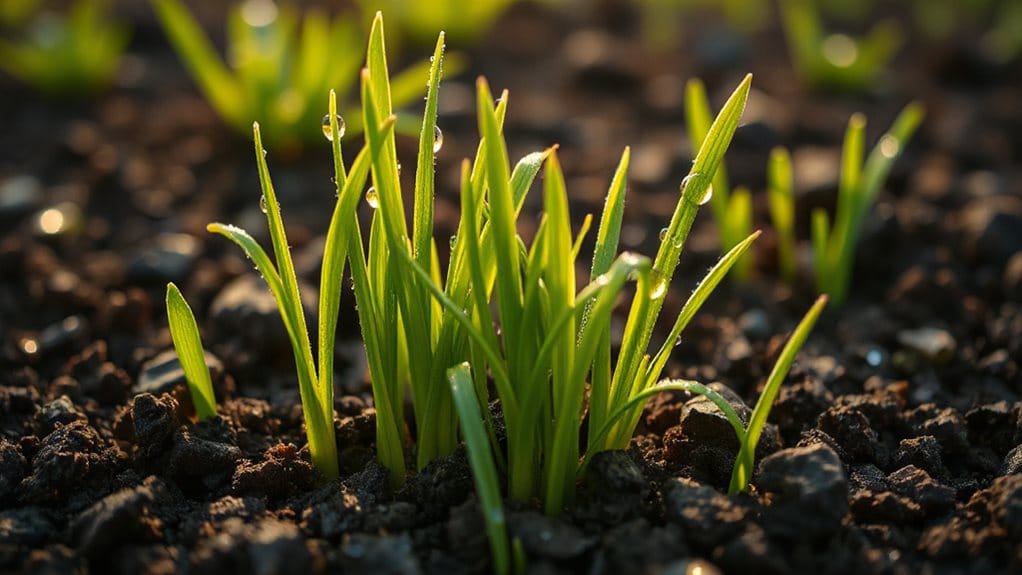
Even if your new lawn looks like a patchy mess right now, don’t panic—because honestly, that’s totally normal, and I promise you’re not doing anything wrong!
Grass seeds sprout at different speeds, like campers waking up late for breakfast, and uneven watering or soil can make things look sparse. Adding organic matter and proper watering helps improve moisture retention in sandy soils to support growth.
But guess what? This is *supposed* to happen—your turf’s just getting settled, not failing!
With time and proper care, including consistent fertilizing, it will fill in beautifully.
New Grass Grows Roots Before Leaves
So your new grass looks like it’s barely there, huh? Don’t panic—it’s totally normal!
Right now, your grass is busy building a strong root system underground, kind of like packing the perfect camping backpack before a big hike.
Roots grow first to grab water and nutrients, so even if the leaves seem shy, cool-season grasses are hard at work.
Warm-season types do this in spring, too.
Think of it as nature’s way of prepping for exploration—roots lead, then the green explosion follows!
Improving soil drainage and avoiding walking on the lawn while roots establish can help prevent compaction and speed healthy growth.
Thin But Healthy? How to Tell the Difference
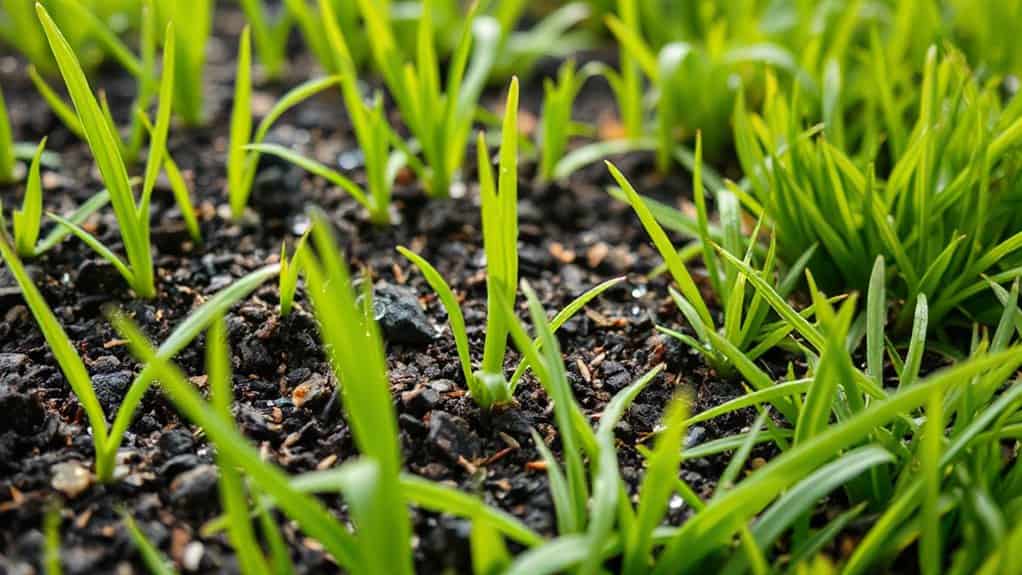
While your new lawn might look like it’s barely covering the soil, don’t start planning its funeral just yet—what you’re seeing could actually be a sign of healthy, behind-the-scenes progress, kind of like when you’re setting up camp and everything’s still in your backpack but you *know* it’s all there.
Check for springy blades, clean cuts, and tiny roots holding firm—these mean your grass is quietly thriving, not failing. Spot even growth, no funky smells, and new seedlings filling in? Awesome!
That thin look? Just a baby lawn taking its time, not giving up. Keep watering gently, stay patient, and celebrate those little green wins—they’re setting up a lush, happy turf down the trail! Add a soil test to confirm nutrient needs and guide amendments like compost before heavy feeding.
Shade, Soil, and Weather: Why Grass Stays Thin
Under the canopy of your backyard trees or tucked against the north side of the house, that patch of grass might look more like a sparse meadow than the lush carpet you were dreaming of—and hey, that’s not necessarily your fault, or even your grass’s.
Shade means less sunlight, so your turf stretches tall, thins out, and grows slower—like a camper squinting for morning light through a thick pine forest! Integrated care like proper soil preparation and mulching can help shaded areas retain moisture and improve turf health, especially when combined with knowledge of sunlight requirements for grass.
Overwatering and Overfeeding: What Slows Growth
You know how awesome it feels when you finally reach that perfect campsite—tents up, fire crackling, and the air smells like pine and escapade?
Well, your new grass feels the opposite when you overwater it—roots drown, nutrients wash away, and diseases move in like uninvited camp neighbors. Cut back the H2O, ease up on the feed, and let your lawn breathe. It’ll grow stronger, deeper, and way more resilient—just like a well-loved trail. Mow early and remove seedheads from weeds before they spread to give your new turf the best chance to establish.
New Grass Takes Months to Fill In
So, you’ve planted your grass seed, kept the soil nice and moist, and now you’re peeking out the window every morning like it’s Christmas morning at a campsite—only instead of presents, you’re hoping for green sprouts, right?
Don’t panic if it looks thin; that’s totally normal! Grass takes weeks to germinate and months to fill in fully. You’re not failing—far from it! With patience, proper watering, and a little love, your lawn will thicken beautifully.
Think of it like growing a tent full of marshmallows—slow at first, then suddenly *boom*, fluffy perfection!
Overall
So, your new grass looks kinda scrawny? Don’t panic—you’re not doing it wrong! It’s like your lawn’s hunkering down, growing roots like it’s prepping for a long camping trip underground. Think of it as nature’s version of “work now, play later.” Water smart, chill on the fertilizer, and give it time—it’ll thicken up, promise! Just like s’mores, good lawns take patience (and a little mess). Stick with it, and soon you’ll be barefoot on a lush green carpet!