Houseplant Leaves Curling Downward: Causes and Fixes
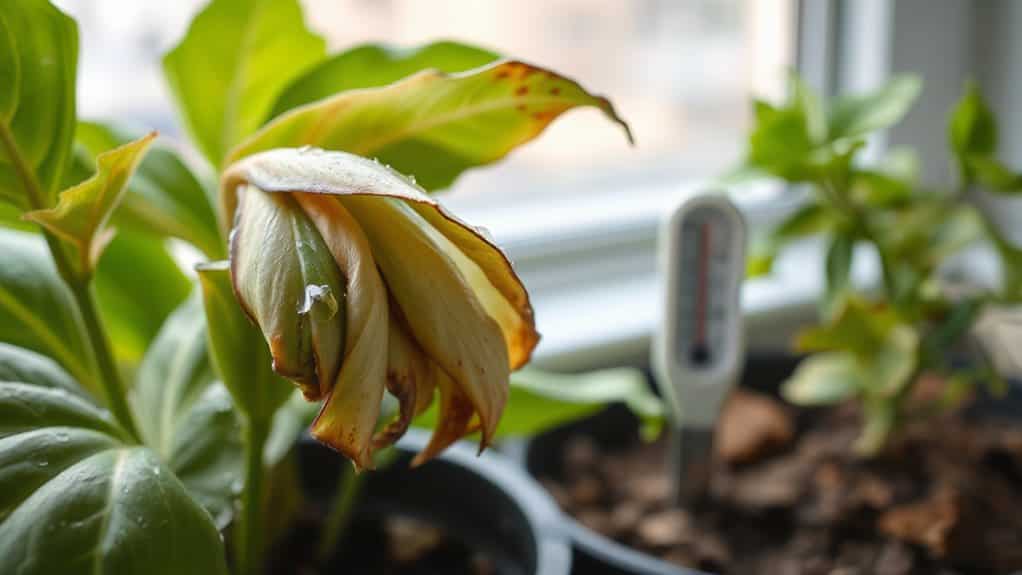
Is your houseplant throwing a dramatic leafy tantrum with those downward curls? Don’t panic—chances are, it’s just begging for help, not saying goodbye! Overwatering’s usually the main culprit (soggy soil = sad roots), but don’t rule out thirst, pests, or a drafty spot. Check the soil, peek at the roots, and ask yourself: “Did I go overboard with the watering can… again?” You’ve got this—and hey, your plant’s got more stories to tell if you listen.
TLDR
- Downward leaf curling is most commonly caused by overwatering, leading to root suffocation and poor soil aeration.
- Underwatering can also cause curling, with dry, crispy leaves and soil pulling away from pot edges.
- Check soil moisture and root health before treating, as pests, temperature stress, or nutrient issues may mimic watering problems.
- Improve hydration with deep, slow watering for dry soil, or enhance drainage and aeration for soggy, compacted soil.
- Repot rootbound plants, increase humidity, and maintain stable temperatures to support recovery and prevent further curling.
Why Are My Houseplant Leaves Curling Downward?
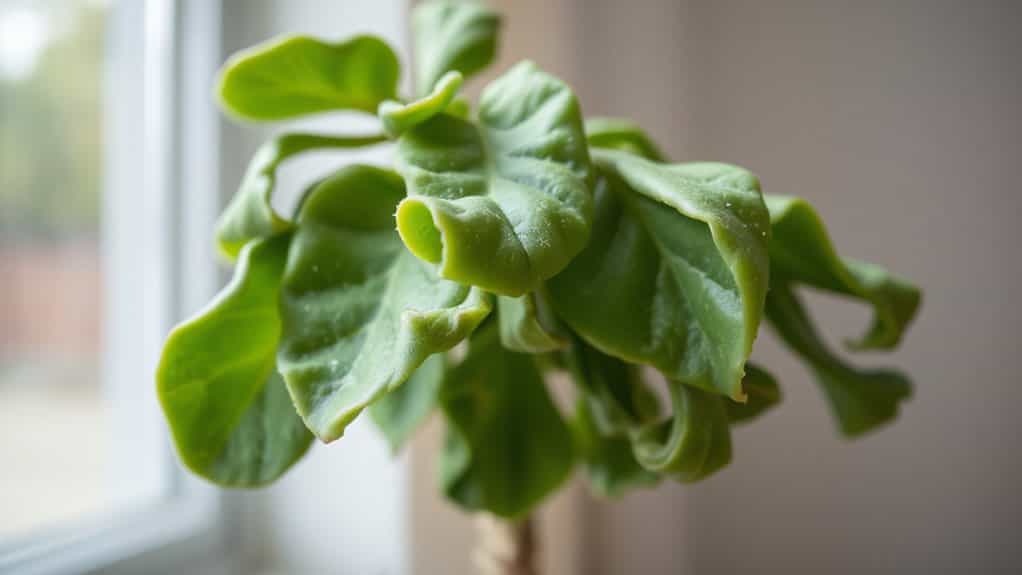
While it might feel like your houseplant is throwing a dramatic tantrum by curling its leaves downward, chances are it’s just trying to send you an SOS message—kind of like when your camping buddy forgets the marshmallows, and you give them *the look*.
Is the soil dry and crispy, or is your plant rootbound, stressed by pests, or craving nutrients? Maybe it’s thirsty, hungry, or just hates cold drafts—let’s play detective and help it thrive! Overwatering and poor drainage are common causes and can lead to soft, drooping leaves and root rot if not corrected—consider repotting into well-draining soil to help roots breathe. One common cause of downward curling is overwatering and poor drainage, which leads to soft, drooping leaves and can suffocate roots due to lack of oxygen.
Check for Overwatering First: It’s the Top Cause
Grab your magnifying glass, plant detective—because the first and *biggest* clue to those sad, droopy leaves might be hiding right under your nose (or, well, under the soil).
Overwatering’s the usual suspect, drowning roots and cutting off oxygen, leaving your green buddy gasping. If the soil’s soggy, smells sour, or fungus gnats pop out when you poke it—yep, you’ve been too generous. Ease up on the H₂O, let the top two inches dry, and your plant will thank you like a camper finding dry socks! This is often the cause of yellowing leaves in money trees and other houseplants, so check for overwatering as a first step.
How to Dry Out Soggy Soil and Save Your Roots
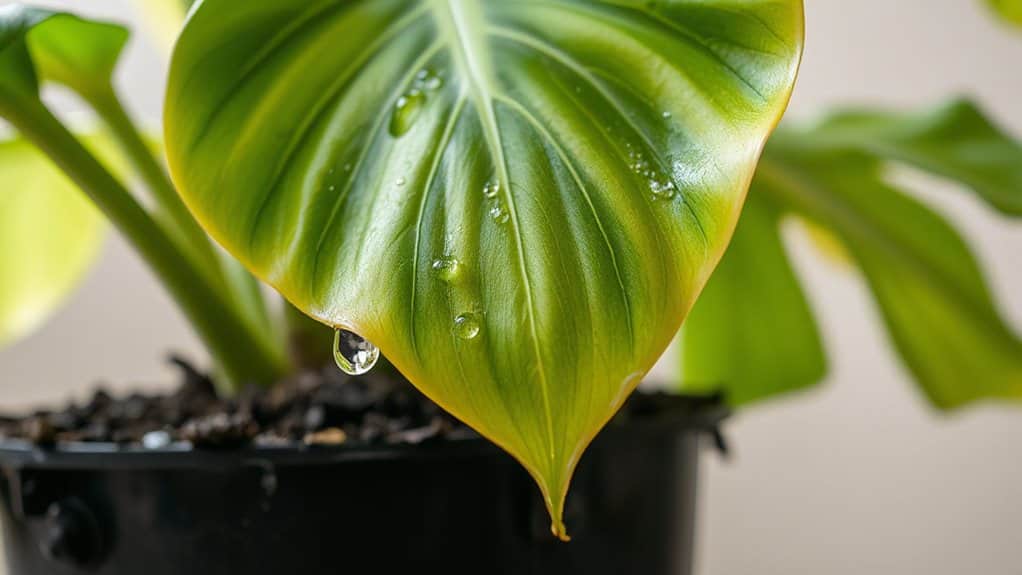
Okay, let’s roll up those sleeves—your plant’s soggy soil situation is totally fixable, and think of it like drying out your tent after a surprise rainstorm on a camping trip (yep, been there, soaked sleeping bag and all).
Grab some paper towels to soak up moisture, poke holes with a pencil for airflow, and tilt the pot to create air pockets—your roots will thank you! Regular, gentle aeration helps improve soil oxygen and prevents root rot.
Could Underwatering Be the Problem? Look for These Signs
Ever feel like your plant’s throwing a drama fit, with leaves curling down like it’s auditioning for a sad plant commercial? Check the soil—it might be drier than the desert air when I forget my water bottle on a camping trip, cracked and pulling away from the pot like it’s trying to escape!
If the pot feels lighter than my backpack after I eat all the snacks, and the leaves are crispy like over-toasted marshmallows, your plant’s probably begging for a drink. Make sure to check for proper soil moisture and water when the top inch of soil is dry.
Dry Soil Clues
Spotting the signs of dry soil is like being a plant detective—magnifying glass not required, but a curious touch definitely helps.
Is the potting mix pulling away from the edges, or does the soil feel like a desert sidewalk? Stick your finger in—bone-dry means it’s rescue time!
Gaps, shrinkage, and crispy texture? Your plant’s basically camping in a drought.
Water deeply, and watch it bounce back like it just found an oasis!
Leaf Texture Changes
When your houseplant starts looking like it just trudged through a desert without a canteen, it’s probably not posing for a dramatic photoshoot—its leaves might actually be crying out for water.
Are they crispy, dry, and papery, especially at the tips? That’s a dead giveaway. Don’t wait—give it a drink! You’ll love how fast it bounces back, like a happy camper after finding water.
Pot Weight Indicator
Okay, so your plant’s leaves are feeling drier than a granola bar left in a backpack after a three-day hike—yep, we’ve all been there—and if they’re also curling downward like they’re trying to hide from the sun, it’s time to play plant detective.
Lift that pot—does it feel suspiciously light? If it’s lighter than your empty water bottle at the end of a camping trip, the soil’s likely parched. A heavy pot holds moisture; a light one’s screaming for water. Compare it to how it feels right after watering—you’ll be amazed at the difference. Trust your arms as much as your eyes; they’re telling you something important!
Fix Dry Soil and Restore Leaf Turgor
Whoa, is your plant throwing a serious dry spell tantrum?
If the soil’s cracked, the pot feels like a feather, and those leaves are curling down like they’re trying to hide, it’s time to give it a deep, slow drink—think of it like refilling your water bottle after a hot hike, not just a quick sip.
Try bottom watering once to really soak the roots, bump up the humidity like you’re camping in a dewy forest at dawn, and keep things consistently moist so your green buddy stays plump and happy!
Also, check the soil daily and adjust watering so it stays damp but not waterlogged to prevent root rot and other seedling-style problems.
Dry Soil Signs
You’ve probably seen it before—your once-perky houseplant suddenly looking like it’s giving up on life, leaves drooping downward like they’re trying to hide from the world—and more often than not, the real culprit is hiding right under your nose: dry soil.
Check the edges; if the soil’s pulled away, it’s screaming for water. Stick your finger in—dry as a desert? Yep, it’s thirsty. Lift the pot—lightweight? That’s a red flag. Soil looks pale and crumbles like cookie crumbs? Definitely time to water. Don’t wait for a plant funeral!
Water Deeply And Slowly
So, imagine this: you’re out on a camping trip, and instead of just splashing water on the ground like a sprinkle from a tiny raincloud, you take your time filling up the campfire pit slowly so every inch of soil soaks it in—that’s exactly the kind of thoughtful, deep drink your parched houseplant is craving!
You’re not just watering—you’re rescuing roots, reviving droopy leaves, and building a stronger, more self-reliant plant pal.
Try bottom-watering or the cycle soak method: give a little, let it sink in, then add more.
Your plant will perk up like it just found an oasis!
Boost Humidity Levels
Feeling the dry winter air zap the life from your houseplants like a forgotten water bottle in the desert sun?
You’re not alone!
Grouping your green friends increases humidity—5 plants can lift moisture levels by nearly 10%.
Tropical lovers like Monstera crave 50–60% RH, so grab a hygrometer, try a pebble tray, or snug them in a mini jungle.
Boom—happy leaves, happy heart!
Are Yellow Lower Leaves a Nutrient Deficiency?
Sometimes, when you’re tending to your leafy green buddies like you’re prepping for a big camping trip—careful, excited, and slightly overpacked with enthusiasm—you might notice the lower leaves turning a sad shade of yellow, and your brain instantly jumps to “Uh-oh, nutrient emergency!”
While that *could* be the case, hold off on whipping out the fertilizer like it’s trail mix at a campfire singalong—because yellow lower leaves aren’t always crying out for nutrients. Could be overwatering, aging, or just a thirsty plant throwing a quiet fit!
Check the soil, peek at the roots, and remember: not every yellow leaf needs a nutrient rescue mission—sometimes, it’s just nature’s way of saying, “I’ve lived well!”
Pests Causing Curl? How to Spot Mealybugs, Thrips, and Psyllids
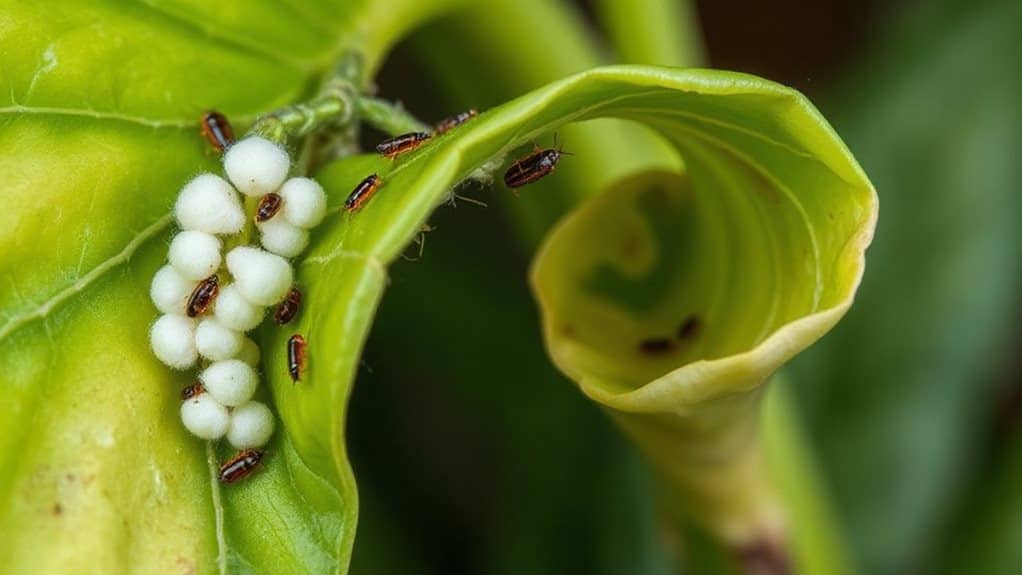
Hold up—before you blame your plant’s sad, curling leaves on your watering habits or the corner of the room that never gets enough light, let’s talk about uninvited houseguests: tiny, sneaky pests throwing a silent rave on your greenery.
Could mealybugs be crashing the party? Check leaf axils and stems for fluffy white cotton balls—yep, those squishy bugs love hiding there, sucking sap and leaving sticky honeydew trails.
Spot silvery streaks or black specks? Thrips might be doing backflips on your leaves, feasting and fleeing at lightning speed.
Psyllids are sneakier—rare indoors, but curled leaves and honeydew could hint at their presence.
Grab a magnifying glass, inspect undersides, and don’t forget to quarantine new plant pals!
Heat, Light, and Drafts: Environmental Triggers for Curling
While your plant’s not exactly packing a tent and hiking into the mountains, it’s still super sensitive to its environment—kind of like how you’d freak out if you woke up in the middle of a desert with no water and a blow dryer aimed at your face.
Too much heat from lights, cold drafts from windows, or strong fans blasting it can make leaves curl down, up, or into little cups—talk about drama! You’re basically its camp counselor, so keep temps steady, move lights a few feet back, block chilly nighttime drafts with a curtain, and aim fans *near*, not *at*, your green buddy.
A little environmental TLC usually fixes things fast—new growth pops out happy and straight in just days!
Is Your Plant Rootbound? How to Tell and Repot Safely
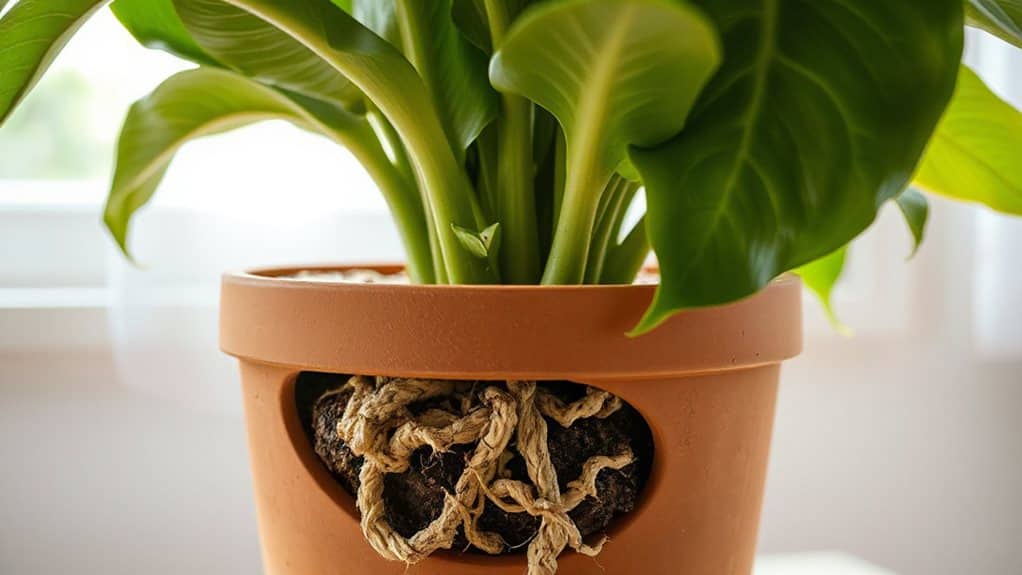
Hey, has your plant been acting thirsty all the time, even right after you water it—kinda like how I feel after a long hike in the sun? It might be screaming, “I’ve outgrown my pot!” with roots packed so tight they’re basically doing gymnastics in there, wrapping around like they’re training for a root Olympics.
Let’s check what’s going on down below and give your green buddy some breathing room—because nobody likes being stuck in a shoebox, not even plants!
Signs Of Root Confinement
So, you’ve been giving your houseplant all the love in the world—regular watering, prime windowside real estate, even talking to it like it’s your tiny green roommate—but something’s still off and those leaves are drooping like they’re ready to throw in the towel. Sound familiar?
Well, guess what—your plant might be screaming (silently) for more root space. If roots are poking out the bottom, circling like confused snakes, or if the pot’s cracking like it’s doing its best to set the plant free, your green buddy’s probably rootbound. Time to repot and give those roots room to roam—think of it like upgrading from a closet to a studio apartment!
Checking Root Health
Alright, let’s get our hands dirty—literally! Gently slide your plant out; if roots are circling like a tangled headphone wire or popping out the bottom, it’s screaming for space.
Is the pot bulging? Soil drying fast? Yep, it’s rootbound. Time for a bigger home—your green buddy will thank you with happy, uncurled leaves!
Safe Repotting Steps
Thinking of giving your leafy roommate a new apartment? First, water it the day before—think of it as prepping for moving day! Gently loosen the rootball, trim any dead roots (snip-snip!), and nestle it into a slightly bigger pot with fresh soil.
Don’t forget drainage holes—nobody likes soggy feet! Water well, then let it chill in shade for a few days. You’ve got this!
Diagnose Deficiencies: Magnesium, Manganese, and More
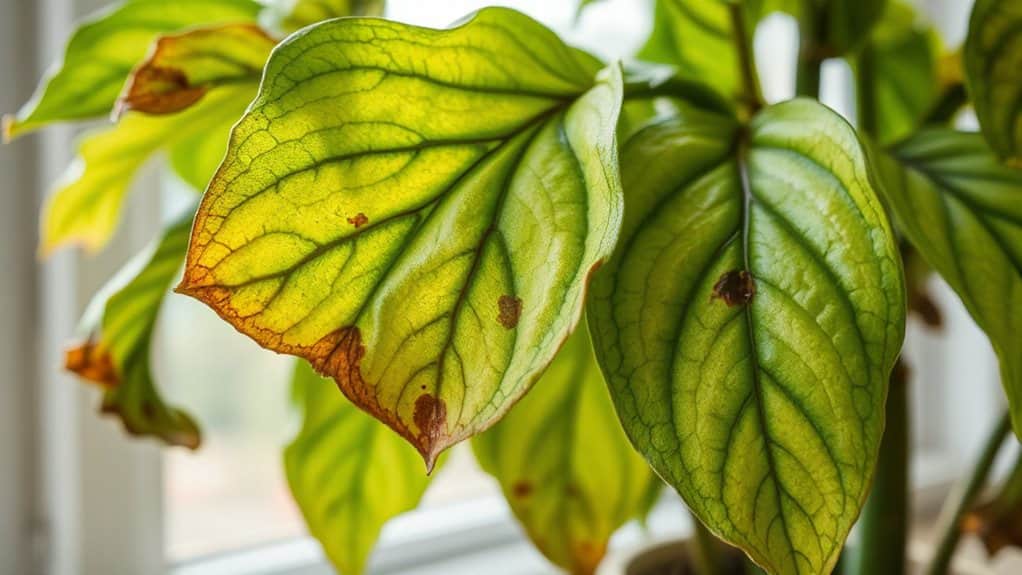
While your houseplant’s leaves curling downward might’ve you picturing a dramatic plant tragedy—like a tiny, leafy version of a camper caught in a surprise rainstorm without a tent—don’t toss it out just yet!
Check for magnesium deficiency first: yellowing between veins on older leaves, rusty spots, or inward curling. Unlike iron issues (which hit young leaves), magnesium problems start low.
Is your soil acidic or soaked in potassium? That could be blocking uptake.
Manganese shortage? Look for pale patches on new growth—high pH or cold roots might be the culprits.
And hey, overdoing fertilizer can backfire too, causing salt burn that mimics deficiencies.
Time to play plant detective!
Fix Curled Leaves: A Step-by-Step Recovery Plan
So you’ve played plant detective and ruled out nutrient drama—maybe your green buddy isn’t starving for magnesium or throwing a manganese tantrum after all. Time to tweak your care!
Check soil moisture, increase humidity with a pebble tray, and give bright, indirect light. Repot if roots are cramped, and watch for new growth—it’s like spotting your first campfire under the stars: a true win!
Overall
So, your plant’s leaves are doing the sad downward curl—don’t panic! You’ve totally got this, like that time I rescued my droopy peace lily with a solid watering tweak and some cozy new pot digs. Check moisture, light, roots, and nutrients, then act fast. Plants bounce back when you speak their language, and honestly, it’s kinda like camping—read the signs, adapt, and thrive! Now go give your green buddy some love, okay? You’re basically a plant hero now.