Vegetables That Grow Well in Shallow Soil
You’d be amazed at what you can grow in just 6–10 inches of soil—think crisp lettuce, peppy spinach, and snappy radishes, all thriving like they’re on vacation in a tiny, sun-drenched resort. Swiss chard and baby beets? Total shallow-soil superstars. Just keep the soil rich with compost, water when the top feels dry, and give them a little shade in summer heat. And hey, if you think *this* is cool, wait till you see how easy it is to turn your space into a veggie paradise.
TLDR
- Lettuce thrives in 6–10 inches of soil and is ideal for shallow containers.
- Spinach grows well in shallow soil, with roots typically reaching 4–6 inches deep.
- Swiss chard adapts to shallow containers and rarely needs more than 12 inches of soil.
- Radishes are shallow-rooted and perform well in small pots with minimal depth.
- Baby beets are champions in shallow soil, requiring less depth than full-sized root crops.
Best Vegetables for Shallow Soil Containers

Let’s plunge right into the fun world of container gardening, where even the tiniest patch of soil can turn into a veggie-packed treasure chest!
You’ve got superstars like lettuce, spinach, and chard thriving in just 6–10 inches of soil—perfect for small spaces.
Try radishes or baby beets; they’re shallow-rooted champs!
And hey, don’t forget chives or spring onions—they’re happy in snug pots and add zing to meals you’ll proudly share.
These plants typically develop an effective root zone within the top 6 to 12 inches of soil, making them ideal for shallow containers and raised beds. Grow leafy greens in 6–12 inches of soil for best results.
How Deep Do Shallow-Rooted Veggies Really Grow?
Ever wonder just how deep your veggies are digging when they’re chilling in that cute little planter on your balcony?
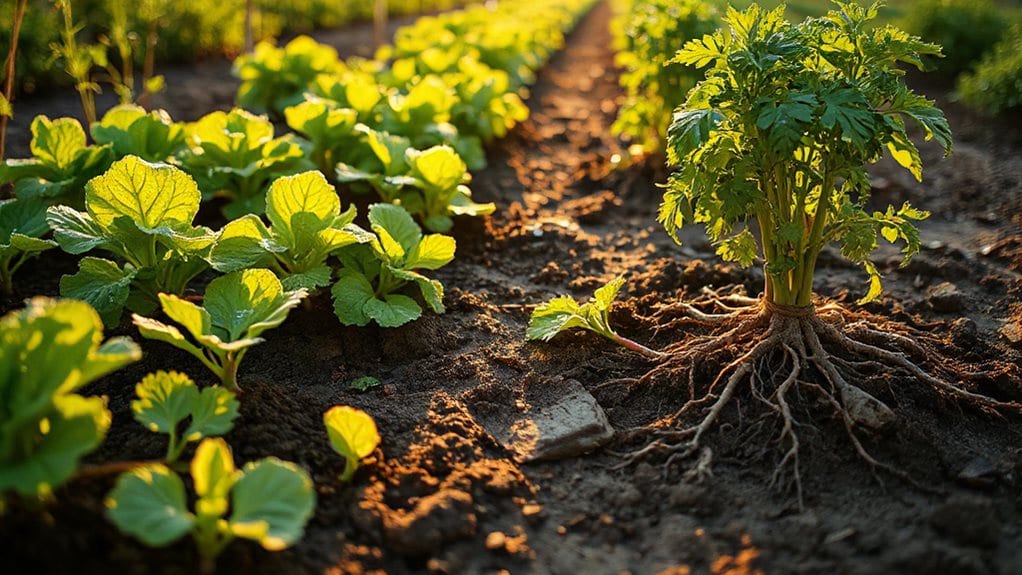
Most shallow-rooted pals, like lettuce and spinach, only plunge 4–6 inches—super cozy!
Arugula and chard stretch to 12, but rarely need more than 18 inches.
Roots spread sideways too, up to 2 feet, so give ‘em room to stretch like campers in a tent!
Native plants often have deep root structures that help prevent soil erosion and build resilient garden ecosystems.
Soil Prep for Shallow Soil Gardens

You’ve got shallow soil? No problem—let’s make the most of those top few inches by packing them with goodies like compost, so your veggies actually *want* to grow there, kind of like how we pile extra snacks into a backpack for a good camping trip.
Make sure water doesn’t just sit around like an uninvited guest by shaping your beds with a little slope or lift, because soggy roots are about as happy as wet socks on a hike.
Seriously, toss in some organic matter, keep it well-drained, and your garden will be the VIP lounge for carrots, lettuce, and all their shallow-rooted friends. Adding regular applications of compost annually will keep the soil fertile and productive.
Enrich Top Layers
While your veggies mightn’t need a five-star hotel, giving them a cozy, nutrient-packed top layer is like setting up a luxury campsite in your backyard—nobody wants to grow in a lumpy, lifeless dirt patch!
Mix in compost, add mulch, and toss in some limestone if needed; your soil will thank you. Think of it as packing the perfect picnic—everything your plants crave, right at their roots!
Ensure Good Drainage
Now that you’ve given your soil a five-star spa treatment up top with compost, mulch, and all the good stuff, let’s talk about what’s *underneath*—because even the coziest campsite falls apart if your tent floods by midnight!
Prevent soggy roots by layering gravel at the base, using raised beds, or installing French drains; your veggies will drain well and thrive, just like a well-vented tent on a rainy expedition—dry, happy, and ready to grow!
Watering Shallow Soil Vegetables
Most of the time, watering your shallow soil veggies isn’t rocket science—but it *is* kind of like being a plant detective, where the clues are in the soil and the suspects are wilting leaves or sneaky evaporation.
Stick your finger down 2 inches; dry? Water time! Use soaker hoses, mulch heavily, and water early—you’ll save gallons and keep roots happy, like a well-packed camping trip for your plants. Seedlings and young plants especially need consistent moisture, so check pots and trays daily to ensure soil stays damp and avoid overwatering or waterlogging.
Sun, Shade, and Climate Needs

If you’ve ever tried to set up a tent in the perfect sunny location only to realize half the campsite’s in shadow by noon, you know light changes fast—and your veggies feel the same way about sunlight!
Give tomatoes and peppers 6–8 hours of sun, but don’t stress if it’s less; greens like spinach actually *prefer* shade, especially in summer.
Train cucumbers up trellises, mulch well, and peek at light patterns—your plants will thank you!
Consider installing trellises and support structures to make the most of limited light and space.
When to Harvest (and How to Do It Right)
While the sun’s still cool and the garden’s shaking off its morning dew, that’s your golden window to sneak in and grab the freshest, crispiest veggies of the day—think of it like snagging the best campsite before anyone else wakes up!
Pluck leafy greens gently, cut squash with a clean snap, and pull carrots when they’re just right; your friends will taste the care in every bite.
Avoid These Shallow Soil Gardening Mistakes
You know that excited, buzz-in-your-jeans feeling you get when you’re about to set up camp at the perfect spot by the lake, only to realize—uh oh, you forgot the tent stakes?
Yeah, skipping soil prep, overwatering, or skimping on mulch is like that—frustrating and fixable!
Water deep, not shallow; your roots will thank you, and your veggies? They’ll thrive, feed others, and make you the garden hero you were born to be!
Overall
So, you’ve nailed growing veggies in shallow soil—awesome job! Who knew containers could burst with cherry tomatoes or zippy radishes? Remember, happy roots mean happy harvests, so keep that soil fluffy and water regular, okay? Don’t ghost your plants, especially on hot days—they’ll beg for a drink! And hey, imagine snipping fresh greens for tacos while camping—yes, really! Just avoid overplanting; nobody needs a zucchini jungle. You’ve totally got this, future garden superstar!