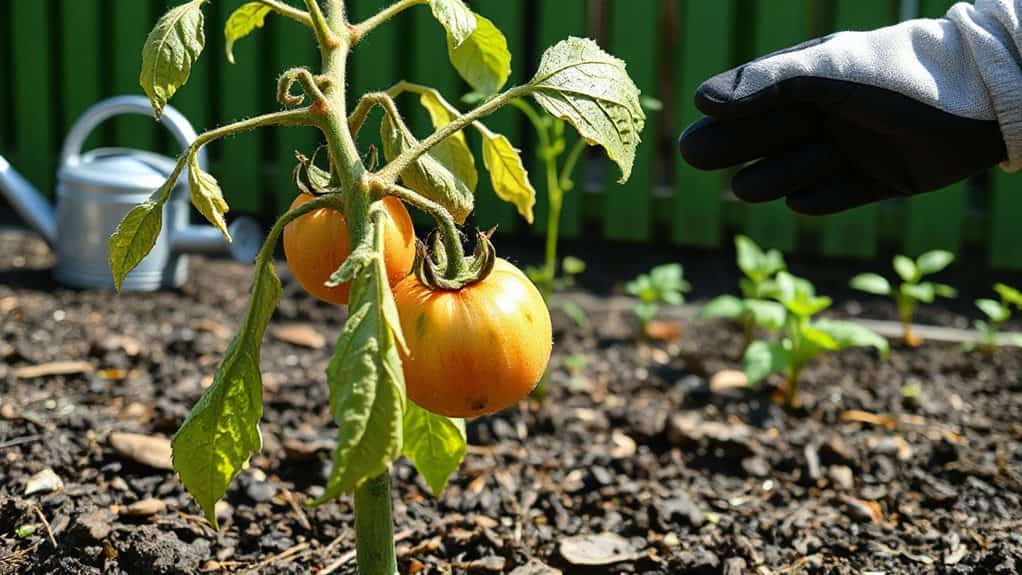
How to Revive a Wilted Tomato Plant
First, figure out why it’s wilting—heat stress, a fungal foe like Fusarium, a bacterial collapse, or pests such as stalk borers or nematodes; then give it a deep morning soak so water reaches the roots, prune the roots by hanging the plant upside‑down in a cut‑off 2‑liter bottle to air‑prune, and feed the soil a mix of compost, eggshell tea, and balanced tomato food while swapping in a resistant variety and rotating crops with marigolds; if you keep going, you’ll uncover even more tricks.
TLDR
- Water deeply in the morning once or twice a week, allowing moisture to reach the root zone and promote deeper roots.
- Identify and treat the specific wilt cause: remove infected foliage, improve drainage, and apply appropriate fungicide or bactericide for Fusarium, Verticillium, or bacterial wilt.
- Reduce heat stress by mulching, providing shade during peak sun, and ensuring consistent soil moisture to prevent rapid water loss.
- Enhance soil health with a one‑inch compost blanket, eggshell tea, and balanced tomato fertilizer to boost microbial activity and nutrient availability.
- Prune and aerate roots using an air‑pruning bottle planter or loosen compacted soil during transplant to encourage healthy lateral root growth.
Diagnose Tomato Wilting Causes
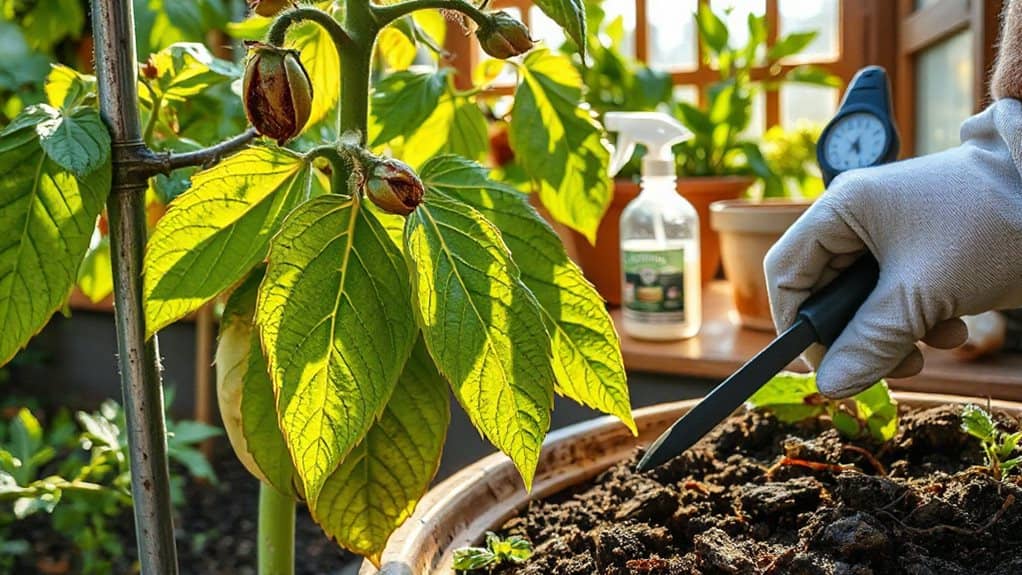
Ever wonder why your tomato plant suddenly looks like it’s taken a tumble on a hiking trail? Check the leaves: yellow then brown, wilting at night but perked up by morning?
Fusarium loves hot 80°F soils, turning stem tissue brown when you scrape it.
Verticillium makes wedge‑shaped yellow spots, wilting one side first.
Bacterial wilt collapses everything instantly, dark hollow stems.
Southern blight adds white mycelium and tan sclerotia.
Look for stalk borers, nematodes, or juglone toxicity if near black walnut trees.
Identify the culprit, then act. Heat stress can cause leaves to curl and wilt during hot, dry spells as a water‑saving mechanism.
After heavy rains ants may colonize nearby patios and hard surfaces as flooded nests force them upward.
Water Deep‑Soak in the Morning to Stop Tomato Wilting
A deep‑soak in the morning is like giving your tomato plant a big, rejuvenating breakfast before a long hike, and it works wonders for stopping wilting.
You’ll water deeply once or twice weekly, letting moisture sink past the surface, so roots grow deeper, stay hydrated, and resist drought.
This cool‑hour soak cuts evaporation, avoids leaf disease, and keeps your plant perked up for harvest.
Contain thirsty plants with deep edging to prevent nearby groundcovers from encroaching.
Air‑Prune Roots With Simple Bottle Planters
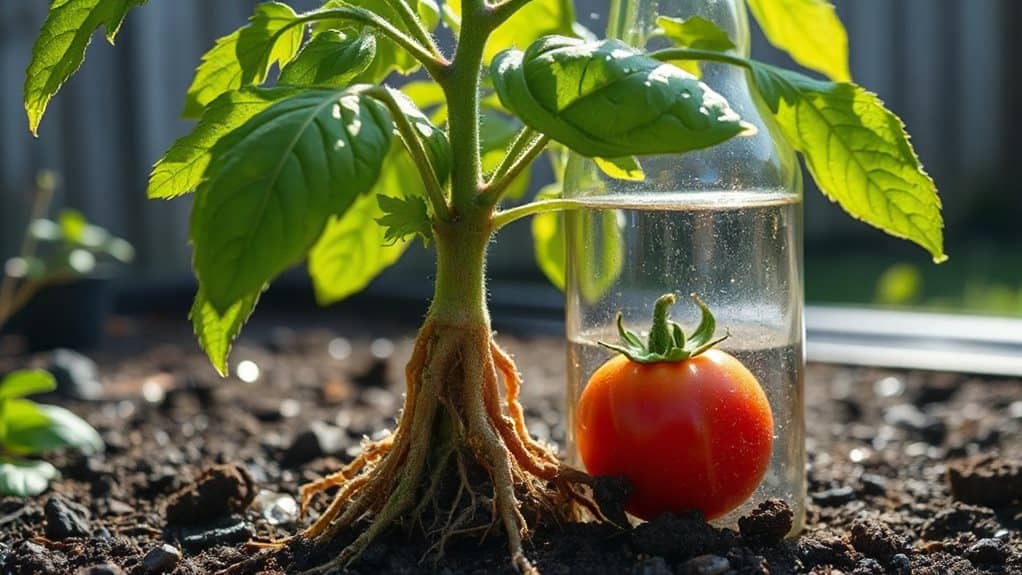
Think of a 2‑liter soda bottle as a tiny, portable campsite for your tomato seedling’s roots, where the air itself becomes the trail guide that nudges those roots to grow outward instead of looping in circles.
Cut the base, poke holes, wrap the root ball in cloth, and hang it upside‑down; the dry air prunes tips, spurring dense, healthy laterals that boost transplant success and yield. A long-handled weeder can help loosen compacted soil when transplanting to minimize root damage and ease planting into the ground with proper depth and spacing (foot pedal leverage).
Boost Soil With Compost, Eggshell Tea, and Tomato Food
A Picture yourself setting up a tiny campsite for your tomato seedlings, only this time the “campfire” is a rich, crumbly layer of leaf‑mold compost mixed with a splash of eggshell tea and a dash of tomato food, and the “tent” is the soil that’s about to become a nutrient‑rich oasis. Spread a one‑inch compost blanket, work it into the top four inches, then stir in calcium‑rich eggshell tea and balanced tomato food; the microbes will cheer, moisture stays steady, and your seedlings will feel like happy campers ready to share their bounty. Bricks are made from natural materials that are non‑combustible and resist high temperatures, which is why using masonry planters or raised beds near cooking areas can reduce fire risk.
Select Tomato Wilting‑Resistant Varieties and Plan Crop Rotation
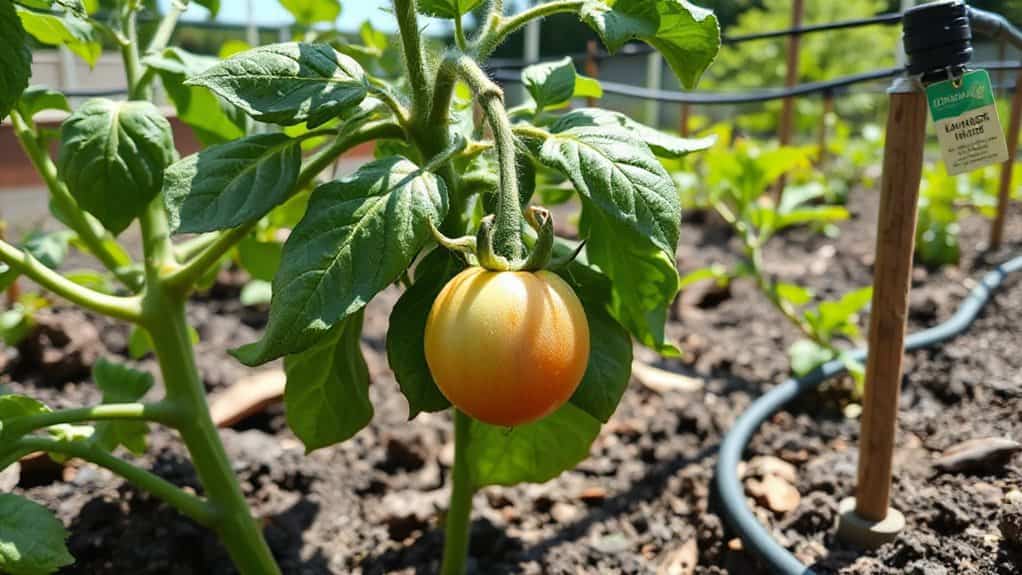
Pick the right tomato variety and you’ll feel like you’ve just set up a campfire that never goes out—steady, warm, and full of good vibes. Choose Roma VF for sauce, Defiant PhR for containers, Early Girl for drought, or Supersweet 100 for cherries, then rotate each block yearly, swap in marigolds, and pull any wilted plants, so your garden stays healthy and your guests keep smiling. Monitor soil temperature to avoid cold soil that stunts growth and invites disease.
Overall
Now you’ve got the tools to rescue that droopy tomato—just give it a deep‑morning soak, prune the roots with a bottle planter, and feed it compost, eggshell tea, and tomato food, then pick a hardy variety and rotate crops. Imagine the thrill of watching it bounce back, like a campsite sunrise after a storm—so satisfying! Keep experimenting, stay curious, and soon you’ll be harvesting juicy, happy tomatoes, all while bragging about your garden‑hero adventures.