
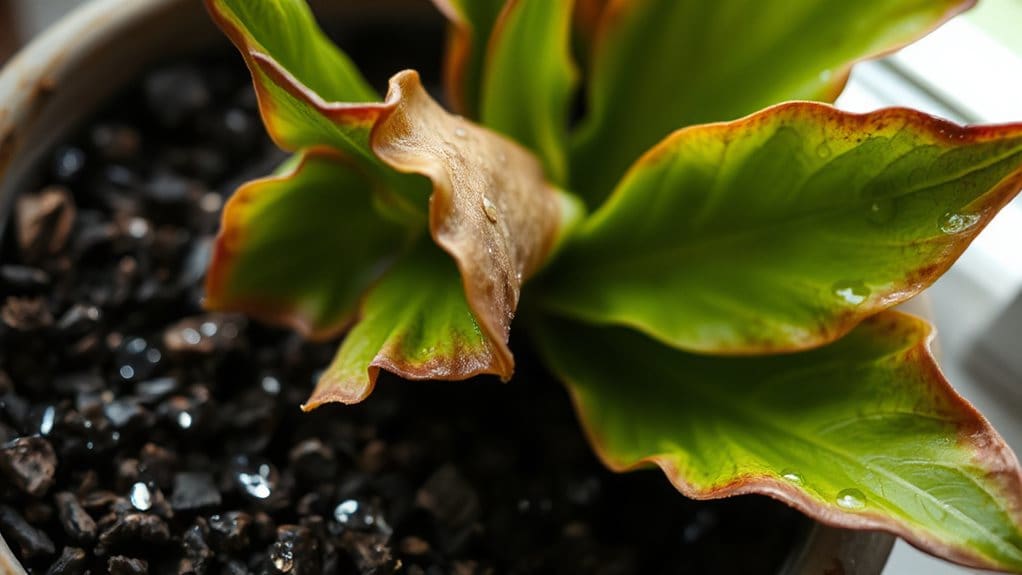
Brown Leaf Tips but Soil Moist: What’s Really Wrong
So, your plant’s got brown tips but the soil’s still damp? Don’t panic—your plant’s not thirsty, it’s probably stressed! Dry winter air, salty tap water, or a pot that’s too snug could be the sneaky culprits, kind of like how your skin gets weird on a long camping trip. Overwatering can suffocate roots, while chlorine or fluoride in tap water can poison the soil over time. Even too much sun or heat might be scorching those tips. Stick around—there’s a whole survival guide waiting to turn you into a plant detective.
TLDR
- Low indoor humidity, especially in winter, can cause brown leaf tips even when soil is moist, particularly in tropical plants.
- Overwatering leads to root oxygen deprivation, impairing water uptake and causing dry, brown leaf tips despite wet soil.
- Tap water containing chlorine, chloramine, or fluoride can damage roots and soil microbes, leading to tip browning.
- Salt buildup from hard water or softeners dehydrates roots, creating drought-like symptoms even in damp soil.
- Root-bound plants or excessive heat and sun exposure can reduce water uptake and cause brown tips regardless of soil moisture.
Why Your Plant’s Tips Turn Brown Even With Moist Soil
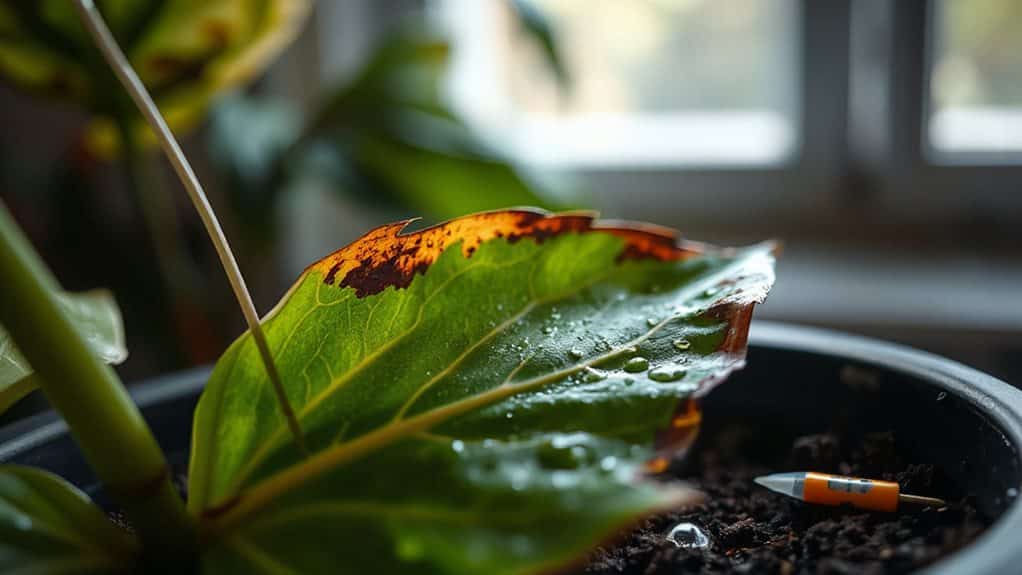
Even if you’re watering your plant like a pro and the soil still feels damp, you might still catch those sneaky brown tips creeping in—kind of like how a campfire starts small but can spread if you’re not paying attention.
Could low humidity be zapping moisture faster than you can say “s’mores”? Or maybe tap water chemicals are staging a slow sneak attack—peace lilies hate that! Check root crowding too; cramped roots can’t drink well, even in wet soil. Consider whether inconsistent watering or poor drainage is creating conditions that mimic both drought and overwatering and stress the roots root rot risk.
Winter indoor air often drops to 10 percent humidity, making it a prime suspect for brown tips despite moist soil.
Overwatering: How Wet Soil Causes Dry, Brown Tips
So here’s a plot twist you didn’t see coming: your plant’s brown, crispy leaf tips might actually be screaming for *less* water, not more—kind of like how your socks get soggy and gross if you wear them in a rainstorm *and* forget to take them off for days.
When roots drown, they can’t drink or breathe, so tips dry out even in wet soil. You’re trying to help, but over-love with the watering can backfires—like overpacking your camping backpack and then wondering why it’s so heavy.
Cut back, let soil dry, and your plant will perk up, promise! Plants like the Majesty Palm are especially susceptible to root problems from overwatering, so check for root rot if the soil stays wet for long.
Toxic Tap Water and Salt Buildup: Silent Soil Killers
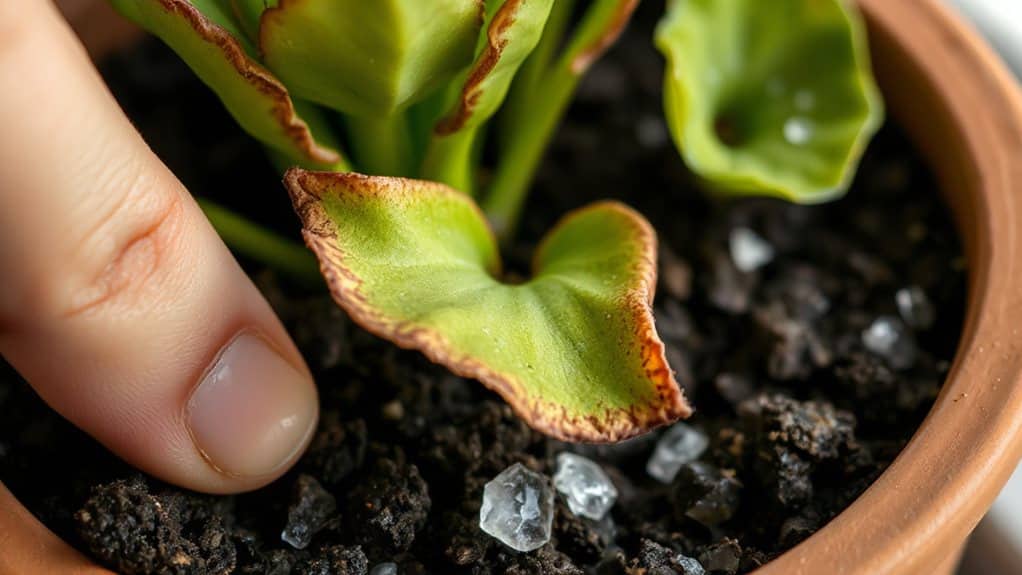
While your plant’s brown tips might look like a cry for water, they could actually be waving a white flag against what’s *in* your water—kind of like how I once tried to cook pasta with seawater and ended up with a salty, crusty disaster nobody wanted near their plate.
Chlorine, chloramine, fluoride, and hard minerals sneak in, harming roots and microbes over time. Tap water can carry invisible toxins—like chlorine killing good soil bugs or fluoride crisping leaf tips. Salt-heavy water from softeners? That’s a drought in disguise, dehydrating roots even when soil’s wet.
Ever camped where streams looked clean but tasted metallic? Same sneaky danger. Your plant’s not thirsty—it’s poisoned. Time to filter up! Soil testing for pH and salts with a home kit can help confirm the problem.
Low Humidity and Winter Air: Drying Out Your Plants
You’ve been watering on schedule, your soil’s in great shape, and yet those pesky brown tips keep creeping up like uninvited guests at a campfire cookout—well, guess what? Winter air’s probably sucking the moisture right out of your plants!
Indoor humidity often drops below 30%, leaving tropical buddies parched. Yep, even if the soil’s damp, dry air speeds up water loss through leaves, causing crispy edges, curling, or wilting—super stressful for your green pals! Regularly checking with a hygrometer can help you spot and correct low-humidity problems before they damage your plants.
Root Bound, Heat, and Sunburn: Other Causes of Brown Tips
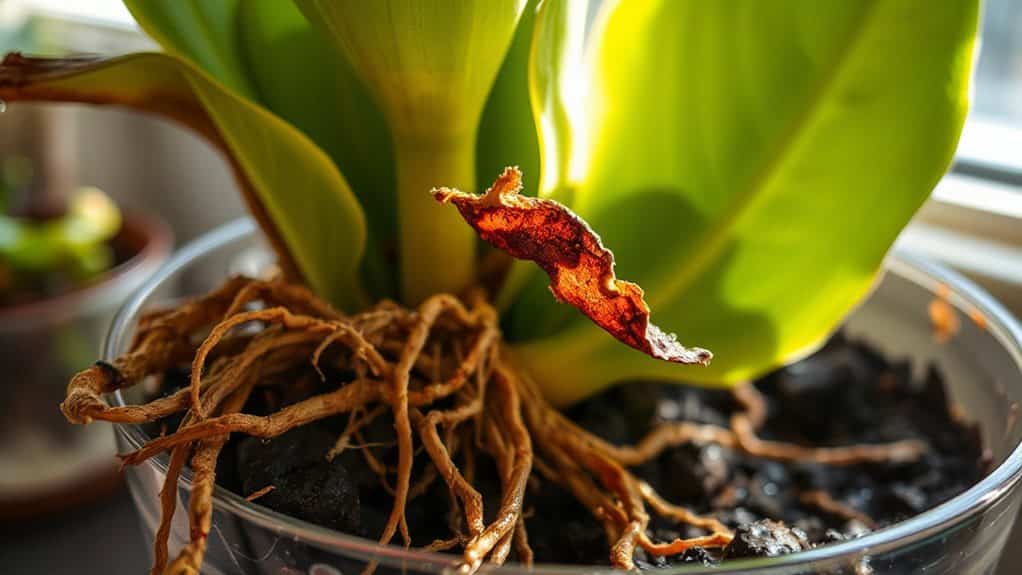
Ever pulled back the curtain on your houseplant and found it basically staging a root rebellion—roots poking out the bottom like escape artists, soil drying faster than a puddle in July, and those stubborn brown tips still crashing the party even though you’ve been doing *everything* right?
Yeah, your plant’s not thirsty—it’s root bound, stressed from heat, or sunburned!
Time to repot, chill out the environment, and maybe give it some shade.
Your green buddy’s just trying to survive, after all.
Let’s help it thrive!
Choose a new pot only slightly larger and with proper drainage to prevent root rot and keep moisture levels healthy.
Overall
So, your plant’s got brown tips, huh? Even though the soil’s moist, don’t panic—you’re not a plant murderer (yet). Overwatering, salty tap water, or dry air could be sneaky culprits, like uninvited campfire guests. I once killed a fern with kindness—talk about over-love! Try flushing the soil, using filtered water, or tossing in a humidity tray. Your green buddy’s got potential, so keep calm, stay curious, and let’s grow together—literally!


