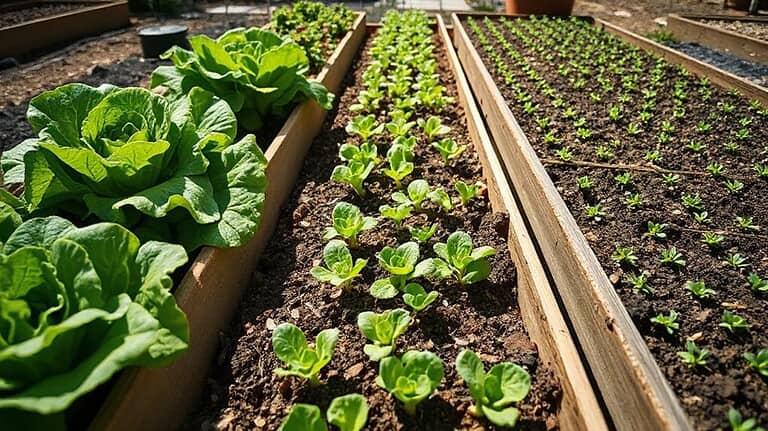
Compost Vs Topsoil for Raised Beds: What’s the Real Difference?
So, you wanna grow happy plants in your raised bed? Here’s the scoop: compost is like a vitamin lift—packed with nutrients and alive with good microbes—while topsoil’s the sturdy backbone that keeps everything from washing away. Think of compost as the energizer bunny and topsoil as the reliable workhorse. Use ’em together, and boom—you’ve got a garden that thrives! Stick around, and you’ll uncover the ultimate mix that’ll make your veggies do a happy dance.
TLDR
- Compost is rich in organic matter and microbes, boosting fertility; topsoil provides mineral structure and stability for plant roots.
- Topsoil forms slowly in nature, while compost is made quickly from decomposed organic waste like food scraps and leaves.
- Compost improves soil texture and drainage; topsoil offers density and anchoring for strong root development in raised beds.
- For best results, mix 60% topsoil with 40% compost to balance structure, nutrients, and biological activity.
- Add 2 inches of compost annually to raised beds to replenish nutrients, with minimal mixing needed for healthy, productive soil.
Understanding the Core Differences

While you might think compost and topsoil are basically the same dirt—hey, we’ve all been there—there’s actually a whole world of difference between them, especially when you’re building a thriving garden in raised beds.
Compost is like a nutrient-packed smoothie for your soil, teaming with life, while topsoil’s the steady, reliable base—kind of like a trusty tent on a camping trip. Topsoil often contains more mineral content and less organic matter than compost, providing structure and support for plant roots.
Compost is manufactured via decomposition, a natural process that breaks down organic matter into rich, fertile material ideal for feeding plants and improving soil health.
Breaking Down Composition
You know how compost is basically nature’s way of recycling old banana peels and fallen leaves into intensified plant food, right?
While topsoil forms slowly over time—like a slow-cooked stew of sand, silt, and tiny bits of once-living stuff—compost is the fast, hot, microbe-packed party that breaks everything down in weeks, not centuries.
Think of it like this: if your garden were a camping trip, topsoil’s the trusty tent—solid and reliable—but compost? That’s the gourmet s’more that makes the whole escapade worth it.
Topsoil is typically higher in fine organic particles and loamy textures, making it better for root growth and seed germination, whereas garden or lawn soil is often amended with compost and targeted to specific plant needs.
Organic Breakdown Process
Turning your banana peels, coffee grounds, and fallen leaves into garden gold? You’re not just rotting scraps—you’re hosting a microbial party!
Tiny helpers munch through waste, turning it into rich, crumbly compost. They lock in carbon, slash emissions, and dish out nutrients plants *love*.
Think of it as slow-cooked soil stew—yum! Keep feeding them, and they’ll keep working, building a thriving, life-filled garden home.
Natural Formation Differences
So, you’ve got your banana peels partying with the microbes—awesome!
While compost forms in your bin from scraps breaking down, topsoil builds slowly in nature, like a slow-cooked stew of sand, silt, and clay.
It’s the dark, rich layer plants love, full of life and nutrients.
You can speed up compost, but topsoil? That’s nature’s time-lapse virtuoso.
Nutrient Content Compared

While you’re dreaming up the perfect garden bed like it’s your next camping expedition—complete with s’mores and starry skies—let’s talk about what really fuels those juicy tomatoes and crunchy carrots: nutrients.
You’ve got options—compost packs a slow-release nutrient punch, while topsoil offers a solid, balanced base. Mix them and boom: your plants get the buffet they deserve! Annual beds benefit more from amendments than perennial plantings, so be sure to add compost each year to keep soil structure and fertility high for seasonal vegetables (apply annually).
Ideal Uses in Raised Bed Gardening
If you’re building your raised bed like it’s a backyard fort that needs to stand strong through summer storms and hungry squirrels, then you’re gonna want to start with the right mix of topsoil and compost—because let’s be real, your carrots aren’t gonna grow themselves (though that’d be pretty cool).
Use topsoil for structure, compost for food; layer compost yearly, keep things fluffy, fertile, and squirrel-resilient.
Your plants will thank you!
Also make sure your bed gets 6–8 hours of sunlight daily to support vigorous growth.
Advantages of Each Soil Type

You’ve got two rockstars here: compost, your nutrient-packed party starter that feeds plants like a slow-cook veggie stew, and topsoil, the chill, reliable buddy who keeps everything from collapsing like a tent in a thunderstorm.
Think of compost as the energizer—bursting with goodies that make tomatoes pop and carrots crunch—while topsoil’s the steady base that says, “Relax, I’ve got structure, I’ve got flow, I won’t let your roots drown.” Mix ‘em right, and boom—your raised bed’s basically a five-star resort for veggies, no camping mishaps required! Raised beds also improve drainage, preventing waterlogged conditions that can damage roots.
Nutrient Powerhouse: Compost Benefits
Think of compost as your garden’s secret superfood—packed with everything your plants crave to grow big, strong, and delicious.
You’re not just feeding plants; you’re building a lively, nutrient-rich home for roots, microbes, and earthworms.
Want thriving tomatoes or crisp carrots? Compost delivers essential micronutrients, enhances organic matter, and nourishes soil naturally—no chemicals needed.
It’s like packing a picnic full of vitamins for your entire garden family!
Structural Base: Topsoil Strength
Imagine your raised bed as a sturdy camping tent—sure, the cozy sleeping bag (that’s the compost) keeps everything warm and fed, but you’d never set out on a weekend excursion without first hammering those tent stakes deep into solid ground.
You need topsoil’s density and clay to anchor roots, prevent slippage, and support heavy plants, especially in raised beds.
It’s the unsung hero beneath the fluff—solid, reliable, and quietly holding everything together, just like a well-driven tent stake after a long, dusty trail hike.
Best Practices for Application
While your raised beds might start as empty frames, they won’t stay that way for long once you plunge into the fun part—filling them up the right way. Mix 60% topsoil with 40% compost for a sturdy, nutritious base—your veggies will throw a party down there!
Then each spring, just top off with 2 inches of compost; no digging needed. Let the worms do the work, like nature’s little roommates.
Creating the Perfect Soil Mix

If you’ve ever dug into a garden bed and hit hard, lifeless dirt, you know it’s not exactly a five-star home for carrots or cucumbers—so let’s build something better, together.
Mix 50% topsoil with 50% compost for an easy, lush blend, or go pro with one-third each of topsoil, compost, and coarse sand.
Want extra fluff and drainage? Toss in perlite or worm castings—your plants will thrive, and honestly, it’s kind of like camping: messy, fun, and totally worth it.
Overall
So, you’ve got compost and topsoil—both awesome, right? Compost’s like the turbocharged smoothie for your plants, packed with nutrients, while topsoil’s the chill, steady base that holds everything together. Want happy veggies in your raised bed? Mix ‘em! I did, and boom—my tomatoes grew bigger than my dreams (and my dog’s head). Don’t overthink it, just dig in, blend both, and watch your garden thrive like it’s on vacation in paradise!