Garden Soil Amendments for Healthier Plants
Your garden soil needs regular amendments to create a thriving buffet for your plants! Start by mixing in organic matter like compost and aged manure to improve soil structure and enhance nutrients. You’ll want to test your soil’s pH and adjust it with lime or sulfur as needed, then incorporate mineral enhancers like perlite for better drainage. Aim to mix amendments 6-12 inches deep using a garden fork or tiller – there’s so much more to uncover about creating your garden’s perfect growing environment.
TLDR
- Compost and organic matter improve soil structure, enhance nutrient content, and create a thriving ecosystem for beneficial microorganisms.
- Mix soil amendments 6-12 inches deep before planting season for maximum effectiveness and better root development.
- Test soil pH regularly and adjust with lime or sulfur to ensure optimal nutrient availability for plant growth.
- Maintain a 2:1 ratio of carbon to nitrogen materials when adding amendments for proper decomposition and nutrient balance.
- Apply amendments annually to garden beds, focusing on seasonal vegetable plots more than perennial plantings.
Why Your Garden Needs Soil Amendments
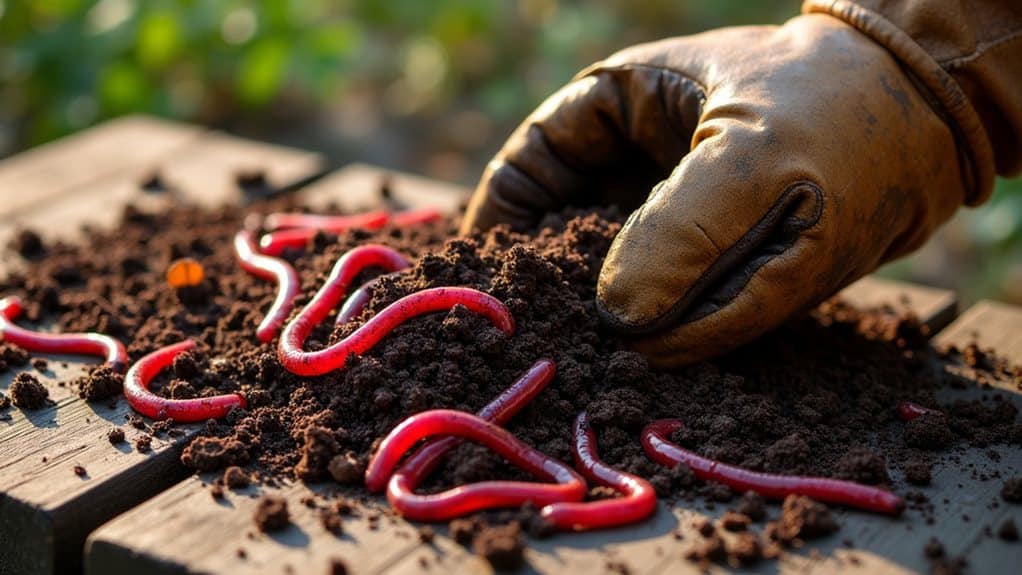
While your garden might look perfectly fine on the surface, there’s an entire world of activity happening beneath your feet that needs regular attention and care!
Your soil is like a living buffet for your plants, and just like you’d want a well-balanced meal, your garden craves properly amended soil that’ll improve its structure, retain water better, and provide essential nutrients for healthier, happier plants. This is especially important for annual plant beds, which significantly benefit from soil amendments more than perennial plantings. Adding organic matter to your soil can enhance its fertility and improve its structure, making it even more beneficial for your plants.
Essential Types of Garden Amendments
Whether you’re new to gardening or a seasoned pro, you’ll need three main types of amendments to create the perfect growing environment for your plants: compost and organic matter to feed your soil’s living ecosystem, mineral-based enhancers like perlite and vermiculite to improve soil structure, and pH adjusters such as lime or sulfur to balance your soil’s chemistry. Incorporating coffee grounds into your compost can significantly enhance nutrient content and promote healthy plant growth. As you learn to work with these crucial amendments, you’ll find that each one plays a unique and essential role in altering even the most challenging soil into a thriving garden bed. The ideal mixture of organic materials should contain two parts carbon to every part nitrogen to create the most effective decomposition process. Just like cooking with the right ingredients makes a meal delicious, using the right combination of these soil amendments will give your plants everything they need to flourish and grow strong.
Compost and Organic Matter
Since a healthy garden starts from the ground up, understanding compost and organic matter is absolutely essential for any aspiring gardener!
You’ll love how compost, made from kitchen scraps and yard waste, works like magic to improve your soil’s structure and water retention.
Mineral-Based Soil Enhancers
The fascinating world of mineral-based soil enhancers opens up a wealth of possibilities for your garden’s health!
You’ll love how greensand improves your soil with potassium, while azomite’s volcanic dust adds an incredible array of trace minerals.
If you’re dealing with acidic soil, dolomitic limestone’s your best friend, and when you need better drainage, perlite and gypsum will come to your rescue.
Ph-Adjusting Amendment Options
Just as mineral enhancers bring their unique benefits to your soil, mastering pH-adjusting amendments can make an incredible difference in your garden’s success!
You’ll want to focus on two main types: lime to raise pH and sulfur to lower it.
When you’re applying these amendments, remember to work them into the soil about 6-8 inches deep, and don’t expect overnight results – these changes take time!
Understanding Ph Balancing in Garden Soils
If you’ve noticed your plants looking yellow, stunted, or just plain unhappy, it’s time to check your soil’s pH level, which acts like a gatekeeper for all those essential nutrients your garden needs.
You’ll find that testing your garden soil’s pH is surprisingly easy with a simple home testing kit, and once you know where you stand, you can use natural methods like sulfur to lower pH or lime to raise it.
When your soil pH is balanced correctly, you’ll be amazed at how your plants respond, with healthier growth and more brilliant blooms, just as nature intended! Additionally, understanding light color effects on plant growth can further enhance your gardening success.
Testing Garden Soil Ph
While mastering garden soil might seem like a complex science experiment, understanding and testing your soil’s pH level is actually one of the most essential steps you’ll take toward creating a thriving garden.
You’ll find several reliable testing options, from simple pH strips to digital meters, but whichever method you choose, remember to test multiple spots in your garden and keep the soil consistently moist for accurate readings.
Natural Ph Adjustment Methods
Now that you’ve got a handle on testing your soil’s pH, let’s investigate the natural ways you can adjust those numbers to create the perfect growing environment for your plants!
You’ll love how simple it can be to use pine needles and oak leaves as mulch for acid-loving plants, while compost tea isn’t just great for nutrients – it’ll help maintain acidity too.
For a natural approach, try collecting rainwater instead of using hard water, which can throw off your soil’s perfect balance.
Signs of Ph Problems
Recognizing the early warning signs of pH problems in your garden can save you from a season of disappointing harvests and struggling plants!
You’ll notice telltale signs when your soil’s pH is off – like yellowing leaves between the veins, stunted plant growth, or distorted new foliage.
If your plants’ roots look stubby and discolored, or they’re showing signs of nutrient deficiencies, it’s time to check your soil’s pH.
Organic Matter: The Key to Thriving Plants
Although gardeners often focus on fancy fertilizers and specialized tools, organic matter is truly the unsung hero of healthy soil that’ll change your garden into a thriving oasis!
When you add materials like compost, manure, or leaf mulch to your soil, you’re creating a natural wonderland where beneficial microorganisms can thrive, nutrients become more available, and your soil’s structure improves dramatically.
Matching Amendments to Your Soil Type
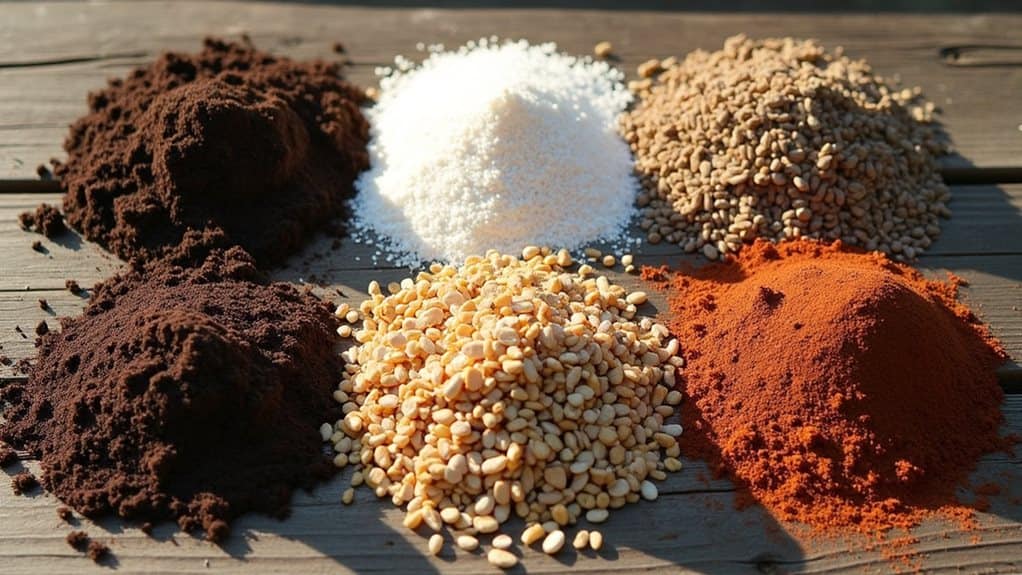
Just as different houseplants need different amounts of water and light, your garden soil requires specific amendments based on its unique characteristics!
If you’re dealing with heavy clay soil, you’ll want to mix in compost, peat moss, or gypsum to improve drainage, while sandy soil needs moisture-retaining additions like vermiculite.
For silty soil, try stabilizing it with compost and aged manure, and if you’ve got loamy soil, you’re lucky – it just needs occasional compost enhancements!
Best Practices for Applying Soil Amendments
Now that you’ve matched the right amendments to your soil, let’s talk about the proper timing and techniques for applying them!
You’ll want to add most amendments during the off-season or before planting, mixing them 6-12 inches deep into your soil.
For the best results, broadcast amendments evenly across your garden’s surface, then work them in thoroughly with a tiller or garden fork.
Overall
Now that you’ve learned about these incredible soil amendments, you’re ready to give your garden the lift it needs! Remember, it’s all about finding the right balance for your specific plants and soil type, but don’t be afraid to experiment with different combinations. Keep testing, adjusting, and nurturing your soil, and you’ll be rewarded with healthier, more lively plants that’ll make your garden the envy of the neighborhood!