How to Tell If Potting Soil Is Exhausted
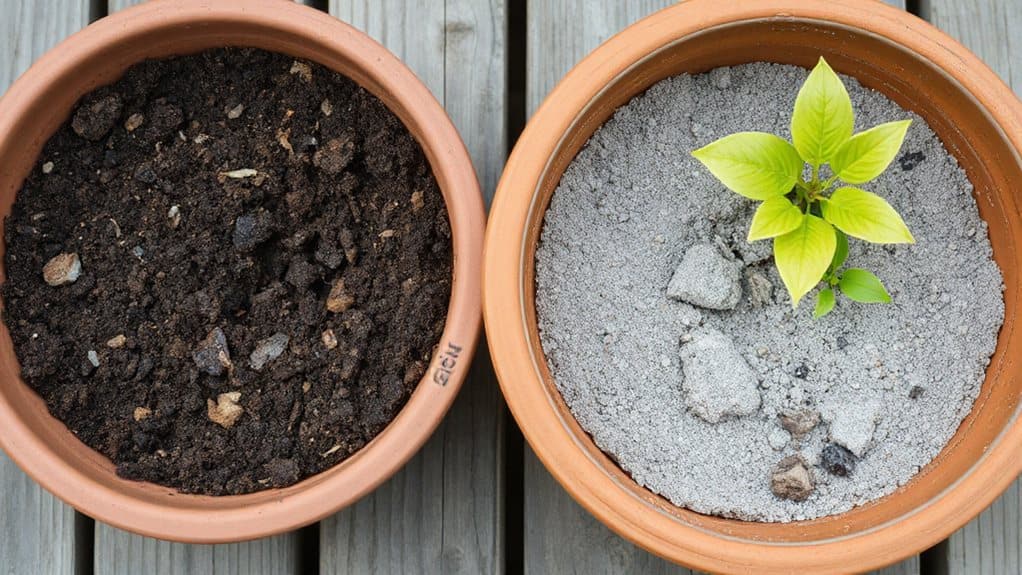
Is your potting soil feeling more like a science fair project than a plant paradise? Check for a crusty, chalky layer or fuzzy white mold—yep, that’s not marshmallow fluff. Does it smell like rotten eggs or sour milk? Gross! If water sits on top for hours or your plant’s throwing a slow-motion growth tantrum, it’s probably exhausted. I once had a basil plant that basically went on strike—turns out, the soil was done for. Stick around, and you’ll see how to bring it back to life!
TLDR
- A white, chalky crust on the surface indicates salt buildup or fertilizer residue, signaling depleted or exhausted soil.
- Foul smells like rotten eggs or sour milk suggest anaerobic conditions due to poor drainage and dying microbial life.
- Soil that feels brick-hard when squeezed shows compaction, restricting roots and reducing aeration.
- Water pooling on the surface or running off quickly points to poor drainage or hydrophobic, degraded soil.
- Stunted growth, yellowing leaves, or persistent mold indicate nutrient deficiency and exhausted growing medium.
Check for Crusty Residue or Mold on Soil
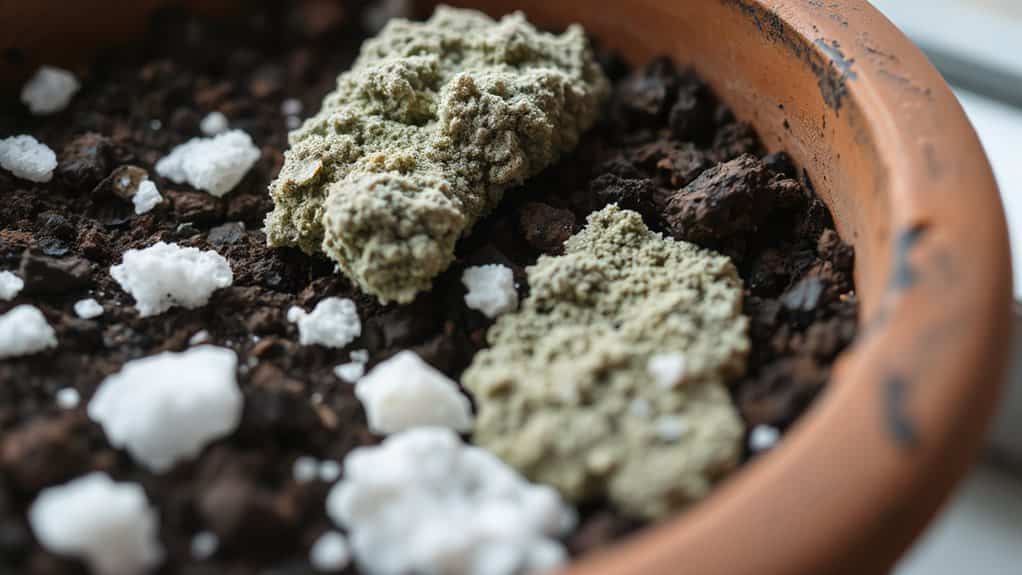
Sometimes, you’ll glance at your houseplant and do a double-take—wait, is that *snow* on my soil? Nope, it’s crusty residue!
If you see a white, chalky layer, blame hard water or too much fertilizer. Mold, though, looks fuzzy and gross—like something from a sci-fi campout.
Break crust with a fork; if it crumbles like stale s’mores, salts built up. Check drainage, flush soil, or repot—your plant will thank you! Adding fresh compost or worm castings can restore nutrients and improve soil structure.
This surface crusting happens more easily when the soil has low organic matter content, reducing its ability to hold structure and resist compaction.
Smell the Soil for Sour or Rotten Odors
You know that fresh, earthy smell of good potting soil—the one that makes you think of spring gardens and happy houseplants?
Well, if you open your bag and get a whiff of sour milk or, worse, rotten eggs, your soil’s throwing up some serious red flags—like a campsite after a rainy weekend, it’s a sign things have gone *very* wrong underground.
Skip the nose plug and give it a good fluff and air out; if the stink sticks around, your mix might be more science experiment than soil.
Anaerobic decomposition from trapped moisture and poor aeration can produce those foul gases and signal the need to replace the soil, so inspect for anaerobic activity before reusing it.
Sour Smell Signals Trouble
Honestly, you’d be amazed at how much your nose can tell you about your potting soil—kind of like how you can *smell* a campfire before you see the smoke or catch a whiff of pancakes cooking at a friend’s house on a lazy Saturday morning.
If your soil reeks like rotten eggs or sour milk, yikes—that’s anaerobic bacteria throwing a party in a damp, oxygen-starved environment. That stench means trouble: think root rot, dead nutrients, and unhappy plants.
Don’t panic! Just scoop it out, fluff it up, and let fresh air crash the party—your green babies will thank you.
Rotten Egg Odor Detected
If your potting soil suddenly hits you with a whiff of rotten eggs, don’t just wrinkle your nose and walk away—*dig in*, because that stink is screaming for attention, kind of like when your campfire sputters out in the rain and you know something’s off.
Anaerobic bacteria are partying in oxygen-poor, soggy soil, pumping out smelly hydrogen sulfide. You’ll find these troublemakers in compacted, overwatered pots or old, damp bags—basically nature’s version of a forgotten lunchbox.
Root rot’s likely lurking, so roll up your sleeves, check those roots, and give your plant a fresh start with new, airy soil.
Fresh Earth Aroma Missing
That rotten egg stink we just talked about? Yeah, it’s gross—but so’s *no* smell at all.
If your potting soil doesn’t have that rich, earthy kick when you open the bag, it’s likely exhausted. Healthy soil smells alive, like a forest after rain—because tiny microbes are partying in there!
No aroma? Microbes are out, nutrients are down, and your plants won’t thrive. Sniff it, trust it, change it!
Test Soil Texture for Compaction or Sogginess
If your potting soil feels like a brick and the surface’s harder than a campsite after a rainstorm, it’s probably compacted—time to check in!
Give it a squeeze: if water oozes out like a soggy tent floor or it won’t form a loose ball, your soil’s likely exhausted and begging for a refresh.
Think of it like packing for a hike—your roots need room to breathe, not a mud pit to wade through!
Compost and organic matter can help restore structure and porosity to exhausted potting mixes by feeding the soil ecosystem and improving texture, so consider amending with compost before repotting.
Soil Feels Compacted
Grab a handful of your potting soil and give it a good squeeze—yep, go ahead, get your hands dirty, that’s half the fun!
If it feels like a brick or won’t budge, it’s probably compacted. Clay-heavy soil turns dense and sticky, like overworked dough, and roots hate that.
Loosen it up, friend—your plants will breathe easier, grow stronger, and thank you later!
Surface Is Hard
Sometimes, your potting soil pulls a sneaky move and turns into a mini concrete slab right on top—yep, that once-fluffy surface now feels like the Sahara after a drought.
You poke it with a stick, and it’s like, “Nope, not today!” Water just sits or zips down the sides, mocking you.
That crust means your plant’s parched underneath, even if it looks “watered.” Break it up, please—it’s time to help!
Drainage Feels Soggy
Honestly, you’ve probably been there—excited to water your favorite potted basil or that spunky little succulent, only to find the water just… sitting there. Yikes! If it’s pooling like a tiny pond, your soil’s likely compacted or soggy.
Try the 15-minute drainage test—slow drop? That’s a red flag. Squeeze some damp soil; cakey = trouble. Time to fluff things up with perlite or compost, yeah?
Observe Water Drainage: Pooled or Repelled?
Most of the time, your potting soil spills its secrets when you’re not even looking—like when water just sits there, staring back at you from a shiny puddle on the surface, refusing to do its job.
Is it pooling for hours? That’s compaction screaming for help. Or worse—water beading up like it’s on a raincoat? Yep, hydrophobic soil’s a red flag.
Squeeze a handful: if it clumps like clay or runs off like a sidewalk, your mix is exhausted, buddy.
Core aeration and adding organic matter like compost can help break up compaction and restore healthy drainage, so consider core aeration or topdressing as next steps.
Check for Stunted Growth or Yellow Leaves
You’ve already caught on to what your potting soil’s trying to tell you when water just sits there like it’s sunbathing on a tiny beach, or worse, rolls off like it’s scared of commitment—yeah, that’s your soil waving a white flag.
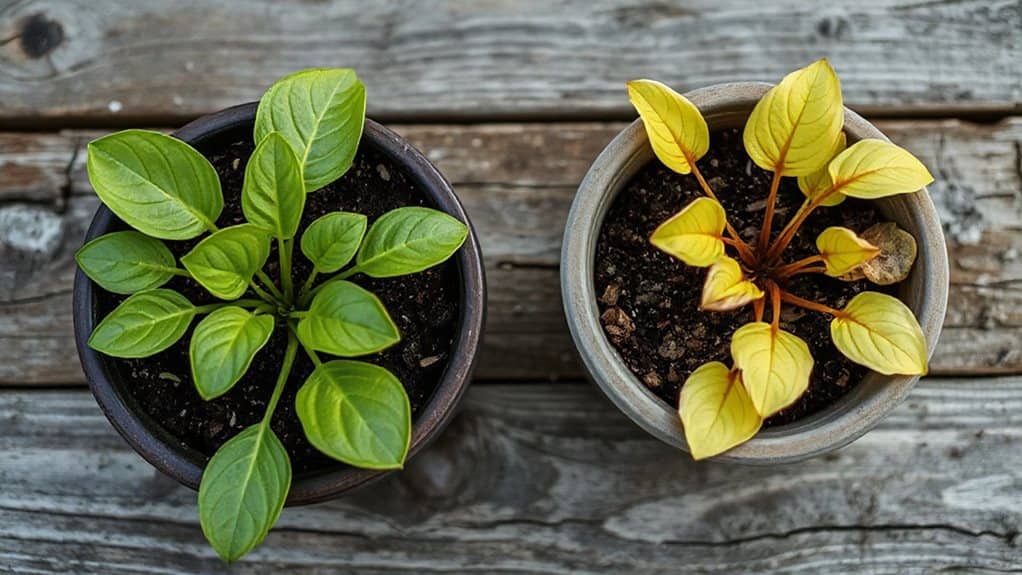
Now, if your plants are growing slower than a snail on a camping trip or their leaves are turning yellow like old notebook paper, listen up! That’s not just drama—it’s exhaustion. You wouldn’t hike without snacks, so don’t expect your plants to thrive on empty soil. Check for stunted growth or yellow leaves—they’re screaming for a nutrient lift, better airflow, and maybe a pH tune-up. Your green friends are counting on you! Consider testing the soil to check nutrient levels and pH balance for targeted fixes like nitrogen or soil testing.
Look for Fungus, Mold, or Pests in Damp Soil
Sometimes, when you’re not looking, your potting soil throws its own little underground rave—complete with white fuzzy mold that creeps across the surface like nature’s version of forgotten cottage cheese.
That fluff? Usually harmless saprophytic fungi munching on old compost, not your plant. But if it’s thriving, you’ve likely been overwatering—mold loves soggy, dark conditions. Check drainage, ease up on the H2O, and give your pot some airflow; your green friend will thank you!
Overall
So, if your soil’s crusty, stinky, or mushier than a week-old banana, it’s probably tapped out—kind of like you after a long hike! Plants droop, water pools, and weird mold pops up like uninvited campfire guests. Don’t panic! Just scoop out the sad dirt and give your green buddies a fresh start. Trust me, they’ll thank you with taller stems and brighter leaves—happy plants, happy life!