
Can You Mulch Over Grass Without Killing Trees
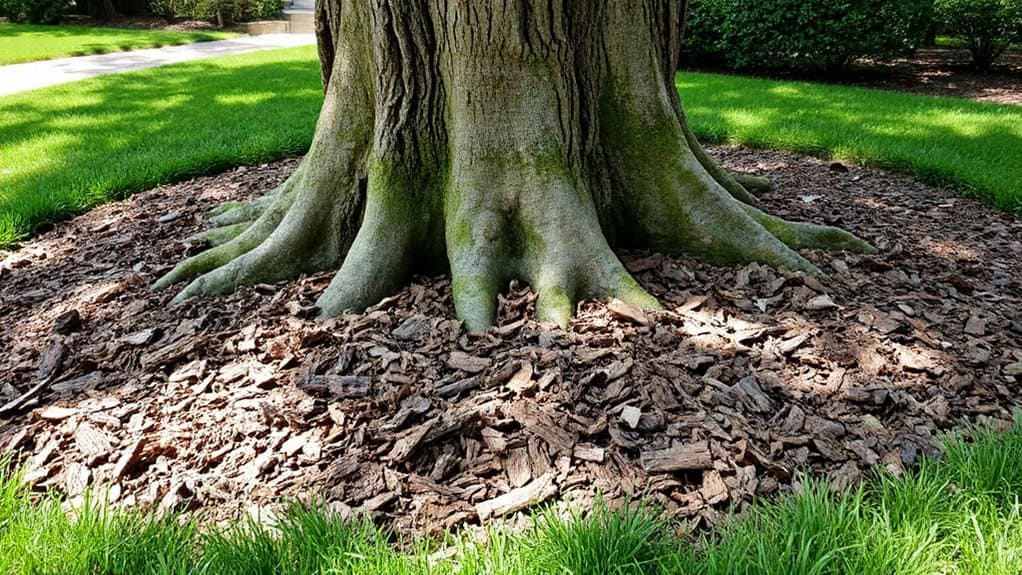
Yep, you can totally mulch over grass without hurting your trees—just don’t go overboard! Mow the grass short first, then lay down 2–4 inches of good stuff like wood chips, keeping it a few inches away from the trunk (no volcano mulching—yikes!). It’ll help your tree by blocking weeds, holding moisture, and feeding the soil. Just skip herbicide-treated clippings and dyed mulch, okay? Do it right, and your tree will thank you big time—plus, there’s even more cool tips where that came from.
TLDR
- Yes, you can mulch over grass without harming trees if done correctly.
- Cut grass short before applying 2–4 inches of organic mulch to suppress regrowth.
- Keep mulch 3–12 inches away from the trunk to prevent rot and pest issues.
- Use arborist wood chips or shredded bark to improve soil health and root growth.
- Avoid excessive depth, dyed mulches, and herbicide-treated grass clippings to protect trees.
Yes, You Can Mulch Over Grass Around Trees (Safely)
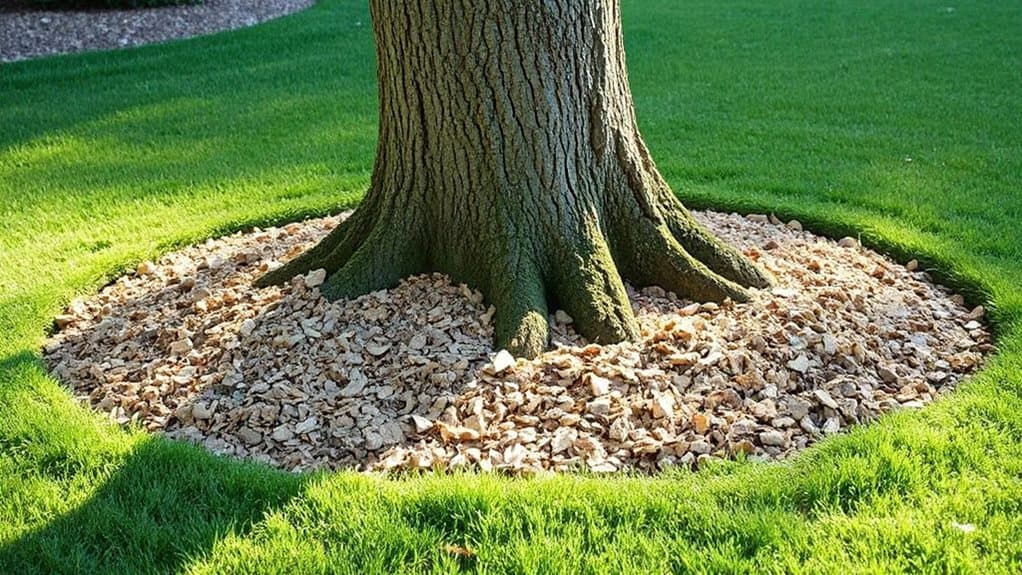
Sure, you *can* plop mulch right over the grass around your trees—no need to rip out the sod like you’re prepping for a backyard battlefield—and honestly, it’s one of the smartest, easiest moves you can make for both your lawn’s peace treaty with your trees and your own sanity.
Just cut the grass short, add 2–4 inches of mulch (keep it away from the trunk!), and let it smother the turf naturally. Raised beds warm earlier in spring, allowing planting two to six weeks sooner for cool-season crops.
Think of it like tucking your tree into bed—cozy, protected, and way less work for you.
Bonus? No more waging war on grass near delicate roots! Just be sure to avoid using grass clippings treated with synthetic herbicides, as herbicide carryover can harm trees even years later.
Why Mulching Over Grass Helps Trees Grow Stronger
Envision this: you’re giving your tree the ultimate upgrade—like swapping out a cramped tent at a muddy campsite for a roomy, climate-controlled cabin with room service (okay, maybe not *that* fancy, but close!).
You’re slashing grass competition, locking in moisture, and enhancing soil health—all while protecting roots and cranking up growth. Who knew mulch could be such a transformative influence?
Your tree’s thriving, and honestly, it’s kind of awesome watching it shine. Applying 2–3 inches of organic mulch at the right time helps retain moisture and improve soil structure, especially when you avoid piling mulch.
How Deep to Mulch Over Grass Around Trees
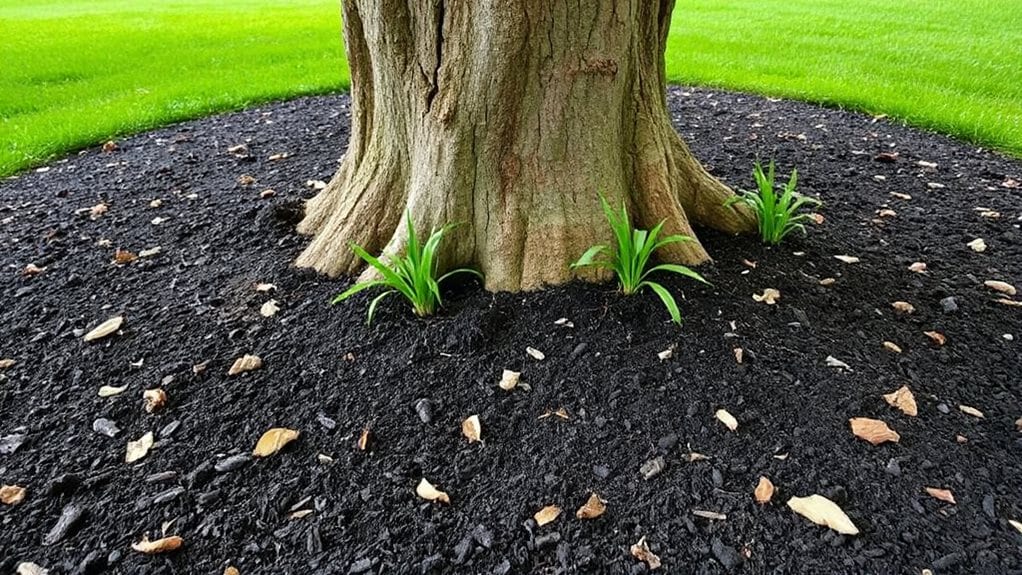
Getting that mulch just right around your tree is kind of like packing the perfect camping backpack—too little, and you’re not prepared; too much, and you’re lugging around dead weight that only slows you down.
Aim for 2 to 4 inches deep—enough to help, not hurt. Keep it away from the trunk, spread it wide, and let your tree breathe, thrive, and grow strong, just like a well-packed journey. Soil structure improves over time with added organic matter, so top up mulch as needed to support soil health.
Best Mulch Materials for Tree Bases (And What to Avoid)
While you wouldn’t pack marshmallows as your main survival gear on a backcountry hike, you also shouldn’t just slap down any old thing around your tree like it’s a quick campfire fix—what you mulch with actually matters, and some materials are way better suited for the job than others.
Go for arborist wood chips; they’re like a five-star hotel for soil microbes, enhancing health, structure, and moisture retention.
Add shredded leaves or pine needles if you’re on a budget or tackling slopes—just skip the dyed mulches or volcano-mounding, okay?
Your tree’s roots will thank you, and honestly, isn’t that the whole point?
Arborist wood chips also support beneficial soil microorganisms that help decompose organic matter and moderate soil acidity.
Can Lawn Clippings With Herbicides Hurt Trees?
You know that fresh, just-mowed lawn smell—like summer in a bottle? Yeah, it’s awesome, but if your grass was treated with weed killer, those clippings can seriously harm trees when used as mulch.
Chemicals like 2,4-D or dicamba don’t just vanish—they hitch a ride into the soil, mess with tree roots, and cause twisted leaves or stunted growth.
Cool, wet conditions can also increase the risk of root damage and disease when contaminated clippings are applied as mulch, because cool, wet soil promotes soilborne pathogens and weak root systems.
How to Convert Grass to Mulch in 4 Simple Steps
You know that patch of grass you’re tired of mowing every weekend? Let’s turn it into a low-maintenance mulch bed in just four simple steps—first, mow the grass as short as you can, almost like giving it a buzz cut before a camping trip.
Then, pile on that mulch thick enough to block weeds but remember, keep it a few inches away from tree trunks, unless you want squirrels throwing mulch parties at the base of your oak!
Mow Grass Short
Most of the time, skipping the lawn-mowing step might seem like a win—hey, who *really* loves pushing a mower under the hot sun?—but when you’re turning grass into a lush, tree-hugging mulch paradise, cutting it short is your secret first move, like packing the perfect camping snack before a big hike: small effort, huge payoff.
Aim for 1–1.5 inches—low, but not scalp-level—so mulch snugs down tight, grass breaks down fast, and your trees stay safe and happy.
Apply Mulch Layer
Roll up your sleeves—your grass-covered patch of yard is about to get a total glow-up, and the real magic starts when you pile on that luscious mulch layer.
Spread 2–4 inches of shredded bark or wood chips, keep it 3–5 inches from tree trunks (no volcano mulching—we’re not roasting marshmallows here!), and fluff it evenly so water and air can sneak through like campers sneaking past a bear.
Keep Trunk Clear
Right from the get-go, imagine this: your tree’s trunk is like a camper huddled around a fire—warm and cozy, sure, but nobody wants a sleeping bag (or mulch!) piled up against their skin. So, keep that trunk flare bare, creating a 3–12 inch mulch-free “donut” around it.
This simple act prevents rot, deters pests, and lets bark breathe—just like airing out your tent keeps it from getting musty!
3 Mulching Mistakes That Kill Trees (And How to Avoid Them)
While you’re out there sprucing up your yard like a weekend warrior with a mission, it’s easy to get carried away with the mulch—heck, I’ve done it too, piling it high around trees like I’m building cozy little forts for them.
But too much mulch suffocates roots, traps moisture, and invites pests and disease. Keep it 2–4 inches deep, pull it away from the trunk, and let that root flare breathe—your trees will thank you!
Overall
You totally *can* mulch over grass without hurting your trees—cool, right? Just keep it a few inches from the trunk, use the right stuff like shredded bark, and don’t go over three inches deep. Skip grass clippings treated with herbicides, though—yikes! I learned the hard way after my sad little sapling threw a silent tantrum. Turn grass into mulch in four easy steps, dodge those common mistakes, and boom: happy trees, less mowing, and more time for s’mores!


