Natural Snake Deterrents: What Actually Works
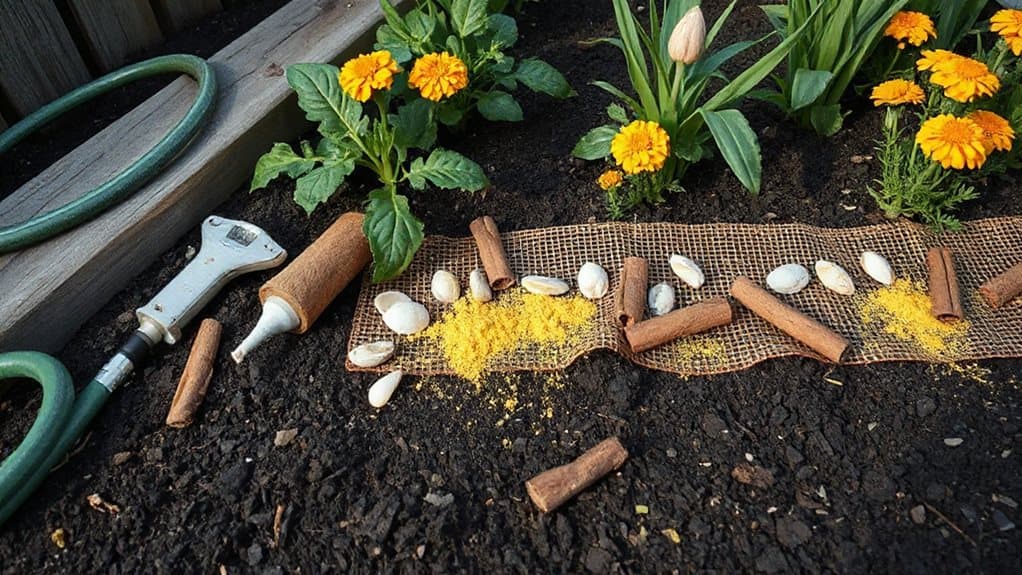
You’ve probably heard mothballs keep snakes away, but that’s a myth—and kinda gross, right? Instead, plant stinky society garlic or spiky mother-in-law’s tongue around your yard; snakes *hate* those. Try spraying cinnamon or clove oil near entry spots—snakes bolt when they catch a whiff! And seriously, ditch the fake owls; just tidy up debris, seal cracks, and use tight mesh fencing. Want to know the sneaky secrets that *actually* work? There’s more where that came from.
TLDR
- Plant strong-scented species like society garlic, lemongrass, and marigolds to naturally repel snakes with odors they avoid.
- Use essential oils such as cinnamon, cedarwood, and clove in sprays near entry points for effective, short-term snake deterrence.
- Install buried, fine-mesh fencing and seal foundation gaps to create physical barriers that prevent snake entry.
- Eliminate shelter and food sources by removing debris, trimming vegetation, and controlling rodent populations to reduce snake attraction.
- Avoid ineffective remedies like mothballs, sulfur, and sonic devices; focus on habitat modification for reliable, long-term prevention.
Plants That Naturally Repel Snakes
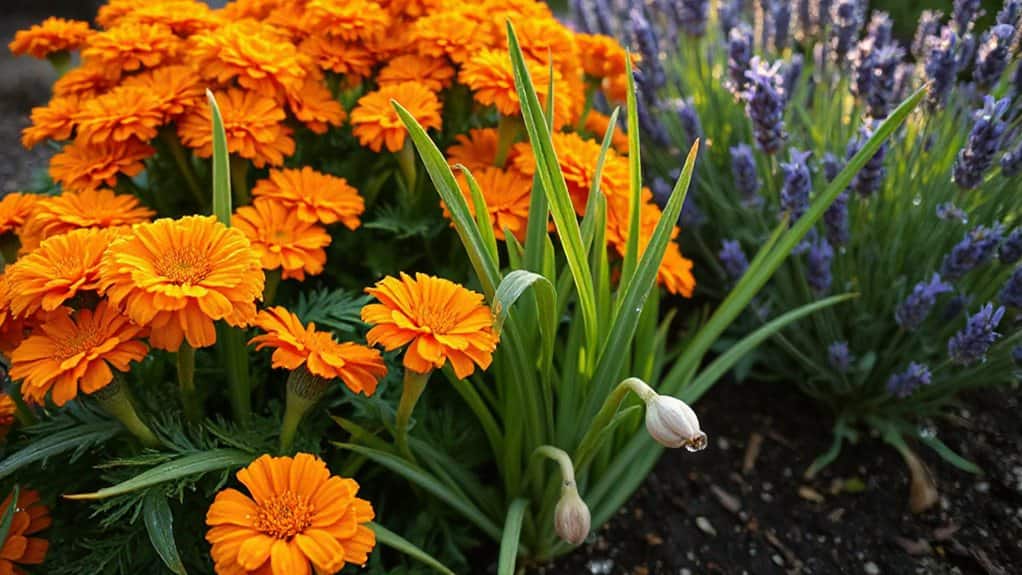
You’ll *definitely* want to get your hands on some stinky, snake-scare plants if you’re planning to enjoy your backyard without any surprise slithery visitors—because, let’s be real, nobody wants a serpent popping up during their evening barbecue or morning garden stroll.
Plant society garlic or onions around entry points; their sharp scents? Snakes *hate* that. Toss in some marigolds and lemongrass—they smell great to us, but to snakes, it’s like walking into a wall of citrus and spice.
Mint spreads fast, so use containers, or it’ll take over (trust me, I learned the hard way). These plants don’t just repel snakes—they also help pollinators and keep pests away, so you’re not just protecting yourself, you’re helping the whole garden thrive! Consider integrating evergreen groundcovers in shady areas to provide year‑round texture and reduce hiding spots for snakes.
Snakes also avoid plants with spiky textured leaves, like mother-in-law’s tongue, which creates a physical barrier they won’t easily cross.
Essential Oils for Snake Deterrence
Sometimes, when you’re setting up camp or just kicking back in your backyard, the last thing you want is a surprise snake slithering through your stuff—seriously, who needs that kind of excitement when you’re trying to roast marshmallows or read a book in peace?
You can use essential oils like cinnamon, cedarwood, or clove—they really bug snakes out!
A quick spray around tents or gardens works fast, and snakes hate the smell.
Just aim 30mm away, spray for two seconds, and boom—natural backup.
Safe for pets, easy to use, and honestly, kind of satisfying.
Who knew keeping snakes away could smell this good?
Sealing cracks and gaps in foundations is the primary defense against snakes entering structures, so combine repellents with sealing entry points to be most effective.
Common Remedies That Don’t Work
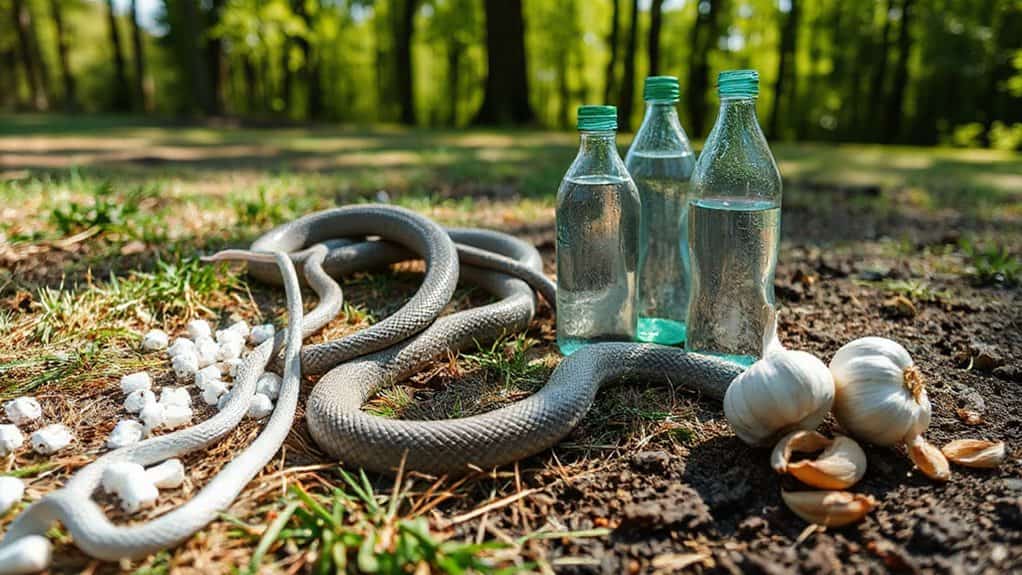
While you’re out there dreaming of bug-free campfires and peaceful hammock naps in the woods, you’ve probably heard a dozen “surefire” tricks to keep snakes at bay—stuff like tossing mothballs around your tent, spraying mystery potions, or plugging in those weird sonic gadgets that promise to zap slithering intruders with sound waves.
Spoiler: none of it works. Mothballs? Harmful and useless. Sonic devices? Snakes just shrug and keep slithering. Sulfur, fox pee, diesel, even eugenol—research shows they fail time and again. Save your money, protect your pets, and skip the gimmicks—real snake safety means smart habits, not magic fixes. Recent guidance from wildlife experts also emphasizes using proven methods like habitat modification and physical barriers to reduce snake encounters.
Modifying Your Habitat to Deter Snakes
Turning your yard into a snake-free zone starts with outsmarting them at their own game—because let’s face it, snakes aren’t looking for a fight, they’re just hunting for cozy hideouts, easy meals, and a sunny rock to lounge on like they’re on vacation.
So, ditch the rock piles and mulch beds, trim shrubs high and tight, seal cracks like you’re hiding snacks from siblings, install tight mesh fencing, and say “no thanks” to bird feeders—they’re basically snake buffets.
You’ve got this! Hot-dip galvanized hardware cloth with a 1/2-inch mesh buried a few inches can help block small burrowing pathways and reinforce fencing.
Proven Strategies for Keeping Snakes Away

If you’re serious about keeping snakes from turning your backyard into their personal playground, it’s time to bring out the big guns—well, not *actual* guns, obviously, but some clever, science-backed tricks that actually work.
Spray cinnamon, clove, or cedar oil around entry points—snakes hate those scents!
Try lava rock barriers or install fine-mesh fencing buried underground and angled outward.
Use funnel traps or damp cloth piles to safely catch and relocate them.
And hey, welcome hawks with perch poles—they’re nature’s snake patrol!
Also, reducing ground-level moisture and removing debris can make your yard far less attractive to snakes and their prey, since snakes seek out areas with abundant cover and moisture.
Understanding Snake Behavior and Attraction
You know that camping trip where you swear you saw a snake eyeing your granola bar? Well, chances are it wasn’t after your snacks—it was probably just looking for a cozy spot under the rocks or chasing down a curious little mouse.
Snakes don’t crash your backyard hangouts for fun; they’re usually drawn by shelter, food, or a warm place to stretch out in the sun, kind of like how you’d pick a sunny spot at the beach.
Why Snakes Enter Yards
Curiosity mightn’t kill the snake, but it sure does send them slithering into your yard looking for escapade, snacks, and a shady nap spot.
You’ve got bugs, rodents, and cozy cracks—why wouldn’t they visit? They’re not crashing your BBQ on purpose, but hey, your woodpile’s a five-star hotel. Close gaps, tidy up, and you’ll gently show them it’s time to check out.
What Attracts Snakes Nearby
Think of your backyard not just as a patch of grass, but as a full-on snake hotspot waiting to happen—like a nature-packed campsite where slithery guests show up uninvited but totally psyched about the amenities.
They’re tracking pheromone trails, sticking tongues out like they’re tasting the air, and checking out shelters, food, and warm spots—so if your yard’s cozy and critter-rich, snakes might just move in, no invitation needed!
How Snakes Find Shelter
Slither into your yard like a curious garter snake on a summer morning, and you’ll quickly realize it’s not just about food or water—shelter’s the secret VIP pass that turns your backyard into a five-star snake resort.
They’re hunting cozy hideouts: think rock walls, crawl spaces, or under sheds where temps stay steady. Cool, quiet, and safe? Perfect. You’d do the same if you were cold-blooded and scouting for a nap spot after sunbathing on warm pavement—all part of their daily chill-and-thrill routine!
Overall
So, you’ve got the lowdown on keeping snakes chillin’ elsewhere—pretty cool, right? You’ll skip the myths, try mint or lemongrass, maybe dab on some cinnamon oil, and tidy up your yard like a pro. Honestly, I learned this the hard way after a surprise snake guest at my campsite—awkward! But hey, now you’re ready. Stay smart, stay safe, and keep adventuring—because nothing beats a wild hike or a cozy campfire… just, you know, minus the slithery roommates.