Overwatering Lawn Symptoms vs Underwatering: How to Tell the Difference
Is your lawn feeling squishy like a water balloon or crispy like week-old fries? If it’s soggy, mushrooms might be throwing a party, and puddles linger like uninvited guests—stop overwatering! On the flip side, if footprints stick and blades curl like tiny straws, your grass is parched and begging for a deep drink. Both extremes hurt roots, but fixing it starts with spotting the signs—want to know the game-changing tricks that turn lawn disasters into lush green wins?
TLDR
- Spongy, waterlogged soil with mushrooms or moss indicates overwatering, while crispy, brown grass that stays flat after walking signals underwatering.
- Yellowing or droopy blades with poor drainage suggest overwatering; blue-gray, curled blades that don’t spring back point to drought stress.
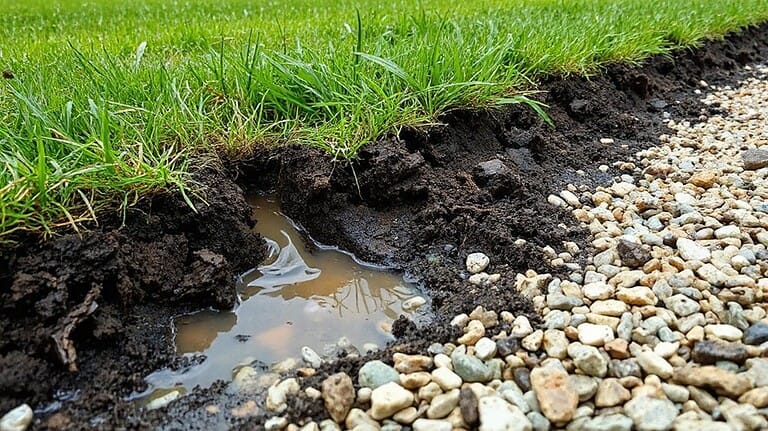
- Puddles lasting over 48 hours or runoff onto sidewalks are signs of overwatering, not seen in underwatered lawns.
- Footprints that remain visible on the turf indicate dehydration, a clear sign of underwatering.
- Check soil moisture depth with a screwdriver: resistance means dry soil (underwatering), while easy penetration into soggy soil suggests overwatering.
Overwatering Vs Underwatering: How To Tell The Difference
While it might seem like your lawn just wants a drink, figuring out whether you’re giving it too much or too little water is kind of like being a grass detective—except instead of solving mysteries in a trench coat, you’re out there squishing soil between your toes and staring intently at blade color.
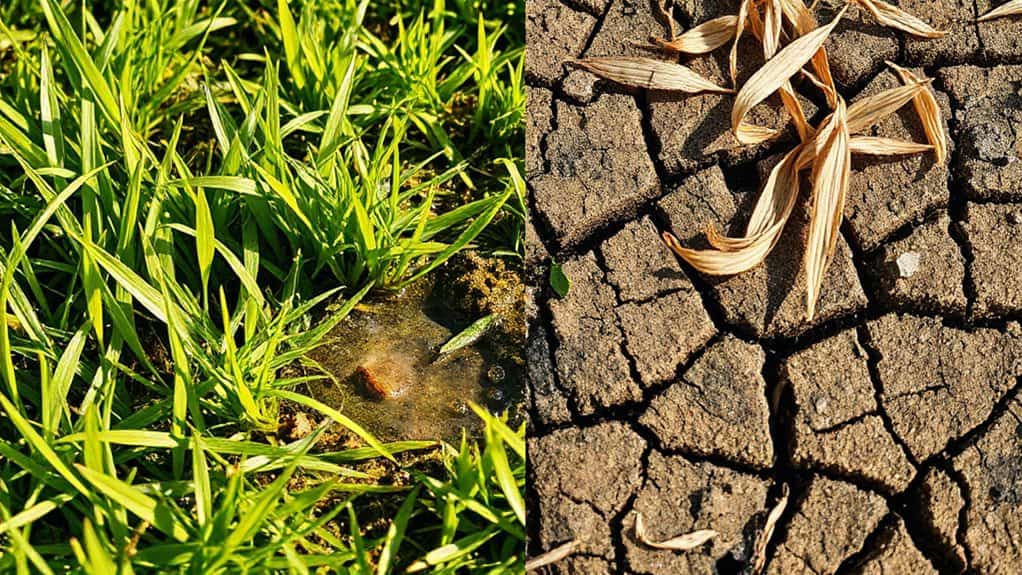
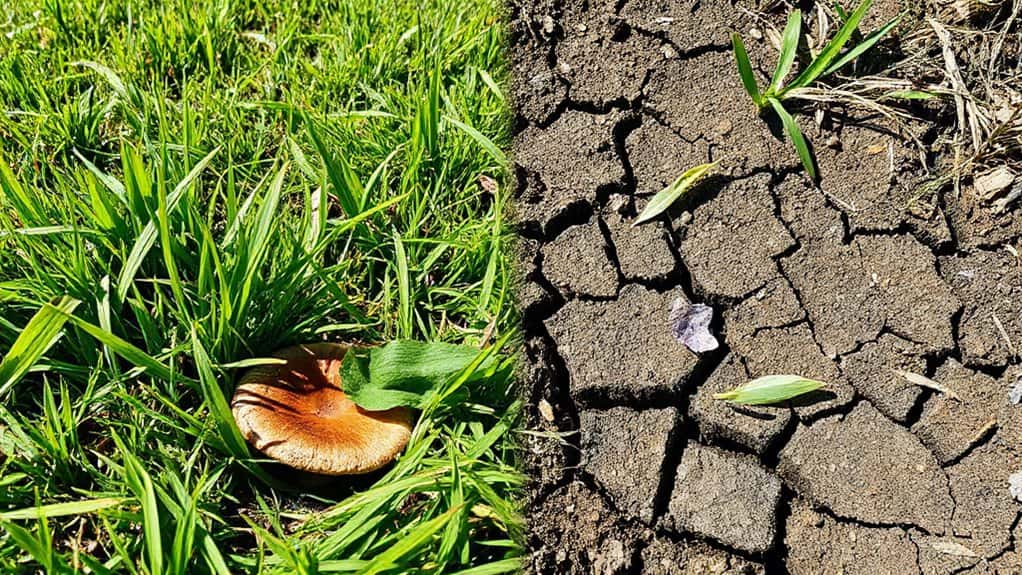
Is it soggy with mushrooms popping up like tiny tents, or crisp and footprinted like a dried-out campsite? Overwatered lawns feel spongy and grow limp, while underwatered ones turn brown, crack, and crunch underfoot—kind of like forgotten trail mix. Be aware that soil type and drainage affect how long moisture stays in the lawn, so clay soils can stay wet much longer than sandy ones soil drainage.
Check texture, color, and soil: bright green but droopy? Probably drowning. Crispy, curled blades? It’s parched.
You’ve got this—happy sleuthing!
One key clue is root depth—underwatered lawns often have short grass roots due to insufficient moisture, preventing healthy growth below the surface.
Is Your Lawn Soggy? Look For These Signs
If your lawn starts looking more like a swamp than a soft green carpet, it’s time to play detective—because soggy turf isn’t just messy, it’s screaming for help.
Puddles lingering past 48 hours? That’s a red flag. Is it squishy underfoot, or sprouting moss like a sci-fi film? Compacted soil, fungal patches, or grubs might be crashing the party.
Stop walking on it—give your grass room to breathe and recover! Consider addressing the underlying drainage issues with a rain garden or other fixes to prevent recurring sogginess.
Is Your Grass Crispy? You Might Be Underwatering
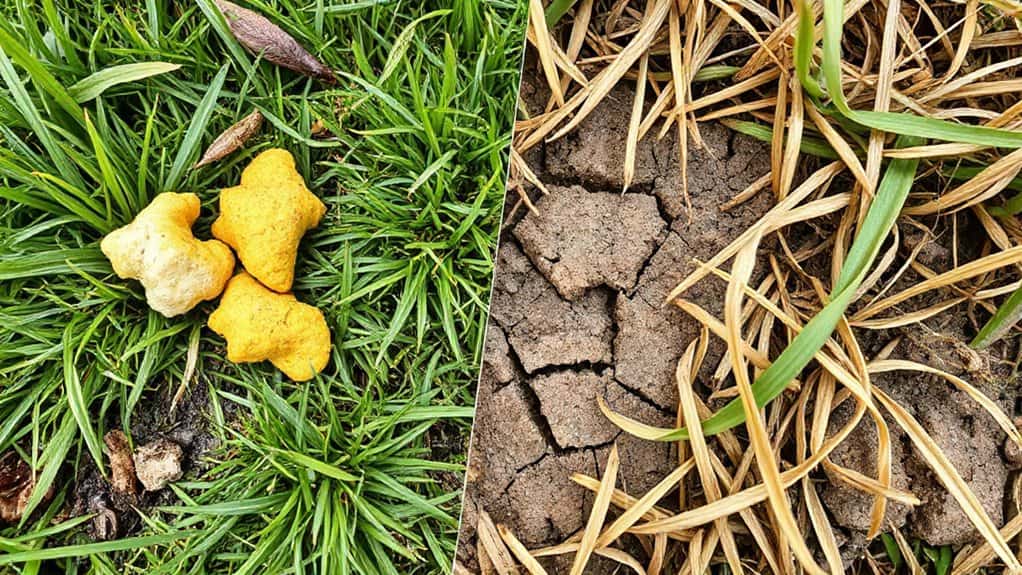
Okay, so your lawn’s not drowning—no squishy shoes or surprise puddles—but it’s still looking rough, huh?
If it crunches like cereal underfoot, turns dusty and brown, or stays flat after you walk on it, you’re likely underwatering.
Grass blades curl up, feel brittle, and lose their bounce—kind of like stale camping trail mix.
Give it a good soak, and watch it spring back to life, happy and hydrated!
Improving moisture retention in sandy soil can help prevent this, so consider adding organic matter to increase water-holding capacity.
Yellow Grass? It Might Not Be Overwatering
So, your grass is turning yellow and you’re quick to blame a dry spell, but hold up—what if you’re actually playing lawn lifeguard way too often?
Overwatering can drown the roots, cut off oxygen, and leave your turf gasping like a fish out of water, all while looking sad and yellow. Think of it like camping in soggy boots: uncomfortable, risky, and definitely not the escapade you signed up for—time to check the soil before you flood the party! Adding organic matter and regular core aeration can help improve soil structure and prevent problems caused by excess moisture.
Yellowing From Too Much Water
You know that sad, yellow lawn look—like your grass gave up on life and started auditioning for a zombie movie? That’s overwatering’s doing.
You’re drowning the roots, washing away nutrients, and starving the soil of oxygen. See squishy spots or fungus? Classic signs.
Your grass isn’t thirsty—it’s suffocating! Cut back watering, aerate, and let the soil breathe. Your lawn will thank you!
Not Always A Dry Lawn
Just because your lawn’s throwing a yellow tantrum doesn’t mean it’s begging for water—sometimes, it’s actually screaming for a break from the sprinkler!
Think heat stress, nutrient gaps, or compacted soil playing hide-and-seek with your grass roots. Did you check for pests, dog spots, or iron shortages? Don’t just soak it—investigate!
Your lawn’s yell might be a cry for balance, not a bath.
Root Issues Behind The Hue
That yellow grass in your yard mightn’t be crying out for water—turns out, it could be throwing a root-level tantrum instead!
Are your roots drowning, compacted, or starving? Overwatering suffocates them, while poor soil blocks their growth, kind of like trying to breathe through a water balloon.
Fix it with aeration, proper watering, and soil checks—your lawn’s roots (and your weekend camping views) will thank you!
Mushrooms Or Moss? Your Lawn Is Too Wet
Whoa, seeing mushrooms pop up like tiny umbrellas after a rainstorm? That’s your lawn waving a white flag, screaming, “Hey, we’ve got way too much water in here!”
And if you’re spotting moss creeping in like a fuzzy green carpet—especially under shady trees—then yep, your yard’s basically throwing a never-ending pool party, and your grass didn’t even get invited. Mushrooms often mean there’s lots of decaying organic material and moisture in the soil, so consider improving drainage and removing excess thatch to reduce fungal growth and excess moisture.
Mushrooms Signal Excess Moisture
Sometimes, after a good soak from rain or your sprinkler, you might wake up and feel like your lawn’s been playing host to a tiny forest party—because suddenly, mushrooms pop up like uninvited campers setting up tents overnight!
They love soggy soil, thrive in shade, and signal overwatering. Time to dial back the sprinkler, aerate, and let your grass breathe—your lawn will thank you!
Moss Thrives In Wet Soil
So you spotted mushrooms doing their little woodland dance after a rainy week—cute, sure, but also a red flag that your lawn’s soaking wet more than it should be.
If moss starts moving in like it’s setting up camp, that’s your soil screaming for help.
It’s not just damp—it’s basically a swamp, and moss *loves* that.
You’re not just overwatering; you’re building a moss resort!
Footprints That Stick? Your Lawn Needs Water
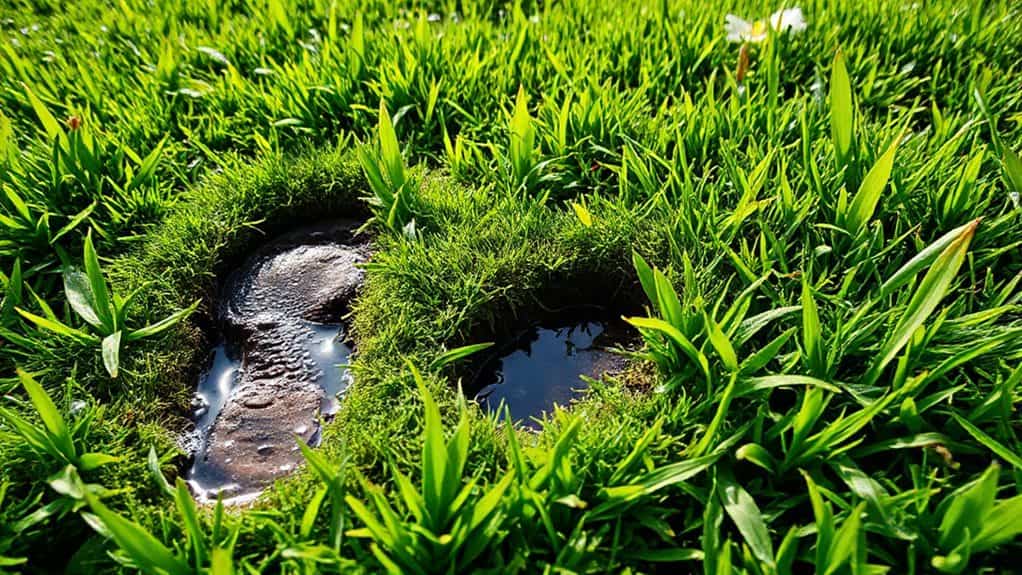
You’ve probably stepped across your lawn and suddenly noticed something kinda funny—your footprints are sticking around like uninvited guests at a campfire cookout. That’s your grass crying out for water!
When it’s dehydrated, blades lose bounce, turn dull or bluish-gray, and can’t spring back. Don’t wait—give it a deep soak of 1 to 1.5 inches right away.
Your lawn’s resilience depends on you!
How To Check Soil Moisture Like A Pro
Most of the time, guessing whether your lawn’s thirsty feels a lot like trying to read a cactus’s mood—frustrating and kinda pointless—so skip the mind games and start checking soil moisture like a total pro, because once you know what’s really happening underground, you’ll save water, grow healthier grass, and maybe even impress your neighbors with your mad scientist lawn skills.
Grab a soil probe—no shovel drama—and push it down; if it stops suddenly, boom, dry zone. Check the mark on the shaft to see how deep the wet soil goes, and listen for that *click*—rocks love to fake you out!
Try the feel method too: grab a walnut-sized lump, rub it, squish it, and learn its secrets. With practice, you’ll nail moisture levels within 10%, no lab coat needed.
How Deep Should Water Penetrate Your Soil?
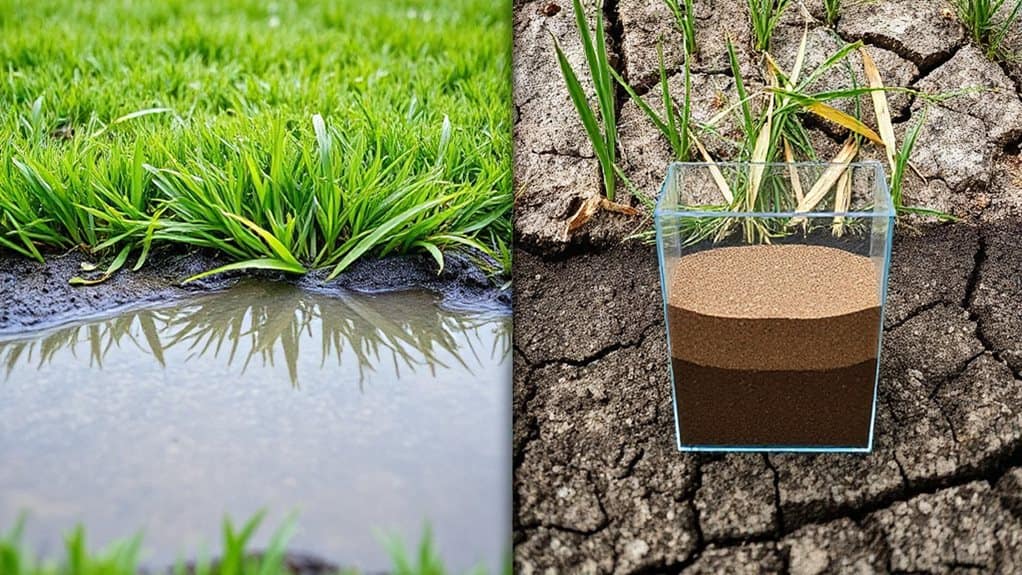
Now that you’re out there poking the ground like a lawn detective with your trusty soil probe—seriously, I once got weird looks from my neighbor while doing the screwdriver test, but hey, healthy grass is worth the side-eye—let’s talk about where all that effort should actually *go*.
Water should reach 6–8 inches deep, ideally 12 for strong roots.
Sandy soil? 1 inch goes far.
Clay? You’ll need 2.5–3 inches—yep, it’s stubborn.
Use tuna cans or a probe to check; your grass will thank you!
Why Runoff Means You’re Overwatering
If you’ve ever turned on the sprinkler only to see little rivers snaking their way across the yard and dumping onto the sidewalk like a mini flash flood, then congratulations—you’re basically hosting a backyard monsoon.
That runoff isn’t just wasted water; it’s a red flag screaming “overwatering!” Your soil’s soaked, nutrients are fleeing, and fungi are throwing a pool party.
Ease up on the sprinkler—you’ll save water, help your grass, and keep the neighborhood algae bloom to a minimum.
Grass Turning Blue-Gray? It’s Thirsty
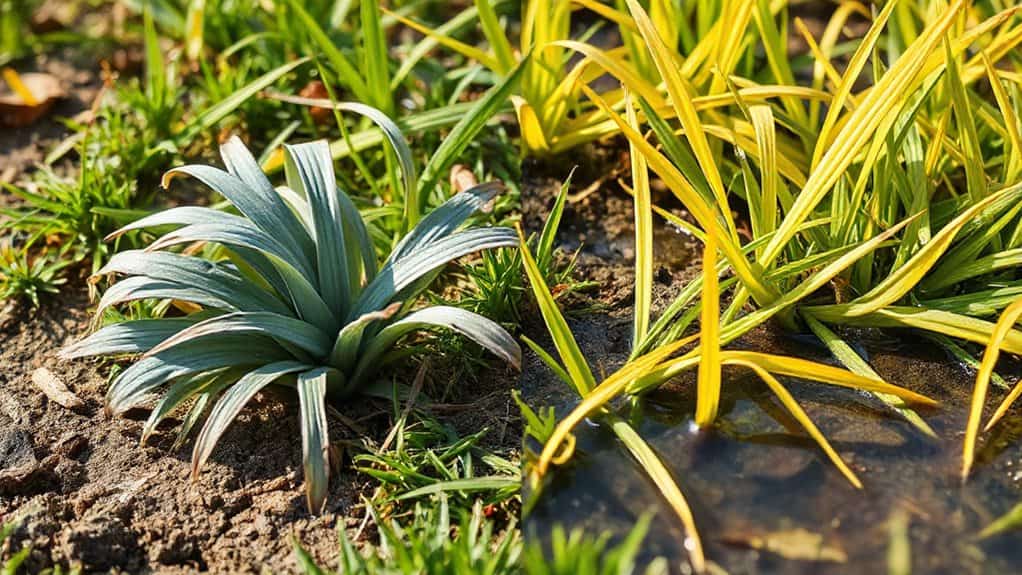
Ever noticed your lawn taking on a weird blue-gray tint, like it’s trying out for a role in a zombie movie? That’s not a fashion statement—it’s a cry for water!
When grass gets thirsty, it dulls from lively green to ashy blue-gray, loses its shine, and starts curling its blades like tiny straws.
Don’t wait—give it a long, deep drink, and watch it bounce back to life!
Fix Waterlogged Soil In 3 Simple Steps
So your yard’s basically a swamp after every rain, huh? Let’s fix that mess in three easy steps: first, check how soggy your soil really is by poking it like you’re testing a camping tent’s muddy footprint—nobody wants to sleep in a puddle!
Then, improve drainage by mixing in compost and sand, aerate like you’re giving the lawn a gust of fresh oxygen, and if it’s still swimming, install a smart drainage system so your grass can finally dry off and thrive.
Assess Soil Saturation
Let’s dig into the soggy situation and tackle waterlogged soil head-on—because nobody wants a lawn that squishes like a waterbed when you walk across it!
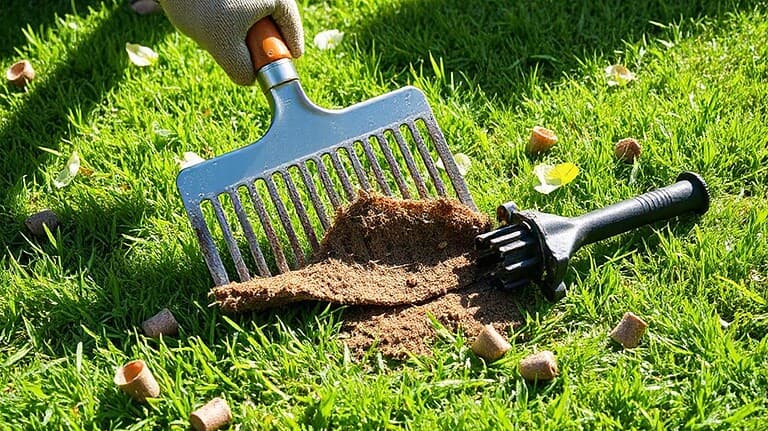
Spike it with a fork or aerator, remove those muddy plugs, and brush in sand to help it breathe.
Rent a machine for big yards, apply gypsum to loosen clay, and top dress with compost—your grass will thank you, and soon you’ll be back to barefoot-friendly turf!
Improve Drainage System
You’ve already poked, prodded, and fluffed your soggy lawn like a true soil superhero—now it’s time to level up and tackle the real watershed moment: fixing that drainage once and for all.
Add compost like you’re seasoning campfire chili—just enough to enhance soil structure and drainage.
Then, install a French drain (yes, it’s as fancy as it sounds) to redirect water like a pro.
Finally, regrade your yard with a gentle slope—2–3 inches per 10 feet—so water flows away from your foundation like a creek heading to a waterfall.
Aerate Compacted Areas
Time to give your lawn the deep-breathing exercise it’s been begging for—because right now, that compacted soil is acting like a packed subway at rush hour, leaving roots squished, suffocated, and totally stressed out.
Skip spike aeration; grab a core aerator instead—it yanks out tiny soil plugs so water, air, and nutrients can plunge deep. Think of it like unzipping a too-tight sleeping bag so your grass can stretch, breathe, and thrive.
Water the day before (just 20–30 minutes—no swamp vibes), then aerate when the soil’s moist but not soggy.
This isn’t just fluff: you’ll see puddles vanish, roots grow stronger, and your lawn actually *thanking* you with greener, happier blades. It’s like giving your yard a spa day that pays off for months—hello, deeper roots, better drought survival, and way less runoff.
Your neighbors mightn’t say thanks, but their lawns will envy yours.
Revive A Dry Lawn Without Overwatering
When your lawn looks more like a sunbaked parking lot than a lush green carpet, it’s easy to panic and start hosing it down like you’re trying to fill a kiddie pool—but hold up!
Instead, give it a solid soak once every few days; think deep, not daily. You’re not drowning it—you’re training those roots to grow strong, like campers learning to thrive off the grid.
Overall
So, now you’re basically a lawn detective, right? If your yard’s squishy or sprouting mushrooms, ease up on the hose—your grass isn’t a swamp creature. But if it’s crispy or blue-gray, give it a drink before it stages a rebellion. And hey, yellow grass? Don’t panic—could be either extreme! Just tweak your routine, fix the soil, and boom: lush, happy turf. Your future picnic blanket thanks you!