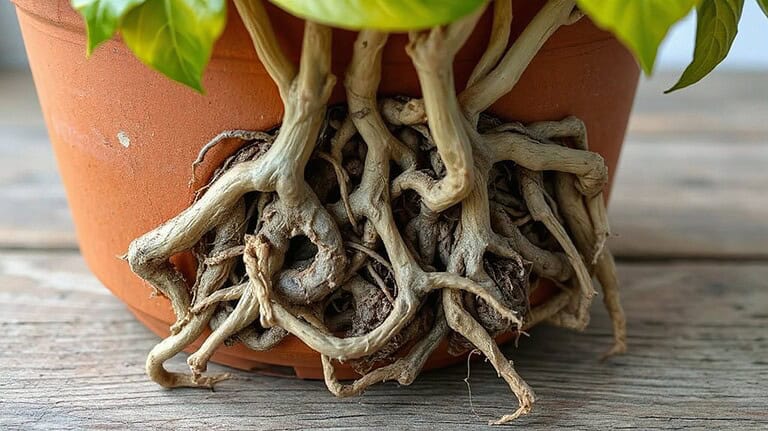
Roots Growing Out of Drainage Holes Meaning Explained
So, you’ve spotted roots sneaking out of your pot’s drainage holes—cool, right? Those tan or white strands mean your plant’s happy and exploring, kind of like a curious camper poking around a campsite. It’s usually a sign of healthy growth, though it can mean your green buddy’s ready for a bigger home. Some plants, like mint or pothos, just love to wander. Keep things balanced with good soil and watering, and you’ll be golden—oh, and there’s more fun stuff coming your way!
TLDR
- Roots emerging from drainage holes usually signal healthy, active growth and a plant ready for more space.
- Tannish or white roots indicate vitality, while circling or dense roots may mean the plant is root-bound.
- Some plants, like aroids and mint, naturally grow roots through drains in search of moisture and nutrients.
- Air pruning can occur when exposed roots dry out, encouraging branching and healthier root development.
- Repot in spring if roots are crowded, water drains too fast, or the soil is pulling away from the pot.
What Do Roots Coming Out of Drainage Holes Mean?
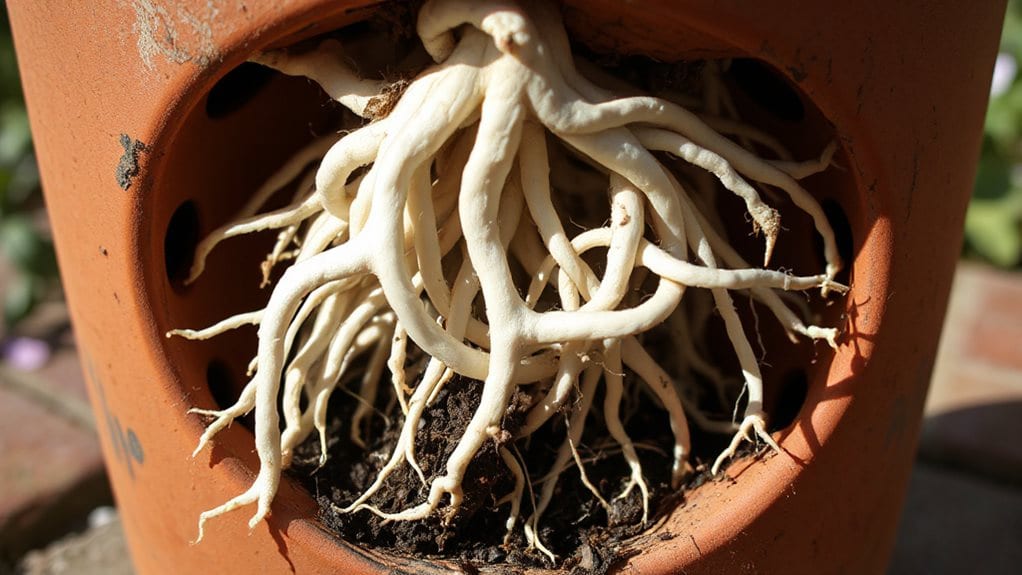
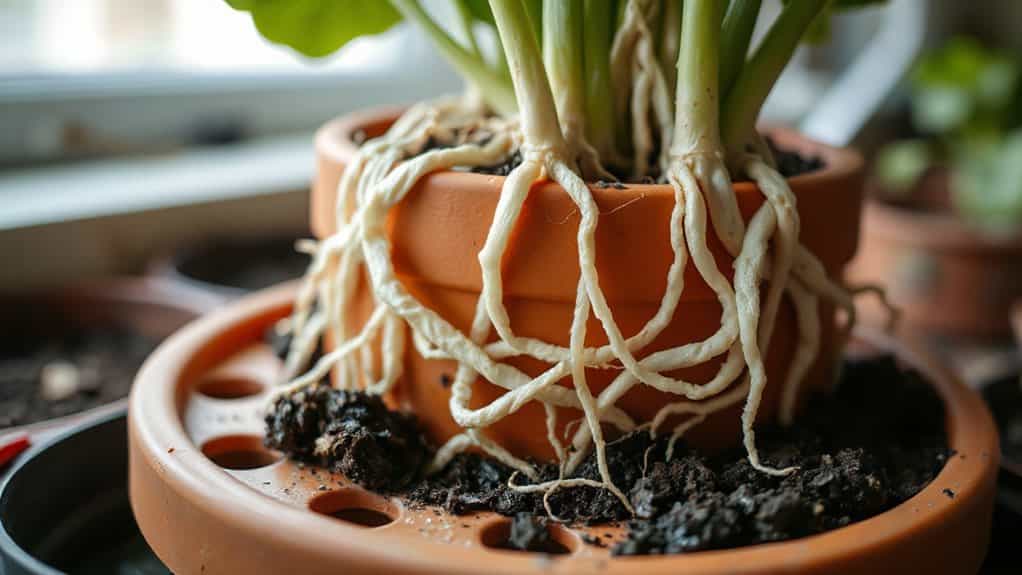
So, you’re watering your plant and—bam!—you spot little roots poking out of the drainage holes like tiny green pioneers testing the waters beyond their base camp.
Cool, right? Those tannish or white threads mean your plant’s thriving, stretching out like it’s ready for a root road trip.
It’s a sign of healthy growth, not distress—think of it as nature’s way of saying, “I’m ready for my next journey!”
This behavior is completely normal for container-grown plants and often leads to air pruning, where exposure to air naturally stops further root extension.
If roots are coming out of the bottom it can also indicate the plant is becoming root-bound and may need a slightly larger pot soon.
Are Roots Through Drain Holes Bad or Healthy?
Spotting roots sneaking out of your pot’s drainage holes? That’s actually a healthy sign—congrats!
Those tannish, firm roots mean your plant’s thriving and just needs more room to stretch. Think of it like your plant camping and needing a bigger tent.
Repot in spring, keep roots moist but not soggy, and you’ll both breathe easier—happy roots, happy plant! A good next step is to repot into a larger container using a nutrient-rich soil mix to support continued growth.
Why Do Some Houseplants Naturally Grow Roots Through Drains?
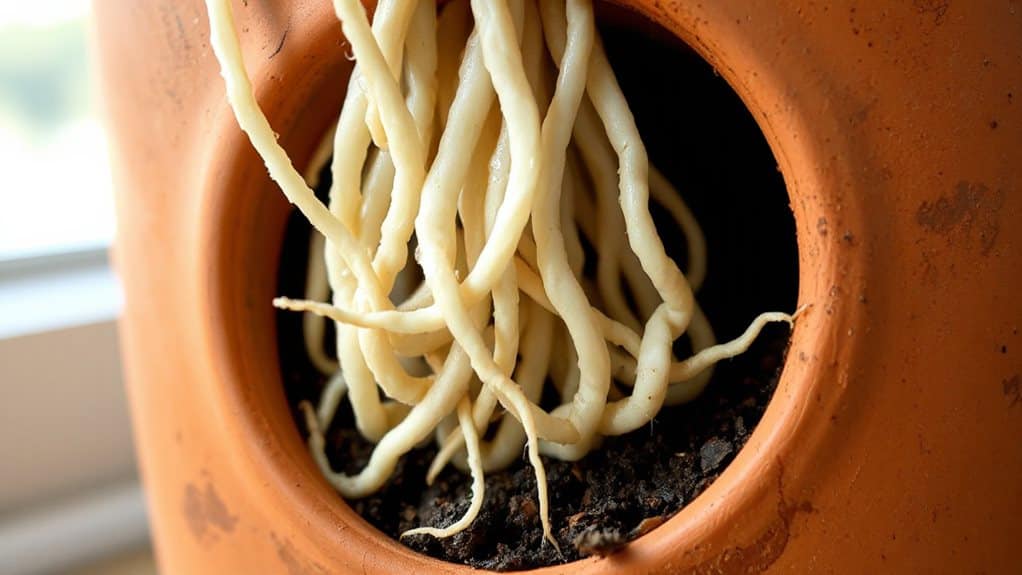
You know how some houseplants just can’t help but send roots sneaking out the bottom like they’re packing their bags for a great escape? Well, it’s because certain plants—like mint or coleus—are natural explorers, always on the hunt for more water, nutrients, and escapade beyond their pots, kind of like how you’d peek out of your tent on a camping trip to see what’s out there.
When the soil gets crowded or a little too soggy, those bold little root tips start poking through the drainage holes, basically saying, “Hey, I’m ready for a bigger world—let’s go!” Plants that aggressively explore often do so when they need better root development and more space to access water and nutrients.
Root Growth Patterns
Peeking at those sneaky roots poking out from the bottom of your plant’s pot? They’re not escaping—they’re exploring!
Roots follow the easiest path, especially in dense soil, and aroids or coleus might just squeeze through drainage holes like campers sneaking out for s’mores.
Even healthy plants do this, seeking space and moisture. So don’t panic; it’s nature’s way of saying, “We’re growing, team!”
Natural Water Seeking
Chasing water like tiny underground investigators on a mission, your plant’s roots aren’t just wandering—they’re on a full-blown treasure hunt for moisture, oxygen, and nutrients, and those drainage holes? They’re the secret map!
Roots sniff out wet zones, follow nutrient trails, and even escape soggy soil like campers fleeing a flooded tent—because nobody likes wet socks, not even plants.
Let them investigate, and you’re basically their hero.
Are Roots Coming Out a Sign of Root Bound?
So, you’ve spotted roots sneaking out the bottom of your plant’s pot—kind of like campers peeking out of a tent zipper at dawn, ready to investigate?
While it *can* mean your plant’s root bound, it’s not always a crisis; in fact, it often just means your green buddy’s been growing like crazy and is totally pumped to move up to a bigger home.
Time to check for crowded roots, slow growth, or water rushing straight through—then grab a bigger pot and give those roots room to stretch! Make sure to wait until seedlings have developed true leaves before repotting to avoid transplant shock.
Root Bound Indicators
Okay, let’s talk truth for a sec—ever water your plant and like two minutes later it’s already drooping like it’s dramatically auditioning for a sad plant reality show? Yeah, that’s a classic cry for help.
If roots are snaking out the bottom, coiled like a tangled headphone wire, or your pot’s cracking from pressure—yep, it’s root bound. Time to repot, friend!
Healthy Growth Signs
Alright, let’s flip the script for a sec—because while we just talked about roots staging a full-scale jailbreak as a cry for help, sometimes those same sneaky root tips poking out the bottom aren’t screaming “save me!” but actually whispering, “Hey, I’m *killing it* in here!”
Yep, seeing a few roots casually exploring out of the drainage holes doesn’t always mean your plant’s throwing a tantrum; sometimes, it’s just flexing.
When To Repot
While those little root tips sneaking out of the drainage holes might look like your plant’s just trying to escape—like it’s planning a botanical road trip without you—they’re actually sending you a pretty clear SOS: it’s time to size up.
Spot roots circling, soil pulling away, or water racing through? Yep, your green buddy’s cramped.
Spring’s ideal for a pot upgrade—think of it like spring cleaning, but for roots!
How Water and Soil Cause Roots to Escape Through Drains
Imagine this: you’re watering your favorite houseplant, and instead of soaking in nicely, the water’s pooling at the top like a tiny, sad puddle. Yikes, right? That’s your plant waving a soggy distress flag!
When soil stays too wet or gets compacted, roots can’t breathe or grow down—so they escape through drainage holes, seeking oxygen and dry ground, kind of like campers fleeing a flooded tent. Regular gentle aeration with a chopstick helps restore soil porosity and prevents roots from escaping through the drain.
How to Manage Roots Without Repotting Right Away
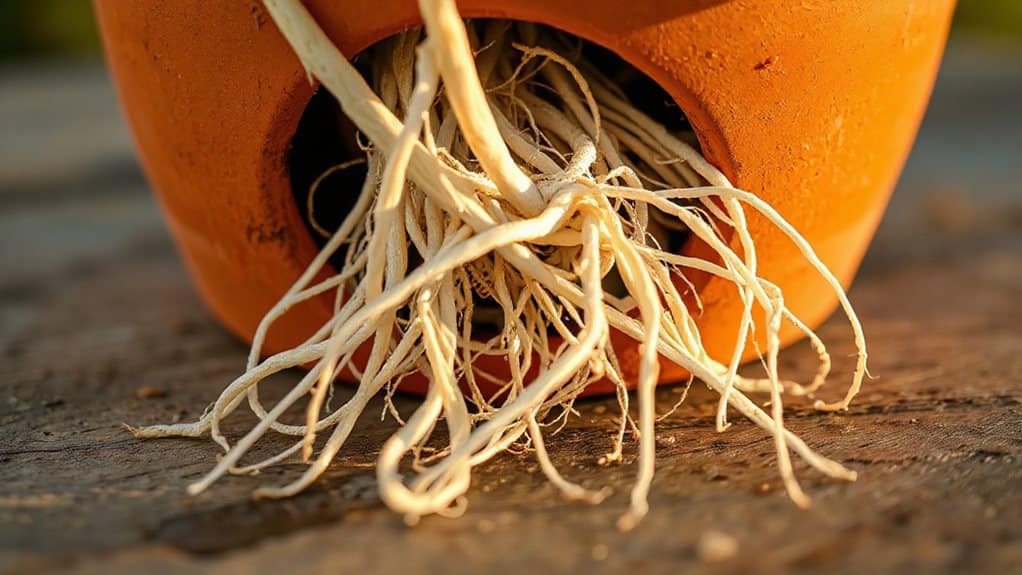
So you’ve spotted roots sneaking out of the drainage holes—no need to panic, we’re not calling in the plant police just yet!
Trim those escape artists with sharp scissors to redirect growth inward, especially if your plant’s thriving otherwise.
Water deeply but let soil dry slightly between drinks, and keep saucers empty—nobody likes soggy feet!
Enrich soil with compost, feed with gentle fertilizer, and peek at roots regularly; a little maintenance goes a long way in keeping your green buddies happy and contained.
When and How to Repot a Root-Heavy Plant
Spotting roots staging a full-scale jailbreak through the drainage holes? Yep, it’s time to repot! Every 2–3 years, give your plant a fresh home—just 1–2 inches bigger.
Gently loosen those tangled roots, trim the circling ones, and nestle it in new soil. Your green buddy will thrive, and honestly, it’s like giving it a camping upgrade—new space, fresh air, and room to stretch!
Overall
So, roots sneaking out the bottom? Totally normal, not a plant emergency! Think of it like your backpack bursting at the seams—your plant’s just saying, “Hey, I’m growing!” It’s kinda like when your socks outgrow your drawer. Sure, it’s time to ponder a bigger pot, but no panic. Just keep an eye on it, maybe ease up on the water, and celebrate—your plant’s thriving, not dying!