
Signs Lawn Soil Is Compacted Clay and How to Improve It
If your lawn feels like concrete when you poke it with a screwdriver, and water just sits there like a sad puddle at a campout, you’ve probably got compacted clay—yep, that tight, stubborn soil that chokes roots and invites weeds to crash the grass party. But don’t sweat it! Core aeration, a compost blanket, and avoiding heavy foot traffic can revive it. Stick around—there’s a fun, dirt-loving fix waiting just for you.
TLDR
- Perform a screwdriver test on moist soil; resistance beyond 2–3 inches indicates compacted clay restricting roots and water.
- Look for patchy grass, standing water, cracked soil, and weeds like knotweed, which signal compaction stress.
- Use hollow-tine aeration in spring or fall to create deep holes that improve root growth and water infiltration.
- Topdress immediately after aeration with compost to enhance soil structure, drainage, and microbial activity.
- Apply 1–3 inches of compost annually and avoid compaction triggers to progressively loosen clay and prevent re-compaction.
Diagnose Compacted Clay in Your Lawn
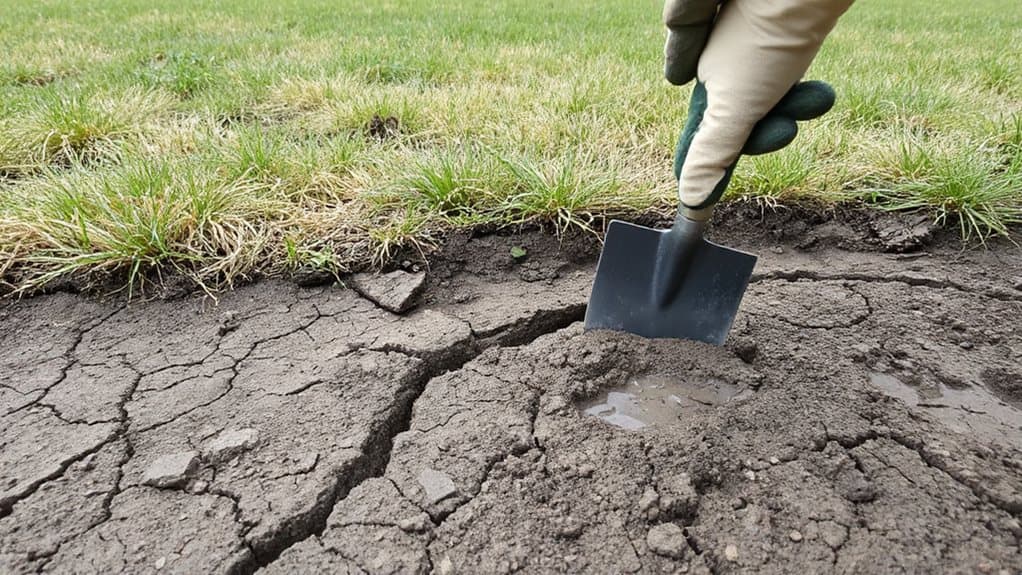
Ever tried poking a screwdriver into your yard only to feel like you’re stabbing concrete? That’s your first clue!
If water pools after rain, grass grows patchy, or weeds like knotweed take over, your clay soil’s compacted. Try the screwdriver test—resistance means trouble.
Thick thatch, yellow blades, and runoff? All red flags. Let’s fix this together! Soil compaction limits root growth.
Aeration and adding organic matter can help break up clay and restore drainage and root access, especially when you use core aeration.
Spot Hard, Crusty Soil Surfaces
Okay, let’s peel back the lid on what’s really going on when your lawn feels like a sidewalk after a dry spell—because that rock-hard, cracked surface isn’t just annoying, it’s basically throwing a tantrum against your grass.
You’ll spot a thin, crusty layer, super compact and brittle, especially in silty or clay-heavy spots where raindrops smash particles into a cement-like seal—yep, even your sprinkler can make it worse.
That crust blocks water, chokes roots, and says “nope” to seedlings trying to pop through.
Sound familiar? Time to fight back with aeration and love.
Sheet mulching can help rebuild structure and water retention over time by adding organic layers that encourage soil life and reduce compaction, especially when combined with proper aeration and topdressings like compost increased water retention.
Why Water Pools on Compacted Clay?
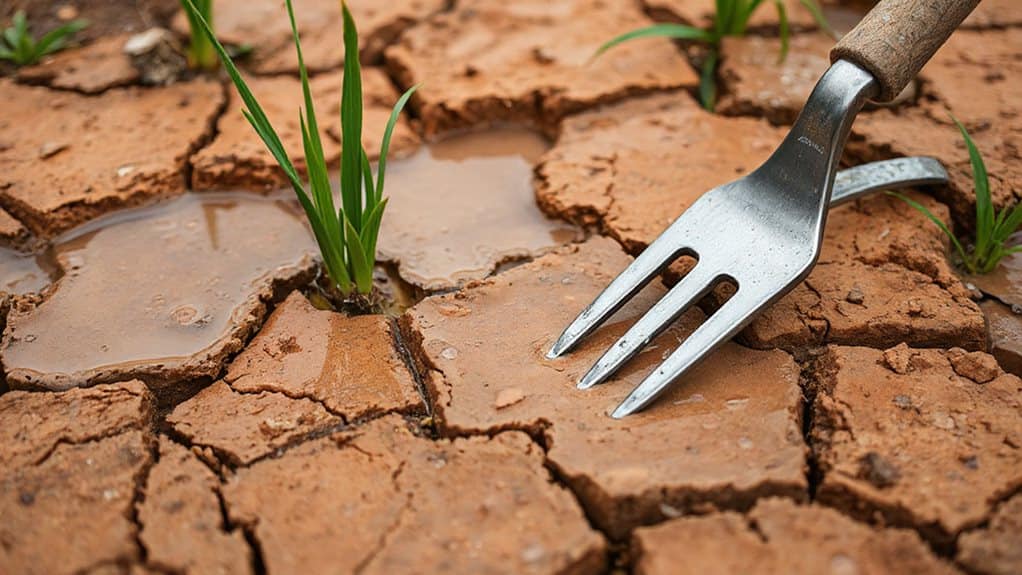
When water just sits there like it’s sunbathing instead of soaking in, you’re not imagining things—your clay soil’s throwing a full-on pool party, and your grass isn’t invited.
Tiny particles pack tight, leaving no room for water to sneak through. It’s like nature’s own water slide—nowhere to go but across the surface, puddling up, stressing roots, and washing away the good stuff.
Pine needles and dense tree roots can also contribute to poor infiltration by creating a needle mat and competing for water, which exacerbates surface pooling and runoff; see more on needle mats.
Read Grass Stress as a Compaction Sign
Most of the time, your lawn’s got a way of speaking up when something’s wrong—it’s just that you’ve gotta lean in and listen.
See those yellow, wilted blades or thin, patchy turf? That’s grass crying out for help! Compacted clay suffocates roots, blocks water, and starves your lawn.
You’re not lazy—you’re fighting dense soil! Aerate, amend, and watch your grass thrive like a happy camper in fresh air! Heavy rainfall can worsen compaction and lead to standing water on clay soils, which may take 24–48 hours or more to dry out and further stress the turf—see drainage quality.
What Stunted Roots Reveal About Clay Soil
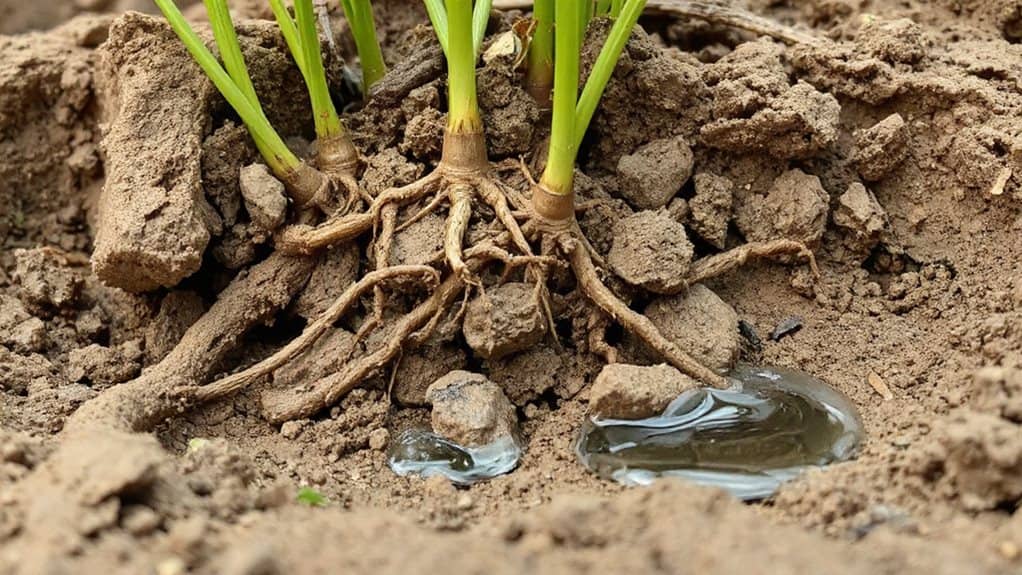
Honestly, you’d be shocked at what’s hiding beneath your feet—those sad, stunted roots in your lawn aren’t just lazy, they’re *trapped* in a dense, clay-packed dungeon!
Tightly packed clay suffocates roots, blocks water flow, and locks away nutrients, like a clingy tent stake refusing to budge.
See shallow growth? That’s roots gasping for air!
Break the cycle—your grass will thank you, big time!
Compost and organic matter can loosen compacted clay and improve drainage over time, so consider adding compost and organic matter to your soil amendments.
Try the Screwdriver Test for Compaction
Ever wonder why your grass looks more tired than a camper after a week of soggy tents and burnt hot dogs? Grab a screwdriver—yes, just a regular one—and stick it into your lawn after a good rain; if it slides in easy, your soil’s doing great, but if it feels like you’re poking a brick, you’ve probably got compaction.
Let’s walk through how this simple test works, how to do it right, and what that stubborn resistance really means for your struggling clay soil.
Screwdriver Test Basics
Let’s plunge right into one of the easiest, most satisfying ways to check what your lawn’s really going through—meet the screwdriver test, your new go-to move for sniffing out soil compaction like a grass detective.
Grab a screwdriver, aim for 4–6 inches deep, and push gently—think of how roots would struggle or thrive.
If it slides like butter, awesome!
If you’re leaning like you’re camping on a sloped tent pad, yep, that’s compacted.
Moist soil only, please—no testing on dry days, or you’ll fake yourself out!
How To Perform Test
While you don’t need a lab coat or fancy gadgets to figure out what’s going on beneath your grass, you *do* need the right moment and a trusty screwdriver—think of it like picking the perfect time to pitch your tent before the sun dips below the trees.
Grab your 4- or 6-inch screwdriver after rain, when soil’s moist but not soggy, and plunge it in like you’re testing a campfire steak for doneness.
Push steadily—if it slides in easily, your soil’s happy; if it fights back past 2–3 inches, compaction’s likely camping out where roots should be thriving.
Interpreting The Results
Now that you’ve gone poking around in your lawn with that trusty screwdriver—kind of like checking the ground before you pitch your tent on a weekend camping trip—it’s time to read the dirt, literally.
Did it slide in easy, like a straw into a milkshake? Great! Your soil’s loose and root-friendly.
Hit a brick wall after 2 inches? Uh-oh—compaction’s crashing your lawn’s party, blocking roots, water, and nutrients.
Fix Drainage: Sand and Compost Tips
You’ve probably heard that tossing some sand on your clay soil will fix everything, but whoa—wrong move, like packing flip-flops for a mountain hike!
Instead, mix in a generous layer of compost, about 2–4 inches, to feed the soil and help it breathe, kind of like how a good campfire needs both logs and airflow to really crackle.
And if you *do* go the sand route, don’t skimp—tiny amounts just make sticky clay worse, like trying to drink a thick milkshake through a coffee stirrer!
Improving Drainage With Amendments
Envision this: rain pours down, and instead of soaking in, water just sits on your lawn like a sad little pond that forgot how to flow.
You’ve got clay, friend—but don’t panic! Mix in 2–4 inches of compost yearly, till it gently, and watch soil breathe again. Add coarse sand (not fine!) to avoid concrete disasters, and toss in gypsum if sodium’s sneaking around. Team it all with mulch, and boom—your yard becomes a happy, draining wonderland!
Topdressing For Soil Aeration
After punching hundreds of tiny holes in your lawn like it’s a polka-dot parade, you’re all set to turn that compacted clay from brick-like boredom into a fluffy, root-friendly paradise—and here’s where topdressing swoops in like the superhero your soil didn’t know it needed.
Spread a thin, nutrient-rich compost or sand blend right after aerating, so it penetrates deep into those holes, enhancing drainage, feeding microbes, and giving roots the five-star treatment they deserve.
Think of it like camping for roots—fresh air, good food, and room to stretch!
Aerate Compacted Clay the Right Way
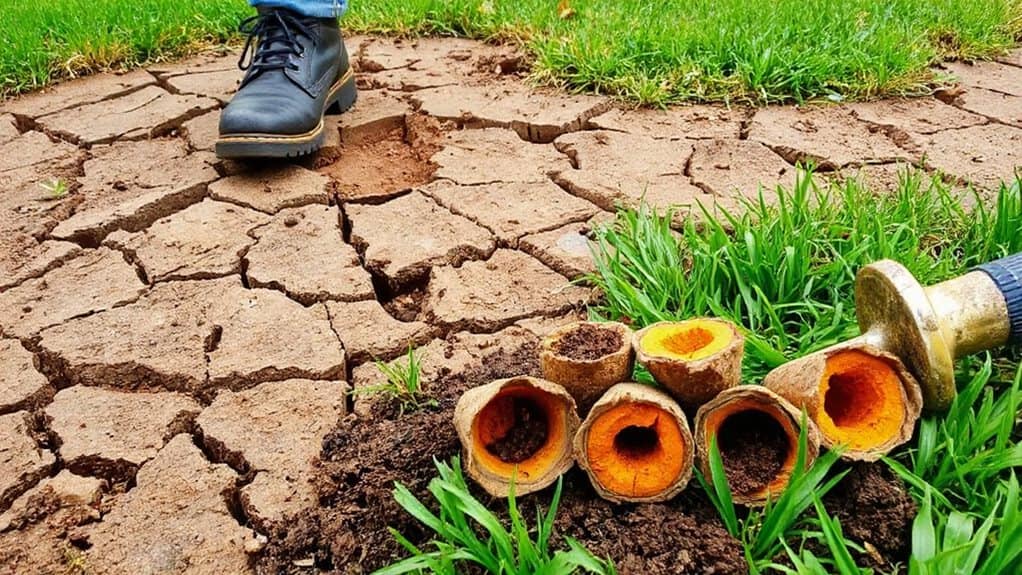
Ready to give your tired, packed-down clay lawn some breathing room? Use hollow-tine aeration—never spikes or shoes—to pull out soil plugs, letting air, water, and roots move freely.
Aim for 3-inch deep cores, criss-cross the lawn, and aerate in spring or fall.
Topdress with compost or sharp sand, work it in, and watch your lawn thrive like a happy campfire after rain!
Support Grass Growth in Tight Soil
You’ve aerated your lawn—awesome, right? Now’s the perfect time to feed that tight clay soil with a ¼-inch layer of compost, like giving your grass a cozy blanket packed with snacks for roots and microbes.
Don’t just walk away—topdress right after aerating so those new seedlings can actually stretch out, breathe, and grow like they’re finally on vacation after being stuck indoors all winter!
Aerate For Root Expansion
Envision this: your lawn’s soil is like a packed stadium after a concert—trampled, tight, and barely room to breathe—so it’s time to roll out the aerator and throw your grass a root-level rescue party!
You punch holes, roots rush in, and suddenly they’re stretching deep, sipping water, and sharing high-fives underground.
It’s like giving your lawn a gust of revitalizing air—literally!
Topdress With Organic Matter
Improving your lawn’s tight, stubborn clay soil starts with a simple but powerful move: feeding it a hearty layer of organic goodness from the top down.
You know that sad, cracked look after a dry spell? Yeah, compost’s like a tall glass of water with electrolytes for your grass.
Spread 1–3 inches after aerating, let rain and worms work it in, and boom—better drainage, fewer puddles, happier roots.
Think of it as a spa day that also fixes plumbing.
Prevent Future Clay Soil Compaction
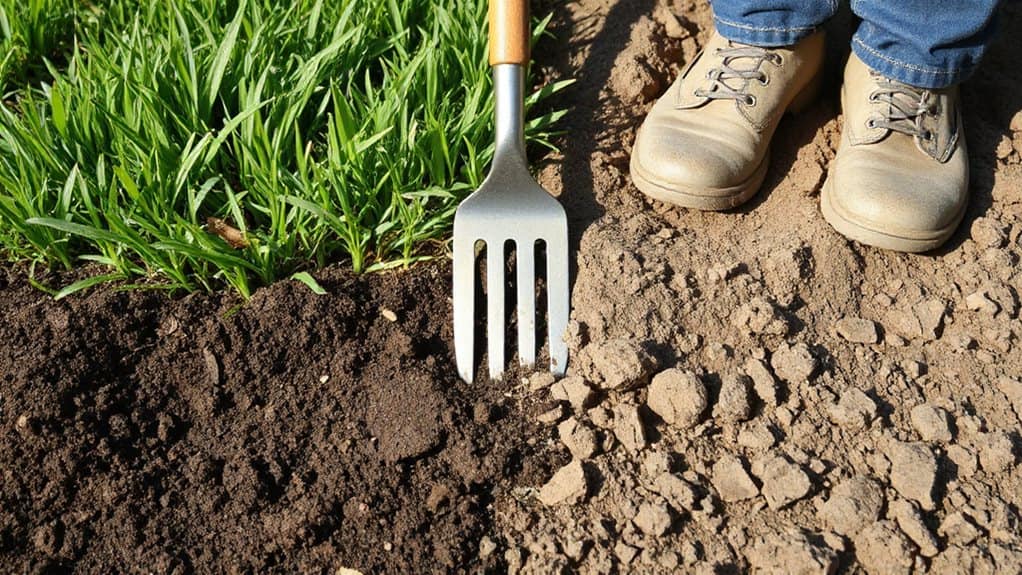
Most of the time, once you’ve gone to the trouble of fixing your compacted clay soil, the last thing you want is to undo all that hard work by accidentally squishing it all over again—kind of like carefully setting up your tent at a campsite, only to have someone stomp through it with muddy boots.
Overall
So, you’ve cracked the code on compacted clay—congrats! Now that you know how to spot it, fix it, and keep your grass happy, your lawn’s basically on its way to becoming a five-star resort for roots. Think of aeration like hitting the reset button, and compost? That’s the VIP snack bar. Keep it loose, keep it fed, and your yard’ll thrive—no more mud puddles or sad, stunted grass. Happy mowing, superstar!


