Why Grass Grows Better Near Fences Than Open Areas
Ever notice how your grass looks lusher near the fence? That’s because it’s basically got its own shady hideout! The fence blocks harsh sun and wind, cuts down on evaporation, and keeps the soil cool and moist—perfect for happy roots. Less trampling and no edging mean deeper roots, too. Add in stable temps and a comfier microclimate, and boom: grass party! Want to know the sneaky tricks that make fence-line grass the envy of the yard? You’re gonna love what comes next.
TLDR
- Fences create shade that reduces heat stress and protects grass from sun damage.
- Shaded areas near fences maintain cooler soil temperatures, supporting healthier root and leaf function.
- Reduced wind near fences lowers evapotranspiration, helping retain soil moisture and humidity.
- Protected microclimates near fences promote deeper root growth by minimizing soil compaction and disturbance.
- Mulch and proper soil prep in fence zones enhance turf resilience in low-light, sheltered conditions.
How Fences Shade Grass and Prevent Heat Stress
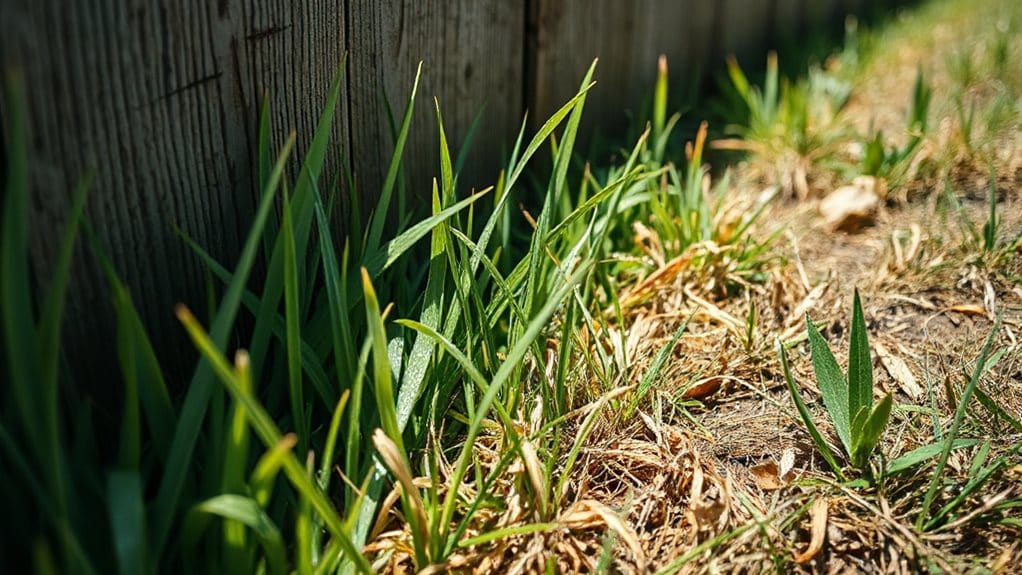
Sometimes, you’ll notice your grass looks a little *too* happy chilling near the fence—like it’s throwing its own shady pool party while the rest of the lawn bakes in the sun.
You’re giving it a break from the heat, and honestly, who wouldn’t love that? Shade cools things down, reduces heat stress, and keeps leaves from frying—kind of like nature’s sunscreen! Red : far-red ratio also plays a role in how grass responds to shaded environments, influencing growth patterns beyond just temperature protection.
Mulch and proper soil preparation can further support turf health by conserving moisture and improving soil structure, especially in these shaded microclimates with soil pH considerations.
Cooler, Stable Zones: The Fence Microclimate Effect
You’ve seen how fences throw some serious shade—literally—giving your grass a break from the scorching sun like a cool umbrella at a backyard cookout.
Well, guess what? Those shady spots create cozy, stable microclimates where soil stays cooler, moister, and way more inviting for grass roots—kind of like nature’s version of a comfy camping spot protected from wind and baking heat.
This sheltered environment also reduces water stress and can mitigate shallow root competition from nearby trees, especially when soil moisture levels are monitored and managed.
Less Wind = Healthier Grass Near Fences
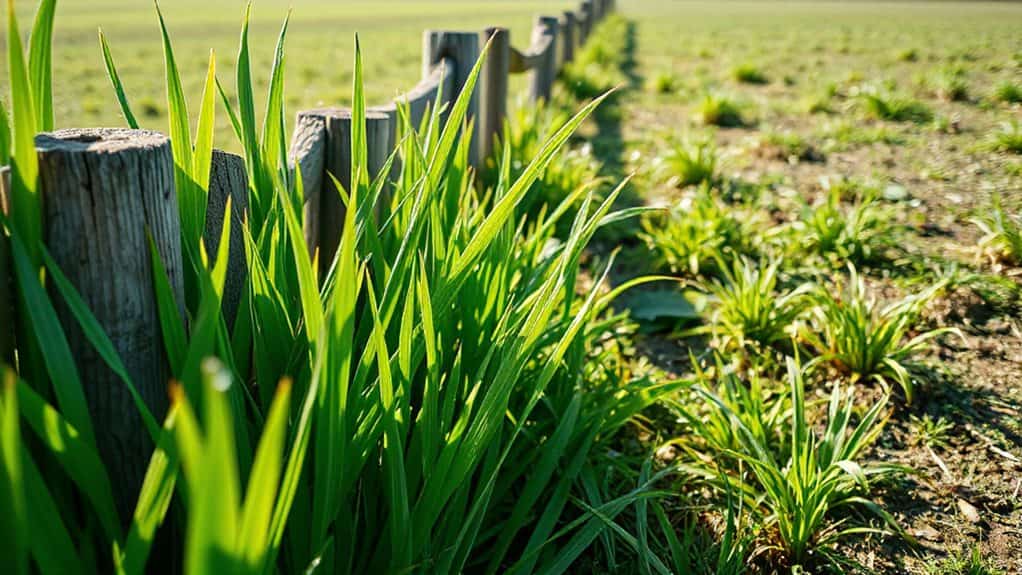
While you might think your fence is just playing backyard bodyguard, it’s actually doing your grass a solid by cutting down on wind—kind of like how a trusty tent wall shields your campsite from gusty nights that turn sleeping bags into sailboats.
Less wind means less moisture loss, so your grass stays hydrated and happy, especially on those scorching, blowy days when everything else feels like a desert.
Adding organic matter like compost or manure after aeration can also improve soil structure and help that hydrated grass develop stronger roots.
Fences Reduce Evaporation and Save Soil Moisture
When the sun’s blazing like a campfire under a cloudless sky, your fence isn’t just standing around looking pretty—it’s quietly running a full-on moisture-saving operation right in your backyard.
Tall grass near it shades the soil like a sunhat, slashing evaporation, while trapping humidity like a cozy blanket—so your land stays juicy, resilient, and ready to serve life, even when the heat’s on. Building a rain garden or improving drainage systems can help manage excess water and prevent muddy patches from forming.
Undisturbed Soil Lets Roots Grow Deeper

That shady, moisture-packed zone next to your fence? It’s not just cozy—it’s a root paradise!
When soil stays undisturbed, roots plunge deep, like campers burrowing into sleeping bags. Unlike trampled areas, this spot lets grass stretch out, drink up moisture, and stockpile nutrients.
Think of it as a quiet forest trail versus a muddy, stomped path—peace wins every time. Let roots roam, and watch your lawn thrive! Mowing less frequently and avoiding heavy foot traffic helps maintain undisturbed soil so roots can continue to grow deep and healthy.
No Edging Needed = Stronger Grass at the Border
Honestly, you’re doing your lawn a huge favor just by skipping the edging along the fence—no guilt needed!
You avoid cutting into roots, which means less stress and stronger grass. No edging means no soil disturbance, fewer weeds, and way less foot traffic.
Plus, your border grass stays thick, happy, and way more resilient—kind of like a tough little camper after a rainy weekend in the woods!
Why Grass Grows Better Near Fences (And How to Use It)

While it might seem like your grass is just playing it safe by hugging the fence, there’s actually a whole secret world of science helping it thrive along that boundary—and once you know the tricks, you’ll feel like you’ve unleashed a cheat code for your lawn.
Shelter from wind, retained moisture, and reflected heat give it a leg up, kind of like nature’s version of a cozy campsite. You’ve seen how a good tent placement makes all the difference, right? Same idea!
Loosen compacted soil with core aeration, adjust sprinklers to avoid dry strips, and pick shade-tolerant grass—boom, instant upgrade. Who knew fences were low-key lawn life hacks?
Overall
So, you’ve seen how grass near fences thrives—cooler shade, less wind, and way more moisture, right? It’s like nature’s VIP section! I’ve even pitched a tent right where the grass is thickest (no mud, score!). Skip the open field next time; hug that fence line for softer ground and happier blades. Want lush grass? Copy what the fence knows. Trust me, your knees—and your campsite—will thank you. Now go grow something awesome!