Bare Spots in Lawn After Winter: Causes and Recovery Tips
Winter’s rough on lawns, huh? Bare spots pop up from sneaky snow mold, salt damage from icy sidewalks, or grass dried out like old camping toast. Maybe voles threw an underground party and wrecked the roots—rude! Don’t stress, though; most of it’s fixable. Rake gently, aerate compacted soil, and toss on some tall fescue seed. Keep it moist, skip the herbicides, and boom—your lawn can bounce back. And hey, if you wanna know which quick fix works best for *your* yard, there’s a neat trick coming up…
TLDR
- Winter browning can result from snow mold, voles, salt damage, or drought stress, not always indicating dead grass.
- Remove debris and thatch to prevent suffocation and encourage grass recovery in bare or thin areas.
- Aerate compacted soil in fall or spring to improve root growth, drainage, and water uptake.
- Overseed small bare spots with cool-season grasses like tall fescue after loosening soil and ensuring good seed contact.
- Flush salt-affected zones, apply gypsum, and protect vulnerable areas to prevent winter damage recurrence.
What Causes Bare Spots in Lawns After Winter?
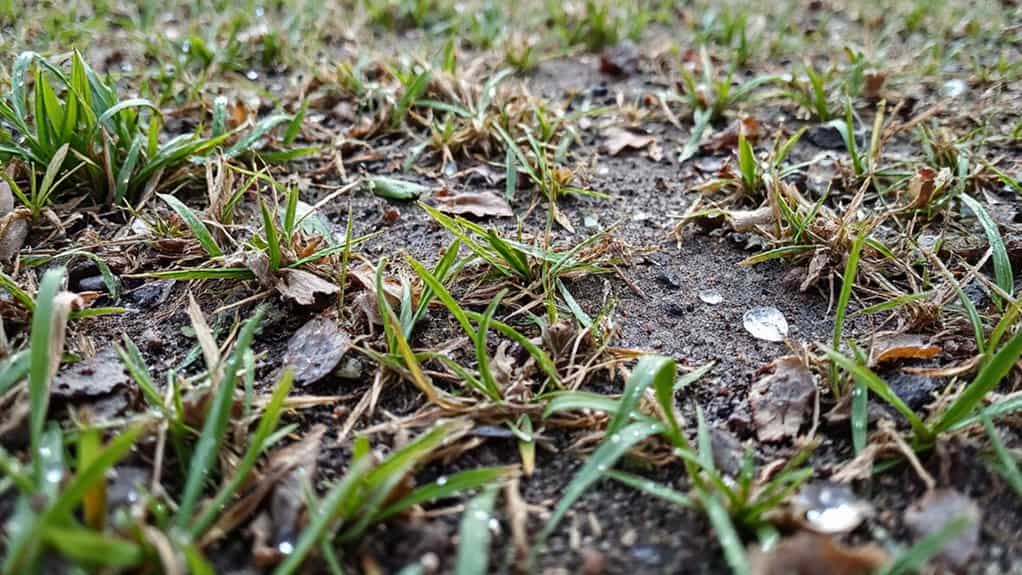
So, you’ve made it through another long winter—snow forts built, sledding runs perfected, and way too many mugs of hot cocoa later—and now you’re finally stepping outside to enjoy your yard again, only to find patchy, sad-looking spots where lush grass should be.
What gives? Well, hold on—those bare spots aren’t just laziness from your lawn!
Could be debris piling up like last fall’s forgotten leaves, suffocating your grass. Or maybe voles threw an underground rave all winter, munching roots and leaving dead trails. Compacted soil from snow or foot traffic? Yep, that’ll choke out new growth too. And don’t forget harsh de-icing salts—those sneaky orange-tinted patches are salt burn, not fall fashion. Even nutrient-poor soil can leave your lawn starving for a spring snack.
Soil compaction prevents grass roots from accessing essential nutrients and water, making it harder for your lawn to recover naturally. Regular core aeration helps relieve compaction so roots can grow deeper and the lawn can recover.
How Snow Mold Damages Your Lawn in Winter
While you’re cozy inside dreaming of spring hikes and backyard campouts, a sneaky winter party’s already happening under the snow—courtesy of snow mold, that uninvited fungal guest crashing your lawn’s downtime. Gray or pink, these molds feast on damp, matted grass, weakening blades or even killing roots. You’ll spot crusty, bleached patches come thaw—yikes! But don’t panic: with sun and care, your lawn can bounce back, ready for summer s’mores and stargazing. Make sure to properly aerate and manage moisture to prevent anaerobic decomposition that can worsen turf decline.
Why Crown Hydration Kills Grass Roots for Good
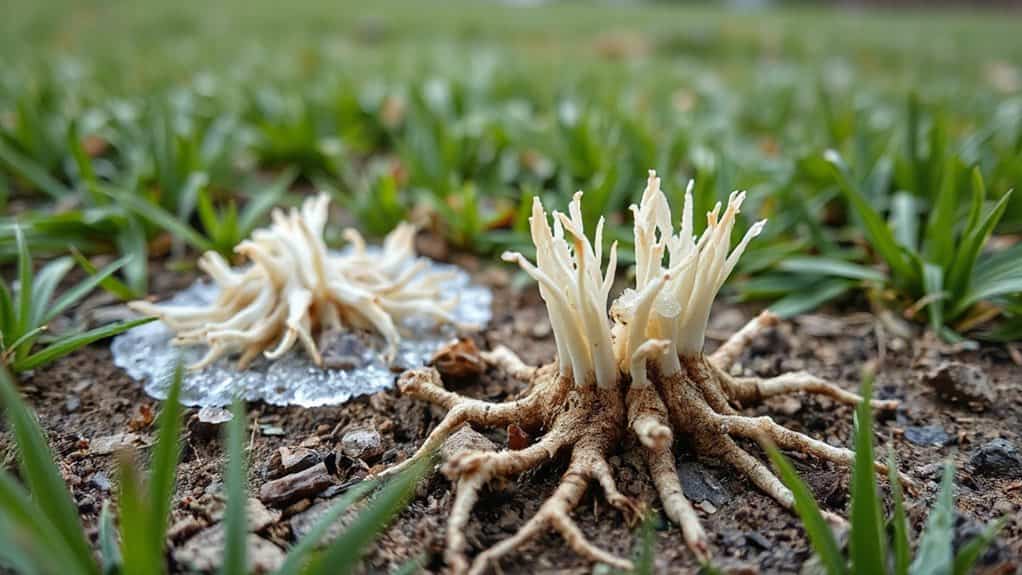
When the days start warming up just enough to make you dream of barefoot evenings and backyard s’mores again, your grass might already be in trouble—thanks to a sneaky winter trap called crown hydration.
Your lawn drinks up water during warm spells, then *bam*—a cold snap freezes it, bursting grass cells like overfilled water balloons.
Poor drainage? That’s like leaving the bathtub running.
Help your turf by improving soil flow and feeding it potassium—your grass will thank you come summer cookout season!
Cold, compacted soil also increases the risk of fungal diseases, which weakens seedlings and slows recovery.
Can Winter Desiccation Be Reversed? (And How to Prevent It)?
You know that sad, crispy look your lawn gets after a long, dry winter? Yeah, once those leaves turn brown from winter desiccation, they’re basically toast—no reviving them, just like how you can’t un-burn a hot dog at a campfire.
But don’t pack up the tent just yet: if the crown’s still got moisture (think 0.764 g of water per gram of turf—fancy, right?), your grass can bounce back, especially if you’ve used covers or sand to lock in that precious hydration like a winter sleeping bag. Improving soil drainage and reducing compaction can help recovery and prevent future winter damage.
Winter Desiccation Explained
So, imagine this: you’re all geared up for spring, ready to fire up the grill and finally enjoy the yard again—only to find patchy, straw-like spots where your lush green lawn used to be. Yep, winter desiccation might’ve sneaked in, drying out grass when frozen soil blocked roots from drinking up.
Think of it like a plant getting a bad sunburn while thirsty—ouch! But don’t panic; it’s fixable, and your lawn can bounce back with some TLC.
Reversing Moisture Loss
Most of the time, your lawn’s winter woes aren’t the end of the world—think of it like waking up with bedhead after a long nap: messy, maybe a little sad, but totally fixable with the right moves.
You can reverse moisture loss! Water lightly every few warm weeks, use anti-desiccant sprays, or cover with straw for insulation—your grass will thank you come spring.
Preventing Winter Drought
Alright, let’s talk about keeping your lawn from turning into a sad, crispy snack by the time spring rolls around—because nobody wants to play host to a yard that looks like it lost a fight with a tumbleweed.
You’ve got this! Water every few weeks with a hose or sprinkler, even in winter—yes, really!
Use anti-desiccant sprays like a plant winter coat, apply mulch or straw under covers, and choose tough grass types like tall fescue.
Pro tip: deep water before freeze-up, add potassium, and shield tender spots with burlap or windbreaks—your lawn will thank you when green returns!
How Deicing Salt Ruins Lawn Edges: and How to Fix It
While winter’s finally loosening its grip, you might be stepping outside with that hopeful spring bounce—only to freeze mid-step when you spot those sad, brown strips hugging your driveway and sidewalks.
Salt from melting snow sneaks in, dehydrating roots and wrecking soil, but don’t panic! Flush it out, add gypsum, aerate, and overseed with tough grass—your lawn’s comeback tour starts now. Consider also checking nearby trash cans or compost piles for excess salt and organic waste that can worsen lawn stress, since removing avoidable attractants around the yard helps overall recovery.
Hidden Ways Winter Foot Traffic Damages Your Grass
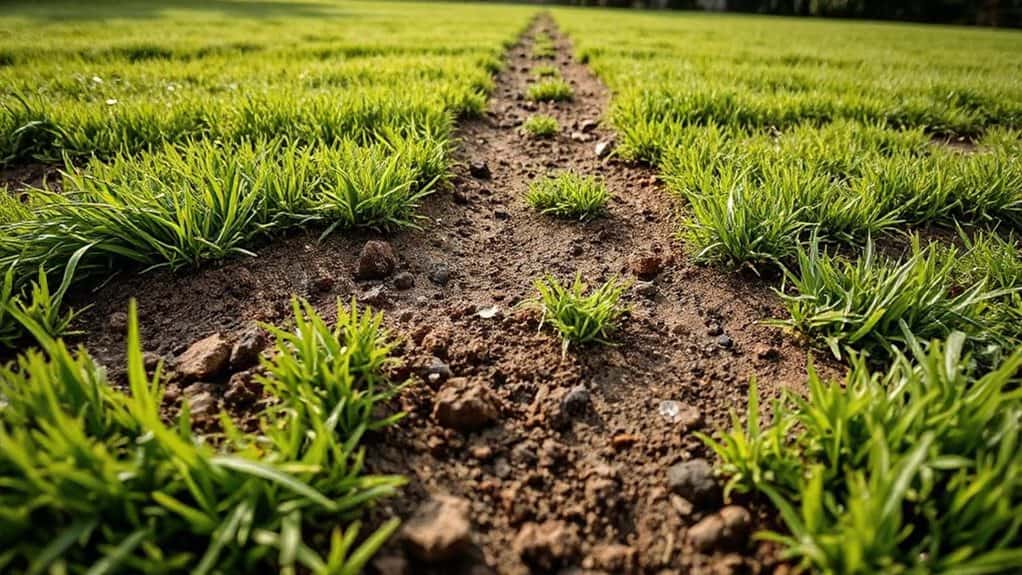
You might think your lawn’s tough enough to handle a few winter strolls—after all, it’s just grass, right? But frost makes turf brittle, and every footstep can crush frozen crowns, especially in the morning when soil dips below 32°F.
Warm-season grasses? Super vulnerable. Even one cart pass on bentgrass can leave lasting damage. So, hold off on those winter shortcuts—your lawn will thank you come spring!
How to Tell Snow Mold From Desiccation and Other Injuries
So you’ve got weird spots in your lawn after winter—kinda like a mystery picnic blanket left out in the cold, huh?
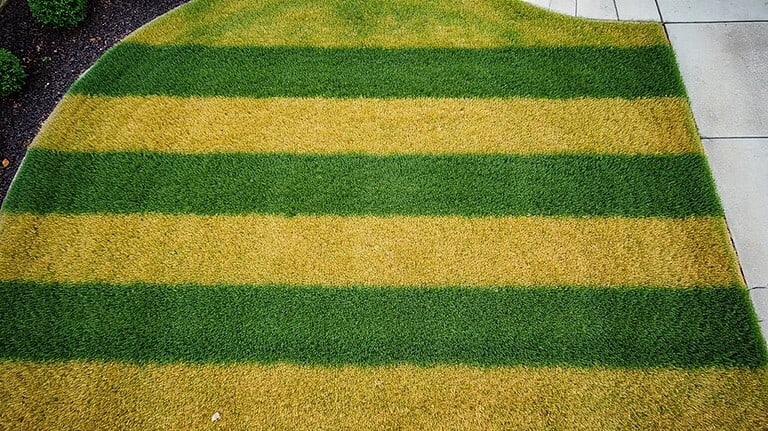
If the patches look like soggy, matted circles with a fuzzy white or pinkish tint, you’re probably dealing with snow mold, but if they’re dry, crispy, and scattered like forgotten trail mix in the wind, it’s likely desiccation.
Let’s break down the clues—because figuring this out is way more fun than packing for a camping trip in the rain!
Snow Mold Identification Tips
When that first warm spell hits and the snow finally starts to retreat, you’re probably itching to get outside and check on your lawn like it’s the first day of camping season—except instead of finding green grass, you stumble upon weird, crusty patches that look like something a confused art student glued down with old paper mâché.
Don’t panic! Check for gray, papery mats or pink, fuzzy spots—gray snow mold leaves tiny red specks (sclerotia), while pink turns reddish and kills roots.
Look near snowbanks or shady spots, especially if snow lingered over bentgrass.
Desiccation Damage Clues
Alright, envision this: you’re out there in your yard with your coffee in hand, ready to celebrate the end of winter like it’s the start of a weekend camping trip—tent pitched, s’mores waiting, the whole vibe—only instead of a lush green welcome, you’re staring at patches of grass that look like they’ve been left in the sun too long, like overcooked hay or that one corner of the trail where nothing grows no matter how much you wish it would.
You see yellow or brown leaves, dry and brittle, maybe with burnt tips—classic desiccation. Spots? Check. Straw-like blades standing stiffly? Yep.
Unlike snow mold’s fuzzy fungi, this damage feels crisp, like fallen autumn leaves underfoot. It’s not disease—it’s drought stress from winter winds and frozen soil locking out water.
Sandy spots or slopes? Likely culprits. Thatch buildup? That’s like insulating roots from salvation.
Don’t panic—your lawn’s not done; it’s just thirsty and tired, like you after a long hike without enough water.
When to Rake, Aerate, and Loosen Winter-Damaged Grass
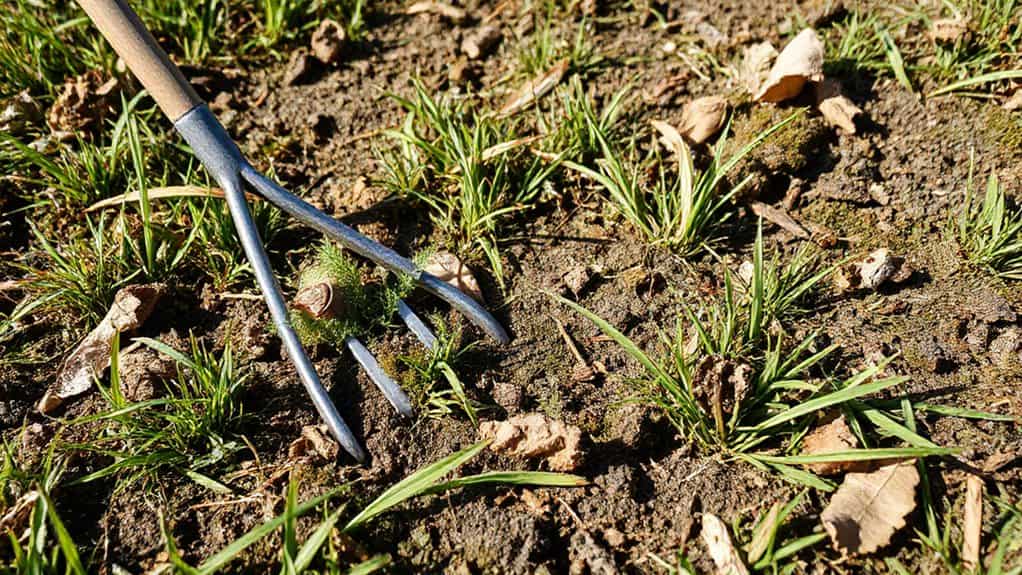
Honestly, you’d be amazed how much your lawn can bounce back after a rough winter—if you give it a little love at just the right time. Skip spring raking if grass is stressed; wait until fall, when cooler temps and moist soil make aeration a breeze.
Aim for thatch thicker than a pencil’s width, and hey, if puddles stick around like uninvited campfire guests, it’s time to aerate!
Spring Repair Guide: Overseed, Resod, or Wait?
You’ve got bare spots popping up like uninvited guests after winter—annoying, right? Instead of ripping everything out, try overseeding those thin patches early, especially if the rest of your lawn still looks decent, kind of like patching a favorite camping tent instead of buying a new one.
Think of it this way: if your grass were a road trip, you wouldn’t tow the whole car home for a flat tire—you’d just fix the flat and keep rolling!
Overseed Bare Patches Early
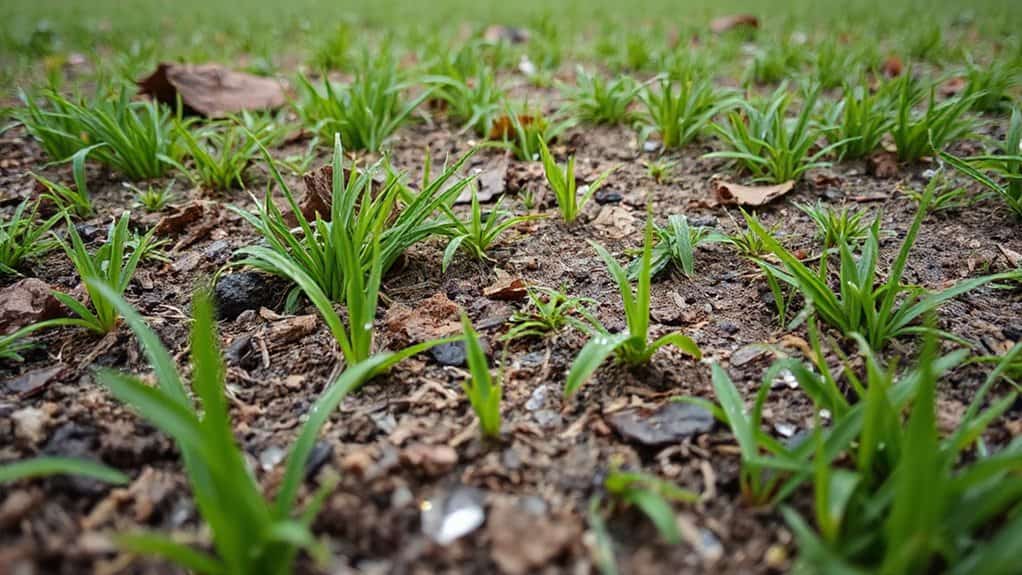
Now’s the perfect time to jump on those sad, bare spots in your lawn before they throw a full-on spring tantrum and spread like spilled soda on a hot driveway. Grab some cool-season seed—tall fescue or ryegrass—and give those patches some love!
Rake away gunk, loosen the soil, and sprinkle seed lightly, just a dusting. Press ‘em in gently, like tucking in a sleepy camper, then mist the area daily—think soft rain, not a fire hose.
Skip the herbicides, okay? They’ll crash your grass party. Keep it moist, pull weeds by hand, and boom: lush, happy turf on the way!
Assess Damage Before Resodding
Before you go all-in and roll out fresh sod like you’re carpeting a backyard bunker, take a breath and play lawn detective—because not every brown patch is a lost cause, and jumping the gun could mean wasting time, cash, and effort on a fix you don’t even need.
Check bare spot size, weed levels, and grass health; if weeds cover less than half, overseed instead!
Compacted or drought-stressed soil? Fix that first.
Small thin spots? They might fill in naturally, especially in warm-season grasses—no sweat!
Prevent Winter Lawn Damage Before the Snow Falls
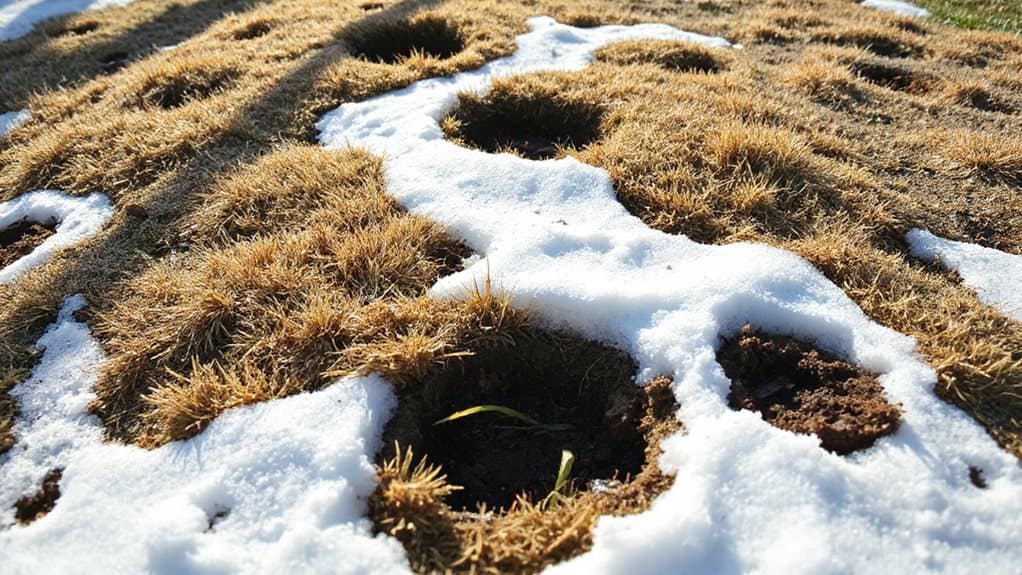
Think of your lawn like a camper gearing up for a long, snowy expedition—it needs the right gear, a solid plan, and a little TLC before the frost rolls in.
Mow tall, feed it potassium-rich winterizer, and aerate to help roots breathe; your grass will thank you in spring!
Don’t forget to clear leaves—mulch ‘em like campfire scraps—and water occasionally if it’s dry.
Ready? Your lawn’s winter escapade starts now!
Overall
So, your lawn looks a little worse for wear after winter? No worries—now you know the usual suspects: snow mold, thirsty grass, salty edges, and those sneaky hydration mishaps. Spring’s your chance to fix things fast: rake, seed, or patch like a pro. I once revived a yard that looked like a zombie snack—true story! Don’t wait too long, though; grass grows fast when you help it. Grab your gloves, get out there, and turn that sad patch into a lush, bouncy green carpet—you’ve totally got this!