How Long Does Grass Seed Last If It’s Never Been Opened?
You’ve got an unopened bag of grass seed hiding in the garage? No worries—most stay fresh for at least 2–3 years, and some, like fescue, can last up to 5 if you’ve kept them cool and dry. Think of it like storing marshmallows for camping: moisture and heat ruin the fun. Keep it sealed, stash it in a cool spot (not the hot garage!), and you’re golden. Wondering if it’s still good? Let’s just say there’s a super easy test that’ll give you the answer—keep going, and you’ll see how!
TLDR
- Unopened grass seed typically lasts 2–5 years, depending on the variety and storage conditions.
- Kentucky bluegrass remains viable for 2–3 years when unopened and properly stored.
- Fescue and perennial ryegrass can last 3–5 years if kept sealed and cool.
- Storing unopened seed at 35–40°F significantly extends its shelf life and preserves germination rates.
- Airtight packaging and low humidity below 60% prevent moisture damage and maintain seed quality.
Understanding the Guaranteed Shelf Life of Unopened Grass Seed
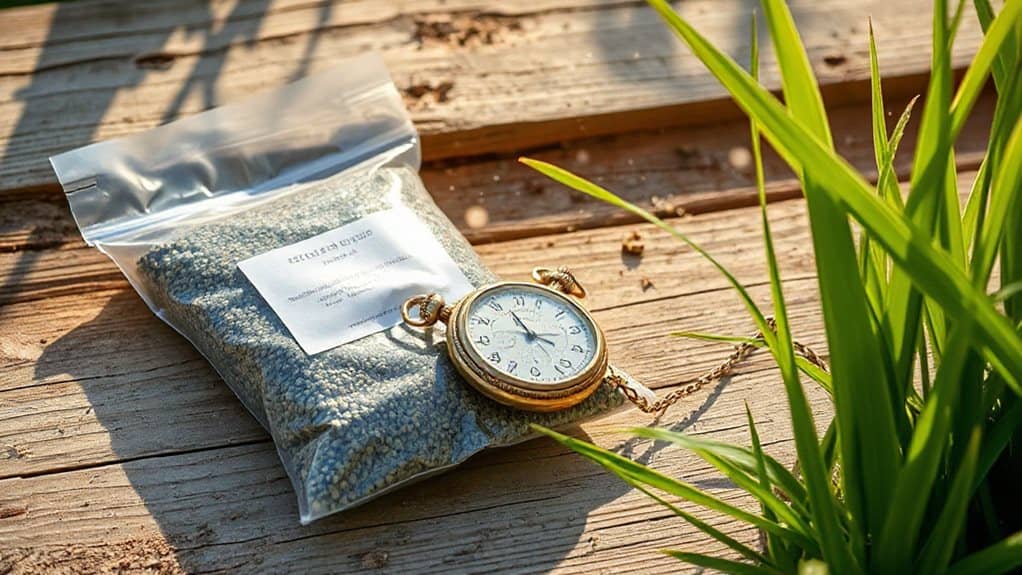
So, here’s the good news: that unopened bag of grass seed sitting in your garage or shed? It’s still got life! Sealed right, it stays fresh for at least two years—guaranteed.
The cool, dry packaging locks in quality like a trusty tent on a camping trip. Just check the Defra label’s date, keep it sealed, and you’re golden. Home kits give quick guidance on soil conditions to help maximize success.
Don’t toss it too soon—you might just grow a lawn that outlasts your favorite hiking boots!
Germination power may slightly decrease after the two-year mark, but the seeds can remain viable for years if stored properly.
Factors That Influence Long-Term Seed Viability
While you might think tossing a bag of grass seed in the garage is all it takes to keep it good for later, the truth is, a whole bunch of sneaky factors are quietly calling the shots on how long those tiny green dreams inside the bag will actually come to life.
Humidity? A total party crasher—it invites mold and early sprouting.
Heat and light? They’re like kryptonite.
But here’s the cool part: if you stash your seed in a cool, dark, airtight spot—think basement bunker, not garage sauna—you’ll keep those seeds happy, healthy, and ready to grow lush lawns for years.
Cool, right?
Aim for storage around 35–40°F to maximize seed longevity.
How Storage Temperature Affects Grass Seed Longevity
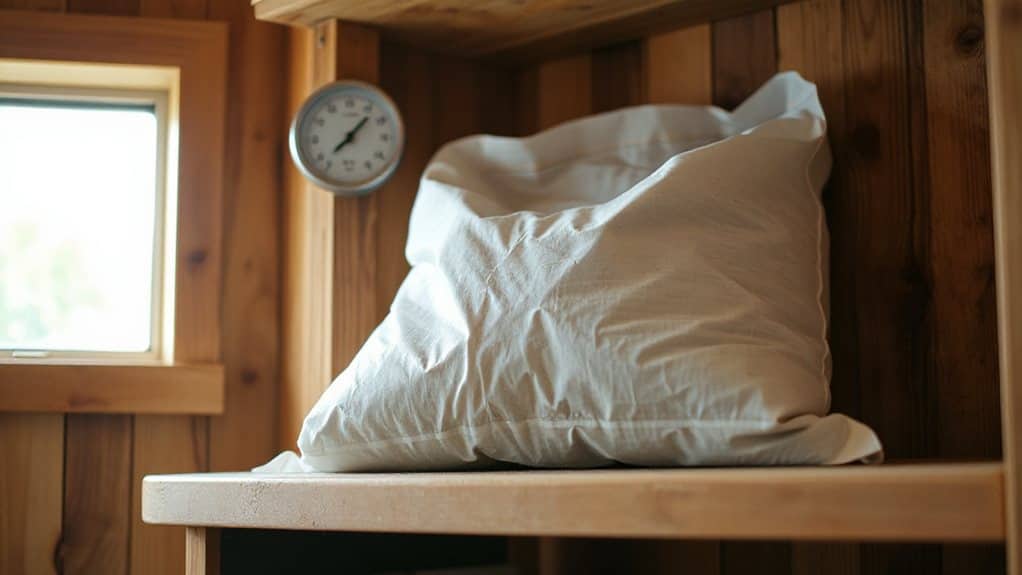
You know how you pack extra layers when camping because nights get chilly? Well, your grass seed kind of feels the same way—keeping it cool, below 60°F, is like giving it a cozy sleeping bag for long-term storage, so it stays ready to sprout when planting time rolls around.
But if you leave it in a hot garage that’s baking like a cookie in July, those little seeds start “cooking” too, and trust me, once their enzymes turn into scrambled eggs, they’re not waking up!
Adding organic matter during planting can help sandy soils retain moisture and nutrients for healthier seedlings, especially when using seeds suited to the site like deep-rooted varieties.
Cool Storage Preserves Viability
Honestly, if you’ve ever dug up an old bag of grass seed only to find it turned into a clumpy science experiment, you’re not alone—temperature matters way more than most people think!
Keep seeds cool, like in the back of your fridge (35–38°F), and they’ll stay viable way longer; just pop them in airtight containers to dodge moisture. Did you know cooling seeds at 60°F doubles their life compared to 70°F? Wild, right?
For best results, pair cool temps with low humidity—under 60%—and your seeds could last years, not months.
Think of it like packing for a long camping trip: prep right, and everything thrives!
Heat Reduces Germination Rates
When the mercury climbs, your grass seed’s chances of sprouting go down—fast, like a popsicle melting on hot pavement.
Heat messes with proteins, zaps moisture, and burns through energy reserves before seeds even get a chance.
Keep them cool, okay? Think of it like packing snacks for a camping trip—nobody wants a melted granola bar.
Your future lawn will thank you!
The Role of Humidity and Moisture in Seed Degradation
While you mightn’t think of grass seed as the kind of thing that needs a comfy, dry vacation home, believe me—it *really* hates soggy situations!
Keep it below 60% humidity, or mold throws a party and ruins the batch. Store it airtight, off concrete floors, and away from damp garages.
Dry seeds stay sprightly for years—perfect for helping your neighbor grow a lush lawn when they’re ready!
Peat moss can help retain moisture for seeds but use sparingly due to its acidic pH and environmental concerns.
Best Packaging Practices for Preserving Seed Quality
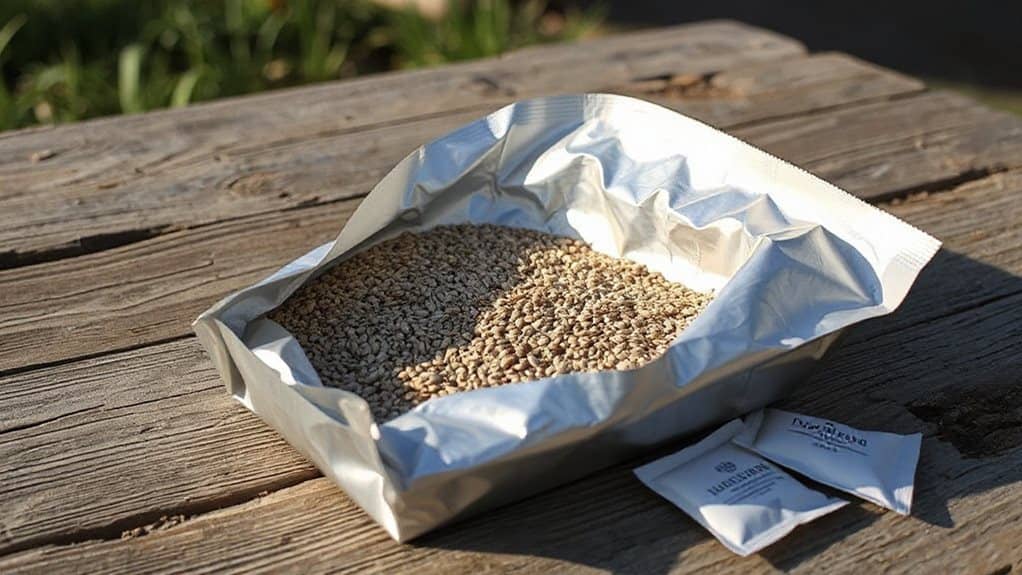
Ready to give your grass seed the five-star storage treatment it deserves? Use airtight plastic containers—rodents hate ’em, and moisture can’t sneak in!
For opened bags, breathable cloth sacks work great, like letting seeds breathe fresh air on a camping trip. Just keep them dry, label everything, and stash away from pesticides. Your future lawn will thank you! Increased production and storage costs—like land costs and specialized handling—are reasons some seed types can be pricier to replace if damaged.
Comparing Grass Seed Types and Their Lifespans
If you’ve ever dug up an old bag of grass seed and wondered, “Will these little guys still grow?”—you’re not alone, and hey, I’ve been there too, rummaging through the garage like a weekend archaeologist uncovering last spring’s lawn dreams.
Kentucky bluegrass lasts 2–3 years, but fescue and perennial ryegrass? They can go 3–5 years unopened—pretty cool, right? Just keep them dry and cool, like you’re prepping for a camping trip where soggy socks are the enemy.
Signs of Deterioration in Long-Term Stored Seed
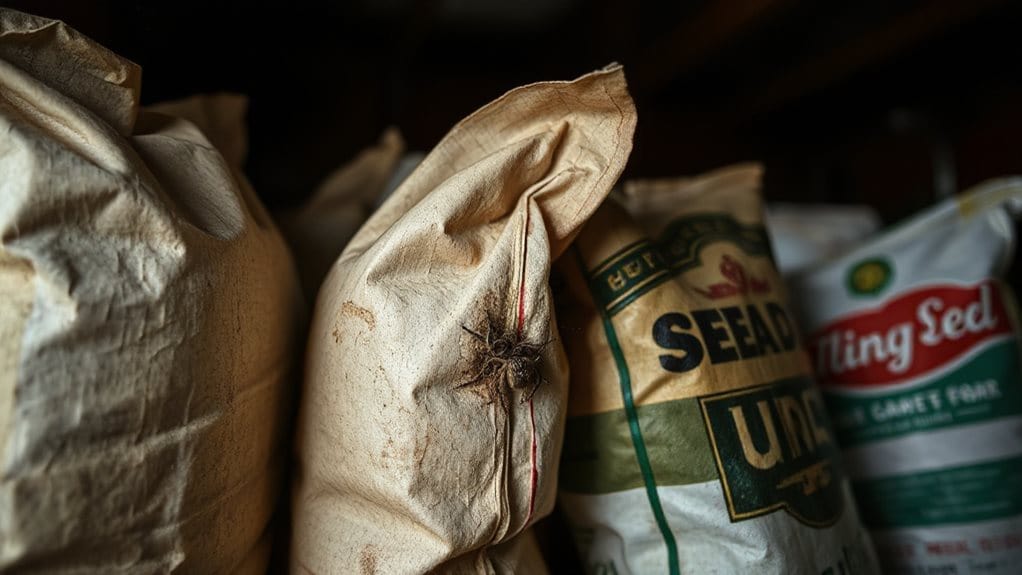
So, you’ve found that old bag of grass seed tucked in the back of the garage—uh-oh, is it still good, or has it turned into a science experiment?
Check for fuzzy mold, weird discoloration (like gray or black splotches), or tiny holes from pests, because nobody wants to plant a bug nursery instead of a lawn.
If it smells musty, feels damp, or looks like it’s been through a mini earthquake (clumped or shriveled?), just toss it—trust me, your future picnic blanket deserves better!
Mold and Mildew Presence
While you’re probably dreaming of lush green lawns and not fuzzy science experiments in your seed bag, here’s the real deal: if your grass seed looks like it’s growing a fuzzy coat, it’s time to pay attention—because mold and mildew are sneaky signs your seed’s gone south.
Clumps? Musty smells? Nope, not camping trip vibes—toss it. Keep seeds cool, dry, and sealed tight to keep them happy and ready to grow.
Seed Discoloration Issues
You just opened that bag of grass seed stored since last spring, and instead of those peppy, golden-brown specks you remember, you’re staring at something that looks like it lost a fight with a campfire—dark, dull, maybe even a little sad-looking.
Dark spots? Fungi’s crashing the party. Brittle or mushy? It’s toast. Toss it—your lawn deserves better than a seed that quit camping season early.
Pest Infestation Signs
If pests have been throwing a secret rave in your grass seed stash, it’s time to crash the party and see what’s really been going down.
See chewed bags or tiny droppings? How about weird clumps or a musty smell? Yikes! Those uninvited guests—rodents or insects—love snacking on seeds, especially if storage’s less than stellar.
Check seals, look for frass, and sniff for sourness—your future lush lawn depends on it!
Testing Germination Rates of Aged Unopened Seed
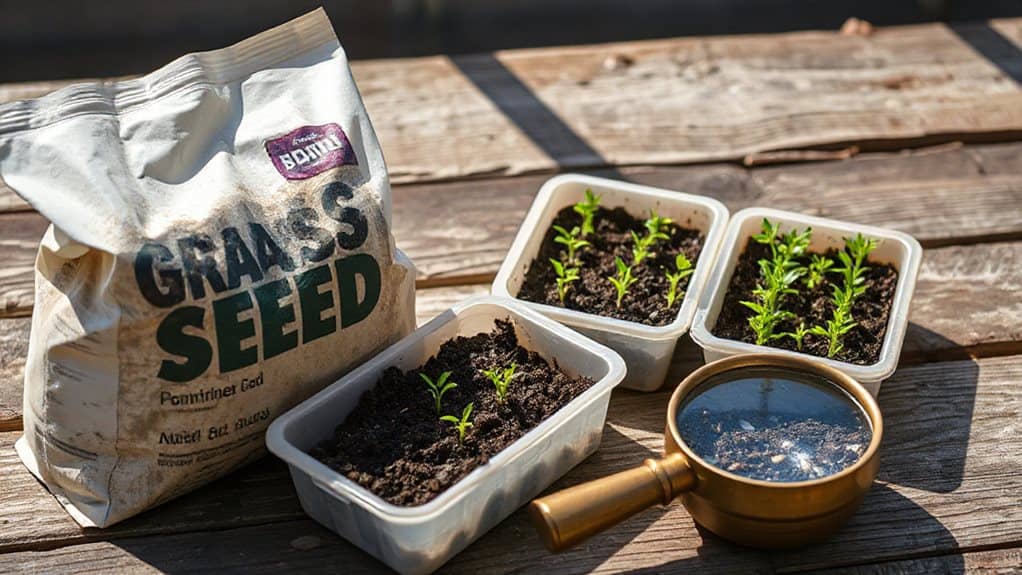
Honestly, you’d be amazed at how well a bag of grass seed can hold up over time—kind of like that old granola bar you found in your camping backpack that somehow still looked edible after two summers!
Want to know if your aged, unopened seed’s still good? Try the paper towel test: dampen a towel, add ten seeds, roll it up, and stash it in a warm spot for a week. Check sprouts—8 to 10 means you’re golden, 5 to 7? You can still use it, just overseed. Fewer than 5? Compost it, my friend.
Overall
So, you’ve got that old bag of grass seed sitting in the garage, huh? Don’t toss it yet—unopened seed can last 2–4 years if stored cool, dry, and away from curious squirrels (true story: mine once opened a bag and planted chaos). Check for clumps or mold, give it a quick germination test, and you might just grow a lawn that’d make your neighbors jealous. Happy seeding—and hey, maybe plant a patch for your next camping excursion snack garden!