The Best No-Mow Lawn Alternatives for a Low-Maintenance Yard
If you’re tired of mowing every weekend, you’ve got awesome options like clover (seriously tough, and pollinators love it), creeping thyme (smells good and it’s soft to walk on), or native ornamental grasses that look wild but barely need any work—plus, all these save you time and money, so you can go camping or just chill instead of sweating over yard chores. Want a yard that’s easier, eco-friendly, and good-looking? There’s plenty more you can do!
TLDR
- Choose native ground covers like clover or creeping thyme for a lush, low-maintenance, and pollinator-friendly lawn alternative.
- Ornamental grasses such as switchgrass and little blue stem provide drought resistance, minimal mowing, and year-round visual interest.
- Blue star creeper and creeping Jenny are foot traffic-tolerant ground covers that add seasonal color and require little care.
- No-mow lawns reduce water use, chemical inputs, and maintenance time, making them eco-friendly and efficient for busy homeowners.
- Proper site preparation and regional plant selection ensure long-lasting, low-maintenance success for your no-mow lawn alternative.
Why Choose a No-Mow Lawn?

If you’ve ever daydreamed about spending your weekends camping in the mountains or planning a summer road trip instead of wrestling with a noisy lawn mower, you’re going to love the idea of a no-mow lawn.
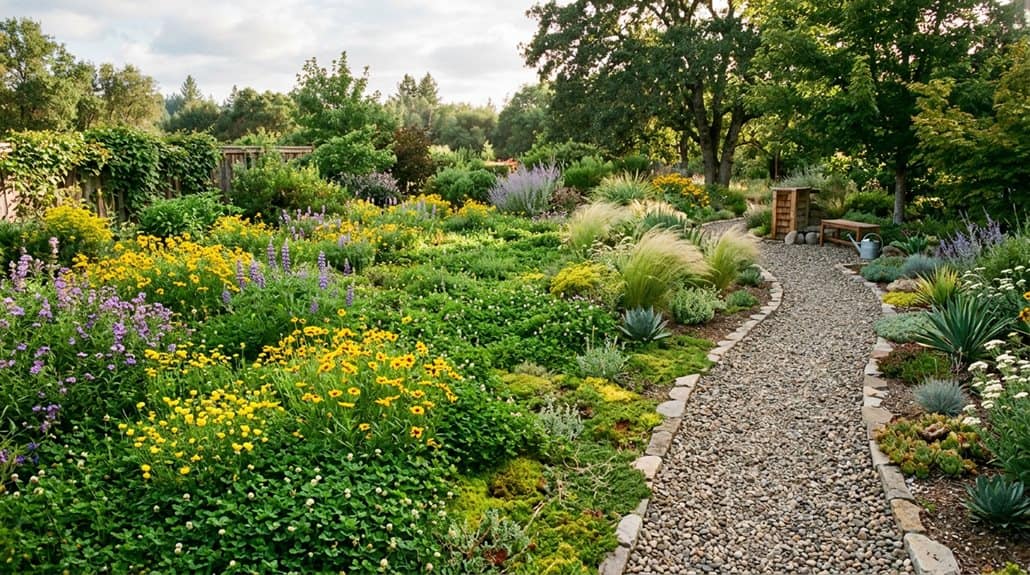
Imagine a low-maintenance yard filled with native plants and tough ground covers like clover, enhancing ecological health and water conservation.
Additionally, incorporating soil and parasitoid allies can naturally suppress pests and promote healthy growth without chemical interventions.
How No-Mow Lawns Save Time and Resources
Imagine actually having your weekends free because you don’t have to push a noisy mower around or worry about watering and fertilizing every other day—sounds like a dream, right?
With a no-mow lawn, you’ll not only save a ton of time and energy, but you’ll also cut down on gas fumes, water bills, and all those sweaty afternoons spent wrestling with stubborn weeds (trust me, I’ve been there, and it’s no picnic).
Why not use that extra time for something way more fun, like camping with friends or planning your next big escapade?
Additionally, opting for a low-maintenance yard can reduce the need for frequent soil testing, ensuring your yard remains healthy and vibrant with minimal effort.
Reduced Maintenance Demands
Although the idea of never dragging out the lawn mower again might sound like pure fantasy, no-mow lawns actually make it pretty close to reality!
When you switch to low-maintenance ground covers like clover or creeping thyme, or plant native grasses, you’ll find minimal mowing is needed.
Imagine spending your weekends camping or traveling instead of sweating over yard work—now that’s a win for both you and your neighbors!
Lower Environmental Impact
While a lush, green lawn might look pretty, traditional grass actually guzzles up way more water, energy, and chemicals than most people realize. That’s where no-mow lawns swoop in to save the day—your day, your wallet, and the planet’s too!
Swap in native ground covers, drought-tolerant plants, or native grasses for eco-friendly landscaping, water conservation, and minimal maintenance. Seriously, it’s like camping for your yard!
Which No-Mow Lawn Is Best for Your Region?

Ever wondered why some yards look lush and green with barely any mowing, while others seem to struggle no matter how much you fuss over them? It’s all about picking what fits your regional climate!
Go for native plants or a clover lawn for low-maintenance beauty. Drought-tolerant ground covers like thyme thrive in dry spots.
Seriously, chat with local experts—they know what’ll work best! Proper application techniques and understanding your area’s humidity and temperature can make all the difference in how well your no-mow lawn thrives.
Top Ground Cover Plants for No-Mow Lawns
Ready to swap your grass for something cooler, tougher, and way more colorful? Let’s check out some awesome ground covers that hug the ground, handle your footsteps (and maybe even your wildest backyard camping escapades), and burst with flowers or bold colors all season long—you’ll wonder why anyone still bothers with boring old turf.
Trust me, after you see these options, you might never look at a traditional lawn the same way again!
Best Low-Growing Options
Have you ever wondered if you could step outside and feel soft, green plants under your feet without having to deal with the hassle of mowing the lawn every weekend? With low-growing ground covers like creeping thyme and clover, you absolutely can!
These low-maintenance, no-mow lawn alternatives thrive with minimal care, look stunning, and even attract pollinators. Trust me, your yard—and your weekends—will thank you!
Foot Traffic Tolerance
While it might sound too good to be true, you can actually have a lawn that doesn’t mind a little (or even a lot!) of stomping around—no mower required.
If you’ve got adventurous guests or kids running wild, try ground covers like creeping thyme, blue star creeper, or even creeping Jenny. Their foot traffic tolerance is impressive, making your pathways resilient and low-maintenance—perfect for outdoor gatherings or camping fun!
Seasonal Color Highlights
Even if you think a lawn without mowing sounds a little too easy, wait until you see how much color and personality these ground covers bring to your yard—seriously, some of them put regular grass to shame!
You’ll love the seasonal color from flowering plants like creeping thyme’s pink blooms, blue star creeper’s pale flowers, or creeping Jenny’s yellow highlights.
Perennial plants equal year-round camping vibes!
Best Ornamental Grasses for No-Mow Lawns
If you’re itching to ditch your mower and try something totally different, let’s talk about ornamental grasses—seriously, these plants are like the cool, outdoorsy cousins of regular turf. Native grasses like switchgrass or little blue stem are drought-resistant, require minimal mowing, and add tons of visual interest. You’ll love their color variety and carefree vibe, plus, they’re super low-maintenance—perfect for serving your community’s landscaping needs! Incorporating these grasses can also help reduce soil compaction and improve overall turf health, especially when paired with peat moss application for overseeding.
Pros and Cons of Clover Lawns
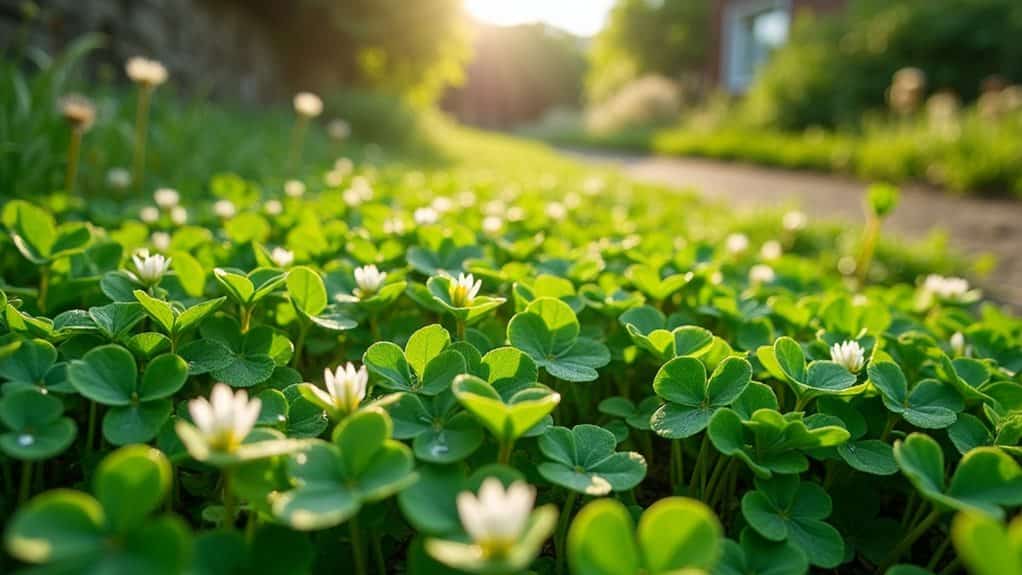
Let’s talk about clover lawns, which honestly remind me of those soft green camping spots you stumble across and just want to sprawl out on after a day of exploring—these little plants are awesome at helping the environment by fixing nitrogen and attracting pollinators.
Plus, they barely need mowing or fussing over. But, have you ever wondered if there’s a catch, like maybe they’re a bit too good at spreading and could crash the party for other plants?
Stick with me as we weigh the pros and cons, because you’ll want all the details before you swap your grass for a clover carpet!
One thing to keep in mind is that leaving your lawn unmowed can sometimes create hazardous conditions, especially if not maintained properly.
Environmental Benefits of Clover
While grass might seem like the obvious choice for a backyard picnic or a quick game of tag, clover lawns are starting to steal the spotlight for anyone who loves the outdoors and cares about the environment.
Clover’s nitrogen fixation cuts down on fertilizer needs, its drought-tolerant nature is perfect for that wild camping vibe, and it attracts pollinators while fighting weeds and stopping soil erosion—pretty impressive, right?
Durability and Maintenance Factors
Even though you might envision a classic green grass lawn as the gold standard for backyard hangouts, clover lawns have their own set of superpowers that make them seriously tough competitors—especially if you’re someone who’d rather spend weekends hiking or camping instead of mowing.
Clover’s resilience and durability mean it thrives with low-maintenance, needs little water, and handles foot traffic well. But keep an eye out—it can get invasive!
How to Remove Your Existing Grass
Although tearing out your old grass might sound about as fun as cleaning the world’s biggest litter box, trust me—removing your existing turf is totally doable and way more satisfying than you might think.
Especially once you imagine pitching a tent or setting up a hammock on your new, lush, no-mow paradise.
Use sod removal with a rented cutter, try manual removal for composting, or smothering with newspaper.
Rototillers help, but don’t forget weed roots!
Make sure to prune and maintain your existing grass to prevent regrowth and keep your new landscape thriving.
Planting and Establishing a No-Mow Lawn
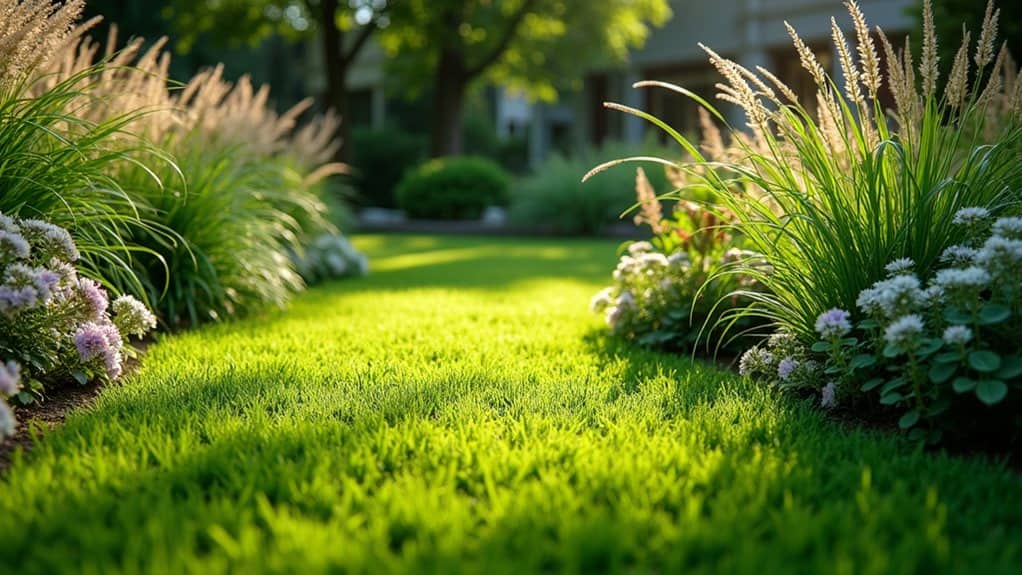
Once you’ve finally said goodbye to your old grass, the real voyage begins—think of this as prepping the perfect campsite, but in your front yard! Start by clearing every weed and rock.
Then pick native groundcovers like thyme or clover for your planting expedition. Plant in early spring or fall, water generously, and remind your family—no stomping!
You’ll soon have a lush, low-maintenance yard everyone enjoys. Remember to replace vase water regularly to keep your plants healthy and extend their lifespan.
Avoiding Invasive Species in Lawn Alternatives
When you’re planning your no-mow lawn expedition, it’s a bit like picking out snacks for a big camping trip—you want the good stuff that won’t wreak havoc on your voyage or the environment around you! Incorporating ground covers for slopes can help prevent erosion and keep your yard stable, making your outdoor space both beautiful and low-maintenance.
Year-Round Care Tips for No-Mow Lawns

Even if you’re the type who’d rather be roasting marshmallows by a campfire than yanking weeds in your backyard, you’ll be happy to know that no-mow lawns are basically the “instant oatmeal” of yard care—quick, easy, and surprisingly satisfying once you get into the groove!
Just remember, a bit of seasonal maintenance, like mulching, trimming native grasses, and clearing debris, keeps your drought-tolerant, low water yard thriving and guarantees easy weed suppression.
Overall
So, if you’re dreaming of more time for explorations—maybe camping under the stars or just hanging out with friends—instead of mowing every weekend, why not give a no-mow lawn a try? You’ll save water, help pollinators, and maybe even impress your neighbors who still fight their grass every week! Trust me, swapping out my old turf for clover and wildflowers was like hitting the easy button for my yard—plus, it actually looks cooler. Ready to ditch the mower?