Why Your Strawberries Aren’t Producing Fruit (And How to Fix It)
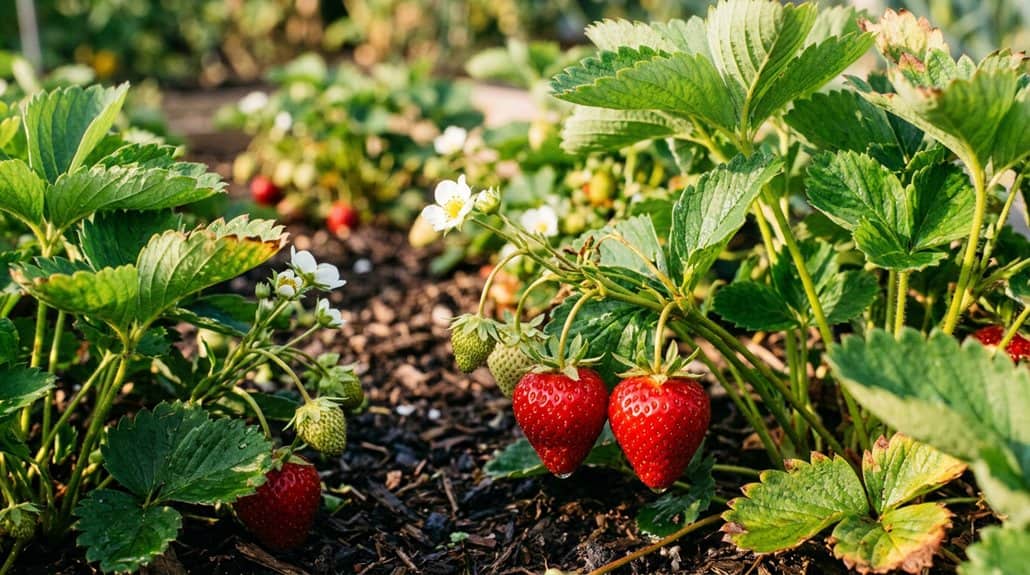
If your strawberries are all leaves but zero berries, don’t panic—you’re probably dealing with rookie plants, too much shade, overzealous watering, or maybe a leafy jungle that’s stealing all the energy from your berries! Make sure they’re getting loads of sunshine (at least 6 hours), snip off excess runners, water just enough to keep soil moist, and skip heavy nitrogen fertilizers. Honestly, I’ve learned the hard way how picky strawberries can be, but with a few tweaks, you’ll see juicy results—stick around for more clever tips!
TLDR
- Insufficient sunlight causes leafy growth but no berries; ensure your strawberries get at least 6 hours of direct sunlight daily.
- Overwatering or soggy soil can prevent fruiting; maintain consistent, deep watering and use mulch to retain proper moisture levels.
- Too much nitrogen fertilizer leads to excess leaves and few berries; use a balanced fertilizer with more phosphorus and potassium.
- Allowing runners to grow unchecked diverts energy from fruiting; regularly remove excess runners to boost berry production.
- Poor pollination or pest issues can limit fruit set; hand-pollinate flowers and monitor for pests to increase your harvest.
Are Your Strawberry Plants Old Enough to Fruit?
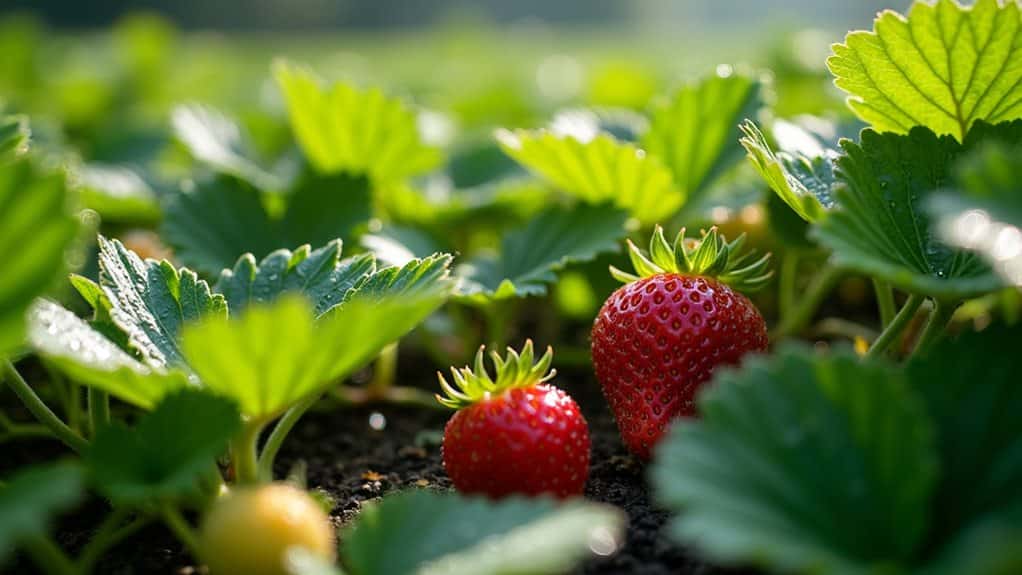
Even though you might be super enthusiastic to see your strawberry plants bursting with juicy red fruit, don’t worry if nothing’s happening yet—sometimes, it’s all about timing! In their first year, strawberries focus on plant maturity and building strong roots, not fruit production. So, be patient and let them grow—think of it as prepping for the ultimate camping trip: you need the right foundation first! Additionally, ensuring your soil has the proper nutrient levels can help support healthy growth and eventual fruiting.
Are Your Strawberries Getting Enough Sunlight?
Let’s talk about sunlight, because your strawberries are basically sun-loving campers who refuse to set up their tents in the shade.
If they don’t get at least six hours of direct sunshine each day, you can pretty much forget about a juicy harvest. Have you accidentally parked your berry patch under a tree or close to the house where the sun barely peeks through, leaving your plants all leaves and no fruit, like a salad with no dressing?
If you want those sweet berries, make sure to give your plants a sunny, open spot—think of it as booking the best campsite with a clear view of the sky, not one tucked away in the forest shadows!
Sunlight Requirements for Fruiting
Although many people think strawberries are super easy to grow, you might be surprised to find out they’re actually pretty picky about their sunlight—kind of like that friend who refuses to camp anywhere without a perfect view of the sunrise!
For the best fruiting, strawberry plants need at least six hours of direct sunlight each day. So, if you want them to serve up juicy berries, make sunshine their daily quest!
Effects of Insufficient Light
If you’ve ever tried to grow strawberries in a spot that’s more shady than sunny, you might’ve noticed your plants looking totally happy and leafy, but then—no berries! That’s because insufficient light tricks your strawberry plants into thinking it’s time for a leaf party, not fruit production.
Without enough sun, flowers can drop early or berries stay tiny—definitely not what you want for sharing delicious treats!
Optimal Placement Strategies
Even though you might think strawberries are pretty chill and can just hang out anywhere in your yard, these little berry machines are secretly sun worshippers—they crave at least six hours of direct sunlight every single day to really show off with juicy, sweet fruit.
For the best placement, pick sunny spots, avoid deep shade, and try containers or baskets if sunlight moves around—trust me, your strawberries will thank you!
Are You Watering Strawberries Correctly?
Watering strawberries might seem simple, but if you’re seeing sad, wilty leaves or soggy, mushy roots, you’re probably not hitting that sweet spot between too dry and drowning (believe me, I’ve turned my share of berries into swamp plants!).
You’ve got to look out for signs of overwatering, make sure the soil stays moist without turning into a mud puddle, and keep a regular watering schedule—especially if your berries are sunbathing in containers or braving the blazing summer heat.
Proper watering helps prevent root rot and ensures healthy growth, but be cautious of overwatering, which can cause the roots to suffocate and rot.
Let’s figure out how to keep your strawberry patch happy, hydrated, and ready to produce the juiciest fruit for your next camping breakfast!
Signs of Overwatering
Although you might think giving your strawberries tons of water is the best way to help them grow big, juicy fruit, there’s actually such a thing as *too much* love—especially when it comes to watering!
Look for yellowing leaves, funky fungal growth, and waterlogged soil that squishes when you touch it. Trust me, I’ve seen strawberries drown before—nobody wants soggy, unhappy plants on their camping snacks list!
Preventing Soil Dryness
If you’ve ever packed a soggy PB&J for a camping trip, you already know too much moisture can ruin a good thing—and your strawberries feel the same way about their soil!
Keep their roots happy by checking soil moisture often, watering deeply but letting it dry slightly between drinks, and mulching generously.
Trust me, your strawberries will thank you by producing more fruit for you—and your friends!
Optimal Watering Frequency
Let’s be real—finding the perfect watering routine for strawberries is a bit like packing just the right amount of snacks for a camping trip: too little, and you’re left hungry (or with wilted plants); too much, and things get soggy in all the wrong ways!
Aim for 1–2 inches of moisture weekly. Check the soil’s top inch to see if it’s moist enough.
And avoid overwatering—trust me, your berries will thank you!
Is Excess Leaf Growth Preventing Strawberry Fruiting?
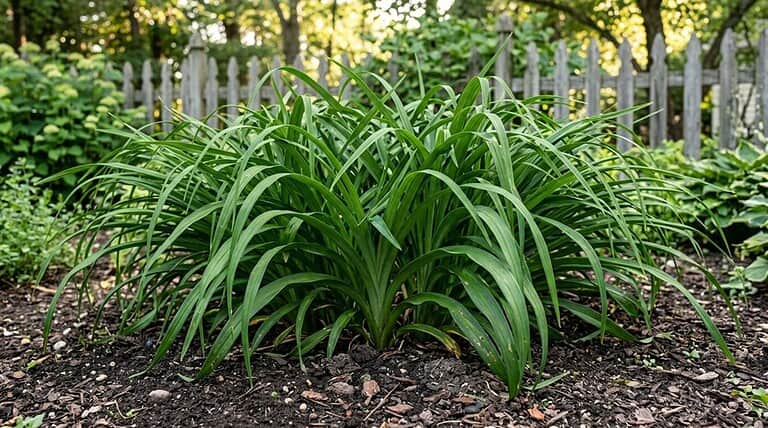
Sometimes, when you look at your strawberry plants and see a jungle of big, beautiful leaves, it feels like you should be winning a gardening award, right? But hold on—excess leaf growth can actually steal energy from fruit production!
A balanced planting schedule can help prevent overstimulation of foliage and promote better fruiting.
If you want to serve up juicy berries at your next camping trip, try regular pruning. It lets sunlight reach the flowers, enhancing pollination and fruit set.
Are You Feeding Your Strawberries the Right Nutrients?
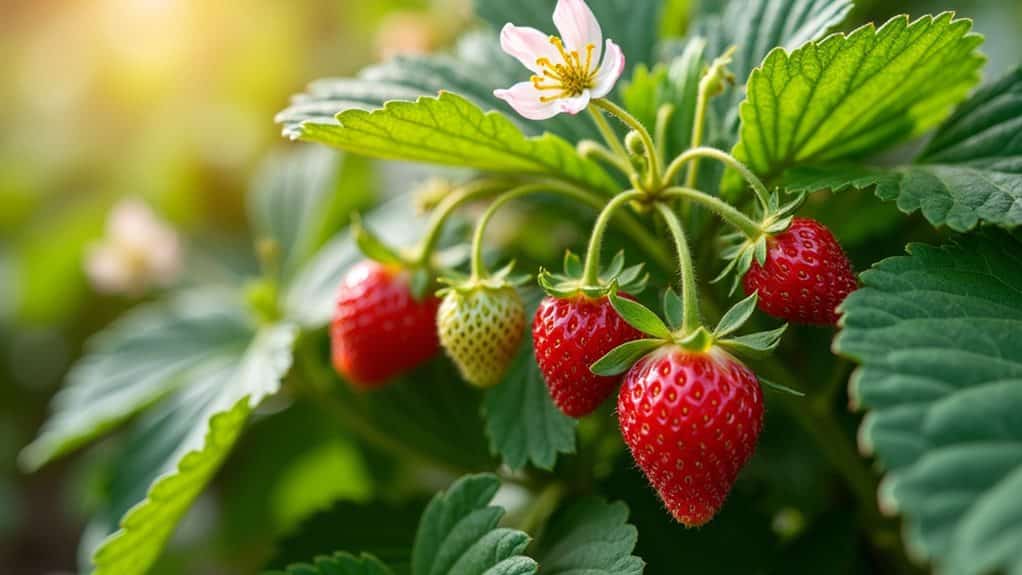
After wrangling those wild leaves and making room for the sun, you might still wonder why your strawberry patch isn’t bursting with berries ready to pack for your next camping breakfast.
Are you giving them the right fertilizer? Too much nitrogen makes leaves go wild, but the real berry magic happens with phosphorus!
Test your soil, try compost or fish emulsion, and remember—balanced nutrients mean sweet rewards for your friends and family.
How Can You Spot Pests and Diseases That Stop Fruiting?
Even if you’ve given your strawberries the perfect sunbathing spot and a five-star nutrient buffet, sneaky pests and tricky diseases can still crash the party and steal your hopes of juicy fruit—trust me, I once watched a slug devour an entire berry right before my eyes on a camping trip, and it was pure heartbreak.
Check strawberry plants for chewed leaves, sticky residue, discolored spots, or wilting—catching pests and diseases early helps everyone! Poor pollination and environmental stressors like temperature fluctuations can also prevent fruit development, so keep an eye out for pollination issues that may be sabotaging your crop.
Are Your Strawberry Flowers Getting Enough Pollination?
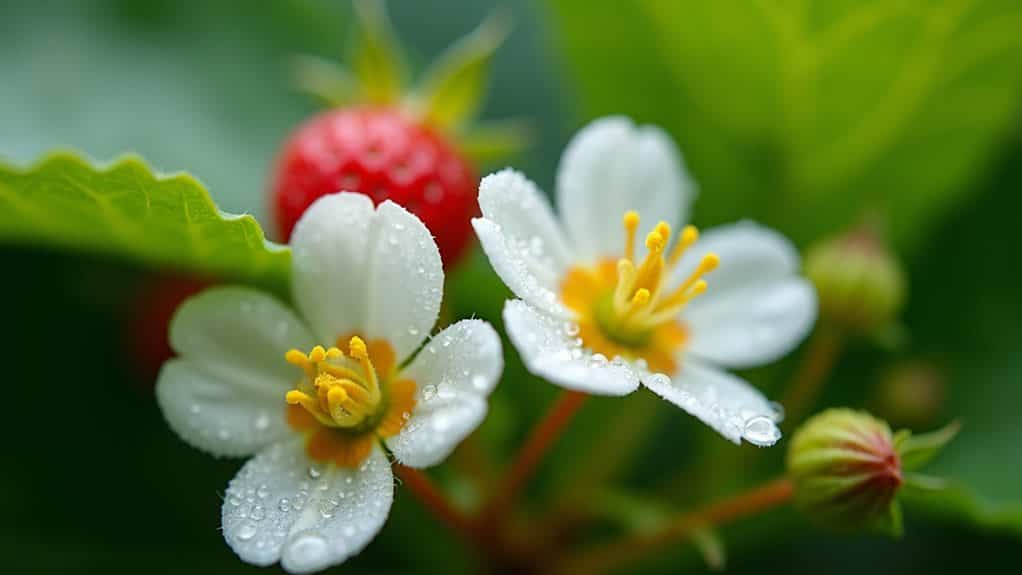
Honestly, have you ever wondered why your strawberry plants burst out with tons of gorgeous white flowers, but then don’t follow up with a juicy berry bonanza? Well, it could be a pollination problem!
Without enough bees visiting, fruit set suffers—leaving you with sad, tiny berries or none at all. Try hand-pollinating with a paintbrush or plant bee-friendly flowers nearby to enhance your strawberry haul!
Is Your Strawberry Variety Suited for Your Climate?
So, maybe you’ve got the bees buzzing and you’re doing your best paintbrush-pollination dance, but those strawberry plants still aren’t loading up with fruit—what gives? It could be your strawberry varieties just don’t match your climate suitability. Choosing the right seed selection and types, such as alpine or everbearing kinds, can make a significant difference in your harvest. If you’re growing June-bearing types in a chilly, short season, fruit production tanks. Go for alpine or everbearing kinds, and check those USDA hardiness zone labels!
Quick Fixes for More Strawberries
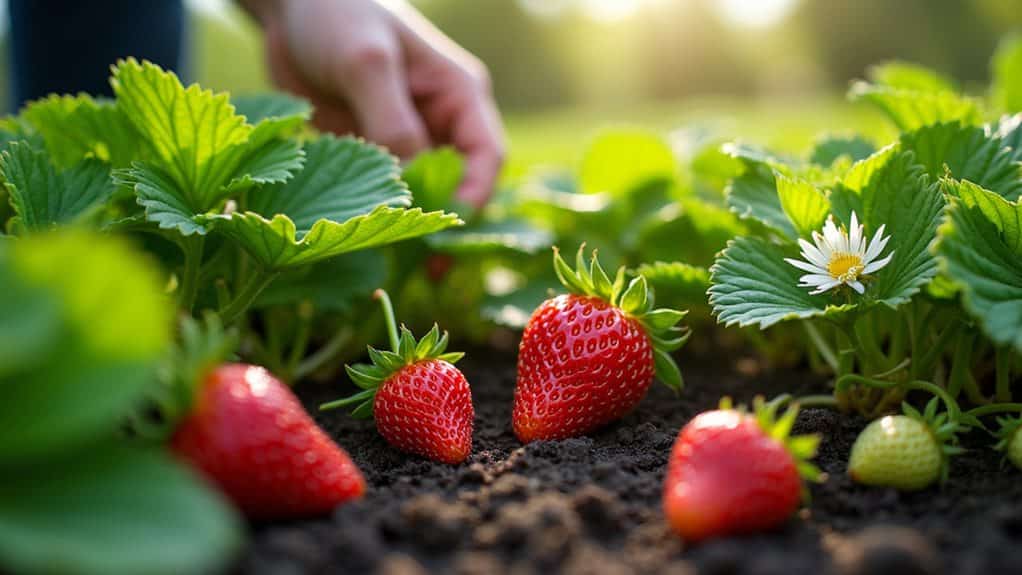
While it might feel like your strawberry patch is out to sabotage your summer fruit dreams, there are actually some pretty simple tweaks you can make to turn things around and get those plants bragging to the neighbors.
Strawberry plants need space, so snip off those wild runners.
Water the plant deeply, mulch well, and use fertilizers with less nitrogen—plants require phosphorus and potassium for juicy berries, not just leafy growth!
Overall
So, if your strawberries are stubbornly refusing to fruit, don’t panic—just think like a strawberry detective! Check their sunlight, water, and food, and maybe have a little chat with them (I swear mine perk up when I talk to them). Remember, every plant has its own quirks, kind of like campers in a tent on a rainy night. Tweak your care, stay patient, and soon you’ll be picking sweet berries for your next camping breakfast!