Daylilies Not Blooming? Common Causes and Fixes
If your daylilies are stubbornly refusing to bloom, don’t panic—mine have played the “no flowers” game, too! Usually, they need at least six hours of sun, so find them a sunny spot, and make sure they’re not buried too deep or smothered under heavy mulch. Give them room to breathe by dividing overcrowded clumps every few years, feed them with rich compost, and don’t forget regular deadheading! Stick around—there’s plenty more ways to get blooms popping!
TLDR
- Daylilies need at least 6 hours of direct sunlight daily for abundant blooms.
- Plant crowns too deep or excess mulch can smother plants and inhibit flowering.
- Overcrowded daylilies should be divided every 3–5 years to restore healthy blooming.
- Ensure soil is enriched, properly watered, and fertilized to support vigorous flower production.
- Regular deadheading and pruning promote continuous and healthier blooming cycles.
Why Aren’t My Daylilies Blooming?

Even though daylilies are usually the show-offs of the garden, bursting with color and energy, sometimes they just refuse to bloom, and wow, that can be frustrating—especially if you’re the type who loves checking your flowers every morning like you’re on a camping trip, scouting for wildlife!
Maybe your daylilies are overcrowded, planted too deep, or stuck in poor soil—think of it as cramming everyone into one tent!
Sunlight Requirements for Healthy Daylily Blooms
While you might envision daylilies as the sun-loving adventurers of the flower world, ready to soak up every golden ray like campers sprawled on their sleeping bags, these beauties actually have some pretty specific sunlight needs if you want them to put on a real show. Make sure they get at least 6 hours of direct sun—without enough light, you’ll see fewer blooms, or sometimes, none at all! Proper sunlight exposure helps prevent stunted growth caused by inadequate energy production in the plant.
Planting Depth and Mulch: Common Mistakes That Inhibit Flowering

Let’s talk about something that trips up even the most passionate gardeners—how deep you plant your daylilies and what happens when mulch goes wild!
If you bury those crowns too deep or pile on mulch like you’re packing for a month-long camping trip, you might accidentally stop your flowers from ever showing up. This is honestly more disappointing than forgetting marshmallows on a campout.
Make sure you keep an eye on how much soil and mulch you’re adding, because your daylilies really want their crowns close to the surface, ready to bloom like they’re excited to hit the open road! Proper planting depth and soil pH management are key to encouraging healthy flowering.
Improper Planting Depth Risks
If you’ve ever packed for a camping trip and stuffed your sleeping bag way down at the bottom of your backpack, only to realize later that it’s impossible to get out when you need it—well, planting daylilies too deep is a lot like that!
Improper planting depth means your daylily crowns get buried, which keeps roots from growing right and flowers from ever showing up to the party.
Mulch Buildup Effects
Even after you’ve planted your daylilies at just the right depth, mulch can sneak in like extra socks stuffed into your suitcase—suddenly, everything’s so jam-packed that nothing fits quite right!
Mulch buildup may seem cozy, but it actually smothers your daylilies, buries the crown, and stops new shoots from popping up.
Keep mulch light and fluffy, just like your favorite camping marshmallows!
Overcrowding and When to Divide Daylilies
Although daylilies are champs at filling up a garden bed, they can get a little too cozy with their neighbors, packing in tightly until there’s barely room to wiggle a root. That’s overcrowding! If you notice fewer flowers, it’s time to dig up those clumps—think of it as giving them their own camping space. Divide every 3 to 5 years, and you’ll help them thrive again. Regularly monitoring plant health and spacing can also prevent overcrowding and promote better blooming growth management.
Soil Nutrition and Watering Tips for More Blooms
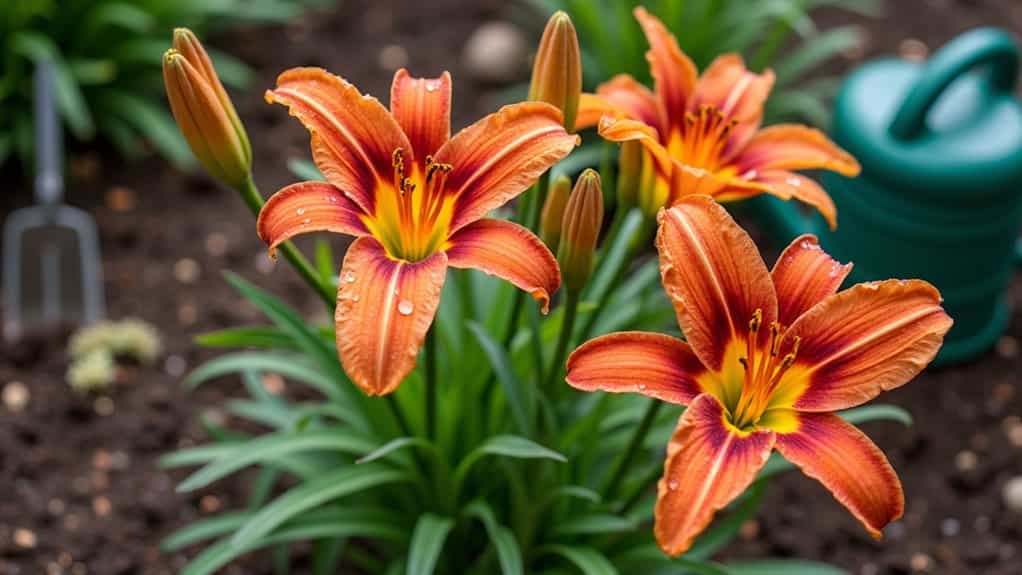
Whenever you’re hoping for a real flower show from your daylilies, think of their soil and water as the secret recipe—like the perfect campfire s’mores, you need just the right ingredients to get the best results! Enhance soil nutrition with compost or well-rotted manure, use a balanced 3-1-2 fertilizer three times yearly, and keep soil evenly moist—nobody likes soggy or bone-dry roots, right? Regular testing of soil parameters like pH and nutrients can help you fine-tune your soil test kits, ensuring optimal conditions for blooming.
How Pruning and Deadheading Affect Daylily Flowering
If you’ve ever felt like your daylily patch just isn’t putting on the dazzling flower show you imagined—kind of like waiting for the campfire popcorn to pop and getting only a sad handful—then it’s time to talk about pruning and deadheading, which are basically your secret gardening superpowers. Regularly removing spent blooms and trimming back overgrown foliage can encourage more vigorous flowering and prevent issues like gas leaks or fire hazards, ensuring your garden remains safe and beautiful.
Environmental Problems That Reduce Daylily Blooms

Let’s talk about some environmental hiccups that could be keeping your daylilies from putting on their best show. Because trust me, even the most adventurous camper can’t pitch a tent in total darkness and expect to have fun—daylilies feel the same way about sunlight!
If these flowers are stuck in too much shade, squished together like a bunch of overpacked suitcases, or planted at the wrong depth, they’ll just sulk and skip blooming altogether.
Insufficient Sunlight Exposure
Although daylilies are some of the hardiest flowers you’ll ever meet on your gardening expeditions, they’re definitely not fans of shade—trust me, I’ve tried tucking them under a tree, and the result was about as exciting as a rainy day at summer camp with no board games.
If your daylilies get insufficient sunlight, you’ll see weak stems and hardly any blooms.
Give them sun—they’ll thank you!
Overcrowding and Root Competition
Once your daylilies have all the sunshine they could possibly want, you might think they’re set for a season of show-stopping blooms—but hold on, because there’s another sneaky problem that can totally mess with their flower power: overcrowding and root competition.
When too many plants cram together, roots fight for space and nutrients, just like siblings fighting over snacks on a camping trip—everyone ends up with less!
Improper Planting Depth
Even if you’ve picked the perfect sunny spot and spaced your daylilies just right, there’s another sneaky camping-style blunder that can totally crash your flower party: planting your daylilies too deep!
Improper planting depth means if the crowns are buried more than 1.5 inches, your blooms might go on strike. Keep crowns at soil level—don’t let thick mulch create a subterranean daylily disaster!
Step-by-Step Solutions to Restore Blooming Daylilies

When your daylilies just sit there with a bunch of leaves and absolutely zero flowers, it can feel a bit like packing for the best camping trip ever, only to find you’ve forgotten the tent—but don’t worry, getting them to bloom again isn’t as tricky as pitching a tent in the dark! Start by dividing overgrown, overcrowded clumps, checking planting depth, pruning away dead leaves, and transplanting during cool weather. Incorporating soil health, such as aerating and enriching the soil, can also encourage better flowering.
Overall
So, if your daylilies are acting stubborn and refusing to bloom, don’t panic—just think of yourself as a plant detective! Maybe they need a sunnier spot, a little snack of fertilizer, or just some elbow room (honestly, who doesn’t?). I’ve wrestled with cranky flowers before, and trust me, with a bit of care, you’ll have your garden looking like a campsite wildflower field in no time. Grab your gloves, get in there, and happy growing!