Bermuda vs Zoysia Grass: Key Differences Explained
If you’re picking between Bermuda and Zoysia grass, here’s the dirt: Bermuda’s got soft, thin, bright blades, loves soaking up sun, and needs lots of mowing—great if your camping chairs live in full sunshine! Zoysia, on the other hand, feels tougher underfoot, handles shade like a champ, and doesn’t guzzle water or fertilizer, making it perfect for chill, low-maintenance lawns. I once tried camping on both and Zoysia didn’t poke my legs! Want the full story? Stick around!
TLDR
- Bermuda has finer, velvety blades and thrives in full sun, while Zoysia features thicker, prickly blades and tolerates partial shade.
- Zoysia requires less mowing and watering due to its slower growth, whereas Bermuda grows quickly and needs more frequent maintenance.
- Bermuda grass excels in drought and heat but is more invasive and pest-prone than Zoysia.
- Zoysia offers better shade tolerance and performs well in cooler climates compared to Bermuda.
- Choose Bermuda for sunny, high-traffic lawns, and Zoysia for shaded, low-maintenance, or border-zone areas.
Zoysia vs Bermuda Grass: Key Differences

If you’ve ever wandered through a sunny park or set up your tent for a weekend of camping, you might’ve noticed that not all grass feels—or even looks—the same under your feet.
Zoysia and Bermuda are two grass types with major differences: Zoysia’s slower growth habits, wider blade width, higher shade tolerance, and greater drought resistance make maintenance easier.
Meanwhile, Bermuda’s turf characteristics demand frequent mowing at a lower height. Additionally, proper handling and storage of grass and plants can help prevent issues like discoloration, which is also important for maintaining healthy turf.
Blade Width, Color, and Texture Compared
Even though you mightn’t think much about the grass when you roll out your sleeping bag or kick off your shoes in a park, the difference between Bermuda and Zoysia is honestly pretty wild once you start paying attention.
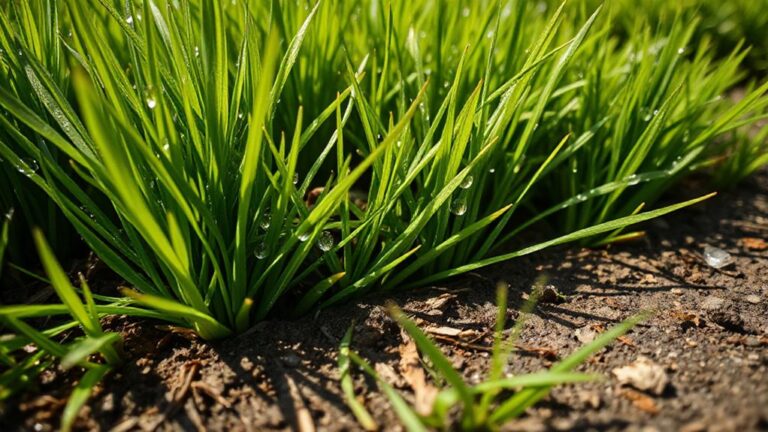
Bermuda grass has a finer blade width, bright green color, and smooth texture—almost like nature’s velvet.
Zoysia grass? Thicker, stiffer, and a bit prickly, with a more muted green color—perfect for a tough turf comparison!
A key difference is how each type responds to foot traffic and maintenance, with moisture control playing a big role in their health and appearance.
Sun, Shade, and Climate Suitability
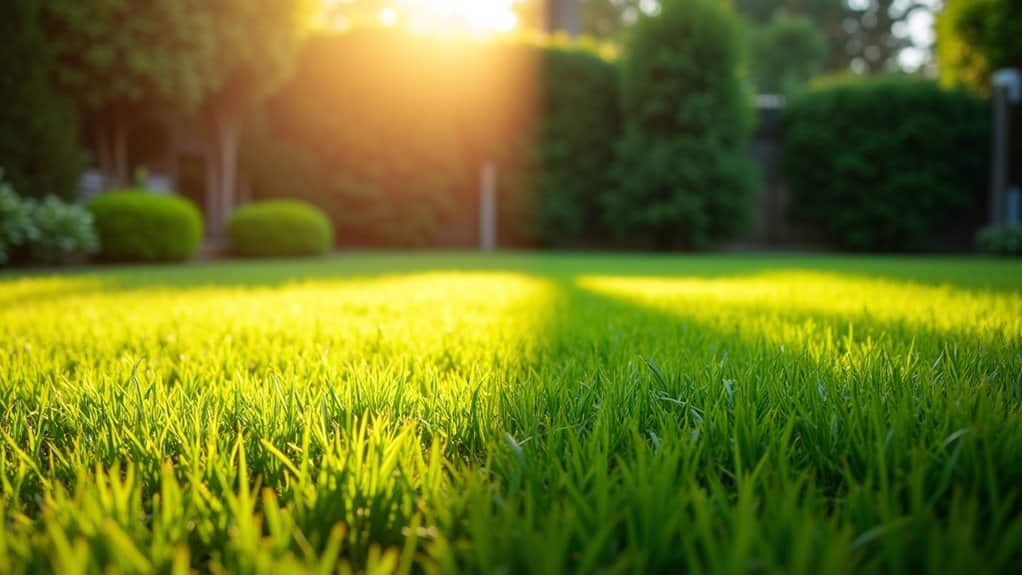
Alright, let’s talk about how these grasses handle sunlight, shade, and different climates, because this stuff is honestly as important as picking the right tent for a camping trip—trust me, I’ve learned that the hard way!
If you’ve got a yard that feels like the Sahara with blazing sun all day, Bermuda’s your sun-loving buddy. But if you camp under trees or have a house that throws shade, Zoysia is way more chill and can handle life in the shadows.
Don’t forget to check your climate too, because Bermuda hates the cold and turns brown faster than my marshmallows over a campfire. Leaving your grass improperly maintained or exposed to rust and corrosion can also lead to issues similar to gas leaks—so regular inspection and maintenance are key to keeping it healthy.
Meanwhile, Zoysia hangs in there through chilly nights and even frosty mornings—now, isn’t that cool?
Sunlight Requirements Compared
When you’re picking the perfect grass for your lawn, it’s almost like planning a camping trip—you’ve got to know what kind of weather you’re dealing with and how much sunshine you’ll get!
Bermuda grass loves full sun, soaking up 6-8 hours daily for the best growth and photosynthesis.
Zoysia, though, is more chill with its sunlight needs, handling partial shade and shorter sun exposure better.
Shade Tolerance Differences
If you’ve ever tried to pitch a tent under the trees instead of in that wide-open sunny spot, you know how tricky it can be to find the perfect balance between sunlight and shade—and honestly, your lawn feels the same way!
Zoysia grass wins for shade tolerance, thriving in partial shade and shaded areas, while Bermuda grass, with higher sunlight requirements, struggles.
Zoysia’s cold-hardiness and growth performance make lawn care much easier!
Climate Adaptation Zones
Ever wondered why some lawns look like lush green carpets while others resemble a patchy old tent site after a rainy camping trip? Well, climate adaptation is key!
Bermuda, a warm-season grass, loves full sun in southern USDA zones, but struggles with cold hardiness and winter dormancy.
Zoysia, with better shade tolerance and temperature tolerance, thrives in border zones, cooler climates, and even handles chilly camping mornings surprisingly well!
Growth Habits and Maintenance Demands
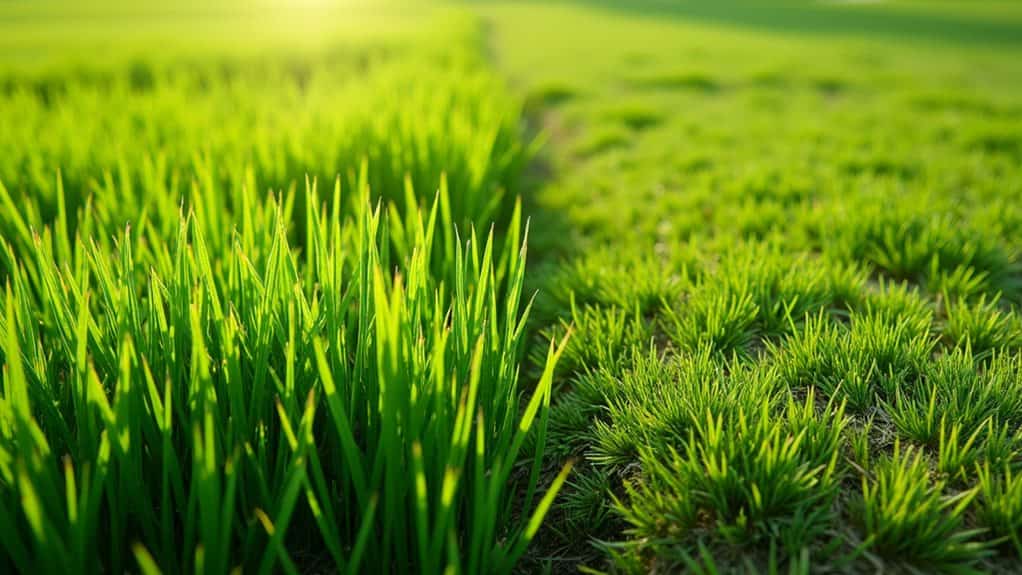
Now, let’s talk about how these grasses actually grow and what you’ll need to keep them looking sharp, because trust me, it’s a bit like choosing between a puppy that never stops running and a turtle that just chills all day.
Have you ever tried to go camping and realized your tent needs less attention than your lawn? Well, Bermuda’s going to keep you busy with constant mowing and watering.
While Zoysia is more of a “kick back and relax” kind of grass, needing less fuss and handling shade a bit differently—so let’s see which one matches your style!
Shade Tolerance Comparison
Although both Bermuda and Zoysia grasses are popular choices for lawns, their shade tolerance is a whole different story—kind of like choosing between camping on a sunny beach or trying to set up your tent in a deep, shady forest.
If you’re tackling shaded lawns, Zoysia grass wins with its upright growth habit, lower sunlight requirements, great turf density, and weed resistance, which means less maintenance for you!
Mowing and Watering Needs
When you’re dreaming about that perfect lawn—like the kind you’d want to pitch your tent on for a backyard camping night—the mowing and watering needs of your grass are a pretty big deal!
Bermuda’s mowing frequency is high, with a speedy growth rate and hefty fertilization and watering requirements.
Zoysia’s slow growth, drought tolerance, and low-maintenance style make it a chill, drought-resistant camping companion!
Toughness, Drought Resistance, and Pest Issues
If you’ve ever dreamed of having a yard that can survive summer heatwaves or wild backyard soccer games, you’re definitely going to want to know how Bermuda and Zoysia grass stack up in the toughness department.
Bermuda boasts awesome drought resistance and quick recovery from pest damage—though it’s pretty invasive and pest-prone.
Zoysia’s got solid pest resistance, especially against chinch bugs, so pest control and pest management are easier.
Additionally, understanding the heat retention characteristics of each grass type can help you choose which one will perform better under your specific climate conditions.
How to Choose the Right Grass for Your Lawn
So, now that you know which grass can take a soccer ball to the face (and which one will sulk about it), let’s talk about how you can actually pick the best grass for your own backyard escapade zone.
Consider your lawn choice based on mowing height, shade tolerance, water requirements, growth rate, durability, maintenance, and climate suitability.
Bermuda grass loves sun and action; Zoysia grass thrives in shady, chill spots!
Overall
So, which grass should you pick—Bermuda or Zoysia? Imagine stepping barefoot onto your lawn after a camping trip—do you want soft, thick Zoysia or the super tough, sun-loving Bermuda under your toes? Honestly, both grasses are awesome, but your climate, how much you love mowing, and whether you’ve got shade or sunshine make a big difference. Don’t stress, just pick what fits your yard and lifestyle best—your future backyard journeys will thank you!