Why Carrots Grow Forked and Twisted (And How to Fix It)
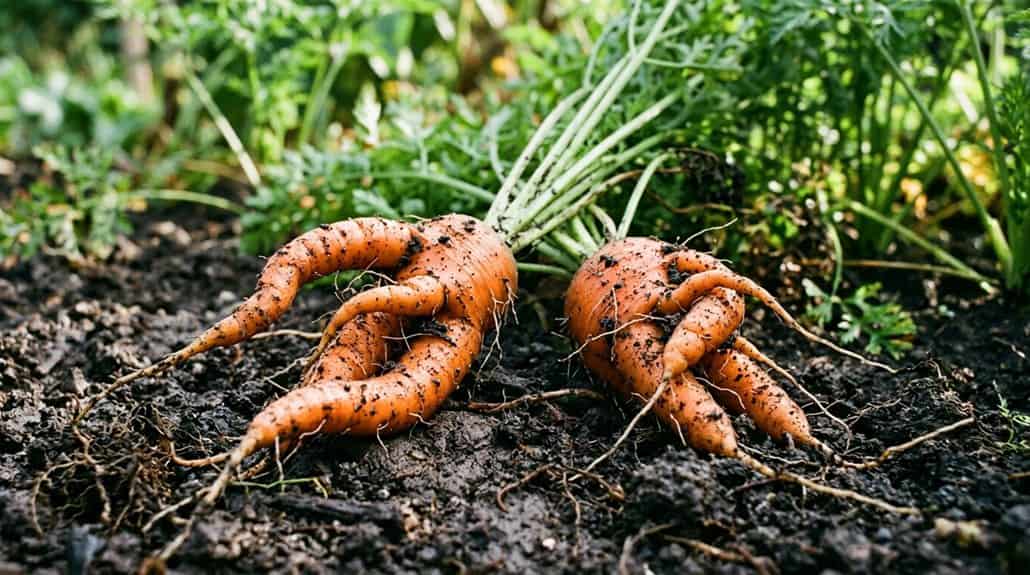
Carrots get all twisty or forked mostly because your soil’s too heavy, like sticky clay, or packed down tight, making it really hard for their roots to grow straight—think of it like trying to pitch a tent on rocky ground! Crowded seedlings, wild watering habits, and too much fertilizer (especially nitrogen) throw them off, too. Even sneaky pests can mess with their shape. Want to camp out with perfect, straight carrots every harvest? Stick around—I’ve got some simple solutions coming up!
TLDR
- Heavy, compacted, or rocky soil prevents proper root growth and causes carrots to fork or twist.
- Overcrowding or skipping thinning forces roots to compete for space, resulting in deformed carrots.
- Disturbing or transplanting seedlings damages roots and leads to abnormal root shapes.
- Inconsistent watering and excessive nitrogen fertilizer can deform carrots by disrupting even root development.
- Pests like root-knot nematodes and diseases can cause root deformities; use crop rotation and row covers to prevent them.
Why Do Carrots Grow Forked or Twisted?
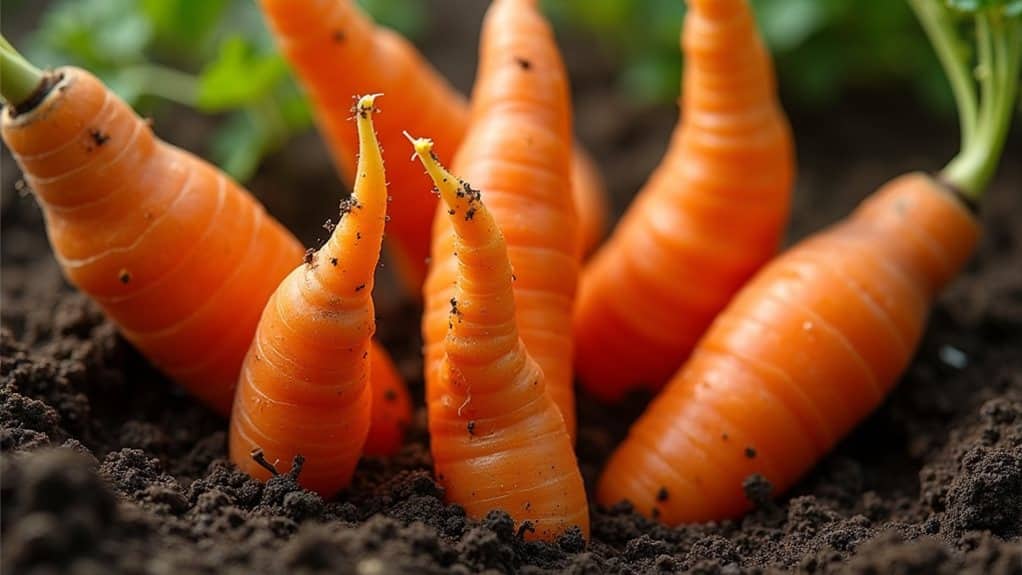
Ever wondered why your carrots sometimes come out of the ground looking more like tangled tree roots or octopus legs than the smooth, crunchy snacks you see at the grocery store? Well, forked roots often happen when carrots hit poor soil, suffer root damage from being disturbed, or deal with irregular watering.
Trust me, nobody wants mutant veggies when you’re hoping to share a perfect garden harvest!
How Soil Type and Texture Affect Carrot Shape
Let’s talk about how the ground under your feet can make all the difference when it comes to growing those legendary, perfectly straight carrots you see in grocery stores—because, honestly, who wants a carrot that looks like it’s trying to escape camp by tunneling sideways?
If you plant carrots in heavy, compacted clay, those roots will twist and fork like they’re on an obstacle course. But switch to a loose, sandy loam and you’ll see them stretch out long and straight, as if they’re sunbathing on a beach.
Trust me, after years of yanking out mutant carrots that looked like they got lost on a hiking trip, I can tell you that picking the right soil is a total revolution! Soil structure and texture play a crucial role in how carrots develop their shape and size.
Effects of Soil Compaction
Although it might sound a little dramatic, the soil your carrots call home is a huge deal when it comes to whether they grow up looking like runway models or twisted pretzels.
If you’ve got soil compaction—especially in dense clay soils—roots struggle, twist, and fork like they’re on a camping trip gone wrong.
Add organic matter, avoid stomping on planting beds, and you’ll help root development tremendously!
Benefits of Sandy Loam
When you envision the perfect carrot—tall, straight, and ready for its close-up—you’re actually imagining what happens when carrots grow up in the carrot equivalent of a five-star resort: sandy loam soil.
With sandy soils, you give your carrots the ultimate camping spot, where the loose soil texture and proper root development go hand in hand.
Planting Mistakes That Lead to Deformed Carrots
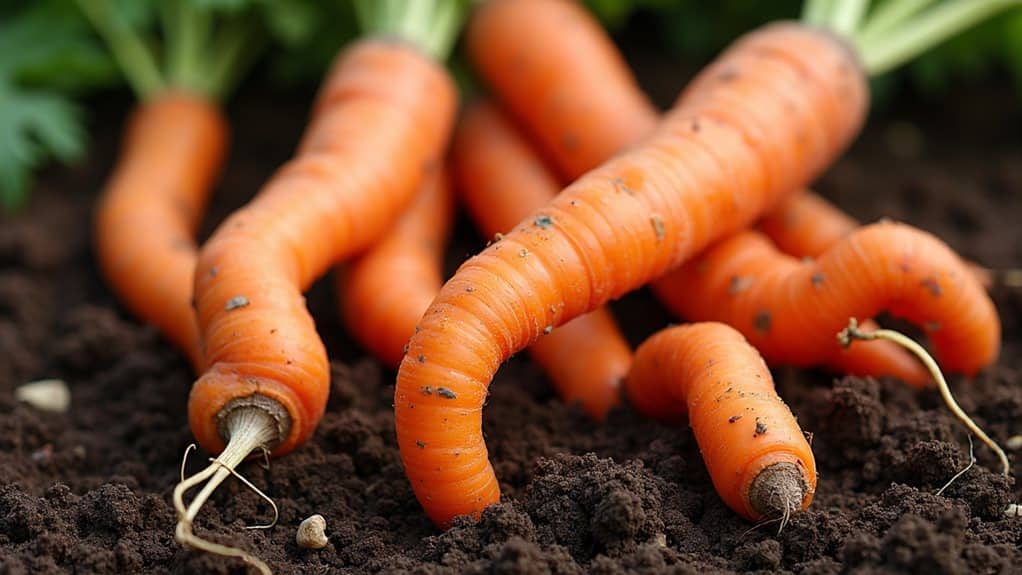
Let’s talk about some classic planting mistakes that can totally mess up your carrot crop, because trust me, I’ve been there—crowded seedlings look like they’re having a sleepover, but they just end up twisting into a big orange knot! If you skip thinning or try to move those delicate little roots, you’re basically handing your carrots a map to Fork City, and that’s not a place you want to visit on your gardening journey. Properly maintaining soil conditions and avoiding overcrowding are essential for healthy, straight carrots, so make sure to seal, clean, and declutter your garden beds to prevent insect activity that could also interfere with growth.
Overcrowded Seedlings Cause Twisting
If you’ve ever tried growing carrots and ended up with a batch that looks more like wild tentacles than neat, straight veggies, you’re definitely not alone—overcrowded seedlings are usually the sneaky culprit behind those twisted, forked roots.
When you pack those tiny seeds too close, the roots wrestle for space, water, and nutrients. Trust me—thinning seedlings to 2 inches apart lets everyone grow straight and happy!
Improper Thinning Promotes Forking
Although it might seem like a small step, skipping the thinning process is one of the biggest reasons carrots come out looking like they’ve been on a wild camping expedition underground—twisting, forking, and branching every which way!
Improper thinning means your carrots face root competition, leading to forked carrots and all sorts of carrot deformities.
Give each seedling space—about 2-3 inches—and they’ll grow straight and strong!
Transplanting Damages Sensitive Roots
Even though you might think giving your carrot seedlings a new “home” is a good idea, carrots aren’t exactly fans of moving day—in fact, transplanting them is one of the quickest ways to end up with roots that look like they’re trying to escape a tent in the middle of the night!
Transplanting causes root damage, leading to deformities. Always sow carrot seeds directly—your seedlings will thank you!
Does Watering or Fertilizer Cause Weird Carrots?
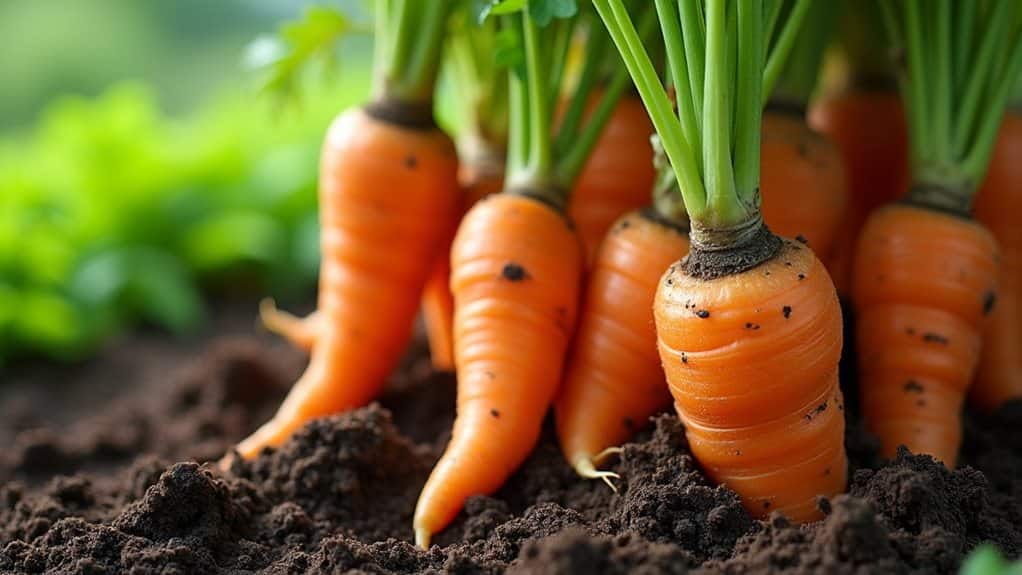
Let’s talk about why your carrots sometimes end up looking more like tangled octopus arms than the straight, crunchy snacks you’re expecting—because yes, both watering and fertilizer can totally mess with your harvest!
If you use excessive nitrogen or let soil moisture swing wildly with inconsistent watering, you’ll see all kinds of root deformities. Trust me, nobody wants mutant carrots when you’re prepping snacks for your next camping trip!
Preventing Carrot Pests and Diseases That Distort Roots
When you’re dreaming of crunching on fresh, perfectly-shaped carrots by the campfire, the last thing you want is to pull up a root that looks like it’s been through a horror movie—thanks to some sneaky pests and diseases that love to mess with your crop!
Stop root-knot nematode from causing deformed carrots with crop rotation, solid pest control, clean tools, reflective mulches, and row covers—your carrot campfire feast depends on it! Properly diagnosing and addressing tank size & recovery issues in your garden can also help prevent root deformities caused by environmental stressors.
Easy Ways to Grow Straight, Healthy Carrots
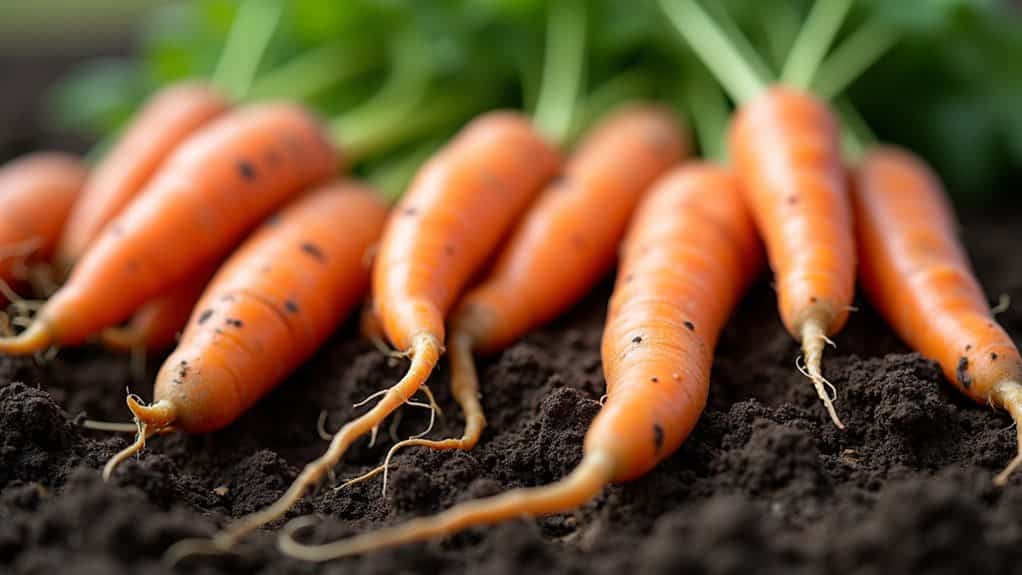
Although it might sound like carrot-growing magic, getting those straight, visual-perfect roots is totally doable if you set things up right from the start.
Start with awesome soil preparation: skip clay soils and go for sandy loam, digging out every pesky rock.
Don’t forget thinning—space seedlings out, or you’ll get some wild root deformities!
If you’re camping in rocky terrain, use raised beds or deep containers.
Overall
So, next time you pull up a carrot that looks more like it’s ready for a camping trip than your dinner plate, don’t freak out! Just remember, with loose soil, careful planting, and steady watering, you can grow those straight, crunchy carrots you see in travel magazines (okay, maybe not, but you get the idea). Don’t be afraid to experiment—gardening’s an experience, and even the weirdest-looking carrots taste awesome roasted over a campfire!