How to Stop Squirrels From Eating Your Tulip Bulbs
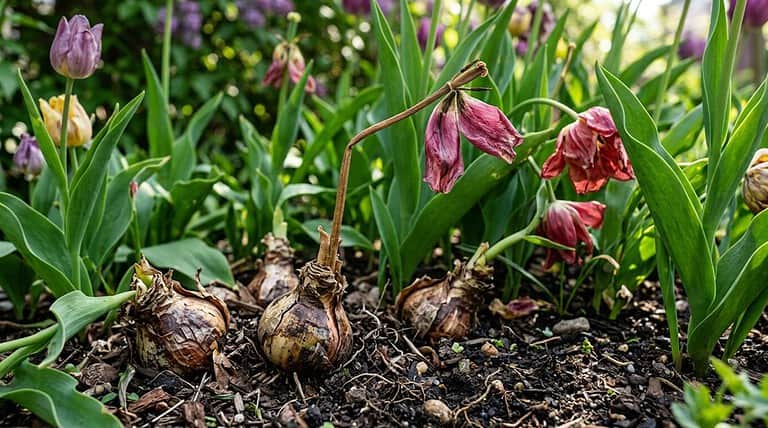
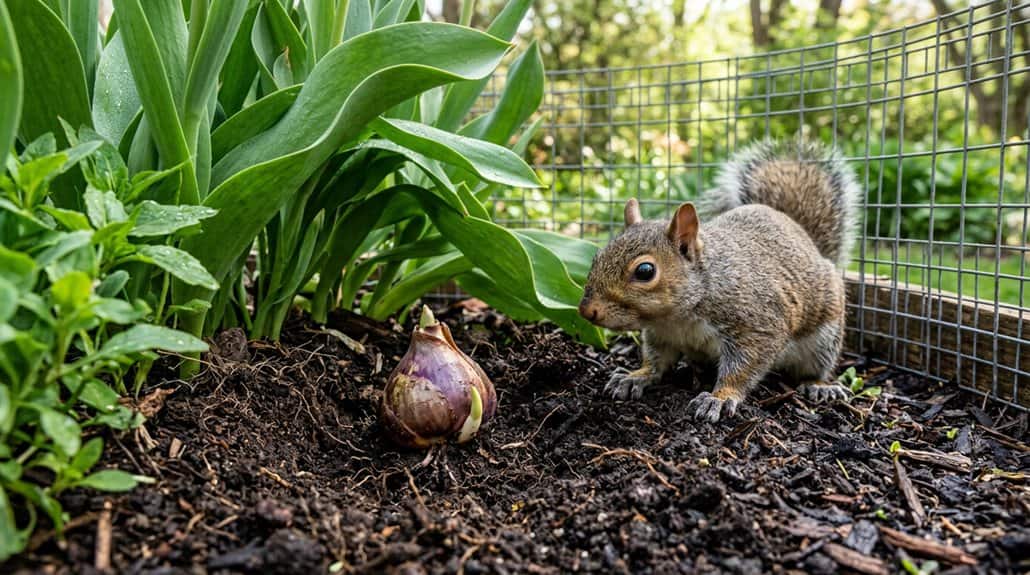
If you’re tired of squirrels acting like your tulip bulbs are a snack bar, don’t worry—you’ve got options! Lay chicken wire over your flower beds, sprinkle crushed oyster shells or red pepper flakes on top, or plant the bulbs in deep containers for easy moving (seriously, chicken wire is more than just farm gear). Try planting mint or lavender, since those smells freak out squirrels, and if all else fails, swap some tulips for daffodils. Want expert-level tricks? Stick around!
TLDR
- Cover tulip beds with chicken wire or hardware cloth to physically block squirrels from digging up bulbs.
- Sprinkle crushed oyster shells, red pepper flakes, or garlic around bulbs to deter squirrels with strong scents and textures.
- Plant squirrel-resistant bulbs like daffodils, alliums, or hyacinths alongside tulips to discourage digging.
- Bury tulip bulbs at least 8 inches deep and cover with mulch or shredded leaves to make them harder to find.
- Use deterrent sprays or create squirrel snack stations away from your tulip beds to divert persistent squirrels.
Quick Solutions to Stop Squirrels Eating Tulip Bulbs
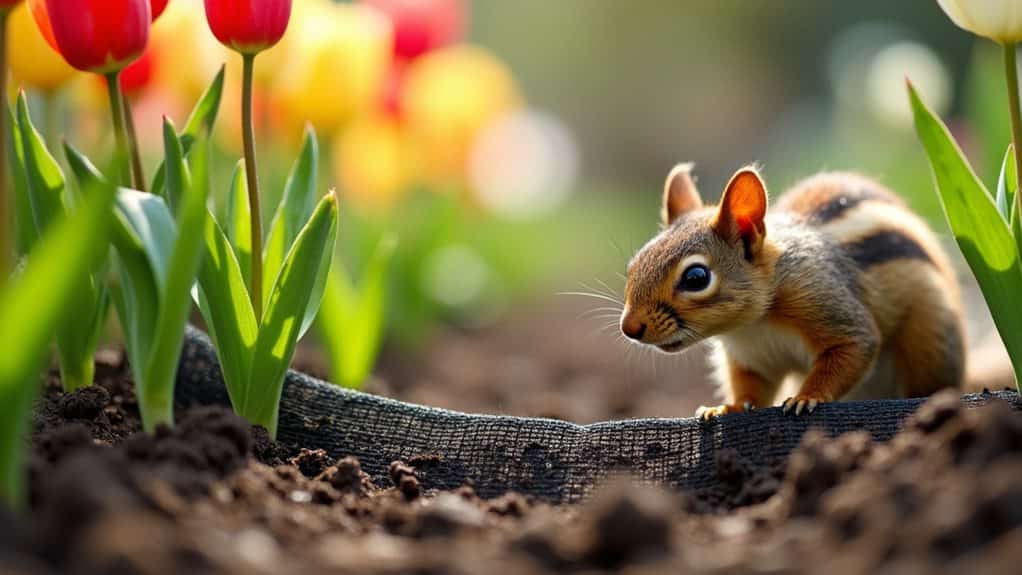
Even though squirrels might seem cute when they’re scampering across your yard, it’s definitely not as adorable when you realize they’ve turned your freshly planted tulip bulbs into an all-you-can-eat buffet! To help others—and save your bulbs—try covering the beds with chicken wire, sprinkling crushed oyster shells or red pepper flakes on the soil, or planting in containers you can whisk away when squirrels get sneaky. Establishing a shared driveway agreement can also help prevent conflicts with neighbors about ongoing yard maintenance and pest issues, ensuring everyone works together to protect their plants.
Natural Deterrents for Protecting Tulip Bulbs
When you’re planning a garden escapade, you don’t want sneaky squirrels treating your tulip bulbs like a free snack bar, so let’s get creative with some natural roadblocks and stinky surprises!
I’ve found that prickly plant barriers, like holly leaves or rose stems, work like a “keep out” sign for squirrel paws, while sprinkling garlic or chili flakes on the soil makes them wrinkle their tiny noses and dash for the hills (I wish I could see their faces).
Additionally, using natural deterrents such as planting herbs like mint or lavender can help repel squirrels and other pests from your garden area.
Ready to turn your garden into a squirrel-proof fortress using stuff you probably already have at home?
Using Prickly Plant Barriers
If you’re like me and love the thrill of spotting bright tulip blooms in your garden each spring—only to find out that mischievous squirrels have treated your bulbs like a free buffet—you’ll be delighted to know there’s a clever trick that doesn’t involve weird sprays or expensive gadgets.
Try using prickly plants, like holly or rose prunings, as deterrent barriers around your tulip bulbs—they’re effective, chemical-free, and totally classic!
Scent-Based Repellent Methods
Think prickly plant barriers are nifty? Wait until you try scent repellents! If you love helping your neighbors’ gardens thrive, sprinkle garlic, red pepper flakes, or even crushed oyster shells around your tulip bulbs.
These strong smells confuse squirrels, making them think your bulbs are yucky. Just remember, after a rainy camping trip or backyard expedition, reapply those scents so your bulbs stay protected!
Physical Barriers That Keep Squirrels Out
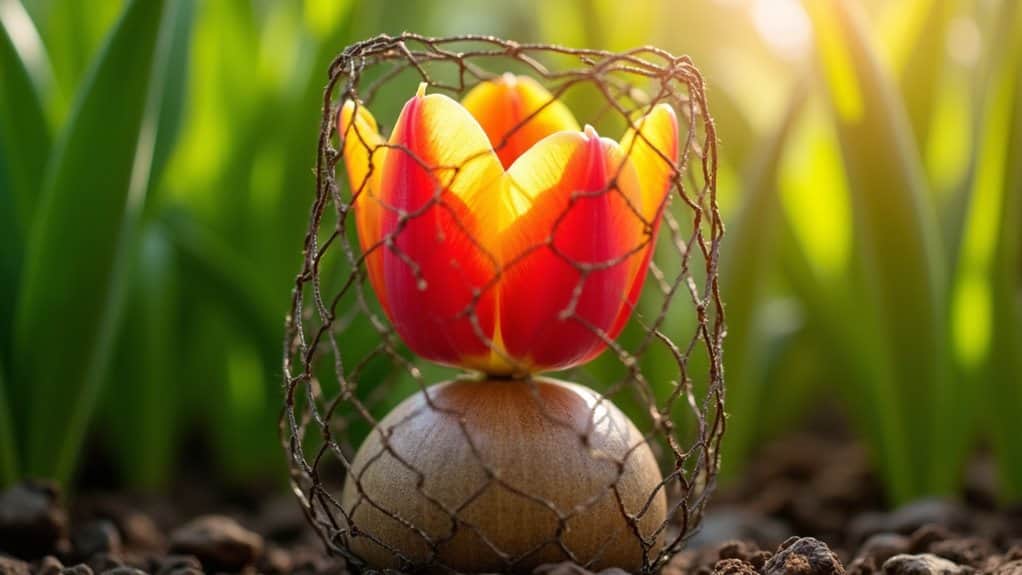
Although squirrels are adorable little acrobats, you probably don’t want them treating your tulip bed like their own personal snack bar, right? So, grab some chicken wire or hardware cloth and lay it over your bulbs before covering with soil—trust me, it’s a physical barrier even the craftiest squirrel can’t beat.
I’ve camped in squirrel country, and nothing foils them faster than a well-secured mesh!
Squirrel-Resistant Bulbs to Grow Instead of Tulips
Ever wondered why some bulbs in your garden disappear overnight while others stay perfectly untouched, like they’ve got their own secret force field? Here’s the scoop: if you plant bulbs like daffodils, alliums, hyacinths, snowdrops, or grape hyacinths, you’ll deter squirrels, because these squirrel-resistant bulbs just aren’t tasty to them.
Honestly, I’ve seen daffodils save entire beds—those little yellow warriors mean business!
Planting Techniques That Deter Squirrels
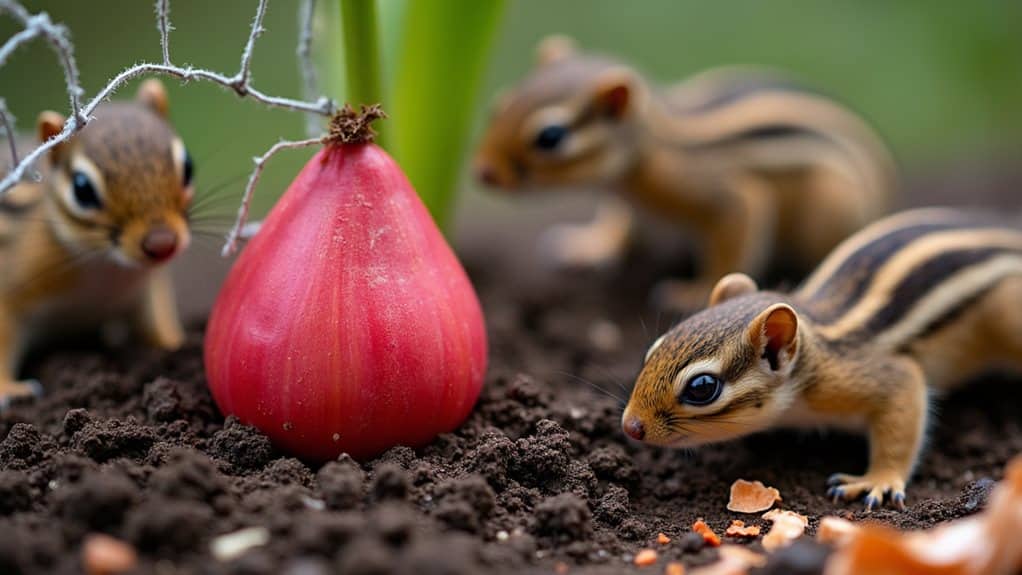
Now, if you’re determined to stick with tulips and not just swap them out for daffodils or alliums, you’ll need some clever tricks up your sleeve to outsmart those furry little gardeners.
Try planting bulbs at least 8 inches deep—squirrels are lazy diggers!
Use chicken wire as a shield, add Vinca minor for groundcover, and hide your work with mulch or shredded leaves.
Outsmart those squirrels!
What to Do If Squirrels Still Attack Your Bulbs
Sometimes, even after you’ve done everything right—dug those bulbs deep, covered them with mulch, and even laid down chicken wire—those sneaky squirrels seem to have a sixth sense for finding your tulip stash.
If these critters still attack, try using a strong plant deterrent spray, reinforce your physical barrier, and plant daffodils nearby.
You can even distract them with a squirrel snack station elsewhere!
Additionally, understanding their behavior and preferred food sources can help you better manage squirrel activity and protect your garden more effectively.
Overall
So, now you’ve got a whole backpack full of tricks to keep those sneaky squirrels away from your tulip bulbs—whether you’re sprinkling spicy stuff, building little fences, or just planting bulbs they hate! I’ve tried lots of these on my own garden camping escapades, and trust me, those furry thieves don’t stand a chance if you’re prepared. So, get out there, experiment, and don’t let squirrels ruin your flower power—your tulips are counting on you!