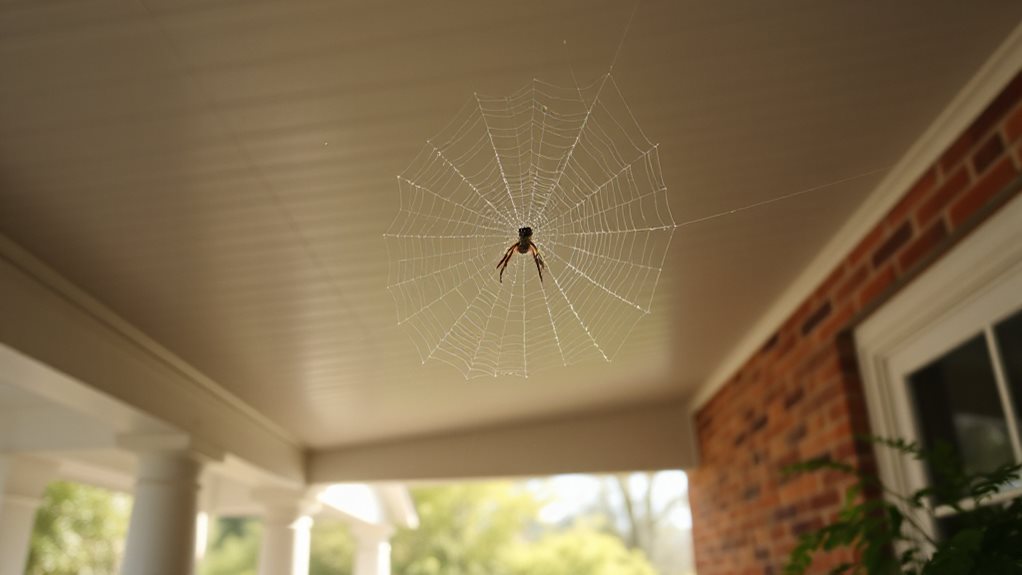
How to Stop Spiders From Building Webs on Porch Ceilings
Seal every crack and sweep away old junk, then scrub the ceiling with a vinegar‑oil mix so spiders can’t cling, and dim the lights or use motion‑sensor LEDs that flash briefly to keep insects away, because no bugs, no spiders, right? Sprinkle citrus or cedar spray for a fresh scent and a natural deterrent, and toss any unused boxes or tools off the porch to eliminate hiding spots. Keep the area dry with a dehumidifier and vacuum webs weekly, and you’ll notice the ceiling staying spider‑free—plus, if you stick around you’ll discover even more tricks.
TLDR
- Seal cracks, gaps, and utility penetrations on the ceiling and around windows to block entry points.
- Remove debris, cobwebs, and any existing spider webs regularly with a vacuum or brush.
- Keep the porch well‑lit with motion‑sensor or warm‑white LEDs, reducing dark corners that attract spiders.
- Declutter and store items away from the ceiling, eliminating hiding spots and reducing insect prey.
- Apply a natural deterrent such as peppermint oil spray or a vinegar‑oil solution to the ceiling surface.
Seal Entry Points to Block Spider Access
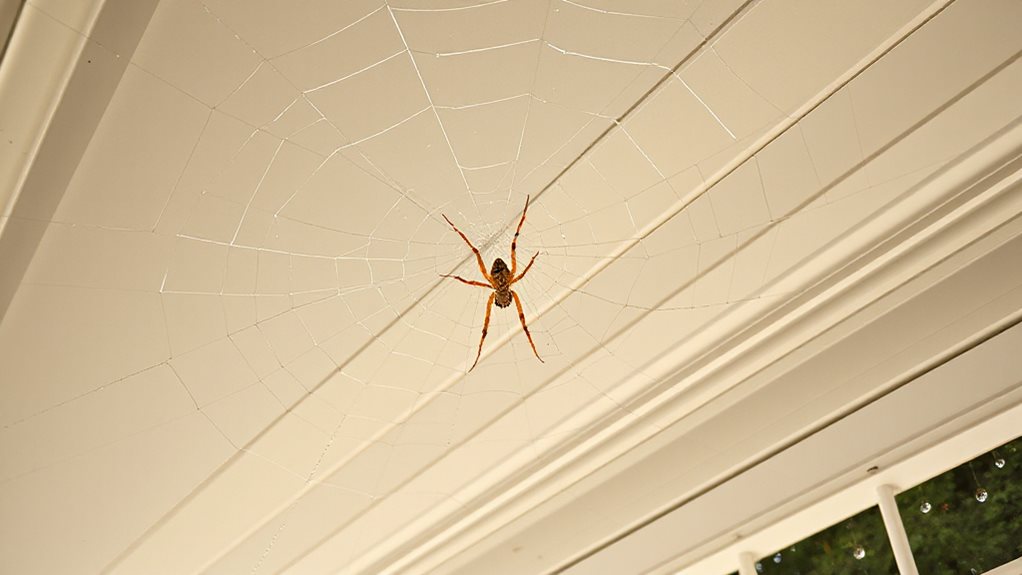
Ever wondered why spiders love to set up camp on your porch ceiling? You can stop them by sealing every entry point: check weather‑stripping, replace worn thresholds, caulk cracks around windows and doors, and install door sweeps. Repair torn screens, cover vents with mesh, and seal utility penetrations. Inspect quarterly, test for daylight, and vacuum any webs after sealing—your porch will stay spider‑free. High corners provide stable anchor points that attract spiders to build webs. Consider adding a perimeter barrier of 1/2-inch mesh around vents and gaps to block tiny crawl spaces.
Declutter Your Porch for Effective Spider Control
You’ll notice that tossing out old boxes, broken chairs, and random garden tools instantly makes the porch feel like a campsite instead of a spider‑infested junkyard, and that’s exactly what you want—less clutter means fewer hiding spots for those eight‑legged critters.
Have you tried organizing your storage bins with tight‑fitting lids and stacking firewood on a pallet a few feet away; it’s amazing how a tidy space can turn a spider‑web nightmare into a clear, open area perfect for hanging a hammock or a lantern.
Improving conditions like soil compaction in nearby garden beds can reduce insect prey and make your porch area less attractive to spiders.
Remove Unused Items
Where do you think those creepy‑crawlies are hiding when you’re not looking? You’ll find them nesting in old magazines, dirty clothes, and abandoned gear, so pull every unused box, bottle, and can off the porch, toss or store them, and wipe away leaves, grass clippings, and wood piles that give spiders cover; keep the area tidy, and you’ll deny them a perfect campsite.
Organize Storage Efficiently
Three simple steps can turn your clutter‑filled porch into a spider‑free zone: grab a stack of sturdy plastic bins, lift everything onto a shelf or pallet, and keep the humidity low while sealing every crack.
Pack items in tight‑sealing bins, stack them with space for airflow, and use dehumidifiers plus peppermint sprays—your porch stays tidy, dry, and spider‑free, just like a well‑organized campsite.
Keep Surfaces Clear
Ever wondered why a spotless porch feels like a campsite where the only “wildlife” are your friends, not eight‑legged hitchhikers? You’ll love sweeping every corner, vacuuming crevices, and power‑washing walls to erase web anchors, then tossing paper piles, firewood, and empty recycling bins away; keep gutters dry, trim nearby plants, and store items in sealed containers so spiders have nowhere to hide or settle.
Clean Porch Surfaces to Eliminate Web‑Building Spots
Ever noticed how a single dust bunny on your porch ceiling can turn into a full‑blown spider metropolis overnight? You’ll love wiping those corners with a microfiber cloth each week, then spraying a vinegar‑oil mix biweekly; it dissolves webs, erases pheromones, and keeps bugs from gathering.
Use a surface roller for quick pick‑up, replace sticky tape often, and enjoy a cleaner, spider‑free porch. Fertilizer feeds both grass and weeds, often giving fast-growing weeds like dandelions a competitive advantage, so avoid nearby lawn nutrient surges that can increase insect activity and indirectly attract spiders to your porch nutrient surges.
Adjust Porch Lighting to Deter Insects and Spiders
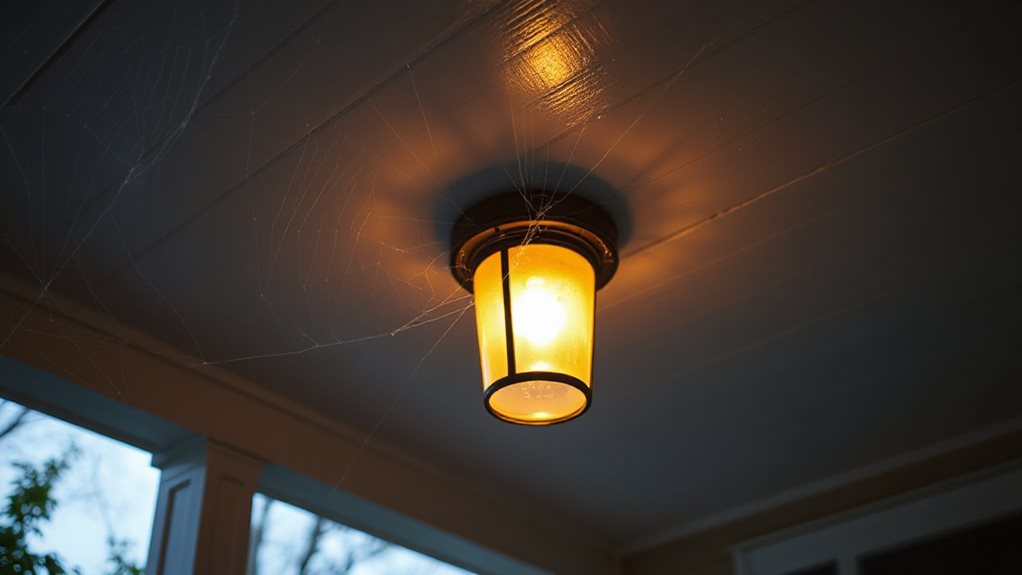
You’ll love how a smart light schedule can keep the porch dark when you’re not out, cutting down the bugs that spiders love to hunt, and you can set it to turn on just before sunset so you still have safety without a midnight insect parade.
Have you tried motion‑sensor illumination? When the sensor hits, the light flashes on for a few seconds, scares the insects away, and then goes dark again—so the spiders lose their buffet and you keep the vibe chill.
Give it a go, and you’ll see fewer webs and more space for your evening camp‑fire stories.
Recording the easement provides public notice and protects access for current and future owners, which can be important when shared driveway maintenance affects porch access and lighting recording the easement.
Smart Light Scheduling
What if you could turn your porch lights into a low‑key bug‑busting squad without buying any extra gadgets? You’ll set a timer to switch on warm‑white LEDs 30 minutes before dusk, then dim to red after sunset, keeping insects—and the spiders that love them—away.
Use the app’s “Insect Control” mood, automate it with door sensors, and enjoy a calm, bug‑free evening.
Motion‑Sensor Illumination
After you’ve set the porch lights to warm‑white and timed them to dim at sunset, the next trick is to let motion sensors do the heavy lifting, because a light that only flicks on when someone walks by cuts the night‑long glow that insects love and, by extension, the spiders that hunt those insects.
Install warm‑LED motion fixtures 10 feet from doors, use 3000 K bulbs, and enjoy fewer bugs, happier guests, and spider‑free ceilings.
Apply Natural Repellents (Citrus, Cedar, Essential Oils)
Ever wondered why a simple slice of lemon or a cedar block can turn your porch ceiling into a spider‑free zone? You can sprinkle citrus peels, spray lemon oil (15‑20 drops, water, vinegar, soap) weekly, tuck cedar chips or blocks where pets aren’t chewing, and mist peppermint, eucalyptus, or rosemary mixes on baseboards, windowsills, and cracks—just seal, vacuum, and repeat for lasting, eco‑friendly protection.
Use Chemical Sprays and Professional Treatments Safely
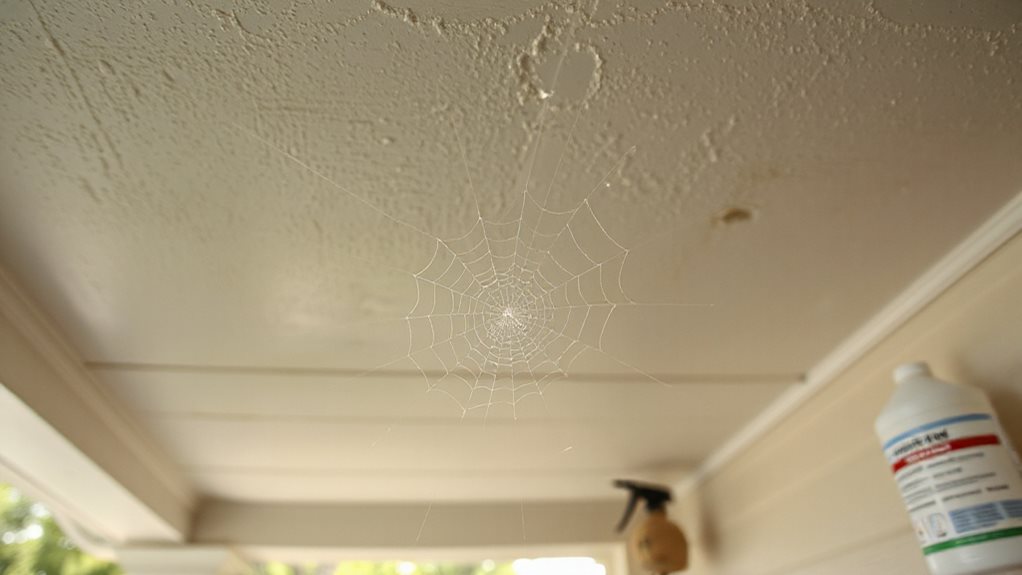
Ready to tackle those eight‑webbed invaders with a spray that works faster than a campfire’s first spark? You’ll mix a quick‑acting bifenthrin or deltamethrin spray, band the foundation three feet wide, and coat windows, doors, and eaves, then step back until it dries—keep kids and pets out, avoid rain, and enjoy a spider‑free porch, just like a campsite after a perfect night’s fire. Be mindful that using strong sprays near your home’s electrical outlets or lighting fixtures can increase the chance of flickering lights if large appliances or motors are on the same circuit.
Create a Maintenance Schedule to Keep Spiders Away
Spraying the porch was a great start, but keeping spiders at bay long‑term is like planning a road trip— you need a solid itinerary, not just a quick pit stop. Sweep ceilings daily, hose down surfaces, dust high spots, and turn off lights; weekly, knock down webs, wipe furniture, clean gutters; monthly, trim vegetation, check screens, store firewood high; seasonally, inspect spring and fall, trim branches, seal gaps; year‑round, keep clutter minimal, swap bulbs, seal gaps, and promptly empty vacuum bags. This schedule keeps your porch spider‑free and your guests happy.
Troubleshoot Common Spider‑Prevention Problems
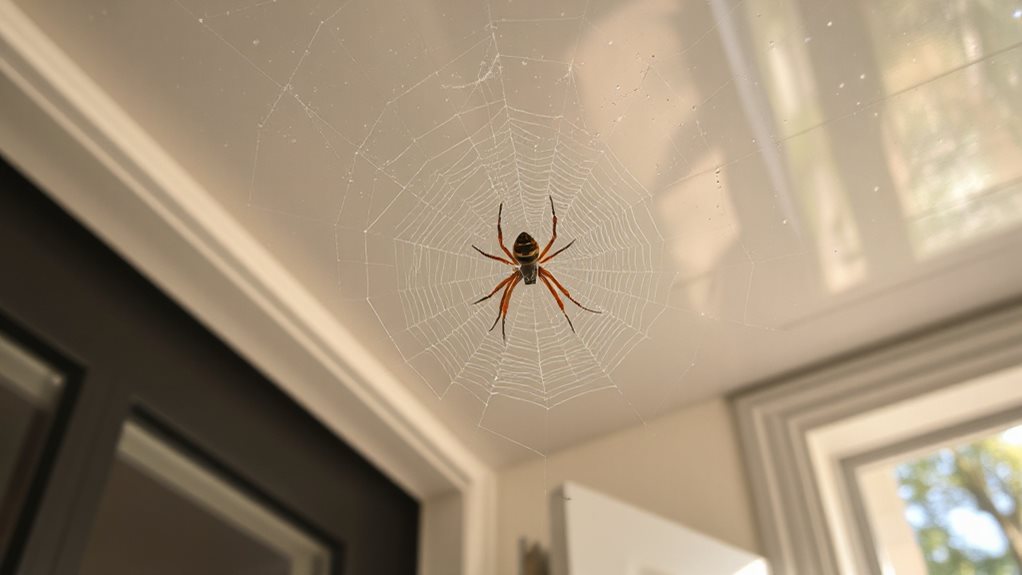
So, why do your spider‑proofing efforts sometimes feel like a leaky tent on a camping trip? You might’ve missed a crack under a door, a vent without mesh, or a branch touching the house, and those tiny gaps let insects—and then spiders—sneak in. Clean crumbs, trim shrubbery, declutter closets, and vacuum webs promptly, because every overlooked spot invites a new eight‑legged camper.
Overall
Now that you’ve sealed every crack, cleared the clutter, and sprayed a little citrus or cedar, your porch will finally stay spider‑free, and you’ll actually enjoy hanging out there instead of dodging webs. Keep the lights bright, the floor tidy, and the maintenance schedule on lock—think of it like a camping checklist for your home. Got a new bug‑proof porch? Yes, please! And if a spider still shows up, just remember: a quick spray and a laugh will send it packing.