Why Does Composite Decking Fade in the Sun?
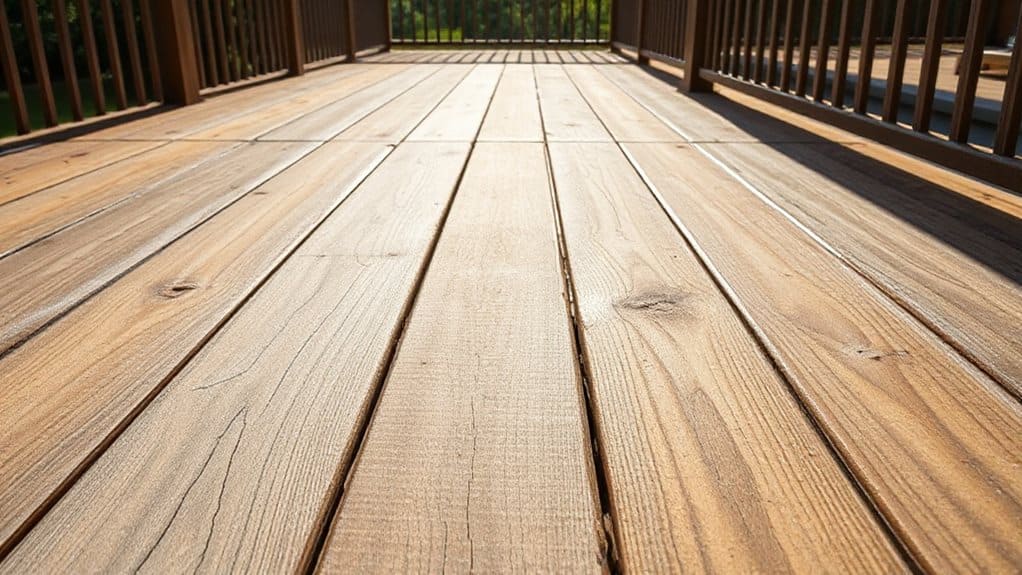
You see your composite deck fade because UV rays smash the pigment bonds, especially on uncapped boards that let UV‑B in, while dark colors soak up heat and crank the chemical breakdown, and any moisture that sneaks into the porous material makes the pigments bleed and chalk faster. Caps loaded with titanium dioxide, HALS, or zinc nano‑particles act like sunscreen, and lighter or variegated tones stay cooler and brighter longer. If you keep cleaning, seal the surface, and choose good cap systems, you’ll see far less fading—more on that ahead.
TLDR
- UV radiation breaks down pigment bonds, causing color fading, especially on uncapped boards that lack UV absorbers.
- Darker shades absorb more solar heat, raising surface temperature and accelerating pigment degradation and chalking.
- Moisture infiltrates porous composites, leading to pigment bleeding and oxidation that further dulls color.
- Batch variations and insufficient cap protection result in inconsistent UV shielding, making some boards fade faster.
- Lack of airflow and trapped humidity under rugs or debris increase heat and moisture, speeding up fading.
How UV Rays Degrade Composite Deck Pigments
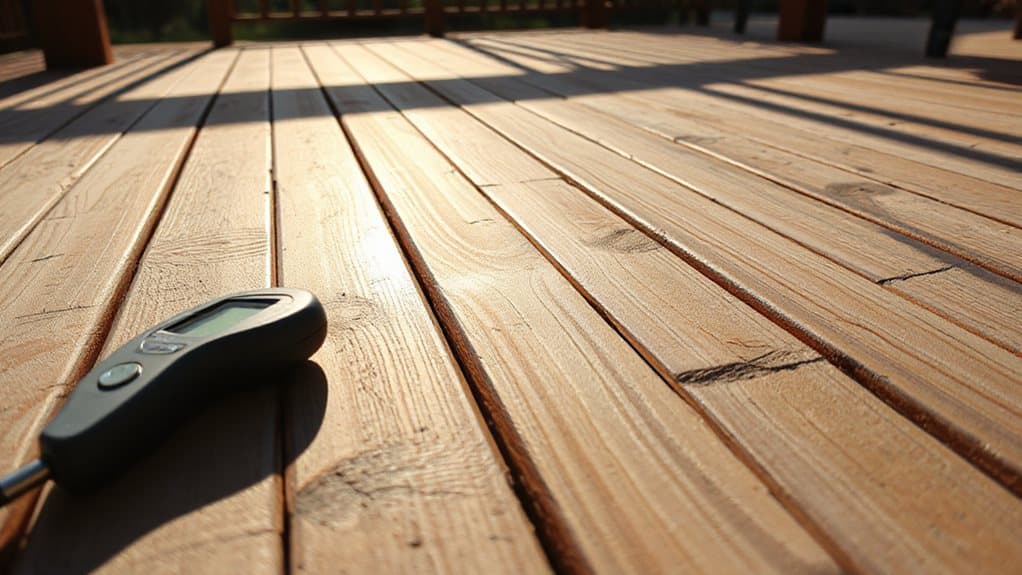
Ever wonder why the bright teal of your backyard deck starts looking a bit more “sun‑kissed” after a summer of camping trips and backyard barbecues? UV rays smash pigment bonds, so colors fade, especially where the sun hits directly.
Capped boards block this, but uncapped ones soak up UV‑B, letting moisture in and accelerating wear.
Use UV‑stable decks, and your guests will always see vibrant hues. Batch variations can also cause subtle colour differences between boards. Mosquitoes are also drawn to yards with standing water, so improving drainage around decks helps reduce pest activity.
How Heat and Dark Colors Accelerate Deck Fade
After we’ve seen how UV rays pry apart pigment bonds, the next thing that really turns up the heat on your deck is the color itself—especially the darker shades. Dark boards soak up solar energy, pushing surface temps past 200°F, which accelerates molecular breakdown and chalking; lighter tones reflect light, stay cooler, and fade slower, so you’ll want to pick mid‑tone or reflective finishes for hot, sunny spots. Over time, accumulated sediment and rust in nearby structures can worsen surface degradation and accelerate wear.
How Moisture, Humidity, and Airflow Influence Composite Deck Fade
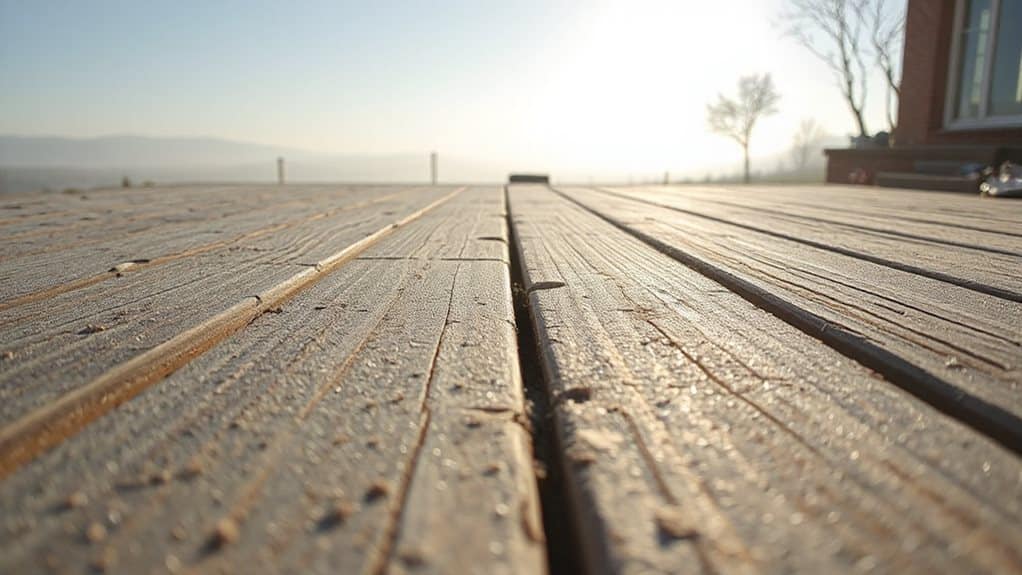
When you set up a campsite on a sunny deck, the last thing you want is the color fading faster than your marshmallow‑toasting skills, and that’s where moisture, humidity, and airflow swoop in like sneaky weather‑pirates.
Moisture seeps into porous composites, bleeding pigments; high humidity expands boards, invites mold, and speeds oxidation; stagnant air under rugs traps heat and moisture, worsening cap wear.
Keep airflow open, dry surfaces, and you’ll preserve that vibrant look while serving happy campers. After rain, rising moisture levels can also attract pests to damp spots near structures, so control drainage and reduce moisture to protect both color and structure.
How UV Stabilizers and Cap Quality Protect Deck Color
If you’ve ever wondered why some decks stay bright after a summer of camping trips while others look like they’ve been sun‑baked for a desert trek, the secret lies in the UV stabilizers and the quality of the cap that seals the wood‑like boards. You’ll love how UV absorbers turn harsh rays into harmless heat, HALS mop up free radicals, and zinc nano‑particles reflect sunlight like sunscreen, while a capped system adds titanium dioxide and multi‑layer protection, keeping colors vivid for years. Improving drainage and reducing excess moisture around the deck also helps prevent related material degradation and staining from poor drainage.
How Color Choice Affects Composite Deck Longevity
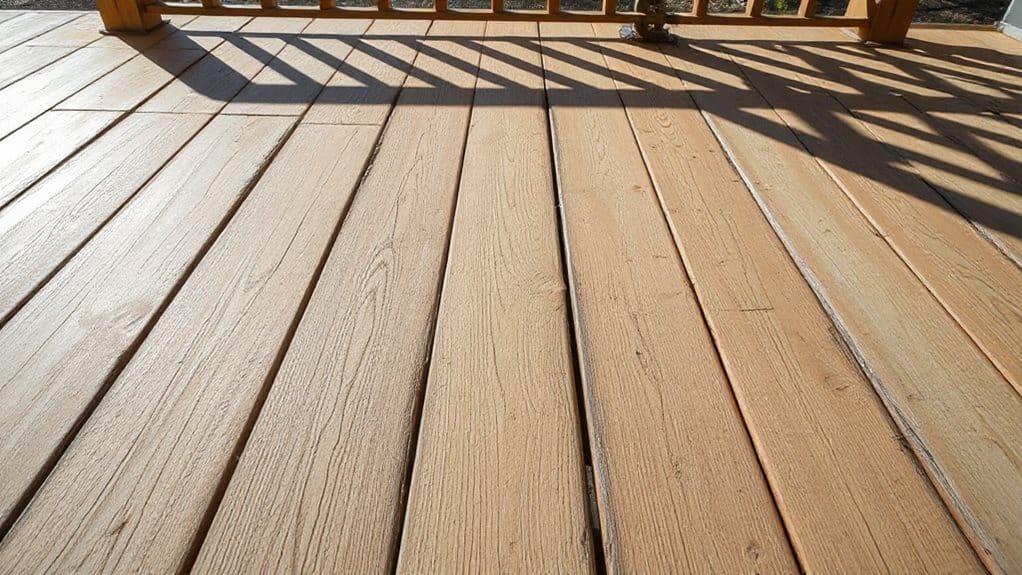
You’ll notice that dark‑colored decks grin more quickly under the sun, so if you love a deep mahogany look, be prepared for the hue to fade like a sun‑bleached T‑shirt after a summer road trip; on the other hand, lighter tones stay bright longer, blending into the scenery like a perfectly timed campsite sunrise, which is why I always pick a pale sand shade for my backyard when I’m planning a weekend BBQ.
Do you want your deck to keep its fresh look for decades, or are you okay with a gradual, rustic shift that adds character?
Pick a color that matches your vibe, and you’ll enjoy a deck that looks great while you’re out exploring, without worrying about the sun stealing the show. A lighter color choice can also help reduce surface temperatures on composite decking by 10–15°F compared with darker shades.
Dark Colors Accelerate Fading
Ever wonder why a midnight‑black deck seems to lose its sparkle faster than a sun‑kissed pine? Dark pigments soak up heat, so the board’s surface temperature spikes, and UV rays then fry the color molecules faster. The extra heat speeds oxidation, causing chalking and a quick shift toward lighter tones, especially when the board faces midday sun directly.
Light Tones Preserve Appearance
A sunny deck in a light‑tone shade is basically a cool‑breeze oasis for your outdoor excursions, because those pale boards bounce most of the sun’s rays right back, keeping the surface temperature down to a pleasant 167 °F even on a scorching 78 °F day, which means the pigments stay stable, the color stays vibrant, and you won’t be staring at a faded, chalky mess after a weekend of camping trips and BBQs.
Light tones reflect UV, lower heat, and let premium caps work harder, so you enjoy vibrant decks longer, protect guests from scorching surfaces, and keep your hospitality reputation shining bright.
Practical Ways to Reduce Composite Deck Fade (Cleaning & Maintenance)
Ever wonder why your deck looks like a sun‑bleached map after a summer of backyard BBQs and camping trips? You can keep it bright by sweeping leaves daily, washing with mild soap and a soft brush, and using a low‑pressure washer with the right nozzle.
Apply a UV‑protective sealant every year or two, add shade sails, and ensure airflow so moisture never sticks around to fade your favorite hangout.
Installation Mistakes That Speed Up Deck Color Degradation
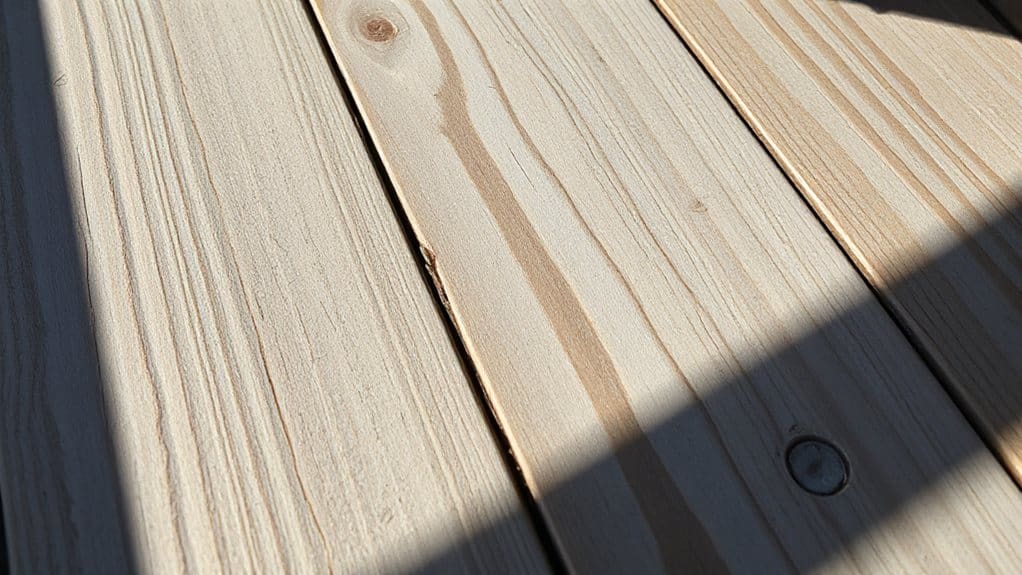
Did you know a single misstep during installation can turn your vibrant backyard oasis into a faded, sun‑scarred mess faster than you can say “camping trip”? Skipping expansion gaps lets boards buckle, while rust‑prone screws stain and accelerate fading. Installing in cold, damp weather cracks surfaces, and sealing unprotected cut ends invites moisture. Use proper joists, manufacturer‑approved fasteners, and seal every edge.
Early vs. Modern Composite Deck Boards: UV Protection Comparison
So, ever wondered why the deck you built last summer still looks as bright as a sunrise while your neighbor’s old board is already fading like a tired camp‑fire blanket?
Early boards missed UV blockers, so sun ripped color right off, while modern ones wear 360° caps, ColorWatch100® and mineral shells, cutting fade by roughly thirty percent, keeping vibrancy and protecting friends’ outdoor gatherings.
Quick Checklist to Minimize Fading and Keep Your Deck Looking New
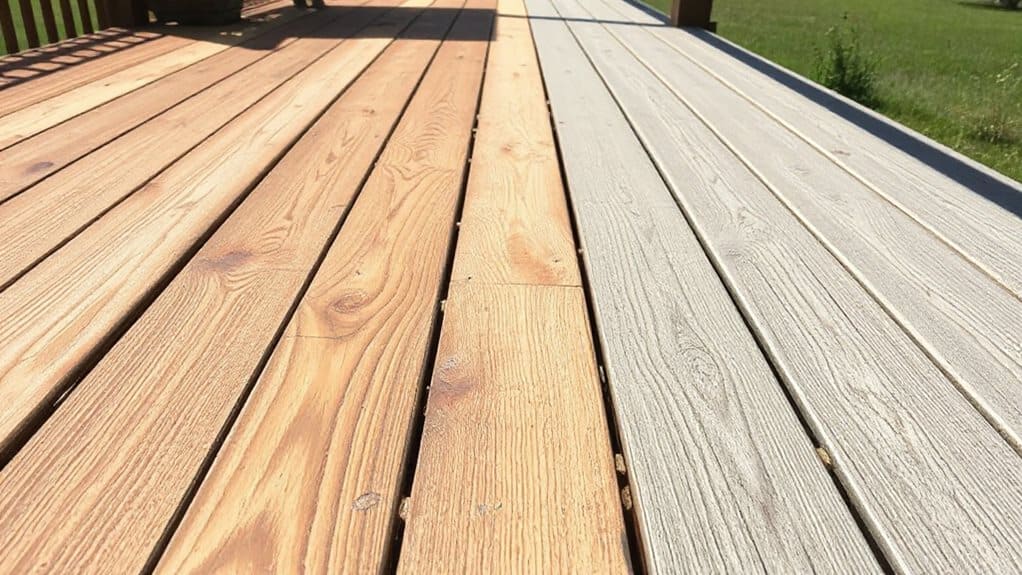
You’ve seen how modern boards with 360° caps and ColorWatch100® keep their color longer than the old‑school stuff, so let’s jump straight into the practical side: a quick checklist that actually helps you fight fading and keeps your deck looking fresh year after year.
Clean monthly with mild soap, apply UV‑sealant every 1‑2 years, shade midday sun with umbrellas or sails, pick lighter or variegated tones, and fix stains fast—your deck will stay bright and ready for weekend camping trips.
Overall
So, you’ve learned why the sun can turn your deck’s bright hues into a dull sunset, and you now know the tricks to keep those colors popping—use UV‑stable boards, pick lighter shades, clean regularly, and avoid heat traps. Remember, a well‑maintained deck feels like a backyard excursion, ready for campfires and stargazing. Follow these tips, and your deck will stay lively, letting you enjoy every summer outing without worrying about a faded, tired look.