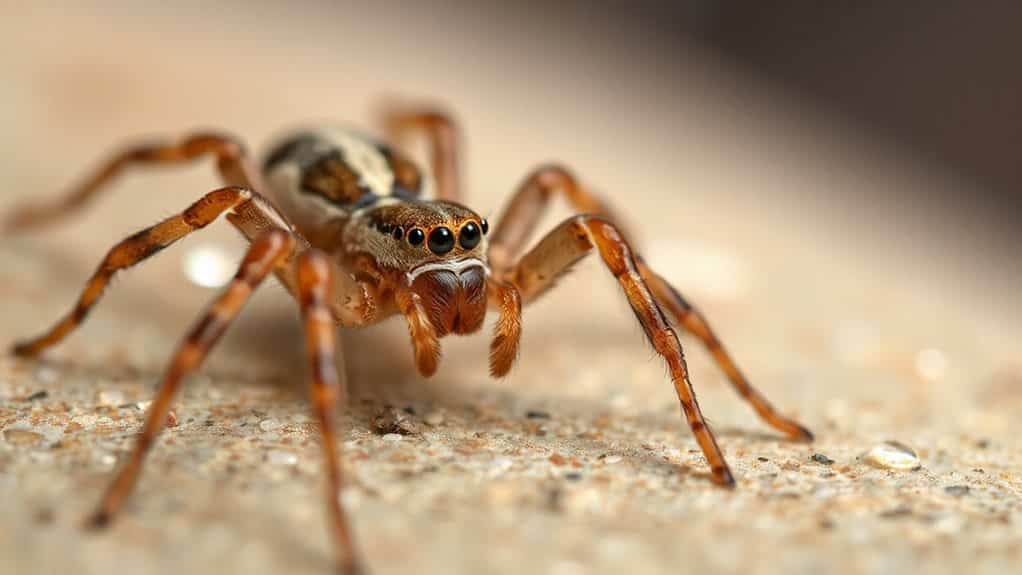
Do Spiders Poop and Pee? The Fascinating Facts
You’ll be thrilled to hear that spiders do poop, but they don’t pee the way we do—everything comes out of one tiny rear opening as a mixed, ink‑like paste of digested insect bits and solid uric acid, which dries into a speck‑sized mark on walls or garden corners. Their “peep” is just part of this excretion, not a separate stream, thanks to Malpighian tubules acting like mini‑kidneys and a stercoral pocket that blends the waste. It’s like a super‑efficient campsite toilet, and if you keep learning you’ll discover even more cool details.
TLDR
- Spiders excrete a single combined waste stream; they have no separate urine,.
- Malpighian tubules convert nitrogenous waste into uric acid, which mixes with digested material in the stercoral pocket.
- The mixed waste is expelled as a viscous, ink‑like droplet from the abdomen’s rear opening.
- Fresh droppings appear liquid and dark, then dry into pin‑sized white or brown spots on surfaces near webs.
- The excretion process conserves water, allowing spiders to thrive in dry environments.
Do Spiders Actually Poop?
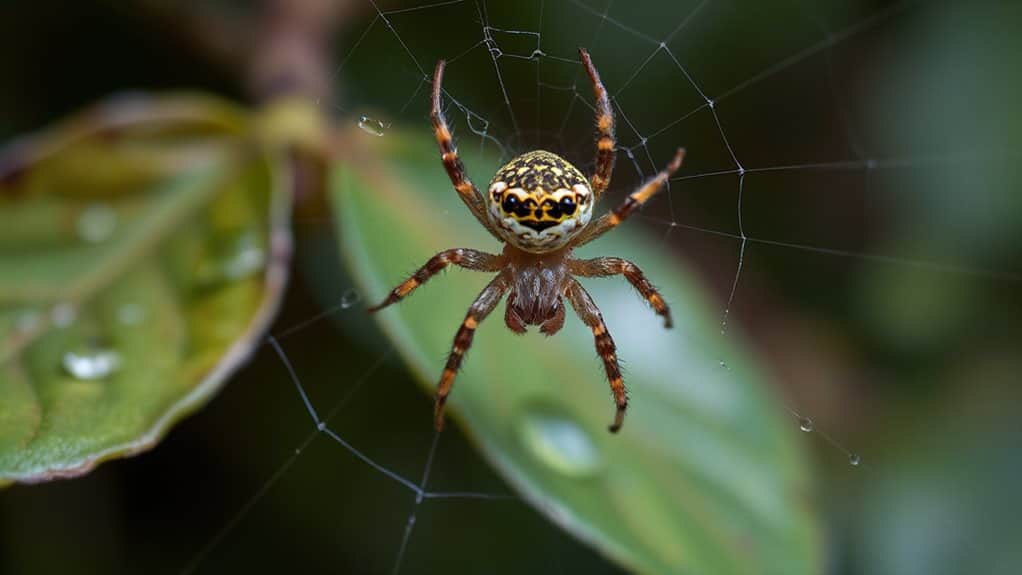
Even though spiders are tiny, they definitely have to take care of business, so yes—spiders actually poop, and it’s a surprisingly interesting process that you’ll notice if you’ve ever camped out under a tent or searched into a dusty attic.
You’ll see tiny, ink‑like drops, white or brown, forming under webs or in corners; they’re the result of liquid digestion, with undigested shells regurgitated, and a single anus expelling a combined fecal‑uric waste that conserves water in dry places. Spiders do not pee and instead combine waste into one excretion.
How Do Spiders Produce “Peep” as Part of Their Poop?
You’ll notice that a spider’s “peep” isn’t a separate stream at all – its Malpighian tubules act like tiny kidneys, pulling nitrogenous waste out of the hemolymph and turning it into near‑solid uric acid, which then drips into the stercoral pocket where the digested bits hang out.
That pocket mixes the uric acid with solid waste, creating the little white‑cream drops you see near the spinnerets, and you can imagine it as the spider’s ultra‑efficient campsite toilet, where everything is packed together to save water and keep the mess minimal.
Malpighian Tubule Function
When you visualize a spider’s “peep” – that tiny, watery splash that sometimes joins its poop – imagine a miniature plumbing system working behind the scenes, and that’s where the Malpighian tubules step in.
You’ll see convoluted tubules, actin‑reinforced walls, and microvilli pushing water and ions, while active transport shuttles waste into the hindgut, letting the spider stay hydrated and ready for your next camping journey.
Stercoral Pocket Mixing
If you’ve ever wondered why a spider’s “peep” looks like a tiny, glistening droplet that clings to its silk, the secret lies in the stercoral pocket—a clever little storage sac that mixes solid waste with a splash of liquid before it’s tossed out.
You’ll see muscles contract, mucus coat the blend, and pressure push a pearl‑like droplet onto the web, conserving water and impressing fellow campers with nature’s tiny recycling marvel.
What Happens Inside a Spider’s Anus When It Releases Poop?
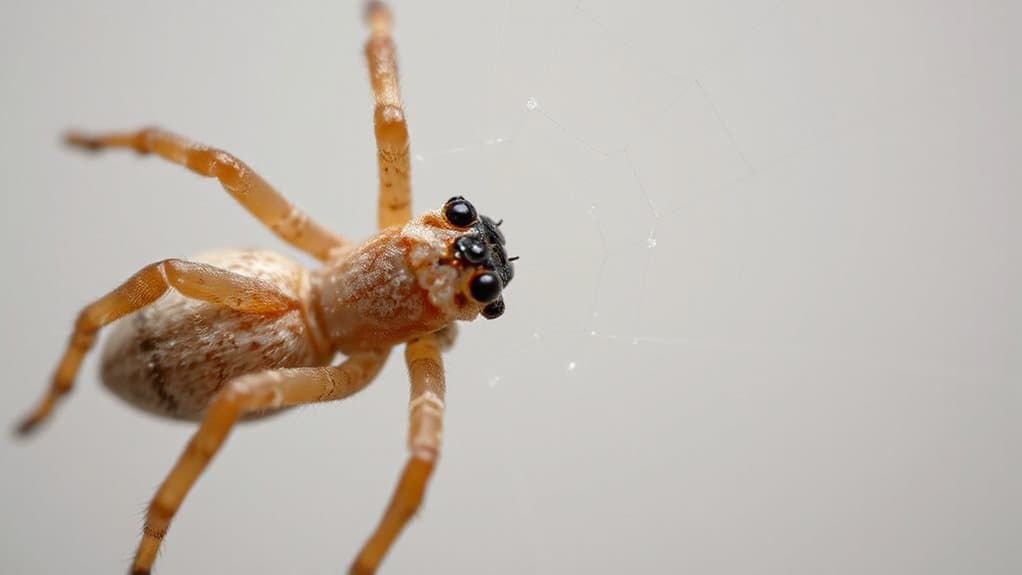
Imagine you’re setting up camp and suddenly notice a tiny droplet of “spider rain” falling from a web—what’s really happening inside that little anus is that the malpighian tubules have just finished draining nitrogenous waste into the stercoral pocket, where it mixes with solid bits and uric acid to form a semi‑solid slurry.
Now, as you watch, the spider contracts its abdominal muscles and pushes the combined waste out through its single opening, a process that’s surprisingly efficient and a bit like squeezing a tiny, ink‑like toothpaste tube.
Next time you’re out in the woods, remember that this one‑way exit not only keeps the spider’s body tidy but also leaves behind those little white‑cream drops that look like nature’s own campsite confetti.
Also, outdoor factors such as heat and humidity can affect how organic materials break down where these droppings land.
Malpighian Tubule Drainage
Even though you might envision a spider’s gut as a simple tube, the reality is far more like a tiny, high‑tech water treatment plant tucked inside its abdomen, and when the critter finally empties its “tank” you’re actually witnessing the last stage of a complex trip that started in the Malpighian tubules.
You see, active pumps and muscle bands shove potassium‑rich pre‑urine along microvilli, reabsorbing water and essential ions, while uric acid crystals form, then the rectum squeezes out guanine‑colored droppings—like a campsite’s final cleanup.
Stercoral Pocket Mixing
After the Malpighian tubules have done their high‑tech water‑treatment work, the pre‑urine and solid crumbs from the gut both end up in the stercoral pocket—a tiny, sac‑like pouch that sits just before the spider’s anus.
Inside, uric acid mingles with guanine‑rich feces, forming a single, low‑water‑loss droplet; you’ll see tiny, cream‑colored beads with specks, perfect for a tidy, camp‑site‑friendly cleanup.
Single Anus Expulsion
When a spider’s rear end opens for the grand finale, the whole process is surprisingly like a tiny, high‑tech waste‑management station firing off a final, neat little missile.
You’ll see its single anus point down, abdomen lifted, and a little round drop—brown, white, speckled—launching onto silk or leaf.
The uric‑acid paste and guanine crystals exit together, taking seconds, then wash away harmlessly.
Why Do Spider Droppings Look Like Ink?
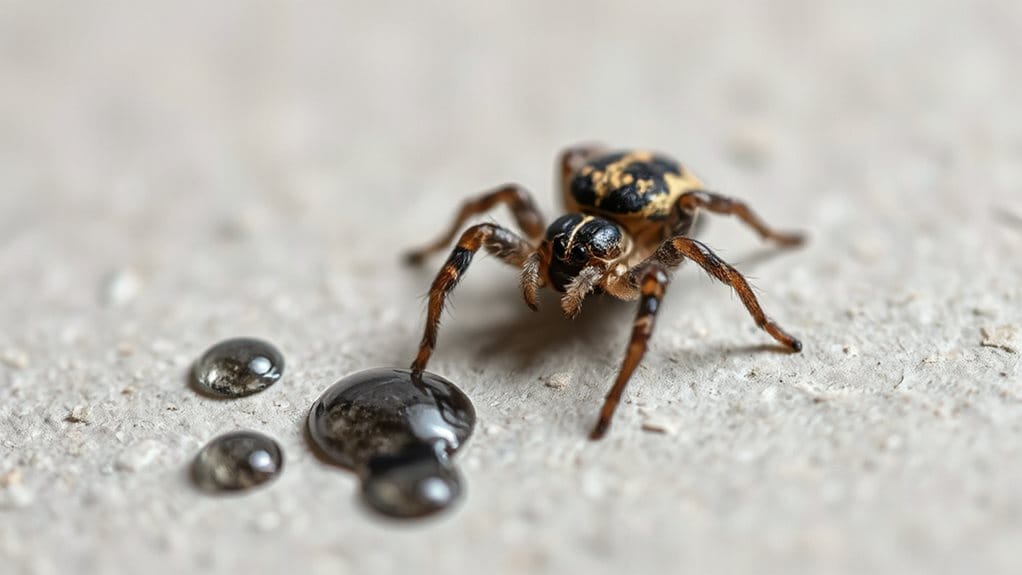
Because spider droppings are basically liquid‑soaked remains of the bugs they’ve devoured, they end up looking a lot like ink splatters you’d see on a notebook page after a wild camping trip.
You’ll notice glossy, pin‑head spots that spread like marker ink because the waste is a viscous, antibacterial cocktail, and the color shifts with each insect meal, turning dark brown or black, sometimes white, just like real ink stains.
LED grow lights deliver targeted PAR wavelengths that match plant absorption and improve energy efficiency.
Where Can You Spot Spider Poop in Your Home or Garden?
If you’re scouring your house or backyard for clues that a tiny eight‑legged crew has set up shop, you’ll start seeing those speck‑like droppings pop up in the most unsuspecting places—think dark corners, ceiling edges, and even the sill of a sunny window.
Look on walls, near webs, on light fixtures, window sills, furniture, floors, garden corners, decks, attics, and crawl spaces, especially where spiders spin undisturbed silk. Basements can also show signs of spider activity, particularly in areas with high humidity that attract other pests and create sheltered conditions.
How Malpighian Tubules and Stercoral Pockets Create Spider Waste?
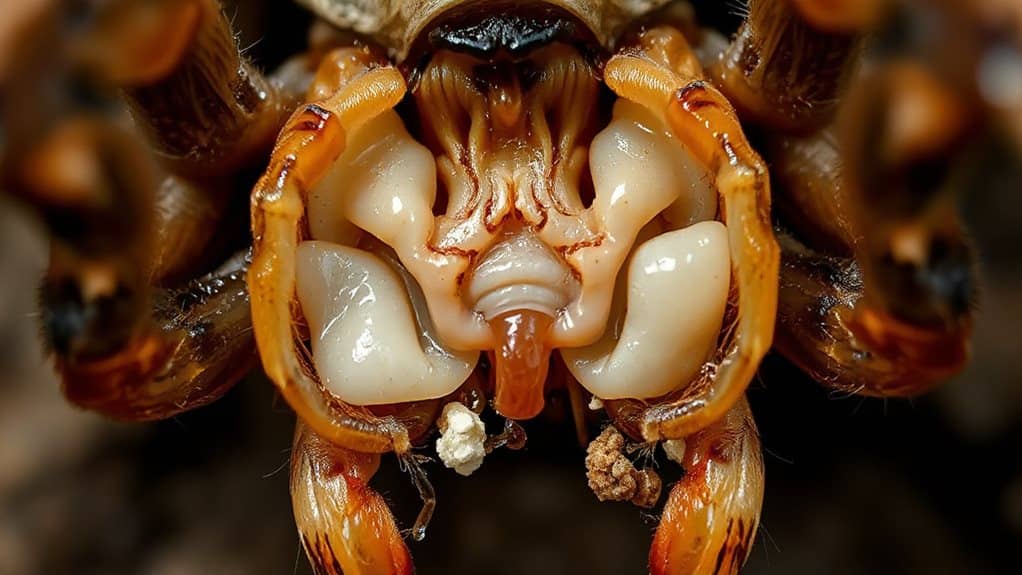
Even though you might think spider waste is just a mystery mess, it’s actually the result of a tiny, high‑tech plumbing system that would make any campsite’s portable toilet look amateurish.
You’ll see malpighian tubules sucking nitrogenous solutes from hemolymph, turning them into near‑solid uric acid, then dumping into stercoral pockets where digestive scraps mingle—so when you spot that cream‑colored droplet, you’re witnessing a perfectly blended, water‑saving excretion marvel.
Mulching a garden with a three-inch layer can conserve soil moisture and support beneficial microorganisms that, like spiders’ efficient systems, help maintain a healthy ecosystem by reducing stress on living organisms and conserving water soil moisture.
Is Spider Waste Safe for Humans?
When you’re out camping and spot those tiny, dark specks on your tent wall, you might wonder whether spider droppings are a hidden health hazard, but the good news is they’re basically harmless to people.
You’ll find they lack disease‑causing germs, unlike rodents or cockroaches, and only cause cosmetic stains.
Just wipe them away, and you can keep your campsite safe and cheerful.
Be mindful that spiders (like many insects) are attracted to warmth and light, so reducing bright lights can lower how often you see them.
What Common Myths About Spider Poop Need to Be Debunked?
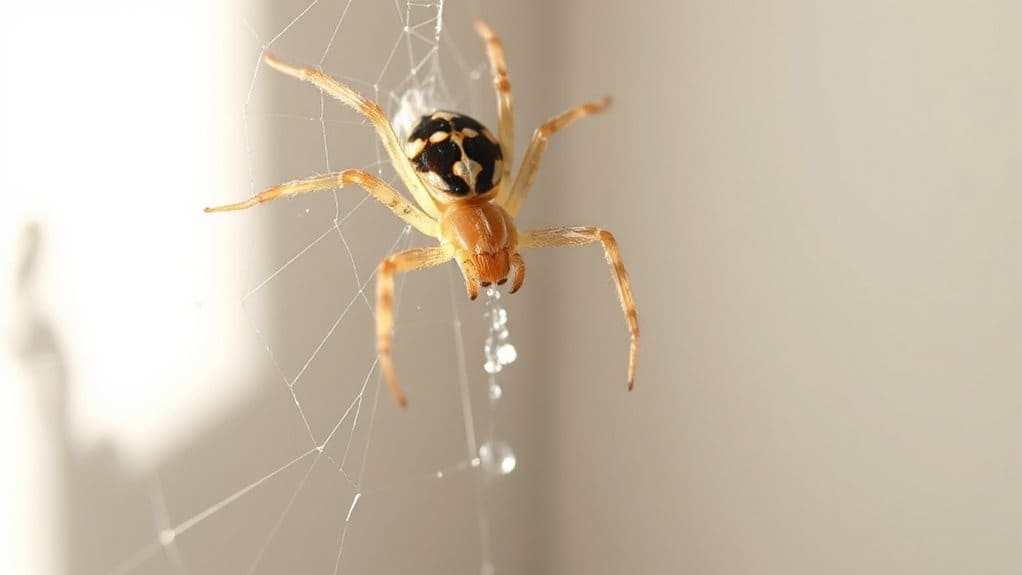
You’ve probably already learned that spider droppings aren’t a hidden health nightmare, so let’s flip the script and tackle the wild rumors that swirl around those tiny specks.
You’ll see that hard exoskeleton fragments never travel through their gut, that they don’t sip separate urine, and that fresh droppings are liquid, turning into pin‑sized spots.
And Finally
Now you’ve seen how spiders poop and pee, you’ll marvel at the tiny, ink‑like droppings that actually tell a story about their diet, habitat, and even their secret “Malpighian” waste system, isn’t it cool that those specks can be harmless (or sometimes a little stinky) for us? Next time you’re camping or hiking, keep an eye out for those little clues—maybe even snap a photo—because understanding spider waste makes the great outdoors feel even more alive and fascinating.