Why Do Beetles Crawl Into Outdoor Lights?
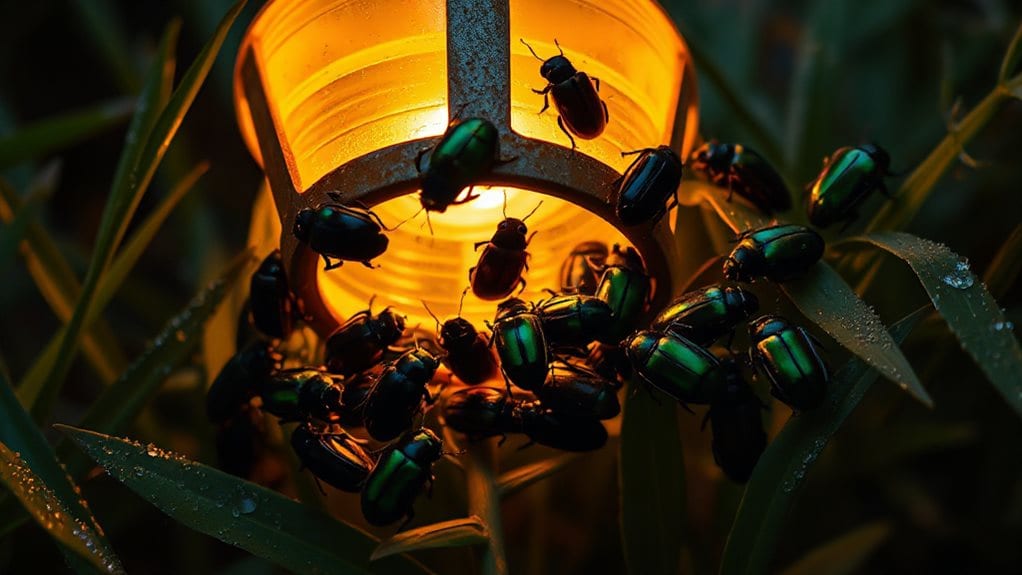
You see beetles buzzing around your porch because their night‑time orientation, which normally follows the moon, stars and polarized skylight, gets totally confused by the bright short‑wavelength glow, so they chase the artificial “star” in endless circles, thinking it’s a new north point; the UV‑blue light (around 350‑450 nm) is especially irresistible, and even warm‑white LEDs can pull in June beetles and scarabs, while cooler blues turn the scene into a beetle concert—if you keep the lights amber‑tinted and angled down, you’ll cut the crowd, and the next tip will show you how to keep those critters out of your campsite.
TLDR
- Beetles exhibit positive phototaxis, moving toward bright sources because they mistake artificial lights for natural celestial cues.
- Short‑wavelength UV‑blue light (300‑450 nm) strongly attracts many beetle species, especially June beetles and scarabs.
- Artificial lights disrupt beetles’ navigation system, causing them to spiral around the source and eventually land nearby.
- Heat‑emitting infrared is less effective; the attraction is driven mainly by light wavelength, not warmth.
- Using amber or warm‑white LEDs, downward‑facing fixtures, and herb barriers (e.g., mint) can significantly reduce beetle clustering.
Beetle Attraction to Outdoor Lights
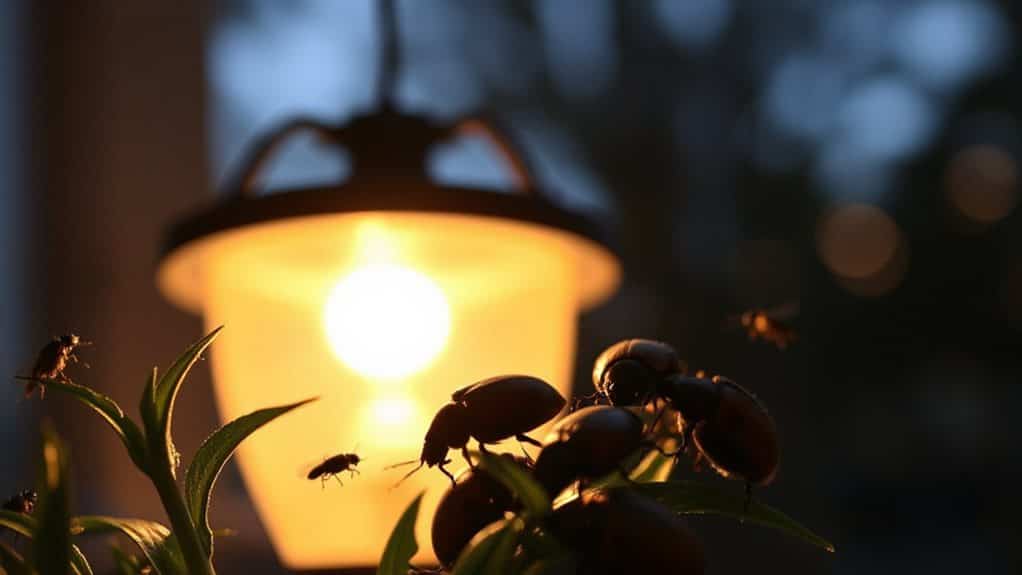
Ever wondered why those beetles seem to throw a midnight party right around your porch light? You’ll notice June beetles and scarabs swarming UV‑rich bulbs, while carpet beetles drift in during mating flights. Blue‑toned LEDs lure more than warm yellows, because beetles’ eyes love short wavelengths. Artificial lighting overwhelms their navigation systems, causing disorientation and indoor invasions. Plantings of nearby herbs like mint can alter insect behavior and reduce nearby activity around lights sheltered sites. Swap to yellow bug lights or low‑UV LEDs, and you’ll dramatically cut those buzzing gatherings.
Phototaxis and Navigation Cues That Draw Beetles to Lights
When you’re out camping and the night sky is a glittering map, beetles use that map—sun, moon, stars, even polarized light—to steer straight like a compass, but as soon as a porch light flickers on, they suddenly think they’ve found a new north star and start a wild, spiraling chase; they follow positive phototaxis, keep a constant angle, and get confused, turning in circles until you rescue them, reminding you how nature’s navigation can be hilariously hijacked. Ants farm aphids to harvest honeydew, a sugary secretion providing carbohydrates and nutrients, which shows how insects can form mutualisms around sugary resources like honeydew.
Wavelengths That Most Attract Beetles
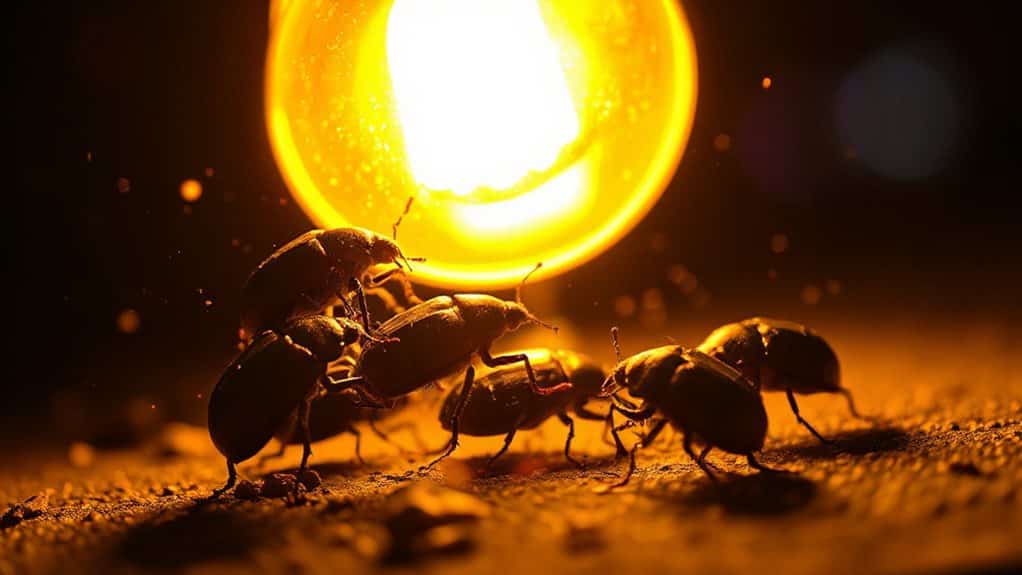
You’ll notice that beetles go crazy for UV‑blue light, so when you set up a campsite lantern that spikes around 450 nm you’ll see them buzzing like tiny tourists at a concert, and you might wonder why the heat‑emitting infrared part of a LED doesn’t pull them in as hard—turns out the insects’ eyes are tuned to those short wavelengths, not the warm glow.
If you swap the bulb for one that emphasizes the LED’s spectral peaks in the blue‑green zone, you’ll probably get a front‑row seat to a beetle parade, which is both fascinating and a little funny if you picture them as eager campers.
Try experimenting with a cooler‑white LED and watch the beetles flock, then switch to a warm amber light and see the crowd thin out—it’s a simple, hands‑on way to learn how wavelength tricks these critters, and you’ll get a good story to tell around the campfire.
You can also reduce attraction by choosing lights designed to limit short-wavelength output, such as full-spectrum LEDs tuned away from UV‑blue peaks.
UV‑Blue Light
Why do beetles seem to flock to those bright porch lights, especially the ones that glow a cool, bluish‑white? You’ll notice their compound eyes love UV‑blue wavelengths—300–400 nm—because those photoreceptors trigger a magnetic pull, especially for Anomala beetles. Blue LEDs amplify the effect, and when UV mixes with green, traps catch even more beetles, making night‑time camping excursions surprisingly beet‑filled.
Infrared Heat Emission
Ever wonder why those tiny beetles seem to gravitate toward the faint glow of a campfire’s heat, not just the light? You’ll find they adore 700 nm near‑infrared because it feels like a warm hug, especially at 7 lux—just enough to heat their bodies without blinding them. That gentle heat, plus their infrared receptors, makes the fire irresistibly cozy, turning a simple night out into a beetle‑magnet excursion.
LED Spectral Peaks
Ever notice how a simple LED lantern can turn a quiet campsite into a beetle‑party? You’ll find UV‑A peaks at 365 nm and 395 nm are the biggest crowd‑pullers, while short‑blue spikes at 447 nm and 478 nm also draw many beetles. Medium greens (500 nm, 519 nm) attract moderately, and reds (627 nm – 740 nm) barely.
Choose cool‑white LEDs for brighter shows, and remember that UV‑blue light matches beetle vision, making your night‑time service feel like a glowing adventure.
Heat From Bulbs That Draws Beetles to Lights
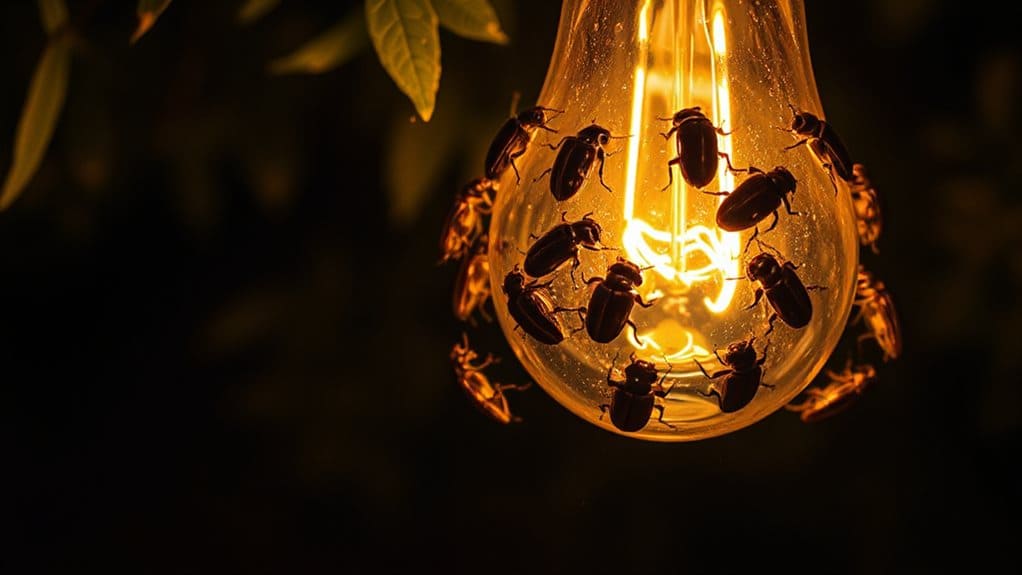
Envision this: you’re setting up a campsite at night, and a warm glow from a lantern pulls a swarm of beetles like moths to a porch light—except the real star of the show is the heat, not the brightness. Incandescent bulbs radiate infrared, mimicking sun‑warmed soil, so beetles—especially June and May types—flock for that cozy microclimate, increasing metabolism and even speeding egg hatching, while cooler evenings amplify the allure. Leaky outdoor fixtures and nearby plumbing issues can also change local humidity and temperature, subtly enhancing the microclimate effects that draw beetles in.
How to Choose Lighting That Deters Beetles
When you swap the warm, heat‑rich glow of an old lantern for a smarter light source, you’ll notice the beetles start to lose interest fast—because they’re not just chasing warmth anymore, they’re also sniffing out the right wavelength. Choose amber or 3000 K LEDs, angle fixtures down, place them away from doors, use motion sensors, and seal gaps; these tweaks keep bugs out while you enjoy campfire‑ready evenings. Planting fragrant companion herbs like lavender or mint nearby can further reduce pest activity while supporting pollinators.
Fate of Beetles After Circling a Light?
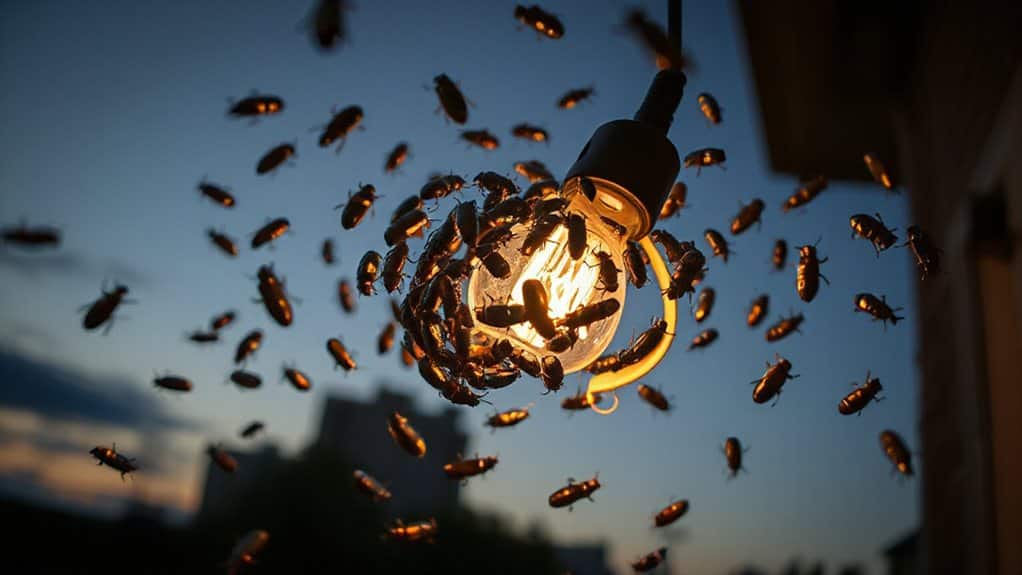
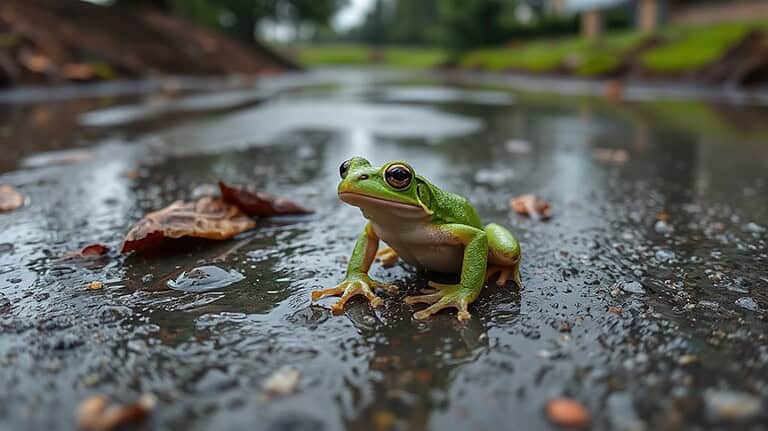
So, what actually happens to those beetles once they’ve been looping around a porch light like a tiny, dizzy spaceship? You’ll see them tire, flopping into fatigue, then become easy snacks for spiders, frogs, or bats that gather nearby.
Some crash into windows, slip inside, and linger harmlessly, while others simply collapse from exhaustion, their energy spent on endless, light‑driven circles.
Overall
Now you’ve got the lowdown on why beetles love your porch light, so next time you’re out camping or stargazing, you’ll know which bulbs keep the bugs at bay—just swap out those warm, heat‑emitting LEDs for cooler, amber‑tinted LEDs, and you’ll see fewer beetles buzzing around. Remember, the right light can make your night expedition bug‑free, and you’ll still get that magical glow without the creepy crawlies. Happy camping!