Can a Chicken Lay Two Eggs a Day? The Surprising Truth
You can see a hen lay two eggs in one day, but it’s a rare “double‑lay” that happens in only about 13 % of birds, usually within a 2.5‑hour window, and most of the time it’s just a 24‑hour cycle that straddles midnight, so you think you got two. The usual cycle runs 24‑26 hours, driven by daylight, with yolk, albumen, and shell forming in stages; stress, heat, or sudden lighting changes can cause a mis‑fire that drops a second yolk or an empty shell. Keep feed balanced, calcium high, and collect eggs a few times daily to smooth things out, and you’ll avoid most double‑lays. If you keep digging, you’ll learn why those “two‑egg‑a‑day” stories are often just a timing trick.
TLDR
- About 13 % of hens can double‑lay, usually within a 2.5‑hour window, but most hens lay only one egg per 24‑26 hour cycle.
- Double‑laying often results from hormonal timing “misfires,” producing two yolks that are encased in a single shell.
- Environmental stressors—heat, erratic lighting, overcrowding—can increase double‑yolk or yolk‑less eggs and disrupt the regular laying rhythm.
- Proper nutrition (16‑18 % protein, ample calcium) and frequent egg collection (2‑3 times daily) help maintain a steady one‑egg‑per‑day output.
- While occasional double‑yolk eggs are normal, persistent double‑laying can stress hens, leading to health issues such as calcium depletion and egg‑binding.
Can a Hen Really Produce Two Eggs in One Day?
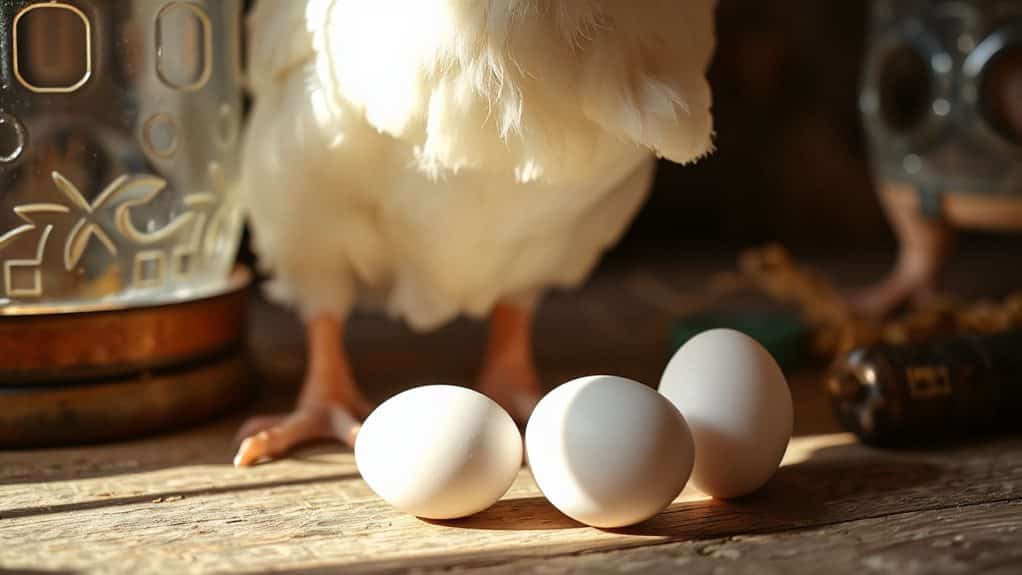
Ever wonder if a hen can actually crank out two eggs in a single day? You’ll be amazed: thermal‑camera studies showed 13 % of hens double‑lay, sometimes within 2.5 hours, even a hen laid three eggs once, and the shells look normal. Stress from predators, sleep loss, or age can trigger this, so watch for signs, and remember it’s a rare, not a daily, surprise. Double oviposition occurs in a notable minority of hens. Chickens’ individual temperament can influence how often unusual behaviors like double-laying appear.
How Does the Normal Egg‑Laying Cycle Work?
When the sun hits the coop just right, a hen’s body kicks off a 24‑to‑26‑hour trip that turns a tiny yolk into a full‑blown egg, and you’ll love watching the timing unfold like a well‑planned road trip.
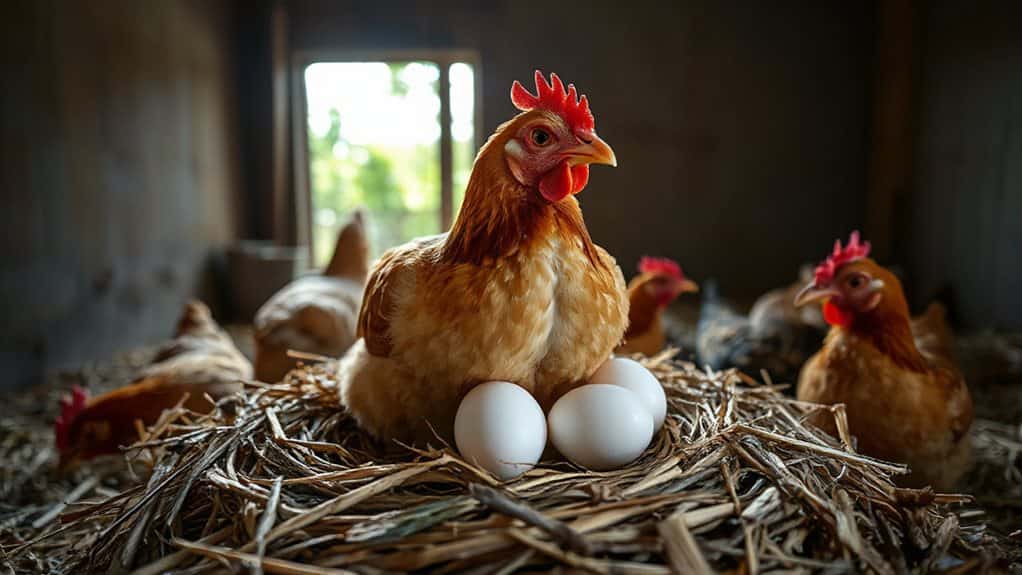
You’ll see the yolk slide into the oviduct, albumen and membranes hug it, then a hard shell builds for twenty‑plus hours before the egg rolls out, one a day, thanks to daylight cues.
Local regulations and HOA rules can affect whether you can keep backyard hens at all, so always check local ordinances before starting a coop.
What Triggers a Double‑Yolk or Yolk‑Less Egg (Two Eggs in One Day)?
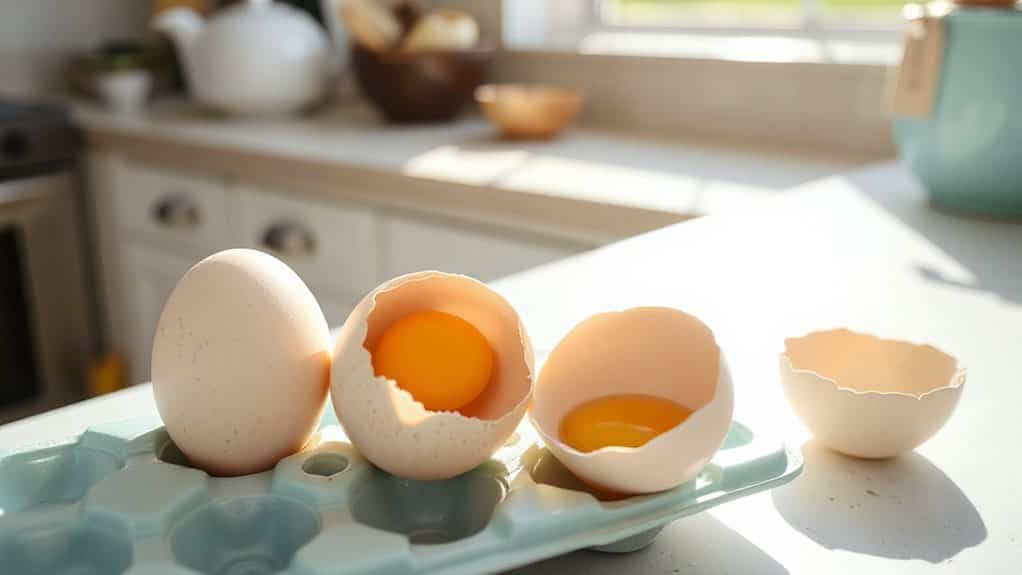
You’ll notice that a sudden hormonal wobble can make a hen release two yolks almost at the same time, especially when her ovary misfires from an early surge of IGF‑1, and that same imbalance often shows up when she’s a fresh‑laid pullet or an older bird whose cycle has gone off‑beat.
Maybe you’ve wondered why a diet low in key nutrients or a stressful heatwave can throw her reproductive rhythm off, causing either a double‑yolk surprise or a yolk‑less egg that looks like a hollow capsule.
Try watching her feed and shelter conditions closely—if you catch the signs early, you’ll be able to tweak her nutrition and environment before the next “two‑in‑one” egg pops up, and you’ll have a good story to share around the campfire!
Heat stress can also shift a bird’s physiology and trigger stress responses that affect egg formation, so consider cooling measures to reduce heat-triggered stress.
Hormonal Imbalance Triggers
Even a tiny hiccup in a hen’s hormone orchestra can turn a normal egg‑laying day into a double‑yolk surprise, and it’s not magic—it’s all about the timing of those pesky LH and FSH surges that normally keep one follicle on stage at a time.
You’ll see that sudden light spikes, stress shocks, or estrogen‑mimicking toxins can scramble those pulses, letting two follicles burst together, while young pullets still finding their hormonal set‑point are especially prone to double‑yolk mishaps.
Nutritional Deficiencies Influence
Hormonal hiccups already hinted that a hen’s internal clock can go haywire, but the story doesn’t stop there—what she eats can push that clock into overdrive or stall it completely.
When she lacks calcium or protein, her ovary may rush yolk release, creating double yolks or even yolk‑less eggs; think of it like a camper forgetting a key ingredient, causing the whole trip to wobble, yet still providing tasty meals.
Environmental Stress Factors
When the weather flips like a surprise detour on a road trip, your hens can end up as confused as a camper who forgot the map, and that confusion often shows up as double‑yolk or yolk‑less eggs—sometimes even two eggs in a single day.
Sudden temperature spikes, erratic lighting, or a noisy construction site crank up cortisol, disrupting ovulation; overcrowding, predator alerts, and sudden coop moves similarly scramble their cycles, making double‑yolks or extra eggs pop up unexpectedly.
How Can You Prevent Unwanted Double‑Egg Laying?
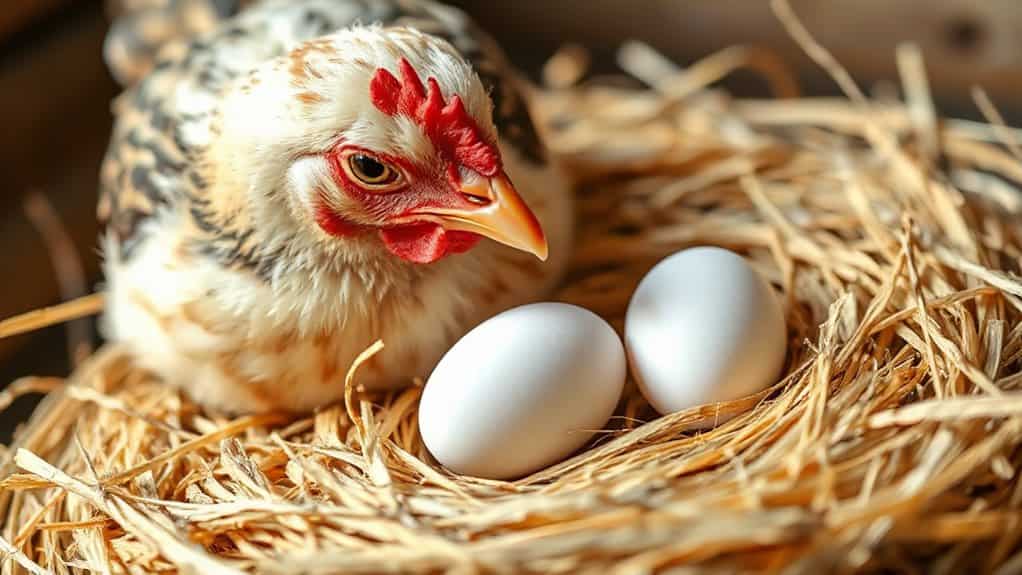
If you’ve ever watched a hen stare at her nest like she’s waiting for a secret treasure, you’ll know that double‑egg laying can pop up when the flock gets bored, stressed, or just a little too well‑fed.
Keep protein at 16‑18 %, add calcium shells, collect eggs 2‑3 times daily, dim the boxes, give forcking toys, and use roll‑away nests—these steps stop the surprise lay‑overs and keep everyone smiling.
Why Are Two‑Egg‑a‑Day Claims Often Misunderstood?
Ever wonder why the “two‑egg‑a‑day” rumor feels like a myth you keep hearing around the coop? You think hens need a strict 24‑hour cycle, yet they can lay just before midnight and again after, so a calendar day shows two eggs while each follows the normal 24‑26‑hour rhythm.
Plus, double ovipositions are rare—only about 13 % of hens ever do it—so most keepers never see one, making the claim seem impossible.
Heat stress and sudden temperature changes can affect laying patterns and increase anomalies like double lays, so managing temperature fluctuations helps maintain regular cycles.
How Do Light, Food, and Age Influence the Chance of Two Eggs in One Day?
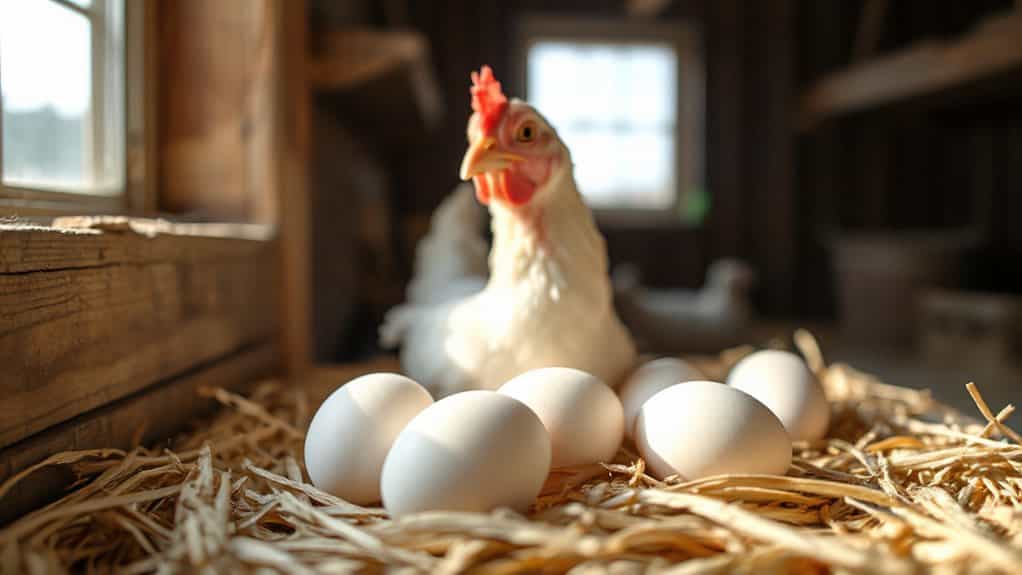
Even though it might sound like a sci‑fi plot, the amount of light, the food you give, and the hen’s age all team up like a well‑planned camping trip to increase the odds of spotting two eggs in a single day, so let’s break down how each factor works and why they matter.
Give 14‑16 hours of warm, low‑intensity light, feed balanced nutrition, and keep hens past sixteen weeks.
The combo sparks hormones, supports shell‑building, and lets mature layers occasionally double‑lay, just like finding two marshmallows in one campfire bag.
Early or stressful conditions can reduce laying and increase care needs, especially when temperature extremes stunt growth and recovery.
How Can You Spot a Double‑Yolk Egg (Two Eggs in One Day)?
When you’re rummaging through the nest or pulling eggs out of the cooler, you can spot a double‑yolk before you even crack it, because those lucky eggs tend to feel heavier, look a bit oversized, and sometimes even sport a quirky “cigar band” that makes them look like Siamese twins.
Feel the weight, check for a jumbo label like “SJ,” and hold the egg up to a light—if you see two distinct yolk shadows, you’ve found a double‑yolk, ready to wow anyone you serve.
What Health Risks Come With Frequent Double Laying?
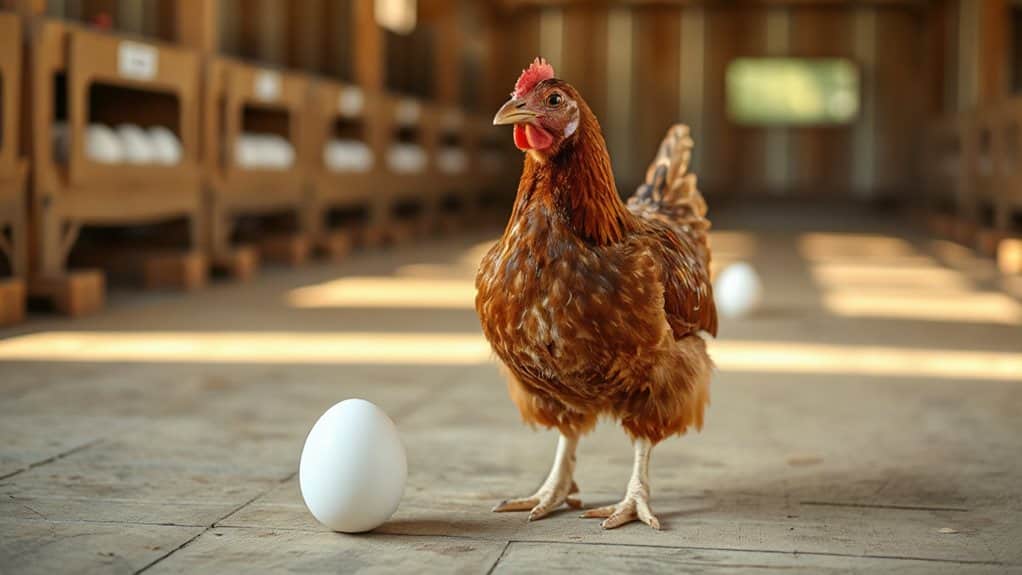
You might think a double‑laying hen is just a super‑productive camper on a road trip, but the reality is that egg peritonitis can set in when the abdomen fills up with leaked fluids, and that’s no joke.
Have you ever watched a chicken struggle to pass a massive double‑yolk and felt the panic of egg binding?
Keep her stress low, feed her right, and you’ll avoid the cascade of health declines that come with pushing her to lay two eggs a day.
Egg Peritonitis Risk
If a hen tries to lay two eggs in a single day, you’ve basically set her up for a wild roller‑coaster of health trouble, because that frantic double‑laying can turn her abdomen into a bacterial playground where E. coli loves to party.
You’ll see swollen bellies, lethargic nesting, and yolk‑colored droppings, while mortality spikes up to 7 %.
Egg Binding Potential
Egg binding is the nasty side‑effect that can pop up when a hen tries to crank out two eggs a day, and it’s not just a little inconvenience—it’s a full‑blown emergency that can turn a happy coop into a high‑stress zone faster than you can say “campfire marshmallows.”
Visualize this: her oviduct, already stretched thin from cranking out extra yolks, suddenly gets jammed by a too‑big or misshapen egg, and the muscles that usually push the egg out start to like a rusty bike chain in the cold.
You’ll notice lethargy, a swollen belly, and frantic straining; without calcium, warm shelter, or prompt help, shock, infection, and death can strike within days, so act fast and keep her diet balanced.
Stress‑Induced Health Decline
When a hen tries to crank out two eggs a day, her body goes into over‑drive, and the stress that builds up can hit every system like a sudden thunderstorm on a camping trip—exciting at first, then a bit overwhelming.
You’ll see calcium ripped from leg bones, causing weak legs and osteoporosis.
Follicles atrophy, eggs crack, pelvic muscles loosen, and infections like salpingitis appear.
Immune cells drop, making her sickly.
Hormones wobble, halting laying.
Heat adds even more chaos, shrinking egg size and number.
When Should You Call a Vet for Egg‑Related Problems?
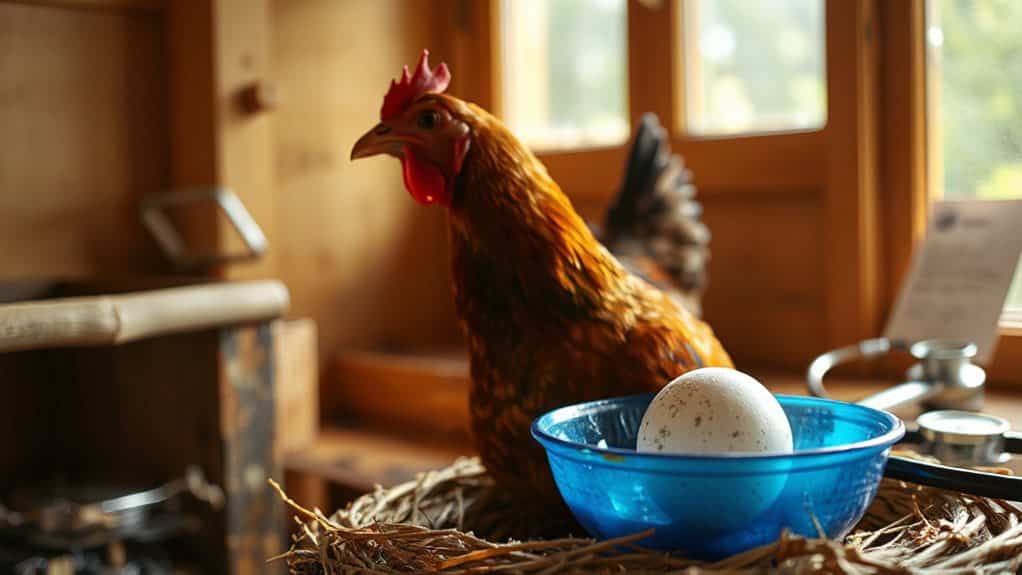
Even though you’re used to checking your hens like you’d check a campsite map before a big expedition, you shouldn’t wait until the situation turns into a full‑blown emergency before calling a vet—especially when the egg‑bound hen shows signs that home remedies just aren’t cutting it.
Call if distress egg stays over 24 hours, she turns purple, panting heavily, or shows blood, shock, or severe swelling; these clues mean professional help is essential.
What Should You Realistically Expect From Your Laying Hens?
You’ll probably see your hens dropping about one egg a day most of the time, especially when they’re fresh out of the pullet stage, but don’t expect a nonstop parade of shells—once they hit their first year the output starts to wobble, and by the time they’re three or four years old you’ll notice a clear dip, especially after a molt or a short‑day winter.
Keep an eye on the lighting, feed, and stress levels, because a well‑lit coop with a balanced diet can keep the daily yield steady, while a sudden change in routine can make them skip a day or two.
Consistent Daily Yield
If you’ve ever watched a flock of hens and wondered whether they’ll actually hand you six eggs every single day, the short answer is: expect a bit of wiggle‑room, not a perfect clockwork schedule.
You’ll need about nine hens for six daily eggs, because each bird rests after a 24‑26‑hour cycle, light, feed, and calcium keep the rhythm steady, but occasional skips happen.
Age‑Related Production Decline
When your hens hit the sweet spot of eight months to two years, they’re basically on a non‑stop egg‑laying marathon, but after that the pace starts to wobble like a backpacker on a rocky trail—by the time they’re two years old you’ll see the daily count dip from ten eggs to about eight or nine, and by three years it’s more like six eggs per ten hens, because the aging body shifts its energy from churning out shells to just staying alive, so expect a gradual slowdown, occasional missed days, and a few extra cracks in the shells as the hens get older.
You’ll notice thinner shells, more molts, and occasional gaps, but still enjoy fresh eggs while planning for replacements.
And Finally
You’ve learned that a hen can’t truly crank out two perfect eggs every day—she’s got a natural cycle, and double‑yolks are just rare quirks, not a daily routine. Keep an eye on her health, give her good feed, and don’t panic if you spot a double‑yolk; it’s a fun surprise, not a crisis. If she starts laying weird eggs or looks stressed, call the vet. So enjoy the fresh‑egg bounty, but remember the science, not the myth, guides your flock’s rhythm.