Why Do Spiders Suddenly Appear in Basements?
You’re seeing spiders pop up in your basement because the dark, damp corners act like a cozy campsite for insects, and those insects are the spiders’ all‑you‑can‑eat buffet, while cracks, vents, and leaky pipes become secret highways that let the critters slip inside, so when humidity rises and clutter piles up, you create the perfect hide‑out for both prey and predator, and if you keep the space tidy, dry, and sealed, you’ll cut the party short—keep going and you’ll uncover how to turn that basement into a spider‑free zone.
TLDR
- High humidity in basements creates a moist environment that supports insects, which are prey for spiders.
- Dark, undisturbed corners and clutter provide safe hiding and web‑building sites for spiders.
- Cracks, vents, and other entry points allow spiders to migrate from outside or other parts of the house.
- Leaks or dampness generate mold and increase insect populations, attracting more spiders.
- Seasonal changes often push insects and spiders indoors seeking stable temperature and shelter.
Quick DIY Fixes to Make Your Basement Spider‑Free
You’ve probably noticed how quickly a few tiny spiders can turn a cozy basement into a creepy‑crawl zone, but the good news is you can shoo them away with a handful of simple, DIY tricks that won’t break the bank.
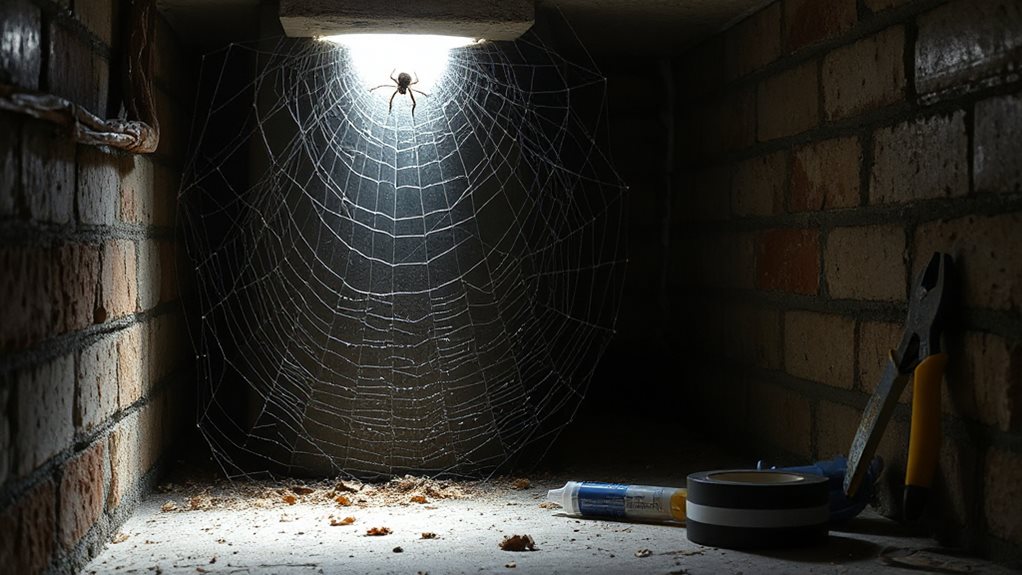
Keep humidity under 50 % with a dehumidifier, seal cracks with silicone caulk and steel wool, vacuum regularly, sprinkle diatomaceous earth, and set sticky traps on baseboards.
These quick fixes protect your space and the people you care about.
Basements provide high humidity that supports insects, which in turn attract spiders. Using warm, downward‑aimed lighting and motion‑activated fixtures can also reduce the number of insects—and therefore spiders—near entrances and windows to the basement, which helps limit their food source and discourages nesting near lights.
Why Dark Basements Attract Spider Infestations
Ever wonder why your basement feels like a spider‑magnet when the lights go out? Dark corners give spiders a safe hideout, shielding them from birds and bats, while low traffic lets them spin webs undisturbed. High humidity fuels mold and insects, creating a buffet. Cracks and vents become secret highways, so the gloom practically invites a thriving spider community. Soil compaction and debris near foundation edges can alter moisture and shelter conditions, encouraging spiders to settle in cracked foundation areas.
How Clutter Creates Hidden Homes for Basement Spiders
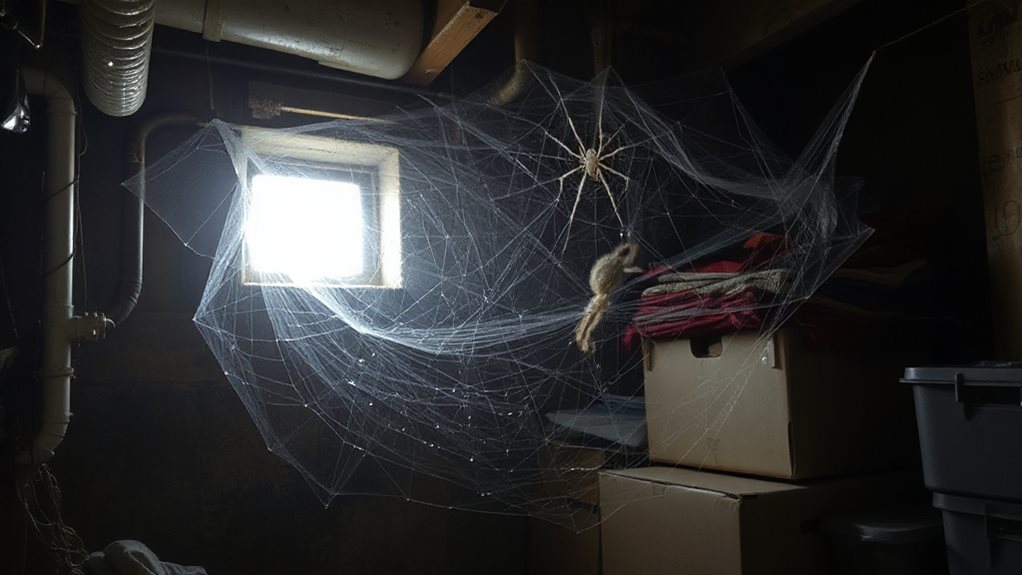
You’ll notice that a cardboard box tucked in a corner becomes a perfect shelter for a spider, giving it a cozy hideaway and a secret launch pad for its web; have you ever seen how a pile of old shoes or storage bins creates hidden anchoring points on the floor joists, letting the spider weave three‑dimensional nets without anyone noticing?
Imagine the excitement of finding a tiny “camping” spot for these critters—just like you’d set up a tent in the woods, they claim the creases and seams of clutter as their own little campsite, and it’s both fascinating and a bit funny to think of them as miniature adventurers thriving in the mess we forget to tidy.
They often favor areas with humidity and shelter, which provide the moist, protected conditions that encourage spider activity.
Boxes as Shelters
Imagine this: you’ve got a mountain of cardboard boxes, old holiday decorations, and a few plastic bins stacked in the corner of the basement, and each one is practically a tiny, secret hotel for spiders.
You’ll see them slip into corrugated folds, hide behind tight‑lid bins, and nest in dark gaps where insects gather, because clutter creates cozy, undisturbed shelters that feel like a camper’s cabin for creepy crawlers.
Hidden Web Anchors
Boxes may be the perfect “campground” for spiders, but the real secret to their basement stay is the hidden web anchors that clutter creates. You’ll find loose boxes, pipes, and stacked books forming secret corners where spiders snag silk, and those dimly lit junctions turn into tiny campsites. Keep the space tidy, and you’ll spot fewer surprise guests, because without hidden anchors, their “camping” trips end early.
Nesting in Clutter
Ever wonder why your basement feels like a tiny wilderness campsite for spiders? You’ll find stacked boxes and fabrics create secret gaps and dark corners, perfect shelters where spiders spin webs unnoticed, while hidden insects in those piles give them a steady snack supply. By decluttering, you cut their hidden homes, limiting nests, egg sacs, and the whole creepy‑camping excursion.
Moisture’s Role in Fueling Spider Infestations
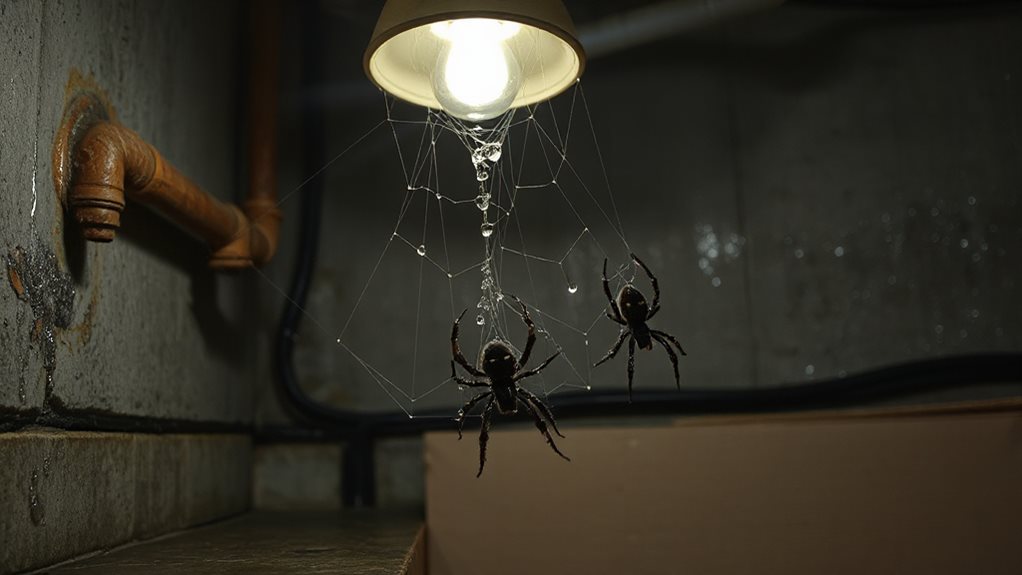
You’ll notice that a damp basement becomes a perfect little oasis for spiders, because those moisture‑rich microhabitats turn the space into a buffet of insects and a cozy shelter, especially when a leaky pipe or a sweaty wall creates a permanent pool of humidity.
Have you ever imagined how the same humidity that makes your socks soggy also fuels a bustling insect population, which in turn lures spider species like trembling and house spiders to set up camp right under your feet?
Try fixing those leaks, boosting ventilation, and keeping the humidity below 50 %—you’ll cut off the food source and the shelter, and the spiders will pack their bags faster than a camper leaving a rain‑soaked campsite!
Increasing airflow and removing damp organic debris can speed drying and reduce the moisture that feeds insects and spiders.
Moisture‑Rich Microhabitats
Ever wonder why basements feel like a secret oasis for spiders? You’ll find moisture‑rich microhabitats in deep soil layers, soggy organic debris, and concrete that wicks water, creating stable hydration zones that mimic forest floor litter.
Those damp corners let spiders sip, molt, and spin silk without dehydration, so they thrive, quietly, while you store boxes and forget the humidity.
Humidity‑Driven Insect Prey
So, why do those creepy‑crawlies seem to throw a party in your basement whenever the humidity spikes? You’ll notice springtails, silverfish, and gnats thriving once moisture climbs above 50%, and those insects become a buffet for spiders hunting in the damp corners. By keeping the air dry, you cut the food supply, so spiders lose interest and move on.
Leak‑Induced Shelter Creation
Ever wonder why a single leaky pipe can turn your basement into a spider‑loving resort?
When water drips, humidity spikes above 50%, creating perfect micro‑habitats; mold blooms, cracks stay damp, and cluttered corners become cozy shelters.
Fix leaks, ventilate, and dehumidify to deny spiders their rain‑forest retreat, and you’ll keep the space dry, safe, and welcoming for everyone.
Prey Insects That Trigger Basement Spider Infestations
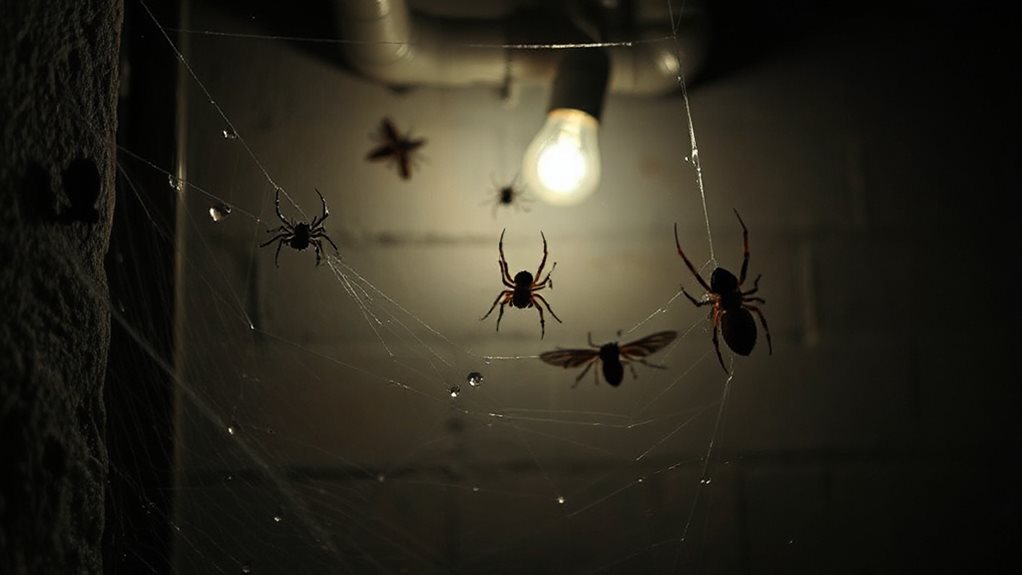
What makes a basement suddenly feel like a bug‑buffet for spiders? You’ll find moisture‑loving pests—psocids, drain flies, springtails, silverfish—thickening up in damp cracks, clutter, and dust, while moths, mosquitoes, carpet beetles, and booklice flutter around stale boxes. Those insects feed on mold and organic debris, creating a thriving buffet that draws web‑builders, so keep humidity low and declutter to starve the spiders. Improving ventilation and reducing moisture through dehumidification helps prevent infestations by limiting humidity-loving pests.
Seasonal Patterns That Drive Spiders Indoors
Ever wonder why spiders seem to pack their bags and move into your basement right when the leaves start falling? As temperatures plunge, cold‑blooded spiders chase warm, humid spots, especially in basements and bathrooms; autumn mating drives males to wander, while winter dormancy pushes them into undisturbed corners, and dampness makes cellars irresistible. So, you’re basically hosting a seasonal spider road‑trip!
Where Spiders Slip In and How to Block Entry Points
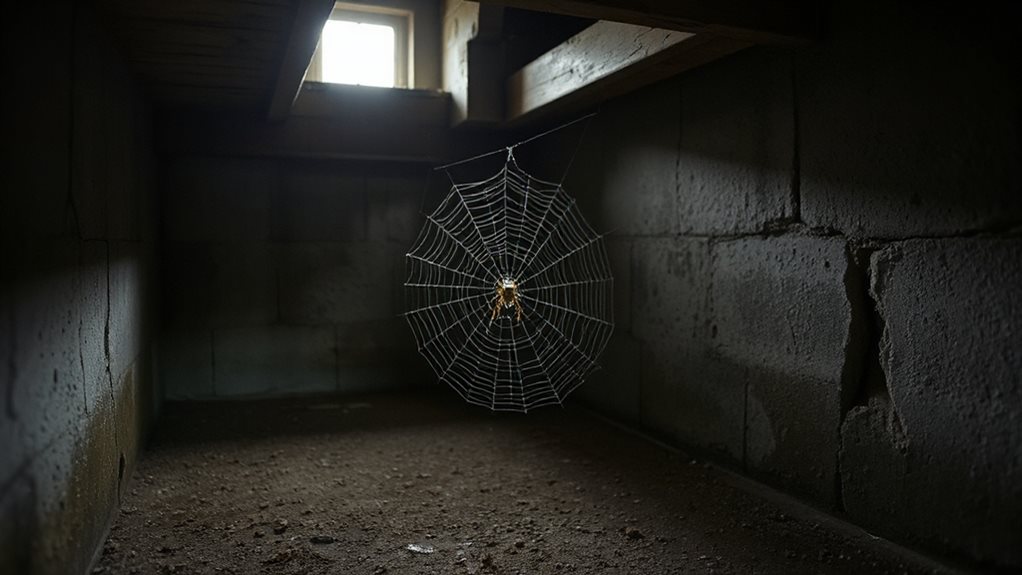
When the leaves start falling and the thermostat drops, you’ve already seen spiders packing up for a basement road‑trip, but now it’s time to figure out how they actually slip in through the walls, floors and vents.
Check hairline foundation cracks, seal utility penetrations with silicone, add door sweeps, weather‑strip windows, mesh floor drains, and screen vents—quick fixes that stop their tiny travel routes.
Long‑Term Prevention: Sealing, Dehumidifying, and Regular Maintenance
Ever wondered why a dry, well‑sealed basement feels like a five‑star campsite for you instead of a spider‑infested wilderness?
You’ll keep those eight‑legged guests out by sealing cracks, installing fans, and running a dehumidifier, then vacuuming corners weekly, decluttering storage, and checking drainage.
Treat your space like a campsite—maintain, monitor, and enjoy a pest‑free escapade!
Overall
Now you’ve got the know‑how to keep those creepy crawlers out, so grab a flashlight, seal those cracks, and dry out any damp spots—think of it as prepping a campsite before the bugs show up. Remember, a tidy, dry basement is like a well‑packed backpack: everything’s in its place and nothing unwanted sneaks in. Got a favorite spider‑free tip? Share it, and let’s keep the basement excursion bug‑free together!