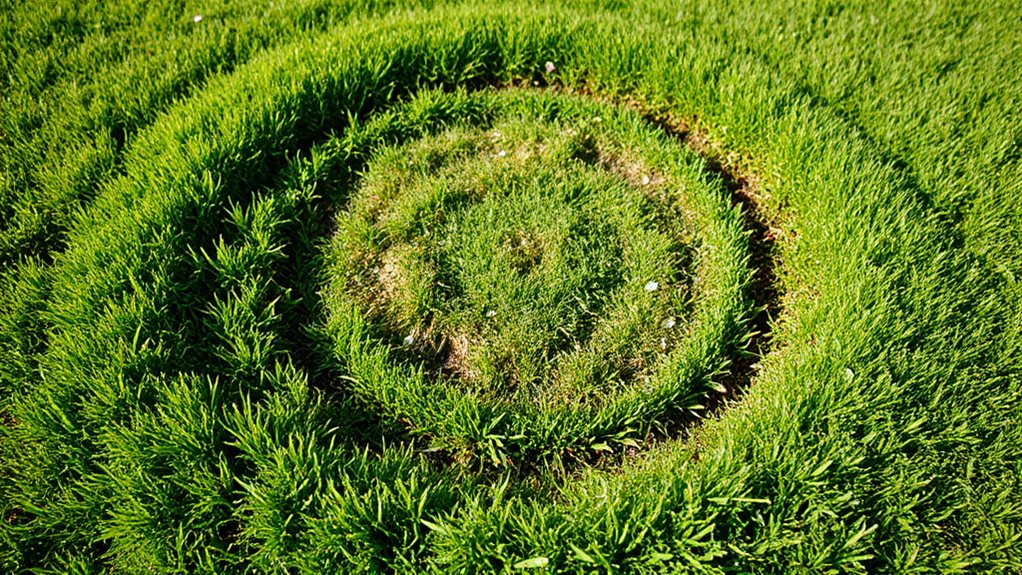
Why Does Grass Turn Brown in Circles?
You’re seeing brown circles because warm, humid nights let the fungus Rhizoctonia solani thrive, especially when the lawn stays wet from over‑watering or poor drainage, and thick thatch traps that moisture like a cozy campsite. Too much nitrogen fuels lush grass that the fungus loves, and low airflow under fences or shrubs creates a humid micro‑climate, while dog urine, chinch bugs, or mis‑applied herbicides can paint similar rings. If you act fast—adjust watering, aerate, mow higher, and treat with a fungicide—you’ll curb the spread, and the next section reveals deeper tricks.
TLDR
- Fungal infection by Rhizoctonia solani creates brown patch circles with a smoky ring and white mycelium.
- Dog urine, insect feeding (chinch bugs, grubs), or mis‑applied herbicides can scorch grass in circular patterns.
- Over‑watering, poor drainage, and thick thatch retain moisture, promoting fungal growth and brown rings.
- Low mowing height and dull mower blades damage crowns, making turf more susceptible to circular brown spots.
- Excess nitrogen or drought stress weakens grass, allowing both fungal and non‑fungal causes to produce brown circles.
What Is a Brown Patch Circle and How Can You Identify It?
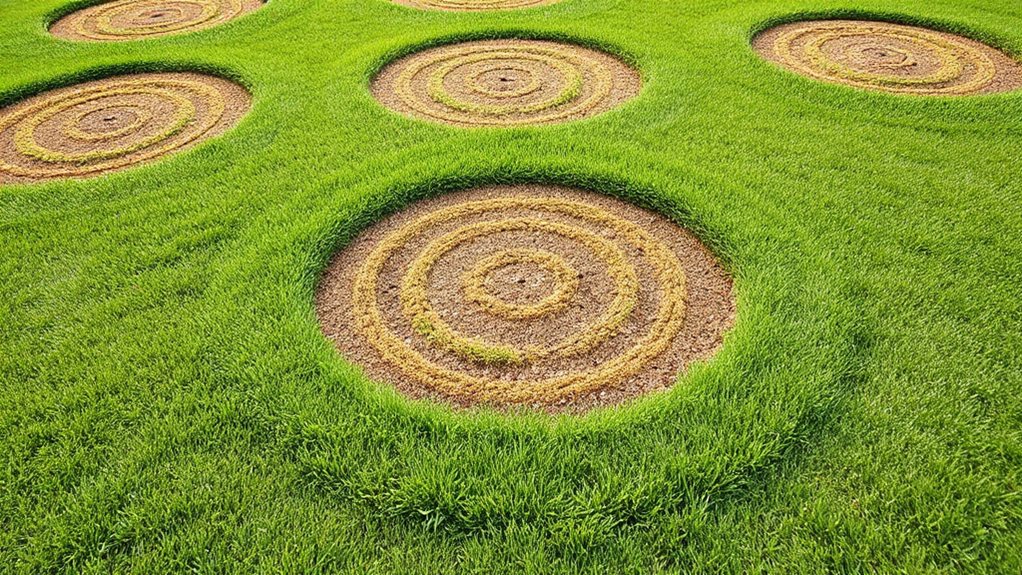
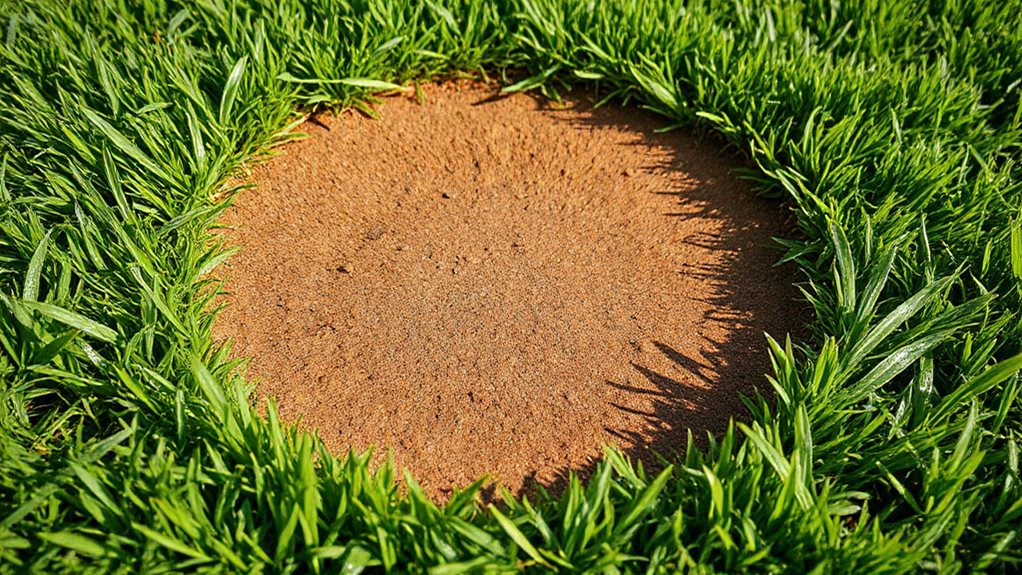
Ever wondered why your lawn sometimes looks like a giant, doughnut‑shaped cookie? You’re looking at a brown patch circle, a fungal ring caused by Rhizoctonia solani that shows up as light‑brown, tan or yellowish circles, sometimes with a smoky, purplish edge.
Spot the doughnut shape when the center greens up, notice cotton‑candy‑white mycelium in morning dew, and check for irregular leaf lesions—these clues tell you the fungus is at work, so you can act fast and protect the turf you love. Warm, humid conditions accelerate its spread. Frequent overwatering and poor drainage can worsen disease severity and spread.
How Warm, Humid Weather Triggers Brown Patch Circles?
When the night heats up past 68°F and the air stays sticky‑sweet at 95%+ humidity, the fungus gets a backstage pass to sprout spores faster than you can set up a tent, and you’ll see those brown circles start to pop up like campfire embers. Imagine the grass on a thick thatch layer acting like a cozy sleeping bag—its moisture hangs on all night, giving the mycelium a perfect playground to spread, and you’ll wonder why a simple warm, humid night can turn a lawn into a patchwork of brown rings. So, if you love camping trips and want to keep your lawn as fresh as a sunrise hike, keep an eye on those night temps and humidity, and consider aerating that thatch before the fungus decides to set up camp! Adding organic matter and improving soil structure can help reduce thatch and improve drainage to discourage fungal outbreaks.
Humidity Accelerates Spore Germination
So, why does a warm, muggy night turn your lawn into a patchwork of brown circles? You’ll notice spores of Rhizoctonia solani spring to life when leaf surfaces stay wet twelve hours, especially above 95% humidity, and thick thatch or over‑watering traps that moisture. Night temps above 60°F keep the dampness alive, letting fungal colonies spread fast, so you can protect neighbors by improving drainage and airflow.
Warm Nights Promote Mycelial Growth
Why do warm, muggy nights turn your lawn into a patchwork of brown circles?
When night temps climb above 60°F, especially past 68°F, the fungus awakens, spilling white, cottony mycelium across dew‑kissed blades.
Hot, humid evenings after scorching days let the mycelium spread 2–3 inches daily, turning tiny spots into sprawling circles that look like campfire rings on your grass.
Moisture Retention on Thatch Layers
After those muggy nights wake up the fungus, the real culprit hiding under your feet is the thatch layer—think of it as a fluffy carpet of dead grass, roots, and organic bits that sits between the soil and the green turf.
You’ll see it soak up dew and rain like a sponge, keeping the surface wet for twelve hours, so warm, humid days let Rhizoctonia solani thrive, forming those perfect brown circles you spot on camping trips.
Dethatching, aerating, and watering early will dry it out fast.
How Over‑watering and Poor Drainage Feed Brown Patch Circles?
You’ll notice that when you water your lawn like you’re filling a kiddie pool, the extra moisture hangs around for hours, creating the perfect playground for Rhizoctonia solani to sprout and spread in those eerie circles.
Have you ever seen how compacted soil or a soggy patch in a low‑lying corner traps water, choking the roots and letting the fungus flourish like a camp‑fire that just won’t die out?
Try cutting back the irrigation, aerating the soil, and watching those brown rings recede—your grass will thank you, and you’ll finally have a lawn as smooth as a well‑packed sleeping bag.
Excess moisture and poor drainage also encourage surface issues like mold growth on soil and thatch, which can make fungal problems worse.
Moisture Accumulation
Ever wondered why your backyard lawn ends up with those mysterious brown circles after a summer rainstorm?
When you over‑water, moisture clings to leaves for hours, especially after evening watering, and poor drainage traps that water in the soil and thatch, creating a soggy blanket.
This humid, warm environment lets fungi thrive, turning patches brown—just like camping gear that stays damp too long.
Soil Aeration Deficiency
When the rain hangs around after a storm, the water can’t sink into the ground because the soil’s been squished flat, so it just sits on top like a tiny pond, and that’s when the brown circles start to show up. You’ll notice compacted earth traps roots, blocks air, and creates puddles; over‑watering just deepens the mess. Aerate to let water, nutrients, and oxygen flow, and watch the grass revive like a campsite after a fresh rain.
Fungal Growth Amplification
Imagine you’ve just set up camp on a soggy lawn after a rainstorm, and the ground’s still soaking like a damp sleeping bag—those extra minutes of leaf wetness are exactly what *Rhizoctonia solani* loves, turning your once‑green carpet into a ring of brown patches that look like camp‑fire smoke rings.
Over‑watering keeps soil soggy, poor drainage traps moisture, and night temps above 60°F let fungal threads spread in perfect circles, especially where nitrogen’s high and airflow’s low.
How Thick Thatch and Low Air Flow Create Brown Patch Circles?
So, why does that thick, squishy thatch layer together with stagnant air turn your lawn into a ring of brown circles? You’ll notice that half‑inch thatch traps moisture, keeping blades damp overnight, while fences or shrubs choke airflow, so humidity stays above 95 %. That soggy, humid pocket fuels Rhizoctonia, forming frog‑eye rings that expand fast—think of it as a campsite where rain never dries, and the fungus throws a perpetual campfire party. Fixing drainage and clearing debris reduces standing water and mosquito breeding grounds that similarly thrive in stagnant, humid conditions.
How Excess Nitrogen Leads to Brown Patch Circles?
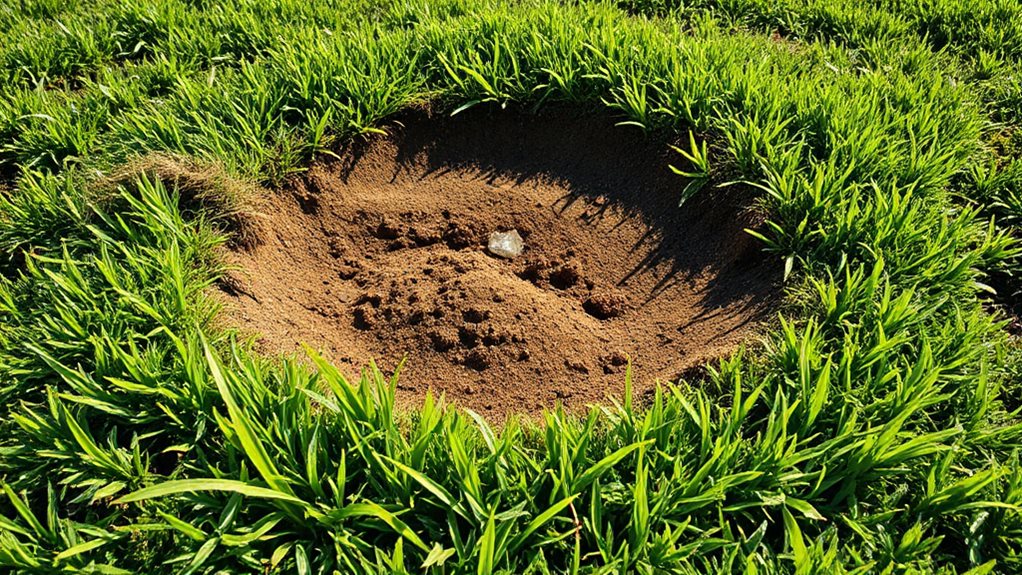
Ever wonder why a lawn fed like a marathon runner’s buffet can suddenly sprout rings of brown that look like campfire circles? When you over‑feed nitrogen, the grass turns soft and juicy, perfect pizza Rhizoctonia solani.
The fungus feasts, spreading fast, especially with quick‑release fertilizers in hot, humid summer nights. Cut back nitrogen, use slow‑release, and keep those circles at bay. Consider reducing applications and choosing slow‑release formulations to limit excessive lush growth and prevent disease.
How Mowing Mistakes Cause Circular Burn Patches?
You’ll notice that when you set the mower blade too low and cut the grass in one big swoop, the soil crown gets exposed and the turf burns into neat circles, kind of like the scorch marks you see after a campfire gone wild. Have you ever tried mowing every week versus waiting a whole month and watched how the grass reacts—short, frequent cuts keep it happy, but a sudden “one‑third rule” violation shocks the roots and leaves brown rings that look like target practice?
Try sharpening those blades and sticking to the right height, because a dull edge tears the blades, invites disease, and turns your lawn into a comedy of errors that even a campsite would laugh at.
Blade Mower Blade Height
Why do those weird brown circles show up after you mow? You probably set the blade too low, scalping the crown and exposing the grass to disease, especially on bumps or compacted soil.
Raise the deck to 2.5‑3 inches, level the mower, and check wheel alignment; then you’ll keep lawns healthy, avoid circular burns, and still enjoy camping trips without worrying about patchy grass.
Improper Mowing Frequency
So, why do those perfect‑shaped brown rings keep popping up after a weekend of mowing?
When you stick to a rigid schedule instead of watching growth, you let grass overgrow, then slash too much at once, exposing tender blades to sunburn and smothering them with clippings.
Adjust mowing to the season, keep cuts under one‑third, and those circular patches will disappear.
How to Tell Brown Patch Apart From Dollar Spot, Pythium, and Ring Spot?
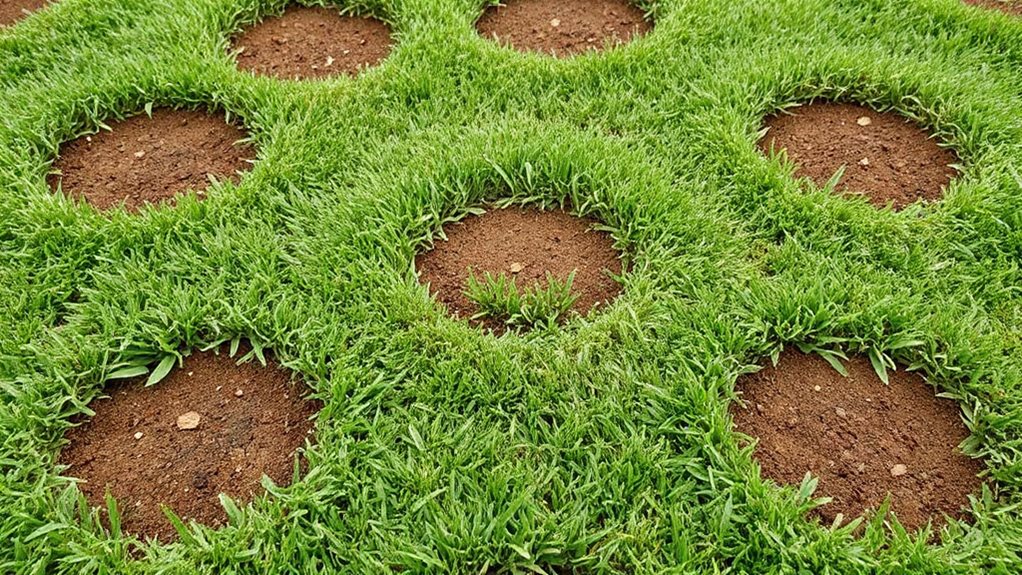
Ever wonder why your backyard lawn sometimes looks like a patchwork quilt of brown circles instead of a smooth green carpet?
Spot the smoke‑ring and gray mycelium on wet brown patches, feel rotted sheaths pull free, and note the larger, irregular lesions; contrast with dollar‑spot’s tiny silver‑dollar circles, pythium’s greasy gray mats, and ring‑spot’s dry, dead centers that appear only in drought.
Non‑Fungal Triggers That Also Form Circular Brown Spots (Dog Urine, Insects, Weeds)
After sorting out the fungal impostors, let’s turn our attention to the culprits that aren’t microbes at all but still love to paint your lawn with brown circles—think of them as the mischievous “tourists” that show up uninvited at a campsite, leaving footprints you can’t ignore. Dog urine burns grass with nitrogen, insects like chinch bugs or grubs carve circular patches, and mis‑applied herbicides or fertilizer create similar rings, while drought‑stressed weeds and salt buildup add to the oddball scenery.
Immediate Steps to Stop a Brown Patch Circle in Its Tracks
Ever wondered how quickly you can halt a brown‑circle disaster before it spreads like a campfire in dry brush? You grab a sprayer, mix Patch Pro, and coat the spot and a ring around it, then rake it loose to dry faster.
Water early, aerate, prune shade, wear PPE, and re‑apply every two weeks—your lawn will thank you.
Long‑Term Prevention Plan for a Healthy, Even‑Greened Lawn
How can you keep your lawn looking like a perfectly rolled campsite blanket all year long? Water deeply 1‑1.5 inches early, use drip hoses, and set smart timers;
aerate yearly, top‑dress with compost, and fix low spots.
Choose slow‑release organic fertilizer, mow at the right height with sharp blades, prune shade‑giving branches, and apply preventative fungicide when nights stay above 60°F.
This routine keeps the grass healthy, even, and ready for any backyard exploration.
Overall
Now you’ve got the low‑down on those pesky brown circles, so grab your garden gloves and start fixing the problem before it spreads—think of it like planning a camping trip: you check the weather, pack the right gear, and avoid the bugs. Remember, proper watering, good airflow, and balanced fertilizer are your campsite rules, and a quick spot‑check can keep your lawn looking like a green meadow instead of a cratered moon. Ready to turn those brown spots into a lush excursion? Let’s get to it!