Why Do Lawns Grow Unevenly?
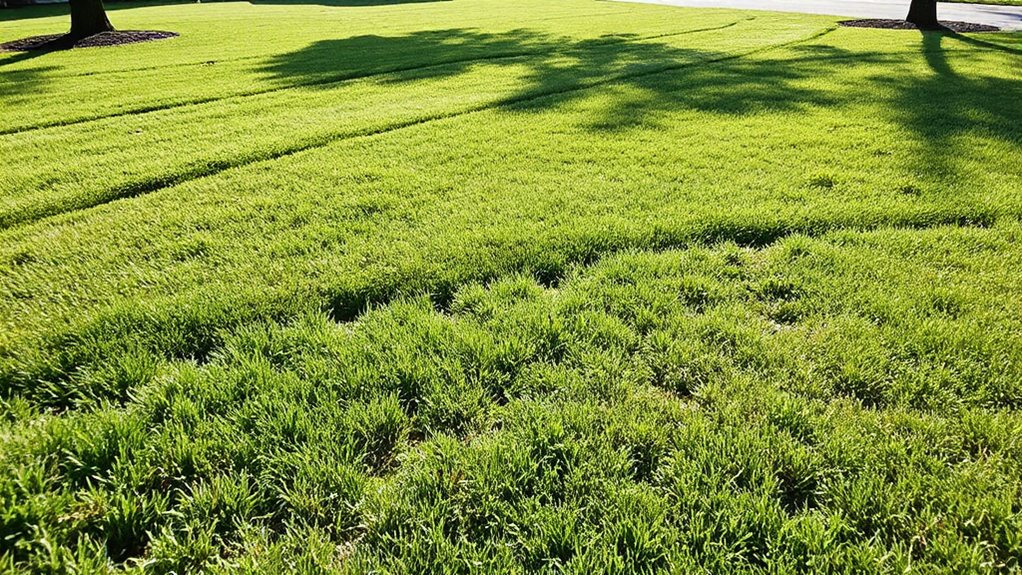
Your lawn gets bumpy when the ground gets compacted from foot traffic, mowing, or heavy tools, because the soil squeezes out air and water, forcing roots to stay shallow and making patches turn yellow or form ruts; uneven drainage creates low spots that fill with puddles, while shade, nutrient swings, and frost‑heave add height differences, and a mower with uneven pressure or the same cutting direction can carve grooves—fix it by aerating, top‑dressing, adjusting pH, and grading, and you’ll see a smoother carpet, plus more tips if you keep going.
TLDR
- Soil compaction limits root depth, causing shallow growth and uneven water and nutrient uptake.
- Poor drainage or low spots collect water, creating soggy areas that promote patchy, uneven turf.
- Inconsistent mowing practices, such as uneven tire pressure or repeated directional passes, produce ruts and height variations.
- Nutrient imbalances or pH issues lead to yellowing and stunted patches, while over‑watering leaches essential nutrients.
- Pest activity (moles, pet digging) and surface disturbances create holes or ridges that disrupt a uniform lawn surface.
Why Soil Compaction Makes Your Lawn Uneven
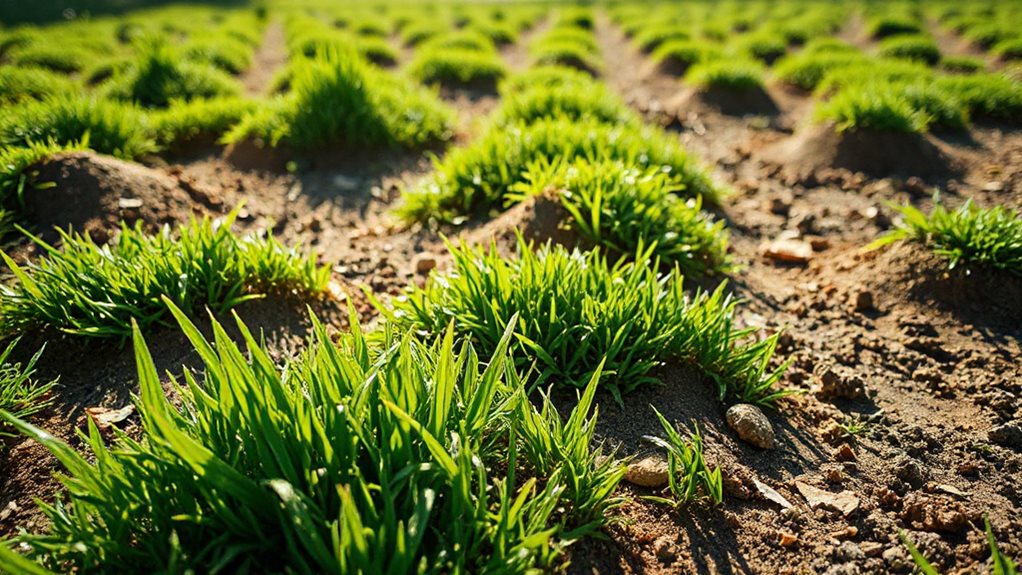
Ever wonder why your lawn looks like a bumpy road after a weekend of backyard camping? When you tread on compacted soil, roots can’t plunge deep, so they stay shallow, drinking only surface moisture and missing nutrients.
The dense ground blocks water, oxygen, and fertilizer, creating puddles and yellow patches. Your grass becomes weak, patchy, and easily stressed—just like a tired traveler on a rough trail. Compaction also raises canopy temperatures, further stressing the turf. Improving aeration and adding organic matter helps loosen compacted soil and restore root growth, reducing runoff and patchiness.
How Heavy Traffic and Tools Create Ruts on an Uneven Lawn
You’ll notice that every time you sprint across the backyard or haul a heavy mower over a soggy patch, the soil gets compacted and tiny ruts start to form, almost like the trail marks left by a camper’s boots on a forest path.
Have you ever tried parking a car on the grass and watched the tires carve deep grooves that stay forever, just like a pothole on a road?
Next time you’re out with your tools, try spreading the weight with a piece of plywood or changing your route, because those simple tricks can keep your lawn from looking like a bumpy campsite.
Edge zones often get extra water and nutrients from runoff concentration, which can make compacted ruts around pavements more noticeable.
Foot Traffic Compaction
So, why does that well‑trodden path on your lawn end up looking like a miniature canyon after a weekend of backyard soccer and a few gardening tools?
Your feet crush soil particles, squeezing out air, water, and nutrients, so roots stay shallow and shoots slump 70 % instantly.
Wet ground compacts faster, turning repeated steps into ruts, thinning turf, inviting weeds, and making the grass look tired and uneven.
Heavy Equipment Ruts
Even a single roll of a mini‑excavator can turn a smooth lawn into a canyon‑like maze, and you’ll see why as soon as you watch those heavy wheels sink into the soft, rain‑soaked grass.
You notice the soil compacting, roots choking, and deep ruts forming like mini‑canyons, especially after rain.
Those ruts tear grass, trap mud, and make mowing a nightmare, so protect the lawn before it turns into a construction site.
Tool-Induced Soil Displacement
Ever wondered why a single push of a garden rake can turn a perfectly flat lawn into a bumpy obstacle course? When you rake or mow on wet soil, your tools act like tiny bulldozers, pushing soil aside, compacting it, and carving ruts that linger.
Repeating the same path, especially with a heavy mower or foot traffic, deepens those grooves, making the grass tilt and uneven. Fill and tamp gently, rotate routes, and keep tools light to protect everyone’s lawn.
How Aeration Fixes Compacted Lawns and Levels Bumps
You’ll notice the soil loosens up fast once you aerate, letting roots spread out like a campsite set up on fresh ground, and that extra space instantly boost water penetration so puddles disappear and the grass drinks like a thirsty hiker.
Have you ever watched a bump flatten out after a good aeration session, almost like leveling a tent on uneven terrain—your lawn’s surface becomes as even as a well‑packed sleeping pad.
Aeration also helps reduce thatch by improving conditions for decomposition and earthworm activity.
Soil Structure Loosened
Ever wondered why your lawn looks like a bumpy road after a weekend of backyard soccer? When you aerate, the plugs lift, breaking dense layers, letting air, water, and nutrients zip straight to roots, so the soil loosens like fresh trail dirt. You’ll see healthier, deeper roots, better drainage, and a smoother surface—perfect for kids, pets, and your next camping‑style backyard excursion.
Water Penetration Improved
Now that the soil’s loosened up, water finally gets a clear highway to the roots instead of pooling on the surface like a tiny lake after a backyard soccer match.
You’ll see puddles disappear, runoff shrink, and the lawn sip moisture deeper, like a traveler finding a hidden spring.
Aeration creates tiny tunnels that hold water longer, boosting root growth, cutting irrigation, and keeping erosion at bay.
Bump Levels Equalized
Ever wondered why your lawn looks like a bumpy road after a weekend of backyard soccer? You’ll love how core aeration pulls out soil plugs, loosening compaction up to four inches, then topdressing fills holes, so roots spread deeper, thicken turf, and smooth out dips. Spike aeration works for mild spots, but combine it with overseeding and fertilizer for a level, resilient carpet that feels like a well‑kept campsite.
Why Poor Drainage and Grading Cause Low Spots on an Uneven Lawn
Why does your lawn end up with those pesky puddles that look like miniature lakes after a rainstorm? When your yard slopes the wrong way, water rushes toward low spots, especially if the soil’s compacted or gutters overflow, creating a funnel effect that traps moisture. Poor drainage is often worsened by compacted, depleted soil that becomes hydrophobic and repels water.
What Causes Frost‑Heaved Bumps and How to Prevent Them?
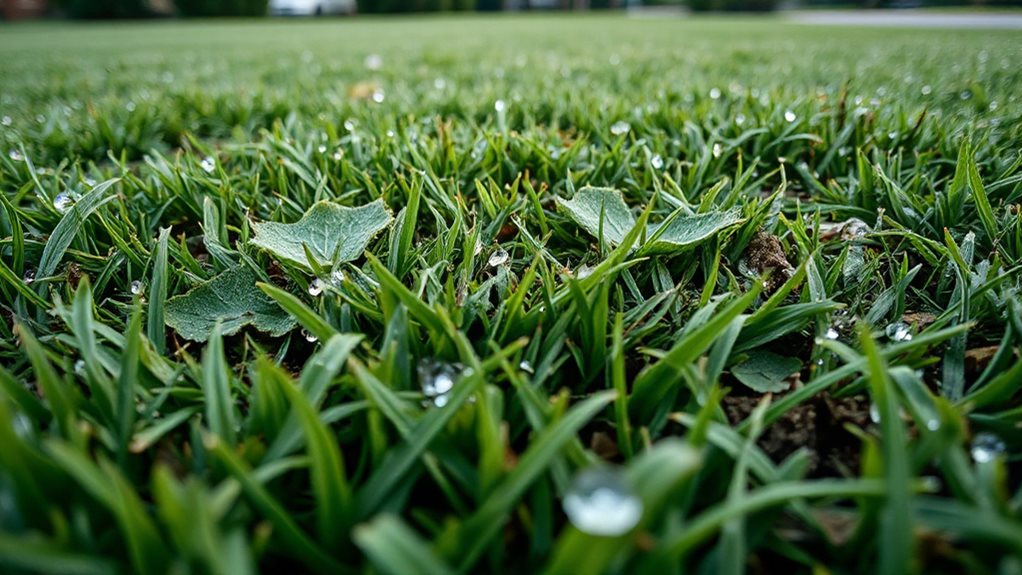
Ever watched a lawn turn into a bumpy obstacle course after a cold snap and wondered what’s really pushing those little hills up? Frost heave lifts soil when water freezes into ice lenses, especially in clay‑rich, moist ground; rapid freeze‑thaw cycles make it worse. To stop it, improve drainage, add a coarse, well‑compacted base, and keep the soil dry—think of it as prepping a campsite for a smooth night under the stars. Mixing a variety of soil amendments like coarse sand or gravel can help reduce frost heave by improving drainage and reducing water retention.
How Burrowing Pests and Animal Digging Disrupt a Smooth Lawn
You’ll notice that moles leave those winding, almost artistic tunnels that pop up like surprise potholes whenever you step on them, and they’re not just a little mess—they can actually yank up seedlings and leave your grass looking like a crumpled map.
Have you ever watched a pet dig a frantic, spiraling hole in the yard, only to realize it’s turned a smooth patch into a battlefield of displaced soil and torn sod?
Grab a shovel, check the spots where the ground looks oddly bumpy, and let’s figure out how to patch up those critter‑made craters before they ruin your next backyard expedition.
Burrowing Moles
Moles burrow through your lawn like tiny underground engineers, popping up ridges and tunnels that turn a smooth carpet of grass into a bumpy obstacle course, and you’ll quickly notice why mowing suddenly feels like traversing a minefield.
Their 6‑inch deep runways raise soil mounds, dry out grass roots, and even flood foundations, so you’ll need to spot and fill burrows before they ruin your next community garden or playground project.
Pet Digging Patterns
Moles may have been the underground engineers turning your lawn into a bumpy obstacle course, but the real chaos often comes from the four‑legged “diggers” that roam the surface with purpose and mischief. You’ll notice holes where dogs chase scents, cool off, or bury toys, and those pits can destabilize soil, break roots, and create uneven patches that ruin the smooth look you work hard to maintain. Use designated dig zones, barrier deterrents, and redirect energy to keep the lawn level.
Nutrient and Water Imbalance That Leads to Patchy, Uneven Lawn Growth
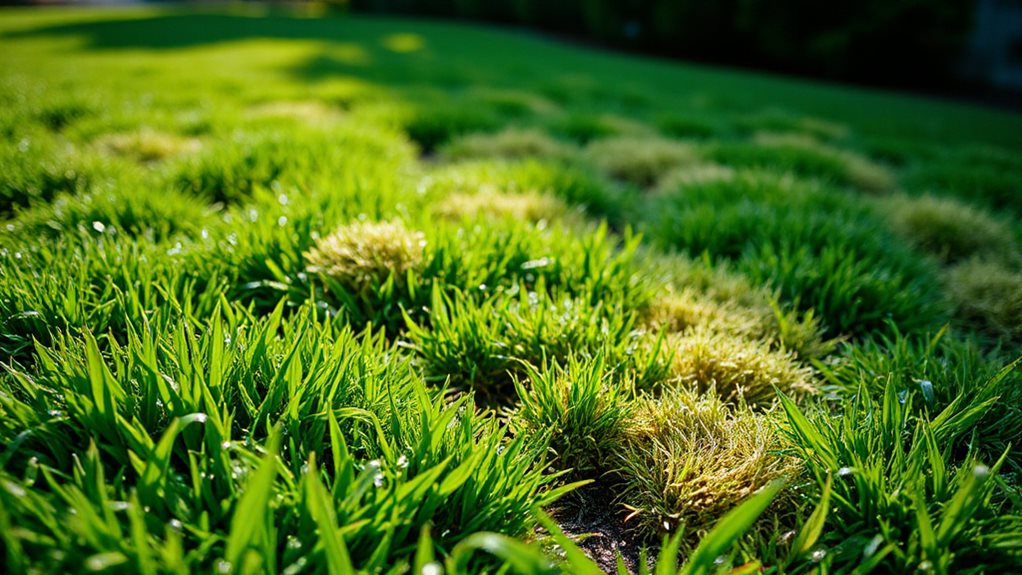
Ever wondered why some parts of your lawn look like a thriving meadow while others resemble a dusty desert? You’re probably battling nutrient and water imbalances—nitrogen, potassium, iron, or pH shifts can yellow leaves, stunt growth, and cause patchy spots.
Over‑watering leaches nutrients, while compacted soil blocks roots.
Fix pH, irrigate evenly, and add organic matter to keep every blade happy.
How Sunlight Variations and Mixed Grass Types Create Height Differences
Ever noticed how some spots on your lawn look like a lush campsite while others seem stuck in a dimly lit tent? Sunlight hits those open patches, pumping carbs, so blades thicken fast, while shade forces grass to stretch like a tired camper reaching for a fire.
Mixed grass types react differently—sun‑loving varieties wilt in oak shadows, yet shade‑tolerant blends thrive under pine, creating obvious height gaps you can spot from the driveway.
How Mowing Patterns and Equipment Produce Ruts and Bumps

Ever wonder why your lawn ends up looking like a bumpy trail after a weekend of mowing? When you drive a riding mower with uneven tire pressure, the deck tilts, cutting one side higher than the other, while debris under the deck clogs airflow and leaves clumps.
Sharp turns, fast speeds, and mowing the same direction repeatedly compact soil, creating ruts and bumps that scream “watch out!”
Practical Steps to Level and Maintain a Smooth, Even Lawn
So, ready to turn your patchwork‑like lawn into a flat, image‑perfect carpet you could roll out for a backyard camping night? Grab a wheelbarrow, fill it with a 70/30 sand‑topsoil mix, shovel onto low spots, then rake with a garden rake while a lawn roller compacts each thin layer. Aerate before, overseed after, and check with a bubble level—your lawn will be campsite‑ready in no time.
Overall
So now you’ve got the scoop on why lawns turn into a roller‑coaster of bumps and dips, and how a little aeration, proper grading, and smart watering can turn that chaos into a smooth, green carpet. Want a lawn that looks as epic as a campsite sunrise? Grab a rake, check your soil, and keep those footpaths light—your yard will thank you, and you’ll be ready for any backyard excursion that comes your way.