How to Tell if Houseplant Roots Are Rotting
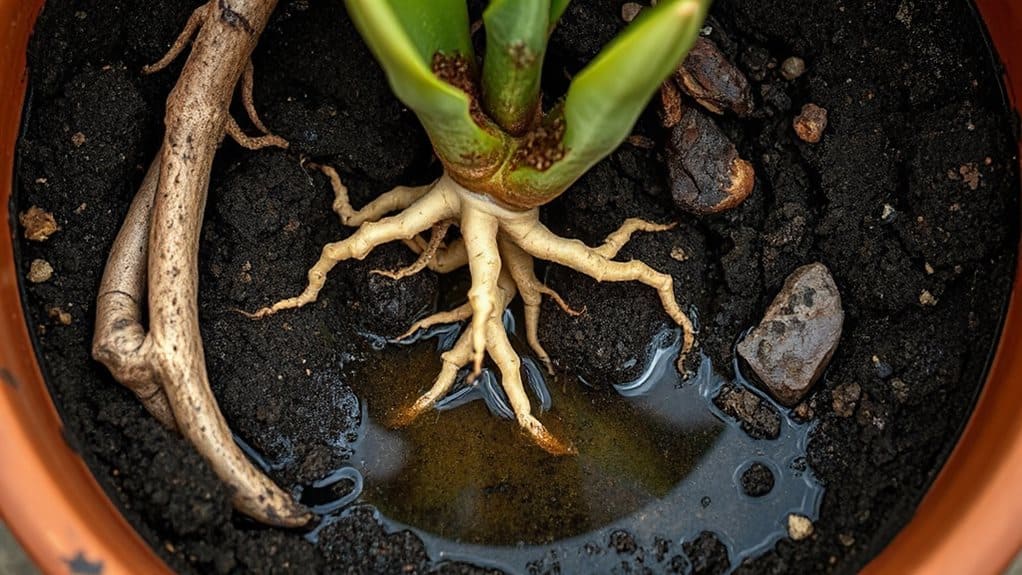
If you see older leaves turning yellow at the tips, then browning, and the plant wilts even though the soil feels soggy, that’s a big red flag that the roots are drowning in rot, plus a musty, sour smell rising from the pot is like a sniff‑test warning sign. Pull the plant out gently, look for white, firm roots versus brown, mushy ones, and check for slime or black tips near the base. A quick trim, a dip in a diluted peroxide mix, and repotting in fresh, well‑draining soil usually saves the day, and the next steps will show you exactly how to rescue and prevent future rot.
TLDR
- Yellowing, browning, or wilting leaves despite moist soil indicates roots can’t uptake water.
- A musty, sour odor from the potting mix or drainage holes signals decaying roots.
- Soil that stays wet or saturated after watering, especially with poor drainage, points to root rot.
- When roots are exposed, white firm roots are healthy; brown, mushy, or slimy sections confirm rot.
- Slime or blackish tips on stems near the base, and a foul smell when roots are rinsed, are additional rot indicators.
Root Rot Symptom: Yellowing Leaves on Older Stems
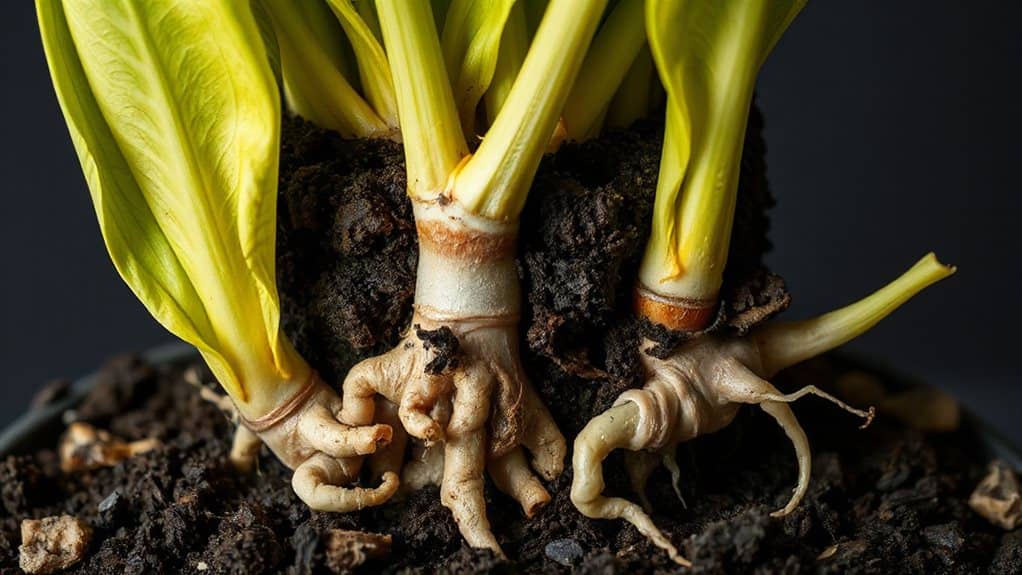
Ever noticed those older leaves turning yellow, almost like a sun‑kissed road trip souvenir that just won’t fade? You’ll see the tips brown, then the whole leaf, especially those nearest the stem, turning pale, because roots can’t pull up water or nutrients. If the soil stays moist and the yellow persists, it’s probably root rot, not just a thirsty plant. Check the roots, act quickly, and your green friends will thank you. Root inspection should be performed immediately to assess the extent of rot. Planting aromatic herbs like rosemary or mint nearby can help attract beneficial insects and reduce pest stress on houseplants.
Root Rot Warning: Wilting Even When Soil Is Wet
Why does your plant look droopy even after you’ve just given it a good soak? You’re probably watching root rot in action—wet soil, yet the plant wilts because roots can’t pull up water.
Pythium and Phytophthora love soggy conditions, turning roots brown, mushy, and useless. Check stems for blackish tips, feel for slime, and act fast before the wilt spreads. Ants nesting under pavers can worsen drainage issues by creating soil voids that hold moisture and promote rot.
Root Rot Cue: Bad‑Smelling Potting Soil
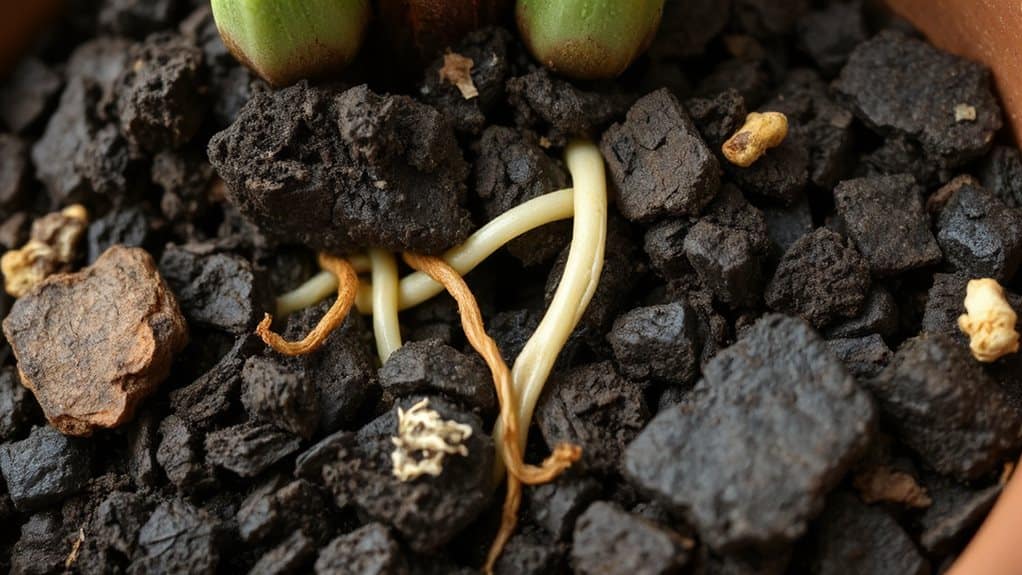
When you first sniff a pot and catch a sour, musty whiff, it’s a clear sign that something’s rotting underground, so trust that nose and act fast.
Do you notice the smell getting stronger after a heavy watering session? That’s because over‑saturation creates anaerobic conditions where fungi like Pythium feast on the roots, and the foul odor is the decay gases escaping—so grab a fresh‑air breath, check the soil moisture, and give those roots a chance to recover before they turn your plant into a stinky campsite. Improving air circulation and reducing moisture can help prevent recurrence, so consider trimming nearby foliage and avoiding prolonged dampness on pots to keep conditions drier and less hospitable to rot improve airflow.
Detecting Foul Odor Early
Can you smell it before you even see the damage? You’ll sniff a sour, rotten‑egg whiff near drainage holes, especially after watering, and it’s a clear sign of Pythium or Phytophthora at work.
Gently waft the soil, compare it to fresh mix, and if the odor deepens from faint to overpowering, act fast—cut back watering, improve drainage, and repot before the roots collapse.
Identifying Musty Soil Smell
Ever walked into your room and caught a stale, musty whiff that makes you think you’ve just opened a forgotten tent after a rainy camping trip? You’ll notice the smell spikes when the soil’s soggy, clings to your finger, and even lingers after a few waterings. That sticky, slimy scent signals overwatering, mold, and oxygen‑starved roots—so check drainage, swap to a looser mix, and act before rot spreads.
Linking Smell to Root Decay
The musty, damp scent that hit you when you lifted the pot is more than a “y” vibe—it’s a neon sign that the roots are probably rotting, especially if the soil feels soggy and clings to your fingers.
You’ll notice a sour, mushroom‑like stench when you sniff the media, a giveaway that Pythium or Phytophthora is feasting, so pull the plant, sniff, and act fast.
Root Rot Check: How to Inspect Roots Safely
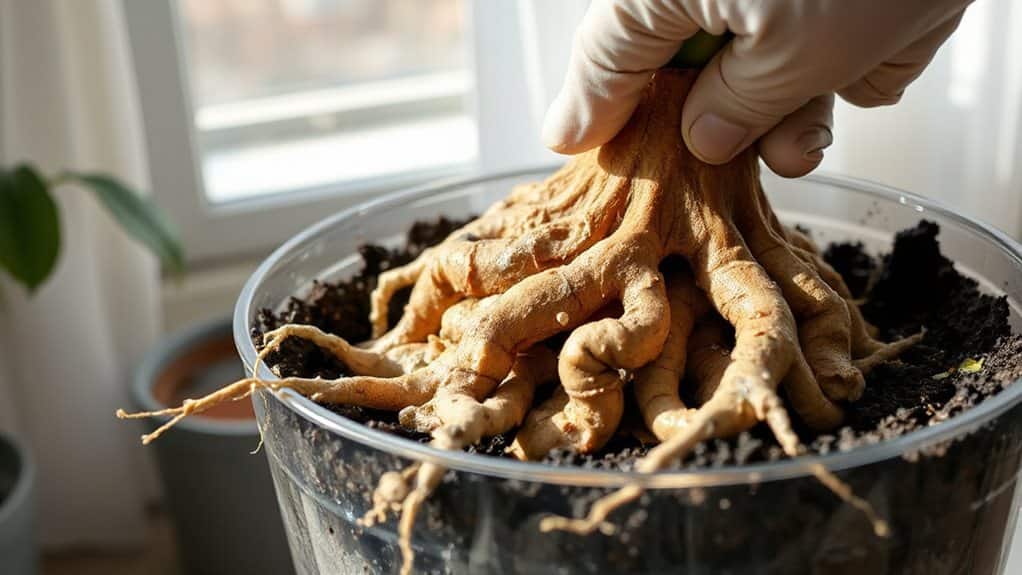
Ever wondered how to give your houseplant a quick “root health check” without turning your kitchen into a swamp? First, lay a tarp, gather sterilized scissors, and set up lukewarm water. Gently slide the plant out, loosen soil, and expose roots to air. Look for white, firm roots; brown, mushy, or slimy parts signal rot. Sniff for musty odor, then rinse and dry before trimming. For persistent problems, consider checking nearby outdoor soil for signs of pests like moles and voles that can indicate broader moisture or drainage issues.
Root Rot Diagnosis: Spotting Pythium, Phytophthora, or Fusarium
So, how do you tell whether your plant’s roots are battling Pythium, Phytophthora, or Fusarium? Check for Pythium’s hair‑like cortex pulling away, Phytophthora’s rapid tip blackening and mushy lower stems, and Fusarium’s general dark, squishy roots with wilting leaves. Smell the soil—foul odor confirms rot. Trust your senses, act fast, and help your green friends thrive. Some succulents and drought-tolerant species can resist decay longer due to their thick leaves and water-storing tissues.
Root Rot Sign: Soft, Mushy Stems on Succulents and Dracaena
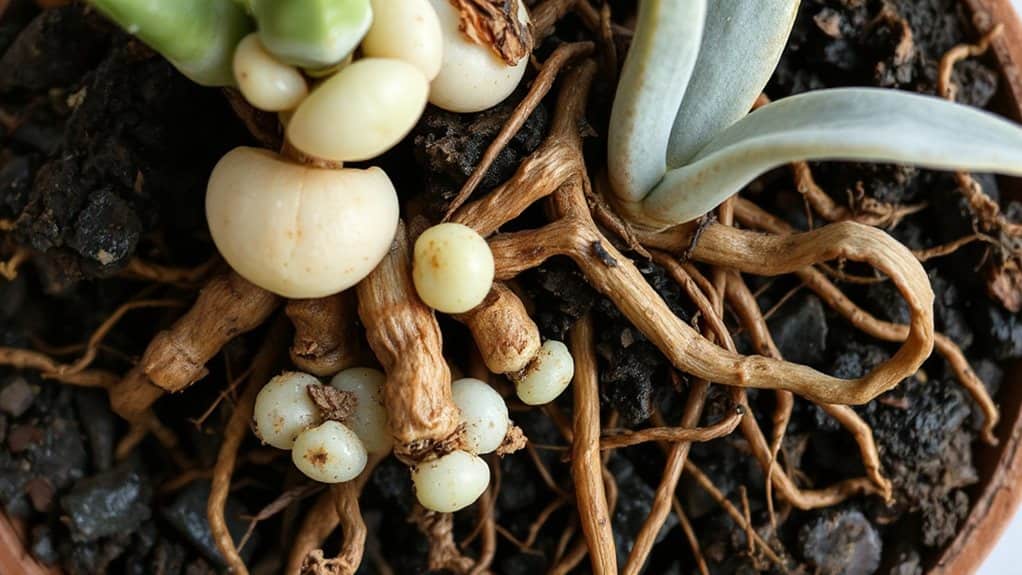
You’ll notice the base of your succulents or Dracaena turning soft and mushy, almost like a soggy marshmallow that’s been left out in the rain, and that’s a big red flag that the stems are rotting.
Have you ever seen the lower stems turn a gloomy black‑brown while the leaves yellow and wilt despite the soil being wet—yeah, that’s the classic Dracaena discoloration that screams “something’s wrong!”
Stem Softening Indicators
Ever wondered why the base of your succulents or Dracaena feels squishy, like an over‑spongy marsh? When you press the lower stem and it yields like a water‑logged pillow, that’s a red flag—mushy texture means rot’s spreading from the roots, often turning the stem blackish‑brown. You’ll also see wilted, yellow leaves, a sour soil smell, and stunted growth, all pointing to serious stem softening.
Dracaena Stem Discoloration
Ever notice that the base of your Dracaena looks like it’s been dunked in chocolate milk and then left out in the sun? That black, mushy stem signals advanced rot—softening when you press, water‑soaked lesions, foul odor, and leaf edges darkening.
Check for these signs daily, because quick repotting with well‑draining soil can rescue the plant and keep your garden crew safe.
Root Rot Early Alerts: Fungus Gnats and Soil Mold
So, have you ever noticed a swarm of tiny flies buzzing around your houseplant’s soil, like an unwanted camping crew that never packs up?
Those fungus gnats are warning signs—adults hover, larvae gnaw feeder roots, and their slime trails betray soggy, over‑watered conditions that invite white mold patches and musty odors, both flagging early root rot you can’t ignore.
Root Rot Rescue: Immediate Treatment Steps
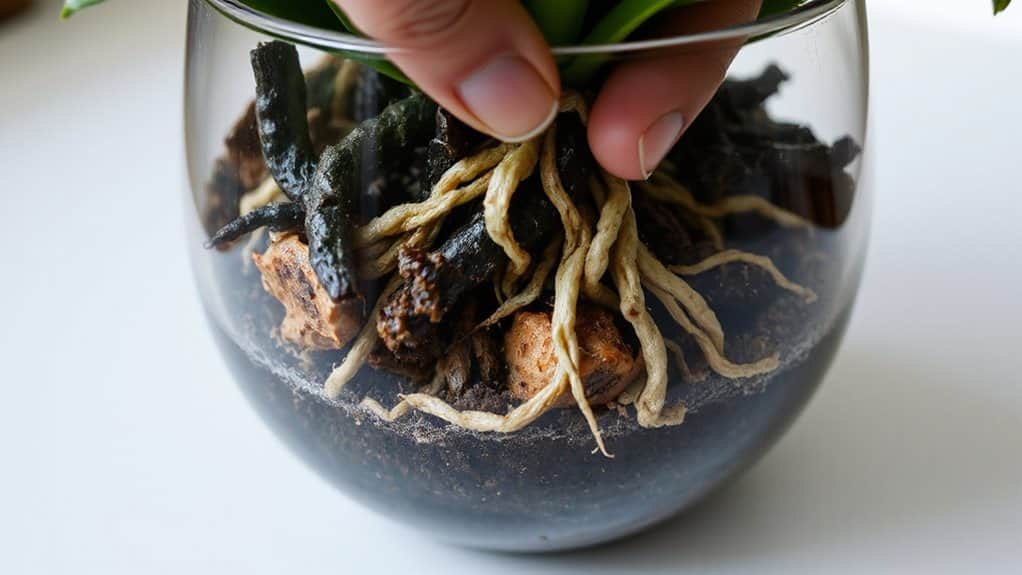
If you’ve caught those gnats buzzing and the soil smelling like a damp tent, it’s time to spring into action and give your plant a rescue mission that feels like a weekend camping expedition—packed with tools, water, and a hint of chemistry.
Gently rinse roots under running water, trim mushy sections with sterilized scissors, dip in a 2:1 water‑to‑hydrogen‑peroxide mix, then repot in fresh, well‑draining mix, cleaning the pot first.
Root Rot Prevention: Watering, Drainage, and Soil Best Practices
Why do you keep feeling like you’re camping in a rainforest when you water your houseplant?
Wait for the top inch to dry, then water thoroughly so every root gets a sip; use pots with drainage holes and unglazed terracotta, never rock‑fill the bottom, and pick a free‑draining mix with perlite or pumice.
Sterilize pots, check for leaks, and keep airflow strong—your plants will thank you.
Overall
So, now you’ve got the lowdown on root rot, so keep an eye on yellow leaves, wilting, and that funky soil smell—don’t let those clues slip by. If you spot mushy stems or pesky gnats, pull the plant out, trim the dead roots, and repot in fresh, well‑draining mix; a quick soak in hydrogen peroxide can give the survivors a boost. Remember, water only when the top inch is dry, and always use a pot with drainage holes, because a happy root system is the key to a thriving plant adventure!