Best Soil Mix for Healthy Indoor Plants
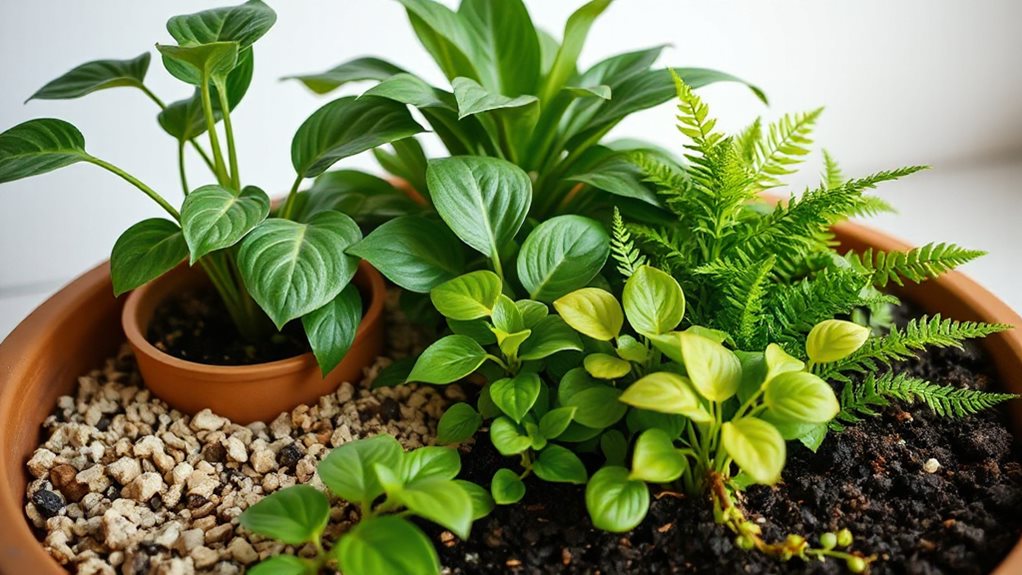
Grab a mix of pine bark fines, coco coir, perlite and sand for a light, airy base that holds just enough moisture without turning soggy, and you’ll see your indoor plants thrive like campers on a perfect trail. The bark fines cut carbon footprints, the coir keeps roots happy, perlite adds quick drainage, and sand gives gritty stability—think of it as a mini‑adventure for every root. Add a pinch of lime for pH balance, sprinkle some compost for nutrients, and you’ve got a ready‑to‑go blend; keep exploring for even more tricks.
TLDR
- Use a balanced base of 30–50% coarse material (pine bark fines, coco coir, or perlite) for aeration and moisture retention.
- Add drainage enhancers like orchid bark, pumice, or charcoal to create airy pockets and prevent root rot.
- Incorporate moisture‑holding components such as peat moss or vermiculite, pre‑soaked and pH‑adjusted with lime.
- Follow proven ratios (e.g., 2‑1‑1 peat/coir : perlite : coarse sand) or succulent‑specific blends (1:1:2:2:1) for plant type.
- Store and label components separately, using UV‑resistant containers, to maintain consistency across mixes.
Choose the Right Base for Your Potting Mix: Pine Bark, Coco Coir, Perlite & Sand
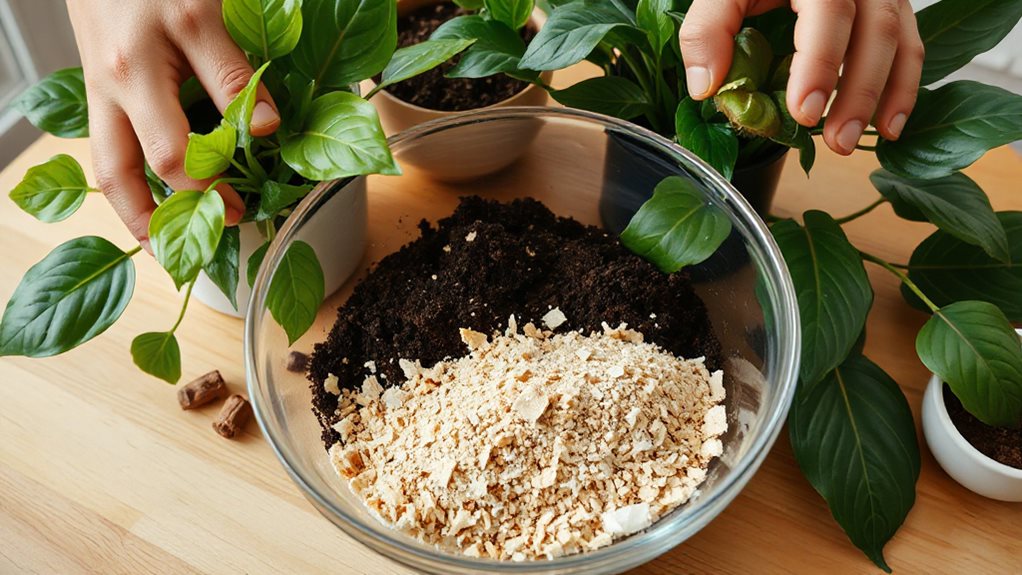
Ever wondered how picking the right base for your potting mix can feel like planning the perfect camping trip, where each gear choice shapes the whole expedition? You’ll love pine bark fines for sustainable aeration, coco coir for moisture‑loving friends, perlite for quick drainage (though it’s mined), and sand for gritty stability. Mix 30‑50% base, then tailor additives to each plant’s needs, and you’ll be a soil‑hero. The new formulation replaces perlite with pine bark fines to reduce the carbon footprint. Pollinators also benefit when you use native plants nearby to support local ecosystems.
Boost Drainage in Your Potting Mix With Orchid Bark, Pumice & Charcoal
You’ll love how chunky orchid bark creates airy pockets that let roots breathe while stopping water from pooling, and when you mix in lightweight pumice you get extra drainage without the mix turning into a soggy mess, plus the charcoal adds a bit of purification and keeps the blend from compacting; have you ever tried a combo that feels like a mini‑campground for roots, with each component playing its own adventurous role?
Toss the bark, pumice, and charcoal together, give them a good stir, and watch your potting mix stay fluffy and well‑drained, just like a well‑packed backpack that never gets too heavy. Trust me, once you see the roots thriving, you’ll feel like you’ve discovered the secret trail to healthier indoor plants. Many low-light apartment setups pair such airy mixes with full-spectrum LED grow lights to maximize plant health.
Orchid Bark Benefits
Orchid bark is the secret sauce that turns a soggy mess into a breezy, well‑draining potting mix, and you’ll love how it instantly opens up space for water to zip through—think of it as the zip‑line for moisture in your plant’s home. Its coarse particles create airy pockets, letting roots breathe, preventing rot, and mimicking forest epiphyte habitats, so you’ll see healthier, longer‑lived plants thriving with just a splash of care.
Pumice and Charcoal Integration
Ever wondered how a mix of pumice and charcoal can turn a soggy pot into a breezy, campsite‑ready terrain for your indoor garden?
You’ll love adding 15% charcoal to a 50/50 pumice‑soil blend, then stirring in coarse sand;
the pumice holds moisture like a tiny reservoir while charcoal creates air pockets, fights rot, and even masks odors—perfect for succulents, cacti, and anyone who wants to “camp” with thriving roots.
Balance Drainage & Moisture Retention in Potting Mixes Using Peat Moss, Compost & Vermiculite
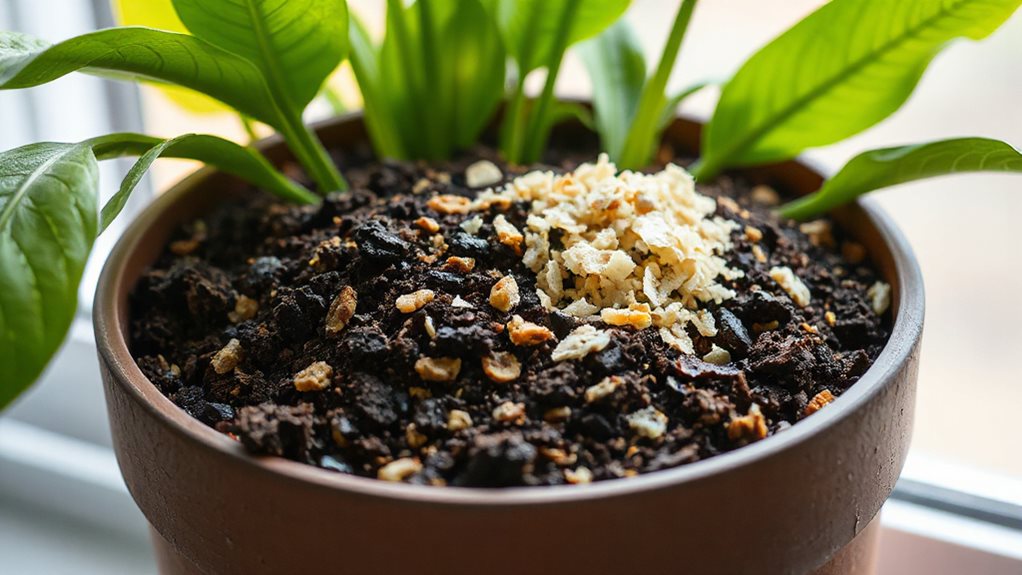
You’ll find that tweaking the peat‑to‑compost ratio is like packing the perfect backpack for a camping trip—enough peat to hold water like a trusty water bottle, but enough compost to feed the roots like trail‑mix snacks, and adding vermiculite just the right amount keeps the mix airy as a mountain breeze.
have you ever tried a 50‑25‑12.5‑12.5 split (soil, perlite, peat, vermiculite) and watched the seedlings thrive without soggy feet?
Give it a go, stir in a handful of vermiculite for extra fluff, and watch your indoor garden feel as balanced as a well‑planned hike, all while you grin at the thought of never having to rescue a drowned plant again.
Corn mâche is a great winter salad green to grow indoors for fresh, nutty leaves when outdoor gardens are dormant and can benefit from consistent moisture to thrive.
Optimizing Peat‑Compost Ratio
Ever wondered why some indoor plants seem to thrive while others droop like a tired camper after a rainy hike?
You’ll balance a 1:1 peat‑to‑compost mix for most houseplants, then tweak toward more peat if you crave longer dry spells, or add compost for extra nutrition and sturdier structure.
Remember to pre‑soak peat, sprinkle a pinch of lime for pH, and enjoy the “camp‑ready” soil venture!
Incorporating Vermiculite Effectively
How do you make your indoor garden feel as ready for a rain‑sod expedition as a well‑packed campsite? Toss 20‑30 % vermiculite into your peat‑and‑compost blend, pre‑wet it to dodge dust, then stir in perlite for extra airflow—your coleus, basil, or calathea will thank you with thriving roots, steady moisture, and happy, hydrated leaves.
Foliage Mix Formulas: Classic 2‑1‑1 & Clemson Recipes
Ever wondered why some foliage plants look like they’re on a tropical vacation while others just wilt? Try the classic 2‑1‑1 mix—2 parts peat or coir, 1 part perlite, 1 part coarse sand—for lightweight drainage, then experiment with pine bark or Clemson’s equal‑part loam, sand, and peat for a sturdier, nutrient‑rich bed, adjusting ratios until your plants feel right at home. Consider using a UV-resistant PVC cover to protect delicate plants when moving them outdoors in a mini greenhouse.
Specialized Potting Mix Formulas for Succulents, Ferns & Epiphytes
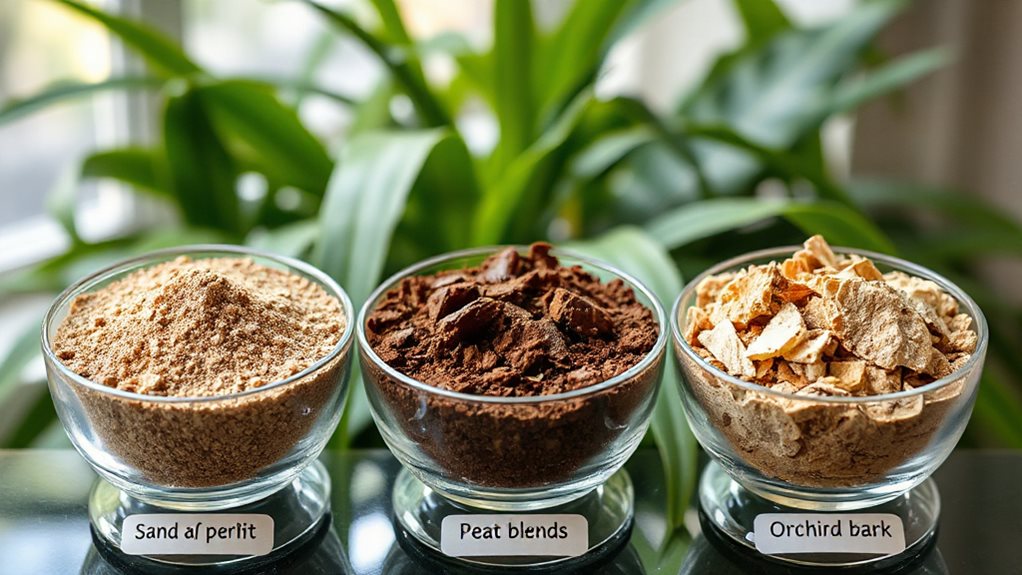
The 2‑1‑1 and Clemson mixes get your foliage looking like it’s on a tropical vacation, but when you switch to succulents, ferns, or epiphytes you need a whole different recipe—think of it as swapping a beach resort for a rugged campsite where each plant gets its own customized terrain.
For succulents, blend coconut coir, potting soil, pumice, coarse sand and perlite in a 1:1:2:2:1 ratio;
for ferns, mix peat moss, pine bark fines, perlite, sphagnum moss, and chopped tree‑fern fiber;
for epiphytes, combine orchid bark, sphagnum moss, perlite, coconut husk chips, and charcoal.
Plan your potting over several sessions to avoid running out of supplies and keep everything organized by room so you can track progress easily, using packing materials to store and label extra components.
Tweak pH & Feed Your Plants With Lime, Fertilizers & Humus
A quick pH check can feel like setting up camp before a big trek—if the ground’s too acidic or too alkaline, your plants won’t thrive, but a little lime, the right fertilizer, and some humus can turn a rough campsite into a lush oasis. Test with a meter, add fine limestone to raise pH, blend in balanced fertilizer, and mix in humus for buffering, keeping most indoor greens happy.
Fix Over‑watering, Compaction & Nutrient Issues
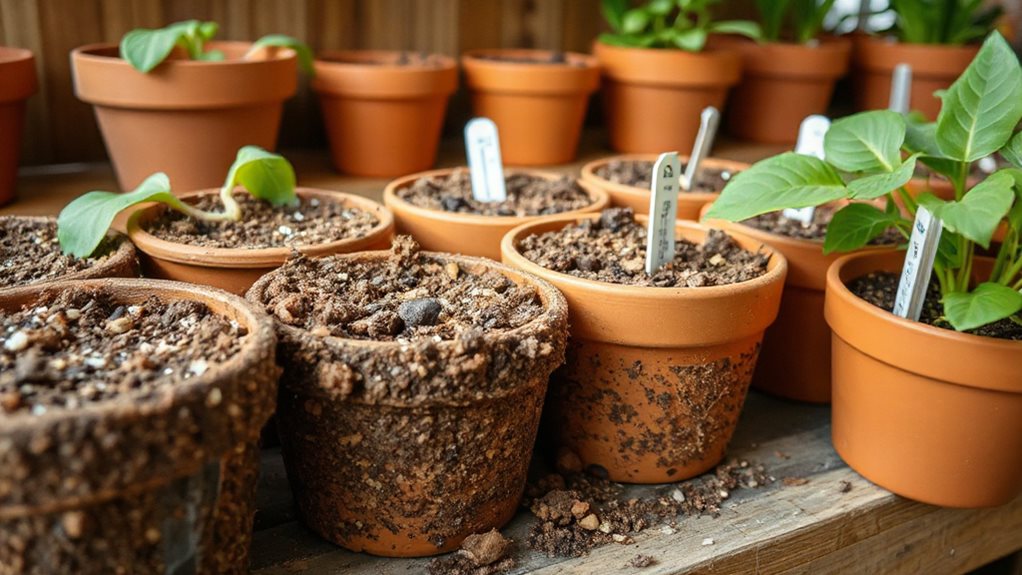
So, you’ve noticed your indoor jungle looking more like a soggy swamp than a thriving campsite, right?
Stop watering, lift the pot to feel its weight, and sniff for musty air; then poke a dowel—if it clings, you’ve over‑watered.
Aerate by poking holes, tilt the pot, add perlite or bark, and swap to a terra‑cotta pot with drainage; prune yellow leaves, skip fertilizer, and you’ll rescue those roots fast.
Overall
Now you’ve got the perfect mix, you’ll see your indoor garden thrive like a wild campsite after a rainstorm—lush, radiant, and totally unstoppable. Got a favorite combo? Try the classic 2‑1‑1 or the Clemson recipe and watch the magic happen. Remember to tweak pH, add a dash of lime or compost, and never forget the charcoal for fresh air—your plants will thank you, and you’ll feel like a camping‑gear guru while you’re at it!