Why Do Squirrels Bury Food in Flower Pots?
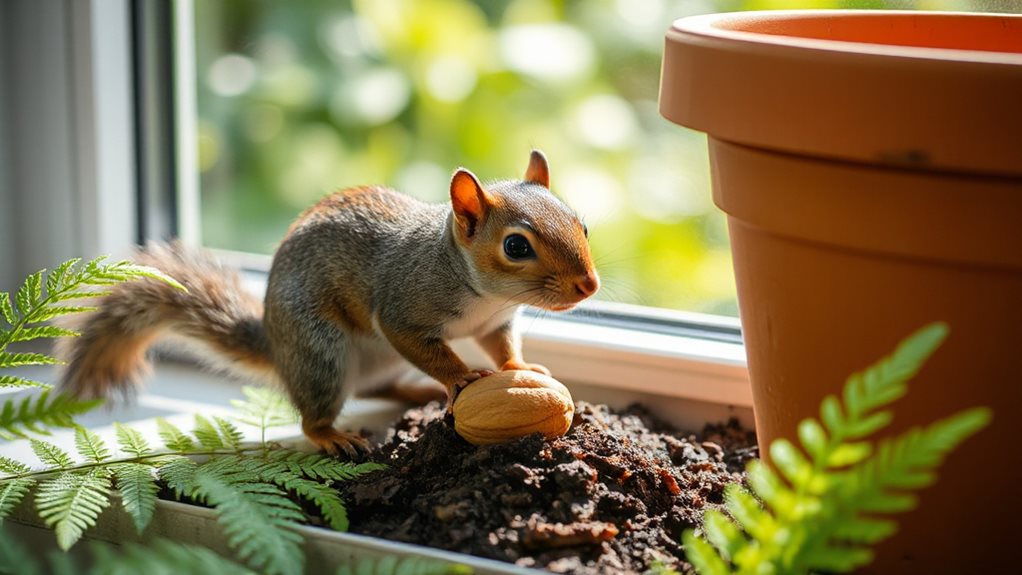
You’ll notice squirrels treating your flower pots like tiny campgrounds because their instinct to stash high‑energy nuts in loose, cool soil—just like a backpacker hides supplies in a soft‑shelled tent—lets them protect food from thieves, spoilage, and winter scarcity while enjoying the hidden, low‑profile shelter that a pot’s fluffy medium and shady spot provide; the autumn chill and fresh soil smell trigger their scatter‑hoarding habit, and the pot’s depth offers the perfect three‑to‑six‑inch cache that’s easy to dig and later retrieve, so if you keep exploring you’ll uncover even more tricks to out‑smart these crafty campers.
TLDR
- Flower pots provide a soft, loose medium that’s easy for squirrels to dig and hide nuts.
- The low‑profile, hidden location protects caches from birds, other squirrels, and ground predators.
- Autumn’s abundance of nuts and cool, stimulates caching behavior, and pots act as convenient mini‑pantries.
- Squirrels favor high‑tannin acorns and long‑lasting foods for winter storage, which they can bury at a depth of three‑to‑six inches in pots.
- The scent of fresh soil and the shelter of low‑light containers near windows attract squirrels to use pots as temporary storage sites.
The Instinct That Drives Squirrels Into Flower Pots
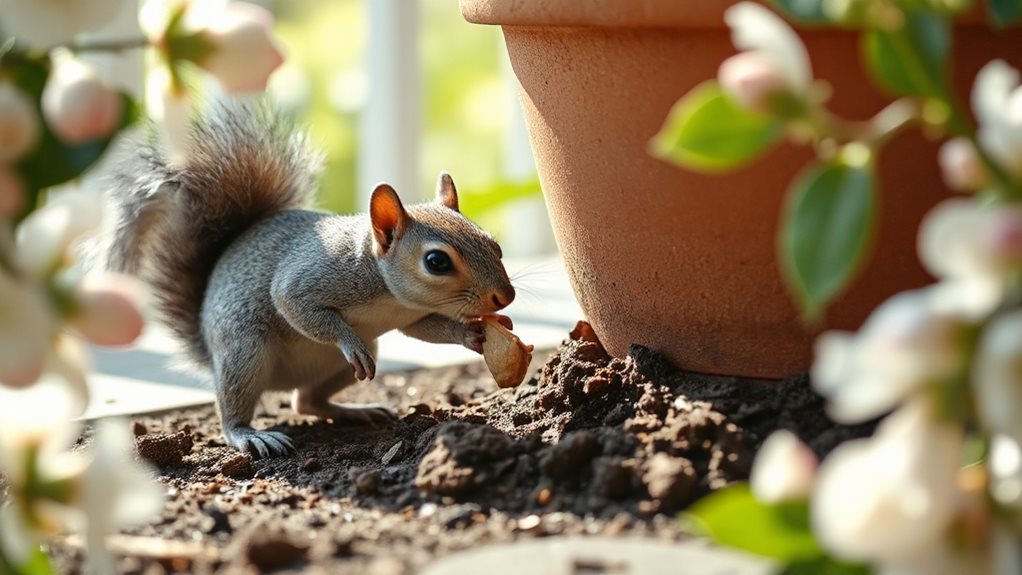
Ever wondered why squirrels seem to treat flower pots like tiny treasure chests? You’ll love how their scatter‑hoarding instinct pushes them to bury nuts in random spots, including pots, because spreading caches thwarts thieves and spoilage. They may also choose pots because the soil offers well‑draining soil similar to natural ground for storing food. Imagine them testing each nut, preferring high‑tannin acorns for winter, and using pots as hidden, low‑profile shelters—your garden becomes a lively, secret‑stashing adventure. Long‑lasting foods like acorns are prioritized for winter survival.
Why Potting Soil Is a Perfect Cache for Squirrels
You’ll notice that the fluffy, loose medium of potting soil lets you dig in with almost no resistance, so you can stash a nut in a flash and still reach it later without a struggle.
Isn’t it cool how the soil’s depth feels just right—deep enough to hide the treasure but shallow enough to dig up quickly when you’re hungry?
Try slipping a seed into a pot and watch how the soft texture makes the whole caching process feel like an easy, breezy camping excursion.
This ease of digging is similar to how wood with degraded loose fibers becomes easier to break down under sun and rain.
Soft, Loose Medium
Potting‑soil fluffiness is the secret sauce that makes flower pots irresistible snack‑caches for squirrels, and you’ll love how this soft, loose medium lets them dig in like tiny treasure hunters on a camping trip—imagine the excitement of finding a perfect, spongy spot to stash an acorn, just a few inches deep, without hitting the hard, compacted ground that feels like a rock‑hard trail.
You see, the airy texture gives them room to place nuts precisely, and the low‑density mix stays gentle through seasons, so squirrels can stash and retrieve without resistance, turning every pot into a cozy, portable pantry.
Easy Digging, Quick Access
Why do squirrels treat flower pots like instant camping sites? You’ll notice they love the loose, easy‑to‑dig soil, because a quick scoop gives them instant access to hidden nuts, just like you’d grab a snack on a hike. The soft medium lets them stash and retrieve fast, while the pot’s rim offers a handy entry point, keeping their cache safe and ready for winter.
Ideal Depth for Caching
After you’ve seen how squirrels love the loose, easy‑to‑dig soil for quick snacks, you’ll notice they’re also picky about how deep they bury those goodies, because the right depth makes the difference between a tasty treat and a soggy mess. You’ll find they aim for three to six inches—deep enough to stay cool and hidden, yet shallow enough for quick digs, especially when potting soil stays moist, uniform, and predator‑free, making every cache feel like a tiny, safe camp‑site.
Autumn’s Role in Squirrels’ Flower‑Pot Digging
Ever wonder why squirrels suddenly turn your garden’s flower pots into mini‑pantries as the leaves start to fall?
You’ll notice they rush to pots when autumn cools, because abundant nuts need safe storage before winter scarcity hits.
The fresh soil smells like recent caches, competition pushes them farther from trees, and they love the hidden, low‑competition spots—so they dig, stash, and grin, ready for snowy escapades.
Many gardeners also find that placing compact, low-light plant containers near windows can unintentionally make ideal, sheltered cache sites for these clever foragers.
What Squirrels Gain From Burying Nuts in Flower Pots
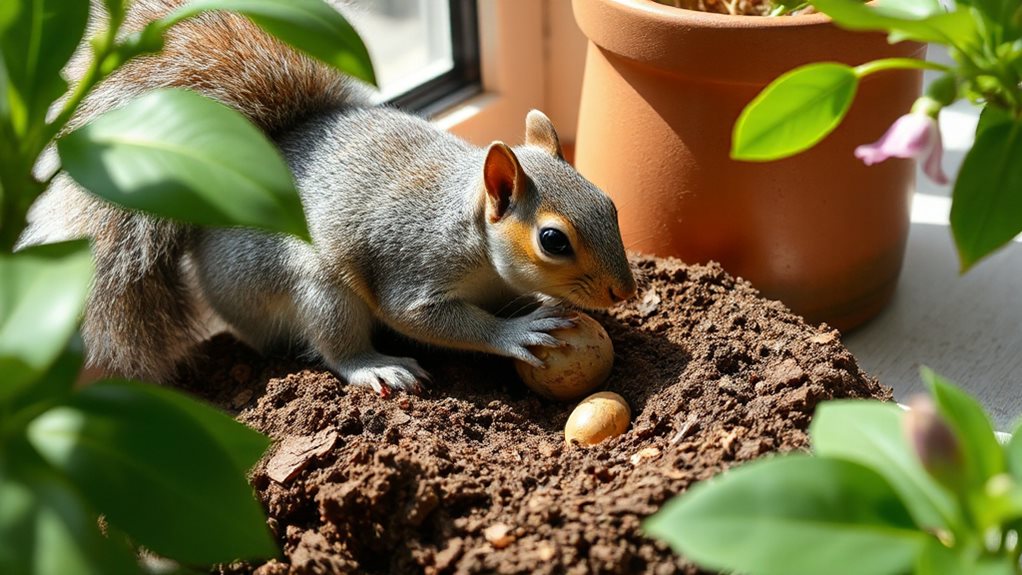
You’ll love how burying nuts in flower pots gives you a super‑secure pantry that stays hidden from hungry birds and other critters, so your snack stash stays fresh for months.
Isn’t it cool that the soft, moist soil in a pot keeps the nuts from drying out while you can hop from pot to pot like a tiny camper scouting the best campgrounds?
Try digging a few caches now and watch how the reduced competition lets you dominate the garden’s food scene without any drama.
Clover often takes advantage of low soil nitrogen to spread quickly in lawns, so choosing pot locations with healthy soil can reduce unwanted plant competitors.
Safe Food Storage
Why do squirrels treat flower pots like tiny treasure chests? You’ll love how loose, aerated soil lets them stash nuts fast, while the rim shields the cache from rain and freeze‑thaw damage, keeping treats fresh.
The pot’s shade and stable humidity preserve flavor, and nearby plants camouflage the stash, so you can envision a squirrel’s safe, snack‑ready pantry.
Reduced Competition Risk
How does a squirrel turn a garden pot into a low‑key vault that keeps nosy neighbors at bay? You’ll love how it hides nuts in a pot, creating a private stash that rivals can’t sniff out, so you protect your food, avoid fights, and keep the cache safe—just like camping with a secret treasure chest, only smaller and cuter.
How Squirrels’ Forgotten Pot Caches Boost Forest Regeneration
Imagine you’re hiking through a forest and stumble upon a tiny, half‑buried acorn tucked inside a flower pot—what’s really happening is a squirrel’s secret “plant‑it‑and‑forget” strategy, and it’s a game‑changer for forest regeneration.
You’ll see forgotten caches sprouting into oaks, spreading seedlings far beyond parent trees, enrich the canopy, boost soil, and gifting wildlife—your tiny‑ helps reforest the world.
Early burial also helps seeds avoid frost damage that can destroy delicate seedlings and delay maturity.
Which Nuts Squirrels Bury in Flower Pots Versus Eat
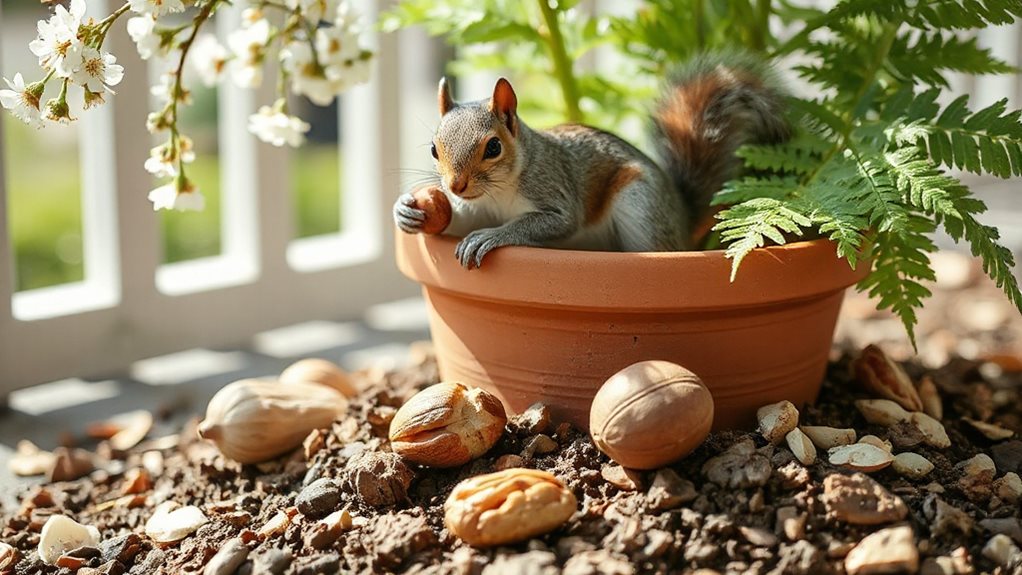
You’ve just seen how forgotten nut caches can turn a backyard into a mini‑forest, and now let’s get into the nitty‑gritty of what kinds of nuts actually end up hidden in those flower pots versus getting chomped on the spot. You’ll notice squirrels stash high‑fat walnuts, red acorns, and dense hazelnuts in pots, while they munch white acorns, peanuts, and low‑fat sunflower seeds on the spot, because fat fuels winter and tannins get leached underground.
Squirrel Theft‑Prevention Tricks for Flower‑Pot Caches
Often you’ll find that a simple mix of scent‑based repellents and clever barriers can turn your flower‑pot cache into a squirrel‑proof treasure chest, and the best part is you don’t need a PhD in wildlife management to pull it off—just a bit of creativity and a few everyday items.
Sprinkle cayenne, scatter dog hair, lay chicken wire 6 inches deep, top with pebbles, and drape black netting; reapply after rain, and you’ll protect seeds while keeping the garden lively.
Gardening Fallout From Squirrels Digging in Flower Pots
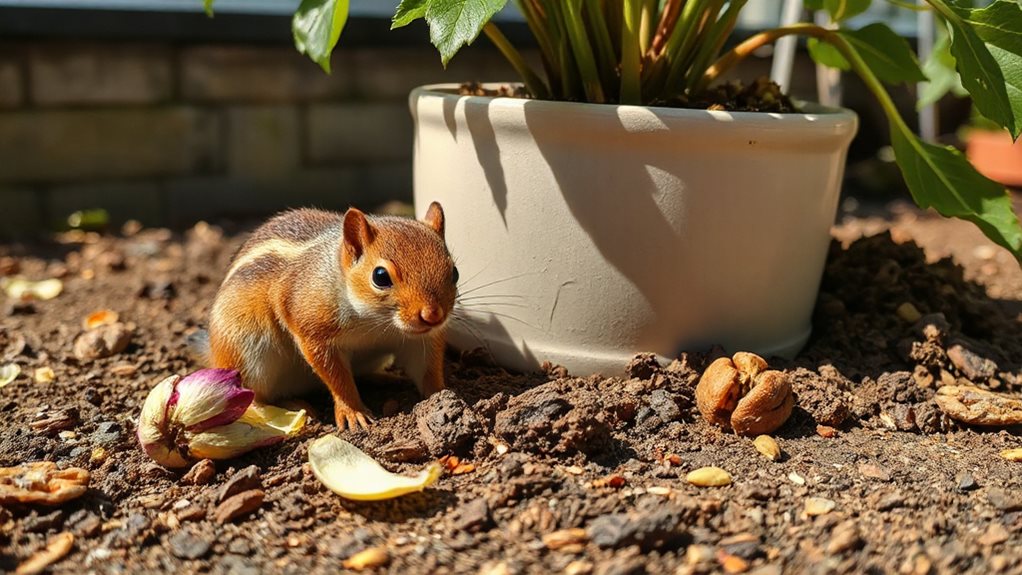
Ever wonder why your once‑pristine flower‑pot garden suddenly looks like a construction site after a squirrel raid? You’ll see soil scattered everywhere, roots exposed and drying out, drainage clogged, and fertilizer uneven—plants wilt, seedlings die, and bright petals fade.
The mess piles up on patios, holes mar the design, and fruits or bulbs disappear, turning your garden into a chaotic, yet oddly adventurous, outdoor campsite.
Squirrel‑Friendly Ways to Protect Your Flower Pots
So, how do you turn your flower‑pot garden into a squirrel‑free campsite without turning it into a construction zone? Lay chicken wire over the soil, anchor it with tent stakes, and sprinkle gravel for a spiky, uncomfortable floor; add plastic forks or pebbles for extra deterrence. Use black netting or fine mesh tunnels over plants, and secure hardware cloth for high‑risk spots, making maintenance easy and pests unwelcome.
Overall
So, next time you spot a squirrel doing a mini‑excavation in your flower pot, you’ll know it’s not just mischievous—it’s a clever, instinct‑driven stash that helps the critter survive winter and even plants new trees. You can outsmart them with a few simple tricks, like using mesh or moving the pots, but remember their digging is a tiny, natural wonder. Keep an eye on those pots, enjoy the wildlife show, and maybe even chuckle at how nature turns a garden into a secret treasure map!