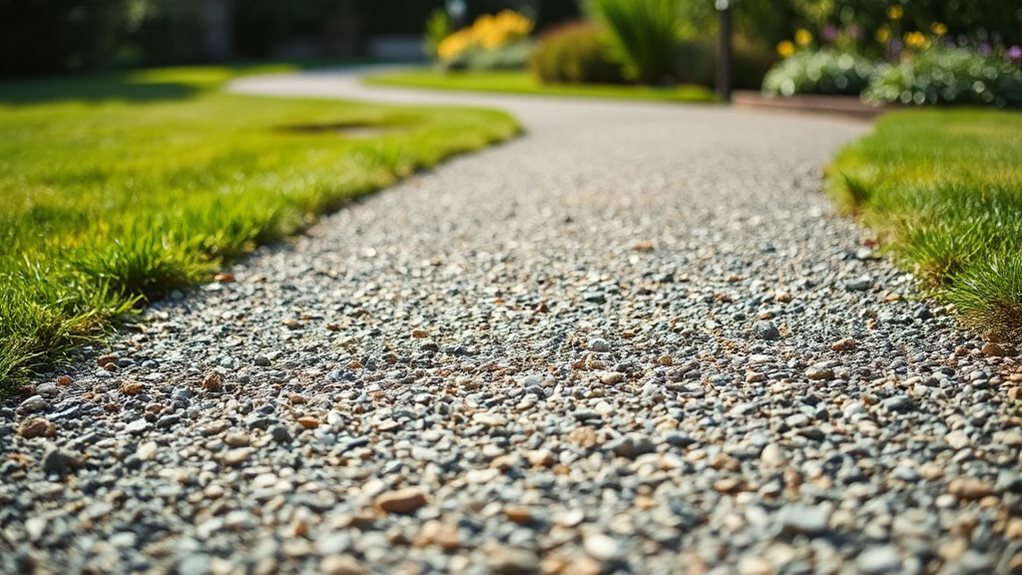
Best Gravel for Backyard Walkways
You’ll love using ¼‑⅜‑inch pea gravel for smooth, kid‑friendly steps and swapping in crushed stone where traffic gets heavy, because pea gravel’s rounded bits feel soft underfoot while crushed stone locks together and resists rutting, even after rain; the mix gives you an earthy or cool‑grey look, easy edging with metal or timber, and a quick water spray during compaction that bonds everything, plus a little PebbleGlue for extra grip—keep reading to discover the best edge tricks and maintenance tips.
TLDR
- Choose ¼–⅜‑inch angular crushed stone for durability and stability under moderate to heavy foot traffic.
- Use pea gravel (smooth, rounded) for a soft, kid‑ and pet‑friendly surface that compacts well but may shift under light traffic.
- Opt for river rock or larger jagged stones for slope stability and minimal maintenance, especially on steep or high‑drainage areas.
- Install a geotextile liner, compact each 2‑inch layer with a plate compactor, and apply a water spray or PebbleGlue for bonding.
- Select earthy beige tones (e.g., Chamois Beige) for a natural feel or cool grey shades for a modern look, and plan regular raking and annual top‑off to control weeds.
Choose the Right Backyard Gravel
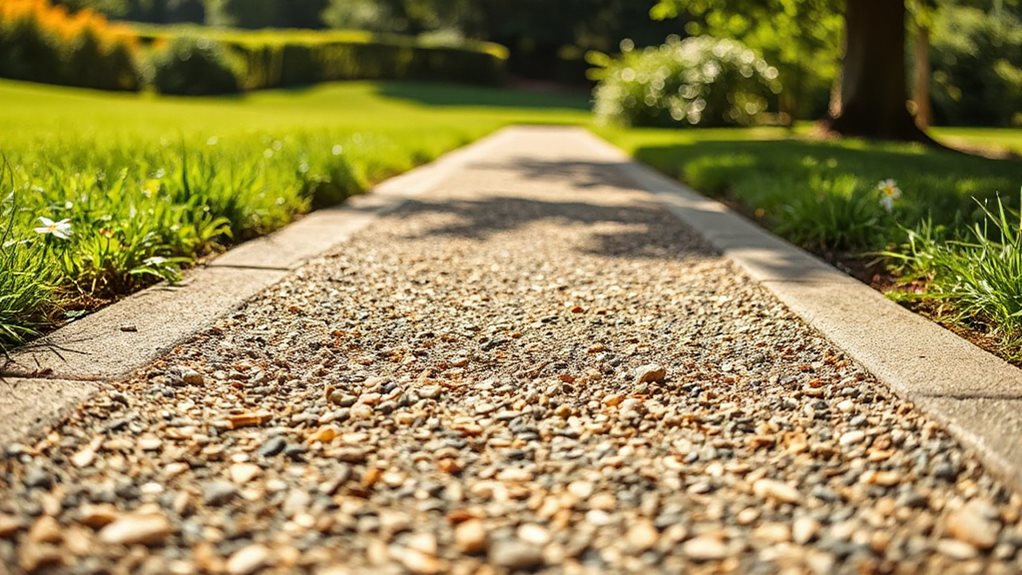
So, how do you pick the perfect gravel for your backyard walkway?
You start by matching durability to traffic—crushed stone locks together, decomposed granite compacts like a sandbox, and limestone survives freeze‑thaw. HOAs may have rules about materials and appearance, so check your community’s governing documents before choosing.
Choose ¼‑⅜” size for comfort, angular for stability, rounded for easy edging.
Pick earthy granite for a formal look, or beachy Jersey Shore tones for a sunny vibe, and remember good drainage keeps paths safe for everyone. Smooth texture is a key benefit of pea gravel, offering both aesthetic appeal and easy installation.
Pea Gravel vs. River Rock: Comfort‑First Backyard Gravel Choices
You’ll feel the soft, round edges of pea gravel under your shoes, making every step feel like a gentle stroll through a campsite trail, while river rock’s bigger, jagged pieces can trip you up like a misplaced tent peg.
If you’re planning a light‑traffic path that stays put without constantly raking, pea gravel’s tight packing gives you stability and easy upkeep, but river rock’s heft and interlocking shape hold firm on slopes and in high‑traffic zones.
Think about how each texture blends with your garden’s vibe—pea gravel offers a clean, modern look that won’t steal the show, whereas river rock adds a rugged, natural flair that can turn a simple walkway into a bold journey backdrop.
For small backyard projects consider portability and ease of setup; many compact garden solutions emphasize tool-free assembly to simplify installation and maintenance.
Comfort and Foot‑Friendly Texture
Ever wonder why a backyard path can feel like a soft carpet or a rocky mountain trail? You’ll love pea gravel’s smooth, rounded edges that cushion each step, making it perfect for kids and pets, while river rock’s big, irregular stones feel like a hiking trek, less friendly for casual strolls.
Choose the softer, foot‑friendly option for a welcoming, safe walkway.
Stability Under Light Foot Traffic
Wondering how a backyard path stays put when kids and pets zip across it?
Pea gravel compacts nicely, but its tiny stones shift under light foot traffic, so you’ll need occasional raking and edging to keep it even.
River rock’s heavier, larger pieces stay put almost effortlessly, giving you a stable surface with far less upkeep, perfect for serving family guests safely.
Aesthetic Integration With Landscape Design
Ever wondered why some backyard paths look like a polished riverbank while others feel more like a soft carpet of tiny pebbles? You’ll love how pea gravel’s smooth, neutral tones blend seamlessly with garden beds, while river rock’s bold, varied colors create eye‑catching accents on dry creek beds or borders. Mix them for comfy walks and striking design, then enjoy the cool, sturdy feel underfoot.
Decomposed Granite vs. Crushed Stone: Durable Backyard Gravel for Heavy Traffic
So, you’re trying to pick the toughest gravel for a backyard path that sees as much traffic as a campsite trail? Crushed granite outlasts limestone, holding up under trucks and constant footfall for 25‑30 years, while decomposed granite spreads and rutts unless stabilized. The chunkier texture bears loads better, drains fast, and resists freeze‑thaw—perfect for serving neighbors who love sturdy, low‑maintenance walkways. Cold soil and freeze‑thaw cycles can still affect performance, so account for freeze‑thaw when planning and preparing the base.
How to Stop Gravel From Shifting With Simple Edge Tricks
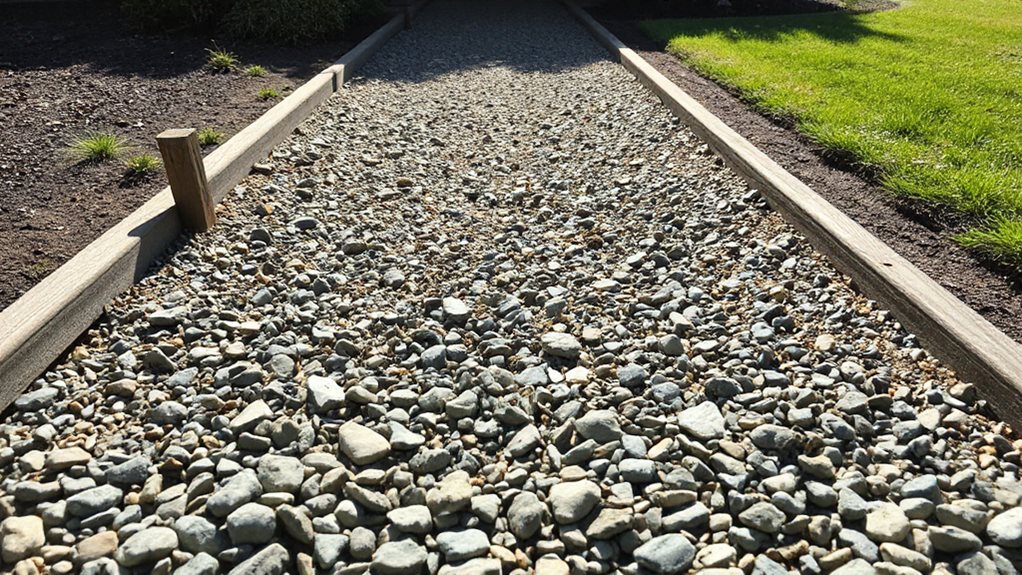
When you’ve got a backyard path that’s constantly getting trampled like a campsite trail, the last thing you want is gravel sliding around like loose sand on a windy beach—so let’s lock it down with a few easy edge tricks that’ll keep everything in place and still look great.
Install metal edging or timber borders for firm containment, then compact each 2‑inch layer with a plate compactor, spray a mist of water, and finish with a thin PebbleGlue coat for extra grip. After heavy rains, be aware that increased moisture can attract ants to patios and hard surfaces, so dry the edges and seal cracks to deter post-rain infestation.
Color & Texture Choices for Your Backyard Gravel
You’ll love how earthy tones make your yard feel like a forest trail, especially when the warm beige hues blend with the soil and give a cozy, camp‑fire vibe. Have you tried cool grey shades? They’re perfect for mimicking river rocks and adding a sleek, modern edge that still feels natural. Pick the texture you want—smooth pea gravel for easy walking or chunky stone for that rugged, adventure‑ready look—and watch your pathway metamorphose into a mini‑getaway. Winter vegetables like Kale become sweeter after cold exposure.
Earthy Tones
Ever wondered why a backyard walkway can feel like a mini‑adventure trail?
You’ll love mixing 1‑inch browns and tans that blend with garden beds, while soft grays keep the vibe sleek and neutral; add a dash of reds or purples for pop, and sprinkle blues or yellows for cool contrast—your path becomes a welcoming, low‑maintenance canvas that feels like a campsite stroll.
Warm Beige Hues
Ever imagined strolling down a backyard path that feels like a cozy campsite trail, with warm beige gravel underfoot? You’ll love Chamois Beige pea gravel—soft, speckled with pink and slate, smooth enough for barefoot walks, yet durable for heavy traffic. Mix it with granite edging for a heritage vibe, or add pavers for contrast; it drains well, resists weeds, and gives your garden a welcoming, warm‑toned hug.
Cool Grey Shades
Ever wondered how a cool‑gray gravel path can make your backyard feel like a sleek, modern campsite?
You’ll love the smooth, rounded river stones that cushion feet, the fine‑grained 1/4‑inch texture that stays cool under summer sun, and the stark black‑and‑white contrast that makes colorful plants pop; pair it with pavers, string lights, and you’ve got a stylish, low‑maintenance trail perfect for sharing escapades.
Backyard Gravel Maintenance for Drainage & Dust‑Free Paths
So, how do you keep your backyard gravel paths from turning into soggy, dusty messes while still looking cool enough for a weekend camping vibe? Excavate 4‑6 inches, lay geotextile, compact a crushed‑stone base, then spray water lightly after tamping. Rake bi‑weekly, top‑off annually with matching ⅜‑inch chip, and wipe dust with leaf‑blower. Keep 2‑3 inches depth, and weeds stay out.
Overall
Now you’ve got the perfect gravel recipe for a backyard that feels like a mini‑adventure trail, so grab your favorite shade, spread those stones, and watch the path come alive under your feet. Remember, a little edge edging keeps the gravel from wandering, and mixing colors adds a pop of personality—just like packing bright gear for a camping trip. Keep it clean, enjoy the crunch, and let every step remind you of the great outdoors right at home.