Clover Taking Over Your Lawn in Spring: Causes & Solutions
So, you’ve seen clover popping up like tiny green party crashers in your lawn this spring, right? Cool temps and rain help it wake up early and spread fast through sneaky stolons, especially if your grass is weak from low nitrogen or short mowing. But hey, don’t grab the weed killer just yet—try mowing higher, feeding your soil, and aerating to fight back naturally. Clover’s not all bad—it’s like a free fertilizer factory! Want to know how to keep your lawn lush without zapping the good stuff? There’s a smart way to balance it all.
TLDR
- Clover spreads rapidly in spring due to early growth, frost tolerance, and efficient stolon-based expansion across lawns.
- Low mowing weakens grass, reducing competition and allowing clover to establish in thin or stressed turf.
- Nitrogen-deficient soils favor clover, which fixes its own nitrogen and thrives where grass struggles.
- Core aeration and proper fertilization improve soil health, helping grass outcompete invading clover.
- Apply herbicides in late March to mid-May when temperatures are above 60°F and avoid use near pollinator activity.
Why Clover Spreads So Quickly in Spring
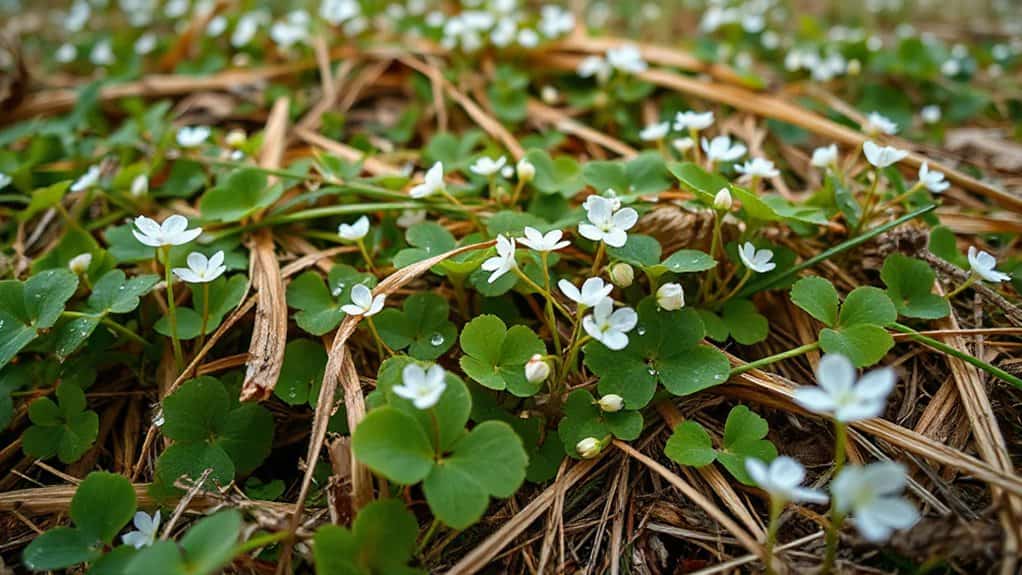
Spotting clover take over your lawn in spring? That’s no accident! It wakes up early, loves cool temps, and laughs at frost. Spring rains? Its personal watering system! With stolons zipping across soil and nitrogen-fixing superpowers, it thrives where grass struggles. Think of it as nature’s little camper—tough, resourceful, and always ready to spread. Pull it? Or adopt the green magic? It’s also a clear sign your lawn may be low in nitrogen, making it an indicator weed of low nitrogen. Increasing soil nitrogen with proper fertilization can help the grass compete with clover by improving soil fertility.
How Low Mowing Encourages Clover Invasion
Ever hacked your lawn down to a sad, stubbly shadow of its former self and wondered why clover suddenly throws a block party across your yard? You’re basically rolling out the welcome mat—short grass gets stressed, starved, and weak, while clover, that sneaky little camper, thrives low to the ground, spreads fast, and hog-ties sunlight and nutrients, leaving your grass fighting a losing battle you didn’t mean to start. Mowing too low also reduces turf density and invites weed competition, which lets clover and other weeds establish more easily.
The Role of Nitrogen Deficiency in Clover Growth

So you’ve been keeping your lawn nice and short, thinking you’re doing it a solid, but instead you’re basically throwing a VIP pass to every clover in the neighborhood—sound familiar?
Turns out, clover’s moving in because your soil’s low on nitrogen, leaving grass weak and space wide open.
But hey, clover’s not all bad—it pulls nitrogen from the air, feeds your grass, and cuts fertilizer work, kind of like a tiny, green camp counselor for your yard! Coffee grounds can help boost soil nitrogen and organic matter when added correctly, especially if mixed into compost or used in moderation as nitrogen-rich organic matter.
Soil Compaction and Its Impact on Lawn Health
Walking across your lawn and feeling like you’re stepping on a sidewalk instead of grass? That’s soil compaction, and it’s a total party crasher for healthy turf.
It squishes out air, water, and space roots and good bugs need, invites pests and diseases, and makes your grass weak—kind of like showing up to a camping trip with a soggy tent and no snacks!
Regular core aeration and adding organic matter like compost can help loosen compacted soil and restore healthy root growth (core aeration).
Recognizing Early Signs of Clover Infestation
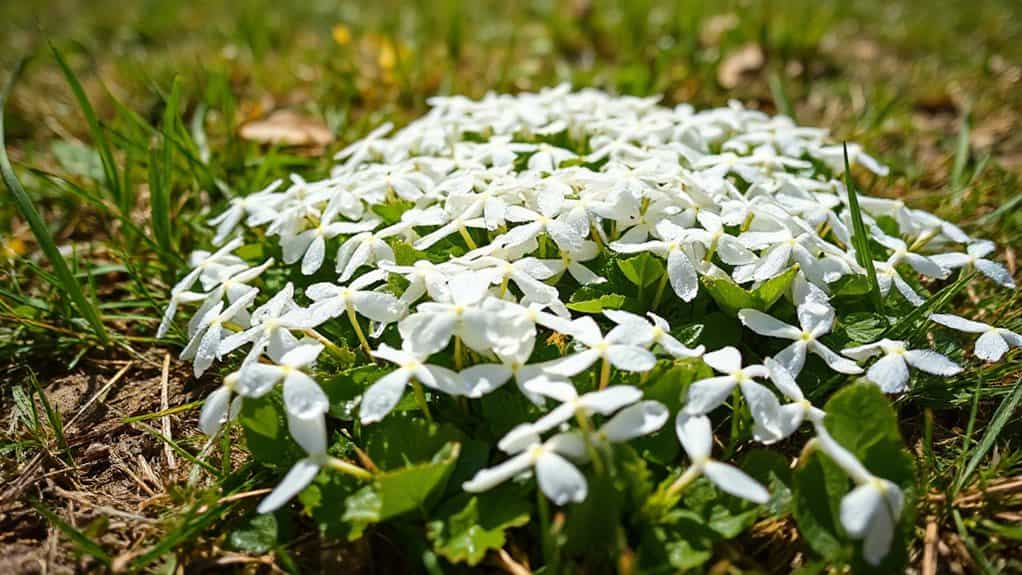
You’re out mowing the lawn one Saturday morning, and suddenly—bam!—you spot tiny white flowers popping up like nature’s confetti, or maybe you notice low-growing green patches spreading faster than your little brother when dinner’s ready.
These sneaky little clover colonies start small, with their round, three-part leaves and those telltale white watermarks that look like someone doodled on them with a highlighter. Keep your eyes peeled, because once they settle in, they’re tougher to kick out than a tent stake in dry soil! Dandelions can also bounce back quickly after cutting thanks to their deep taproot system, so watch for both kinds of invaders.
White Flowers Emerging
Every now and then, right when spring starts shaking off winter’s last yawn, you might spot little round pom-poms of white flowers popping up in your lawn like nature’s own confetti—and yep, that’s often the first sneak peek of a clover takeover.
See those cute, fuzzy white balls on creeping stems? Don’t be fooled by their charm; they’re busy spreading, rooting, and throwing a clover party you didn’t RSVP to!
Low-Growing Green Patches
Right when you think your lawn’s finally greened up nice and even, BAM—there they are: those suspiciously lush, low-growing green patches that look like someone sneaked in overnight and planted tiny emerald welcome mats for a clover convention.
See those round, three-part leaves with little white watermarks? That’s clover rolling out the red carpet. It creeps along stolons, loves shade and poor soil, and puffs up spongily underfoot—kind of like nature’s camping pad!
Effective Cultural Practices to Prevent Clover
You know how we always crank up the air and hit the trails for a weekend of camping with the crew? Well, treating your lawn right is kind of like prepping the perfect campsite—start by mowing high, like 2.5 to 3 inches, because tall grass throws shade (literally!) on clover trying to sprout, and honestly, it just looks way cooler.
Don’t forget to aerate your soil too, since poking those little holes helps grass roots stretch out and grab nutrients, kind of like giving your lawn its own pair of hiking boots for better traction.
Think of it this way: a strong, happy turf is like a full crew on a road trip—no room for uninvited hitchhikers like clover!
Mow High to Suppress Clover
Most of the time, keeping your lawn one step ahead of clover is easier than you’d think—and it all starts right at the handle of your mower.
Want a lush, clover-free yard? Mow high—around 3 inches—so grass shades the soil and blocks clover seeds from sprouting, just like how a thick forest canopy blocks sunlight.
Taller grass also crowds out clover, competes for resources, and grows deeper roots, making your lawn tougher than a well-packed camping tent.
Keep your mower high, and your lawn will thank you all season long.
Aerate Soil for Stronger Grass
Poke a few holes in your lawn and watch it come alive—like giving your grass a deep, rejuvenating breath after being squished under a heavy backpack all summer.
You’re not just relieving soil stress; you’re inviting oxygen, water, and nutrients to party at the root level.
Aerate twice for full coverage, help roots grow deep, reduce thatch, and outcompete clover—your grass will thank you with thicker, greener hugs of turf.
When and How to Use Herbicides Safely
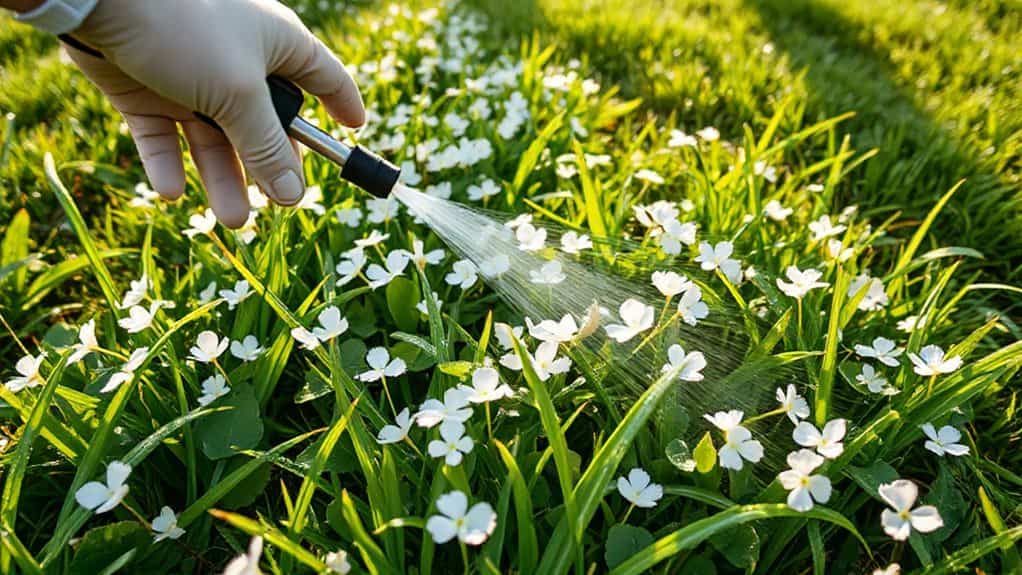
While clover might look like a cheerful little guest in your lawn at first glance, it’s not long before it starts throwing a full-on green party and inviting all its weedy friends—so if you’re thinking about bringing out the big guns (a.k.a. herbicides), timing and technique are your secret weapons to win the battle without wrecking your grassy kingdom.
Apply in late March to mid-May when temps stay above 60°F for four days, grass is actively growing, and after your second mow—skip the stress, skip the heat, and definitely skip spraying if it’s over 85°F or if rain’s due soon.
Water in preemergents within 21 days, avoid mowing 3 days before and 2 after, and hey—your lawn will thank you like a campfire s’more thanks chocolate: deeply, sweetly, and with zero regrets.
Balancing Clover Control With Environmental Benefits
Thinking of yanking every last clover out of your lawn like it’s public enemy number one? Hold on!
Clover feeds bees, cuts fertilizer use, and saves water—plus, it’s basically nature’s lawn helper. You’re not just growing grass; you’re supporting pollinators, enhancing soil health, and helping the planet. Why not keep a little green teamwork going? Let some clover stay and thrive!
Overall
So, you’ve battled the clover takeover—awesome job! Spring’s sneaky way of helping it spread? Totally beatable. You now know tall grass, good soil, and a little nitrogen go a long way, right? Think of your lawn like a campsite: happy turf means no room for uninvited green guests! And hey, if you *do* spot clover, you’ve got the tools—no panic, just action. Keep it fun, keep it green, and remember: victory tastes extra sweet after a long weekend of camping and zero lawn drama!