Why Does Grass Grow Faster After Rain?
When rain hits, it instantly pumps soil water from a dry 15% to a lush 27%, letting your grass roots gulp H₂O, swell with turgor, and fire up cell expansion—think of it as a sudden energy boost for the lawn. The storm also drops lightning‑made nitrates, which microbes quickly turn into plant‑available nitrogen, flooding the blades with chlorophyll and turning them a vivid green. Meanwhile, moisture awakens soil microbes that mineralize extra nutrients, and dormant roots mobilize stored sugars to sprout new shoots. All this combo fuels a rapid growth surge, but watch out for water‑logging and disease if the ground stays soggy. Keep going and you’ll discover even more cool details.
TLDR
- Rain raises soil water‑filled pore space, providing water water for cell expansion, turgor maintenance, and rapid photosynthesis.
- Increased moisture triggers microbial activity that mineralizes nitrogen, boosting nitrate availability and chlorophyll synthesis for greener growth.
- Elevated soil moisture stimulates deeper root growth and mobilizes stored carbohydrates, supplying energy for new shoot development.
- Lightning‑derived nitrates and rain‑driven nitrate infiltration enhance nutrient uptake, accelerating biomass accumulation.
- Adequate drainage prevents waterlogging, allowing roots to breathe and avoiding oxygen loss that would otherwise hinder growth.
Rain Instantly Lifts Soil Moisture, Jump‑Starting Grass Growth
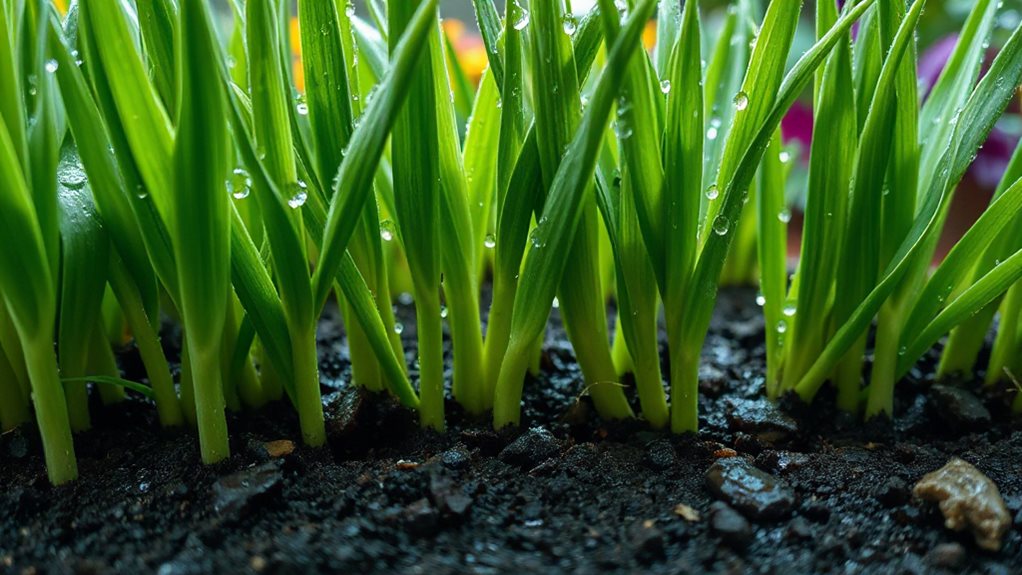
Ever wonder why a soggy down can make your backyard look like a fresh‑cut carpet in just a few days? When rain hits, soil VWC jumps from 15% to 27% in five days, lifting growth from 33% to 73% of field capacity. You’ll see roots breathe easier, seedlings sprout faster, and the grass bounce back like a camper finding fresh trail water. Keep it light, avoid waterlogging, and enjoy the green burst. Rain also promotes deep root growth by infiltrating the soil, encouraging roots to extend further for better drought resistance. Annual aeration helps maintain soil structure and supports the microbial activity that keeps turf healthy.
Rain‑Driven Direct Water Effect: 12 mL / m² / day Boost
So, ever wondered why a single rainstorm can make your lawn feel like a fresh‑cut carpet overnight? The 20 mm rain spikes soil water-content – 15 % to 27 %, slashing growth from 33 % to 73 % of max, which translates into a 12 mL / m² / day elevate. That extra water fuels cell expansion, turgor, and metabolism, letting you nurture a greener, happier yard for everyone. Standing water can also increase local mosquito breeding habitat if drainage and yard conditions aren’t managed.
Nitrogen From Rain for Grass: Lightning‑Created Nitrate Uptake
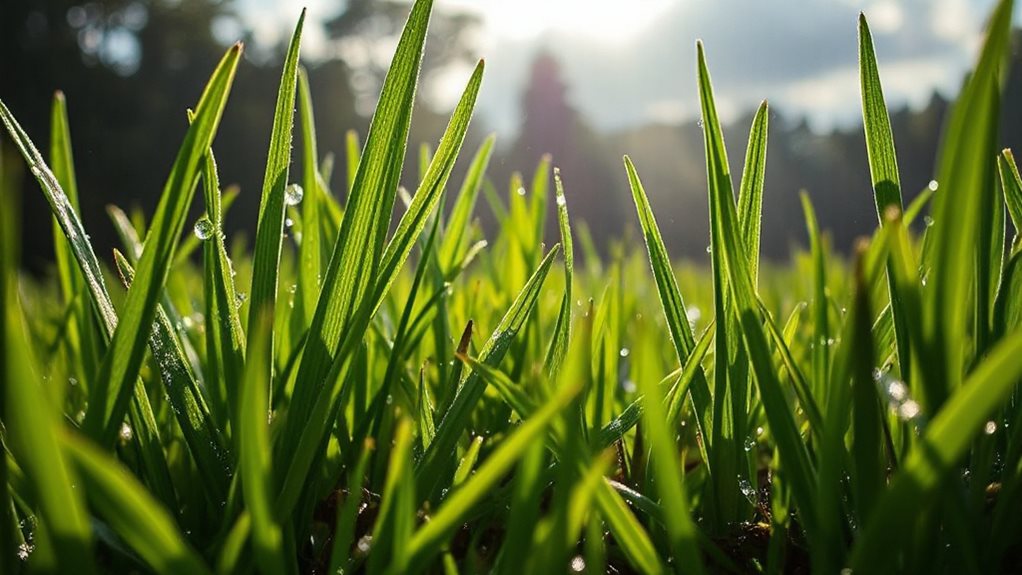
You’ve probably noticed that after a thunderstorm your lawn looks extra green, and that’s because lightning actually creates nitrates that rain drips straight into the soil, giving the grass a free‑form fertilizer boost.
Imagine each bolt as a tiny, high‑energy chef that splits nitrogen molecules, lets the atoms bond with oxygen, and then delivers the resulting nitrates right where the roots can sip them up—pretty wild, right?
Red-leaved trees also benefit from post-storm nutrient pulses, which can enhance foliage color and growth in species like Japanese Maple when soil conditions are favorable.
Lightning‑Generated Nitrate Deposition
What if I told you that a single bolt of lightning can act like a secret fertilizer, sprinkling tiny packets of nitrate onto the grass you love to mow?
You’ll see how each flash splits N₂, creates nitrogen oxides, and rain turns them into soluble nitrates that drift onto lawns, providing a natural enhancement that fuels greener, faster growth after storms.
Soil Nitrate Uptake Efficiency
Ever wondered why a fresh rainstorm feels like a turbo‑boost for your backyard lawn? You see, rain drives nitrate into the soil, and grass grabs it fast, thanks to clever sensors that trigger transporters.
When you apply nitrogen before the storm, you enhance recovery, keep nitrate under 15 ppm, and help the turf stay lush—perfect for serving neighbors and impressing campers.
Moisture‑Activated Soil Microbes Supply Grass With Extra Nutrients
Ever wondered why the grass seems to shoot up like a superhero after a rainstorm? When the soil swells to 77% moisture, microbes awaken, crank up nitrogen mineralization, and flood the roots with three‑times more N than rain alone, boosting growth by 8 mL/m²/day; you’ll see greener patches, thanks to proteobacteria networks, while actinobacteria step back, making every post‑rain lawn feel like a thriving campsite. Including diverse plant species and matching them to local conditions can further support this boosted growth by improving soil structure and nutrient cycling, especially when native plants are prioritized for their adaptation to local soils.
Rain‑Triggered Carbohydrate Mobilization: Dormant Roots Feed New Shoots
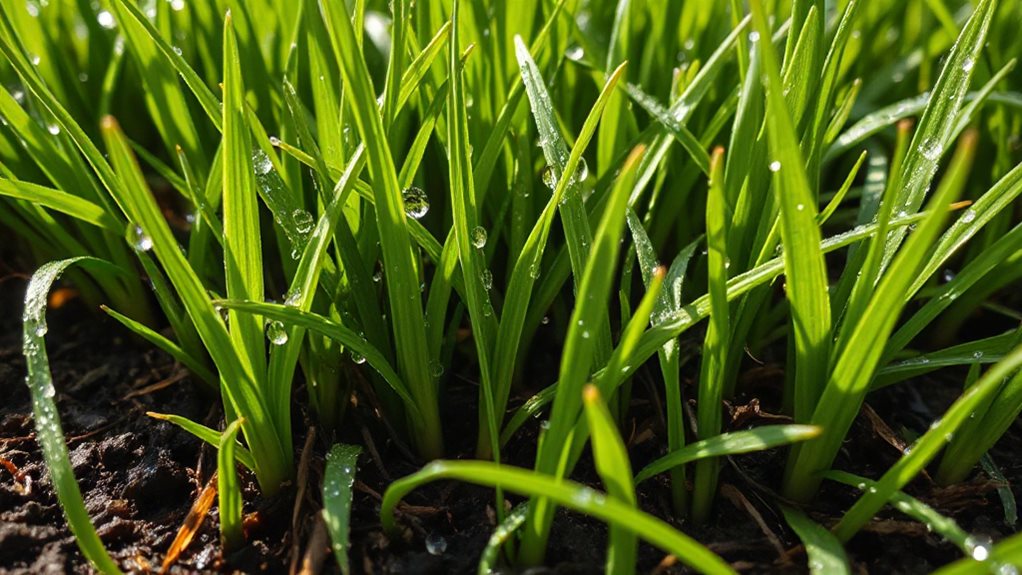
When the rain finally hits after a dry spell, those sleepy roots that have been hoarding sugar like a squirrel with a secret stash spring to life, shuffling their hidden carbs up the stalks to fuel a burst of fresh shoots.
You’ll see dormant roots instantly release stored NSC, sending water‑soluble sugars and fructans upward, so new shoots grow lush, sugary, and ready for grazing—just like a campfire ignited by fresh logs.
Why Rain Makes Grass Greener: Nitrate‑Driven Pigment Changes?
You’ll notice the grass turns a richer green right after a rain because the moisture pulls nitrate up from the soil, and that nitrate fuels chlorophyll production, making each blade sparkle like a fresh‑cut postcard. Have you ever thought that the tiny microbes waking up in the wet earth act like backstage crew, cranking up pigment synthesis and giving the grass that vivid hue you love to photograph on your camping trips? Heavy or prolonged wetness, however, can lead to overwatering that drowns roots and invites fungus if drainage isn’t adequate.
Nitrate‑Induced Chlorophyll Boost
So why does the grass look so bright and fresh after a rainstorm? You’ll notice nitrate flooding the soil, kick‑starting chlorophyll synthesis; it fuels nitrogen metabolism, powers Rubisco, and revives pigment pathways, so the blades turn vivid green.
Imagine hiking after a downpour, feeling that fresh scent—thanks to nitrate’s boost, photosynthesis spikes, and the grass practically thanks you with its sparkle.
Soil Moisture Enhances Nutrient Uptake
The rain that just drenched the lawn doesn’t just splash the leaves—it also turns the soil into a nutrient‑rich soup that the grass can slurp up, so after a storm the blades look like they’ve been polished with neon paint.
You’ll notice minerals dissolve faster, cations hop onto roots, and water‑filled pores guide nutrients straight to the grass, enhancing growth while you enjoy the fresh, lively carpet.
Microbial Activity Elevates Pigment Synthesis
Ever wonder why the grass looks so vivid after a rainstorm? You see, rain wakes up soil microbes, and they crank up respiration, pumping CO₂ that fuels bacterial and fungal growth; those microbes release nitrogen and enzymes, sparking chlorophyll synthesis, so the blades turn emerald.
Imagine camping, watching the green carpet bloom—thanks to microscopic teamwork, nature’s own paint‑job.
Compensatory Growth Rates After Rain (kg DM/ha/day) Exceed Normal
What makes the grass bounce back so wildly after a rainstorm? You’ll notice compensatory growth spikes—12 kg DM/ha/day in May, 14 kg in June, and a whopping 15 kg in August—far above the normal 6.6 kg surplus. The rain lifts soil moisture to 27% VWC, fuels nitrogen boosts, and flips dormant pathways, letting you see lush, rapid recovery, perfect for anyone caring for a thriving lawn.
Hidden Risks After Heavy Rain: Disease, Oxygen Loss, and Root Weakening
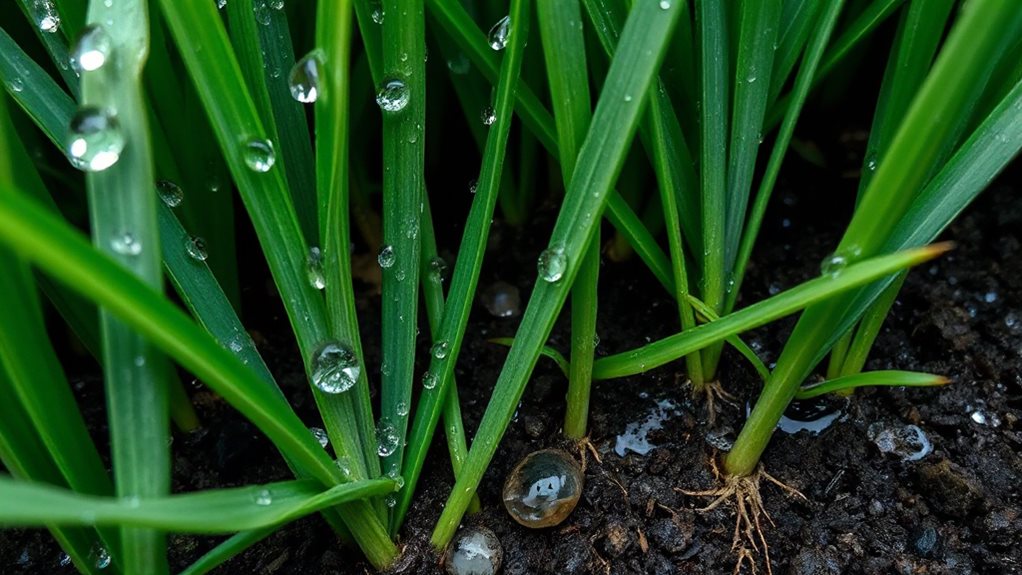
After that burst of growth you just saw, the real story starts when the rain hangs around a bit longer—because the same moisture that fuels a lush lawn also creates a perfect playground for troublemakers.
You’ll see gray leaf spot, Pythium blight, and take‑all rot thriving, while saturated soil steals oxygen, drowning roots, and leaching nitrogen weakens them, so act fast, keep turf dry, and protect your crew’s green carpet.
Overall
Now you’ve seen why rain turns your backyard into a fast‑forward growth show, remember that each drop is like a power‑up for the grass, flooding the soil with moisture, nitrogen, and happy microbes that all shout “let’s grow!” So next time you hear thunder, grab your boots, sprint outside, and watch the green sprint ahead—just don’t forget to check for soggy spots that might hide a sneaky fungus. Happy, rain‑fueled adventures!