Why Do Raccoons Knock Over Trash Cans at Night?
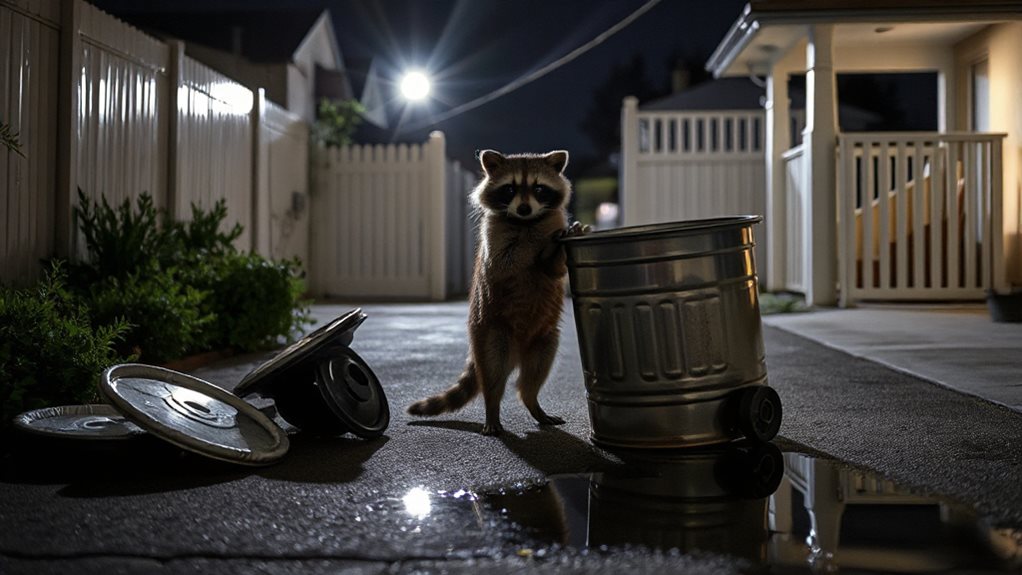
You see raccoons flipping trash cans at night because their night‑vision eyes, low‑metabolism energy, and super‑sharp nose turn every glowing, smelly bin into a high‑calorie treasure hunt, and they’ve learned—often by watching neighbors or practicing with cardboard lids—how to pry lids, rip handles, and even use twigs as tools, so when you hear a clatter under the streetlamp you’re really hearing a clever, opportunistic forager in action, and if you keep going you’ll discover even more tricks they use.
TLDR
- Raccoons are nocturnal scavengers attracted to the strong odors of high‑calorie food waste that emit from trash cans at night.
- Their enhanced night vision and low metabolic rate let them safely explore and manipulate lids under low‑light conditions.
- They learn efficient lid‑opening techniques through observation and practice, allowing them to pry or knock over cans to access contents.
- Urban environments provide abundant, easy‑to‑reach food, reducing foraging effort and encouraging repeated raids on the same bins.
- Docile individuals tiptoe and leave shallow prints, while aggressive ones rip lids and scatter trash, both driven by the reward of high‑energy meals.
Why Raccoons Raid Trash Cans at Night?
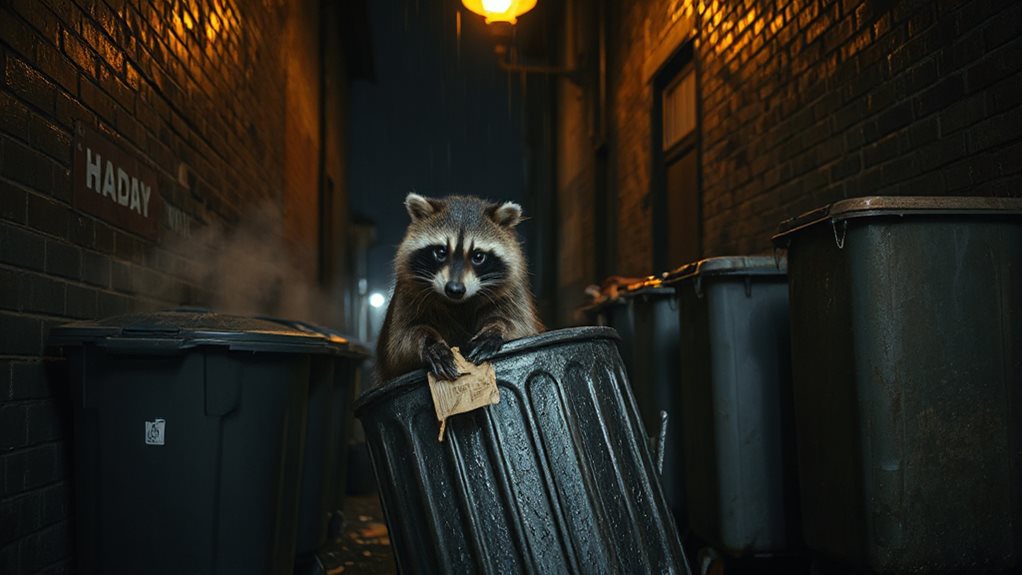
Ever wonder why those masked bandits tip over your trash at night? You’re probably hungry for a story, so picture this: raccoons sniff out high‑calorie leftovers, then dash out midnight when humans are asleep, using clever paws to pry lids, remembering which bins are easy, and turning chaos into a feast. Their nocturnal raids keep neighborhoods lively, especially during holidays. They rely on their highly sensitive front paws to manipulate lids and latches with precision. Soil compaction from foot traffic and debris can create bare spots that attract curious animals and complicate cleanup.
How Does Nocturnal Physiology Give Raccoons an Edge?
You’ll notice that raccoons see like night‑vision superheroes, thanks to a ton of rod cells and that signature black mask that lets them spot a stray chip even in the darkest alley, so you can picture them sneaking through shadows like a camp‑fire‑lit adventure.
Their low metabolic rate means they can keep moving for hours without getting exhausted, which is perfect for those late‑night trash‑can raids—imagine a marathon hike where you never have to stop for a snack.
And because they’re built for the night, you’ll find them thriving under streetlights and moonbeams, turning every urban back‑yard into a playground of textures and smells.
Salt buildup on soil can hinder water uptake for plants, so regular flushing and good drainage help prevent damage.
Enhanced Night Vision
Why do raccoons seem to glide through the night like secret agents on a camping trip? You’ll love how their tapetum lucidum acts like a night‑time mirror, bouncing faint light back into rods, while the black facial mask cuts glare, sharpening vision. This combo lets them spot a half‑eaten sandwich under a streetlamp, navigate alleys, and out‑smart predators—all while you’re marveling at their stealthy, camp‑ready brilliance.
Low Metabolic Rate
After you’ve pictured raccoons slipping through the night like stealthy campers, imagine this: their low‑metabolic, is the secret sauce that lets them stay energized for those midnight raids.
You’ll love how torpor lets them nap through freezing days, conserving fat they hoarded in fall, then burst out at night with steady heat, so they can rummage through trash cans without tiring, just like a well‑planned campout.
What Food Items Drive Raccoon Trash‑Can Raids?
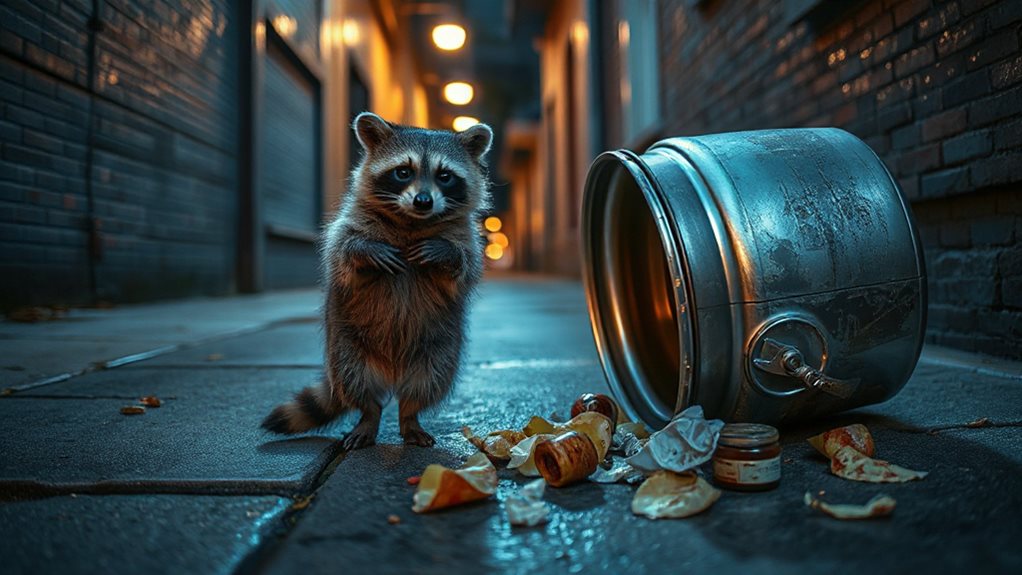
You’ll notice that raccoons sprint toward trash cans the moment they sniff high‑protein dog food, because that scent promises a hearty meal you’d normally reserve for your four‑legged buddy.
Ever wondered why they rummage through bags of smelly human waste? The pungent aroma of leftovers and easy‑access fish treats makes the bin irresistible, turning a simple night‑time stroll into a full‑blown snack‑hunt odyssey—just picture a raccoon camping out with you, swapping stories over a busted bag of chips!
High‑Protein Dog Food
You’ll notice raccoons returning nightly, attracted by the high‑fat, high‑moisture mix that mirrors their natural prey, so keep bowls indoors to stop their midnight raids.
Smelly Human Waste
Ever wonder why raccoons seem to throw a midnight party in your trash can? You’ll find grease‑laden pizza crusts, buttery bread, and salty meat scraps spilling out, their strong odors acting like a neon sign for hungry paws; those high‑fat, high‑protein leftovers enhance raccoon energy, turning your bin into a tasty, irresistible buffet that fuels nightly raids.
Easy‑Access Fish Treats
Why do raccoons sprint to your kitchen trash when you’ve tossed a fish or two? You’ll notice they zero in on oily fish scraps because their nose catches the protein‑rich scent from yards away, and a single sardine can trigger a full‑blown raid.
Tossed fish heads, leftover salmon, or even pet fish food become irresistible, so seal bins tight and keep those tasty temptations out of reach.
How Do Urban Raccoons Learn to Open Locked Cans?
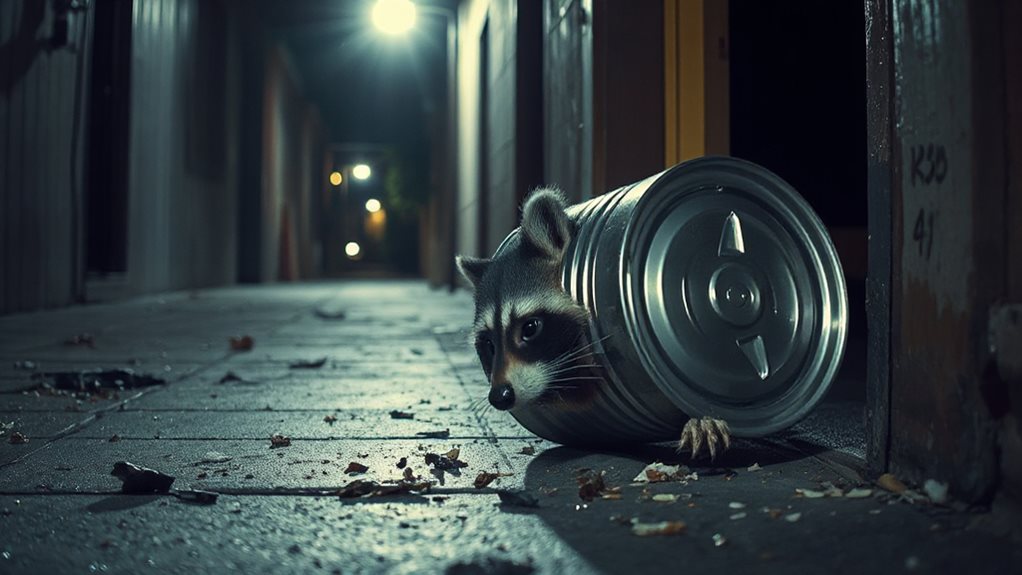
Ever wonder how a city raccoon figures out the trick to a locked trash can, almost like a tiny, furry locksmith on a midnight scavenger hunt? You’ll see them watching neighbors, mimicking paw‑presses, testing latch angles, and remembering successes; they share tips at den gatherings, practice with cardboard lids, and improvise tools from twigs, turning every failed attempt into a clever lesson for the whole crew. They also tend to leave a mess behind, similar to how mortar needs time to cure fully and shouldn’t be rushed before it’s ready.
What Triggers Reversal Learning on Changing Latches?
You’ll notice that a sudden change in the button‑switching cue—like the click you hear when the other button lights up—can make a raccoon pause, then scramble to figure out the new reward timing, especially if a distraction suddenly forces it to rethink its strategy; have you ever watched a raccoon stare at a trash can lid, then hop back and try a different angle when a car horn interrupts its focus?
Try watching the next field test and see how those timing shifts and unexpected noises trigger a burst of reversal learning, because the moment the environment throws a curveball, the raccoon’s brain flips the switch and goes full‑on problem‑solver.
After rain, many animals shift foraging locations toward hard dry surfaces, which can similarly prompt raccoons to investigate patios and damp spots near structures as they adapt their strategies.
Button‑Switching Cues
Ever wondered what flips a raccoon’s brain switch when the “right” button suddenly becomes the “wrong” one? You’ll see that docile adults, not jittery juveniles, notice subtle scanner lights and treat‑dispense clicks, then shift persistently despite crowd noise.
When the reward stops, their quiet confidence drives them to explore the new button, turning confusion into clever adaptation.
Reward Timing Shifts
How does a raccoon know when it’s time to ditch the “old favorite” latch and sprint toward a new one?
You’ll see that when the reward timing shifts—like a button that suddenly offers food later—docile, less bold raccoons quickly relearn, especially adults who outshine juveniles.
Their emotional steadiness lets them abandon the familiar latch, adapt to the fresh cue, and keep the snack flow moving, just like a seasoned camper swapping routes for better views.
Distraction‑Induced Strategy Change
What makes a raccoon ditch its favorite latch and scramble for a new one when the scene gets noisy?
You’ll see it when a crowded cubicle buzzes, other raccoons bumping, and the original button loses its shine, prompting reversal learning.
Adults, less jittery, switch faster, while juveniles linger; the chaos forces them to abandon old tricks, chase fresh rewards, and keep your trash‑can adventures exciting.
How Do Docile vs. Aggressive Temperaments Affect Raiding?
When you watch a raccoon sneak up on a trash can at night, you’ll notice two very different styles of raid—one quiet and careful, the other loud and chaotic—because the animal’s temperament drives everything from how it opens the lid to how far it’ll carry the loot back to its den. Docile raccoons tiptoe, pick accessible bags, leave shallow prints, and return home quietly, while aggressive ones rip lids, scatter trash, gouge deep holes, and leave greasy marks, turning the whole yard into a noisy, messy playground. Overwatering can create soggy, attractive spots for wildlife by producing spongy, waterlogged soil that masks scents and makes trash easier to access.
Why Do Adult Raccoons Outperform Younger Explorers?
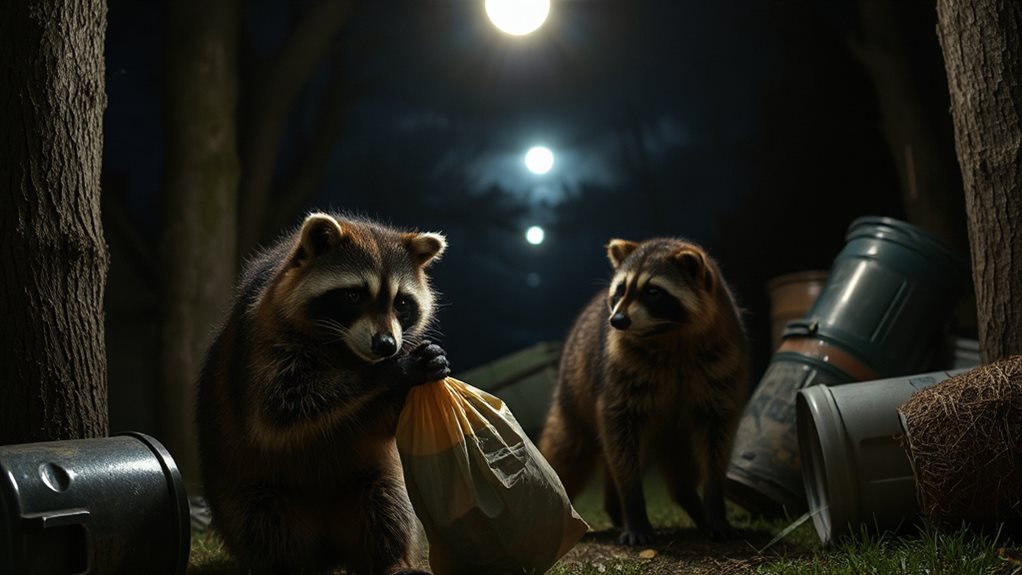
Most of the time, adult raccoons outshine their younger cousins because they’ve already earned a few extra “survival points” from years of night‑time scouting and trash‑can raids, and that experience translates into sharper cognition, better risk assessment, and higher learning efficiency.
You’ll notice they dodge traps faster, remember safe routes, and weigh dangers like seasoned campers, while juveniles rush in, eager but less persistent.
How Does Urban Waste Shape Raccoon Evolution?
Ever wondered why raccoons seem to have turned city trash cans into their own all‑you‑can‑eat buffet?
You’ll see that easy, steady food cuts foraging effort, letting them shrink home ranges, overlap more, and even develop shorter snouts and smaller teeth—traits humans unintentionally favor.
These bold, tamer critters learn to open lids, mingle with neighbors, and thrive, turning urban waste into a rapid evolutionary catalyst.
How Do Cold Nights and Darkness Influence Activity?
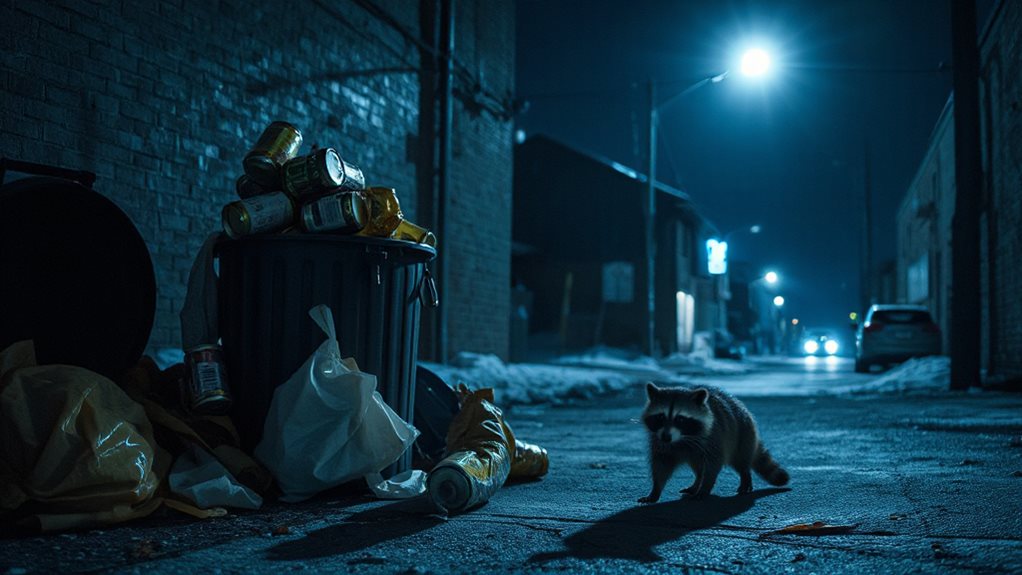
Urban trash cans turned raccoons into buffet‑hungry city slickers, and now those same opportunists face a whole new challenge when the temperature drops and the lights go out.
You’ll notice they hunker down in torpor when nights are brutal, yet they still slip out under dark skies, using thick fur and stored fat to scout for food, especially on milder evenings when you’re camping nearby.
Why Do Raccoons Stay Focused on Cans Amid Distractions?
Ever wonder why a raccoon will stare at a trash can like it’s the last piece of pizza at a campsite, even when a skunk or a curious squirrel is buzzing around?
You see, raccoons treat cans as high‑energy, predictable rewards, so they push aside rivals, stay docile, and keep pressing buttons or latches despite noise, because their learned persistence and focus outweigh any distraction.
How to Prevent Raccoon Trash‑Can Raids in Suburbs?
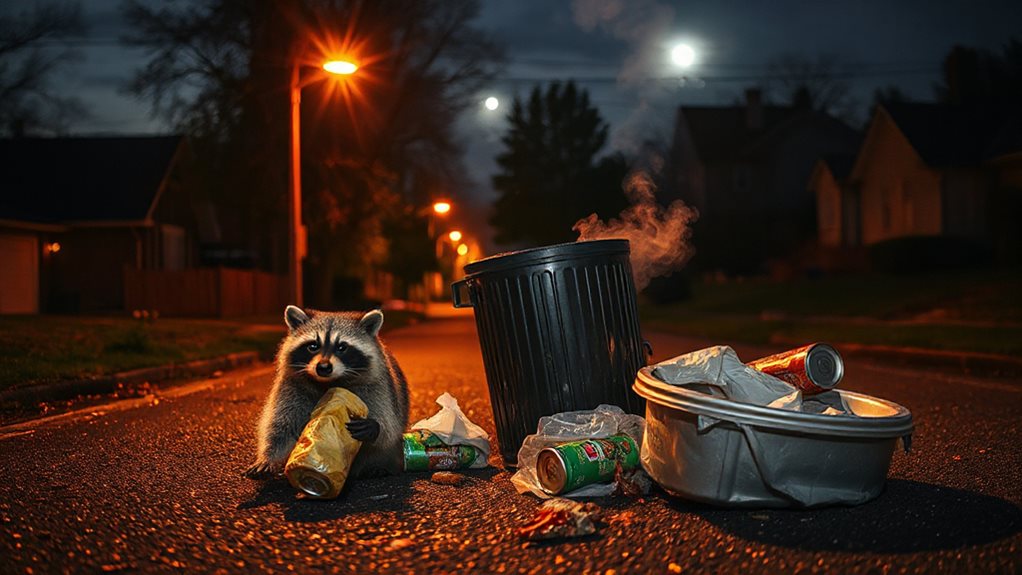
Why let those sneaky raccoons turn your backyard into a midnight snack bar? Secure heavy‑duty bins with lockable lids, strap them with bungee cords or ratchet straps, and store them in a garage or shed overnight; rinse and deodorize regularly, sprinkle Epsom salt, and set motion‑activated sprinklers or lights—combine repellents, and you’ll keep the critters out while serving a clean, safe neighborhood.
Infrared Camera Findings on Raccoon Puzzle Behavior
Ever wondered what raccoons are up to when the lights go out? You’ll see four IR cameras, spaced three meters from puzzle boxes, catching every shove and wait‑and‑steal move; they even spot skunks aside for latches, cut solving time by eleven seconds, and still investigate constantly, while PIT tags and VHF collars confirm each thief’s identity and route.
Overall
You’ve seen how raccoons turn a midnight snack hunt into a full‑blown treasure‑hunt, using their night‑vision eyes, nimble paws, and clever problem‑solving to outwit locked lids, especially when the cold makes them extra hungry. So next time you hear a rustle, remember they’re just on a camping‑style adventure—just swap the tent for a trash can. Keep lids tight, use baffles, and you’ll outsmart those furry campers without missing a beat.