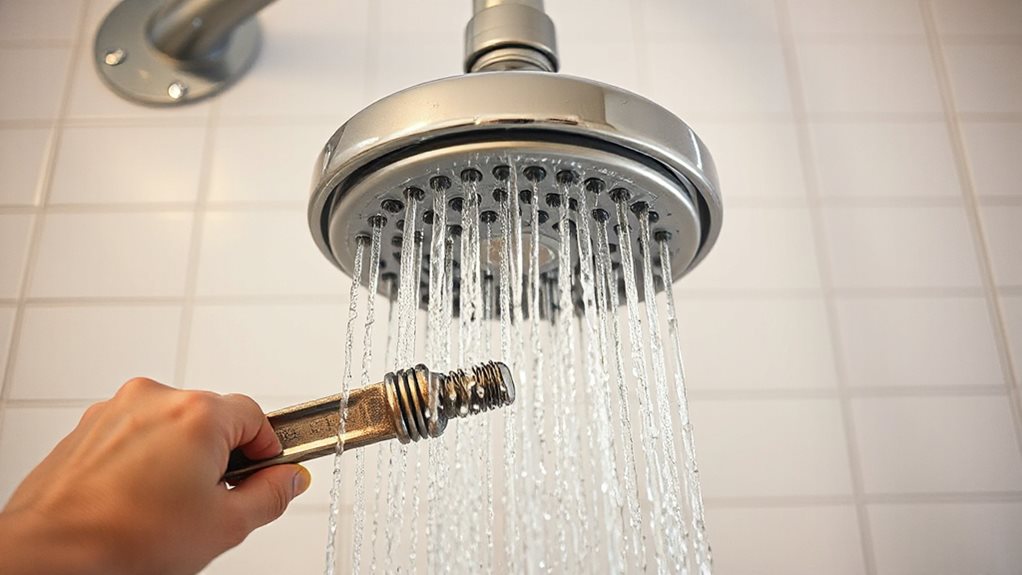
How to Increase Water Pressure in Your Shower (Simple Fixes)
First, grab a pressure gauge and screw it onto your outdoor hose bib, open the faucet fully, and note the static (black) and peak (red) readings—if it’s under 40 PSI, turn the regulator screw clockwise a notch and re‑check. Next, soak your shower head in vinegar for a half‑hour (or overnight), scrub off any gunk with a toothbrush, and rinse with hot water to restore a strong spray. If that still feels weak, unscrew the head and yank out the tiny flow‑restrictor disk with needle‑nose pliers or a paperclip, then re‑tape the threads. Check your hose for kinks, replace it if needed, or upgrade to a high‑pressure head like a Speakman Hotel Anystream for an instant boost. When all else fails, a compact booster pump can lift the PSI from around 40 to 60—just install a non‑return valve, prime the pump, and wire it safely. Keep going and you’ll discover even more tricks.
TLDR
- Test and adjust the pressure regulator by tightening the PRV screw clockwise if static pressure is below 40 PSI.
- Clean shower heads by soaking them in vinegar, scrubbing with a toothbrush, and rinsing with hot water.
- Remove flow restrictors from the shower head using needle‑nose pliers or a paperclip, then re‑tape threads and tighten.
- Replace kinked or damaged hoses and consider upgrading to a high‑pressure shower head for a stronger spray.
- Install a shower booster pump with a non‑return valve and PTFE‑taped fittings if other fixes don’t raise pressure.
Measure Your Home’s Water Pressure and Adjust the Regulator
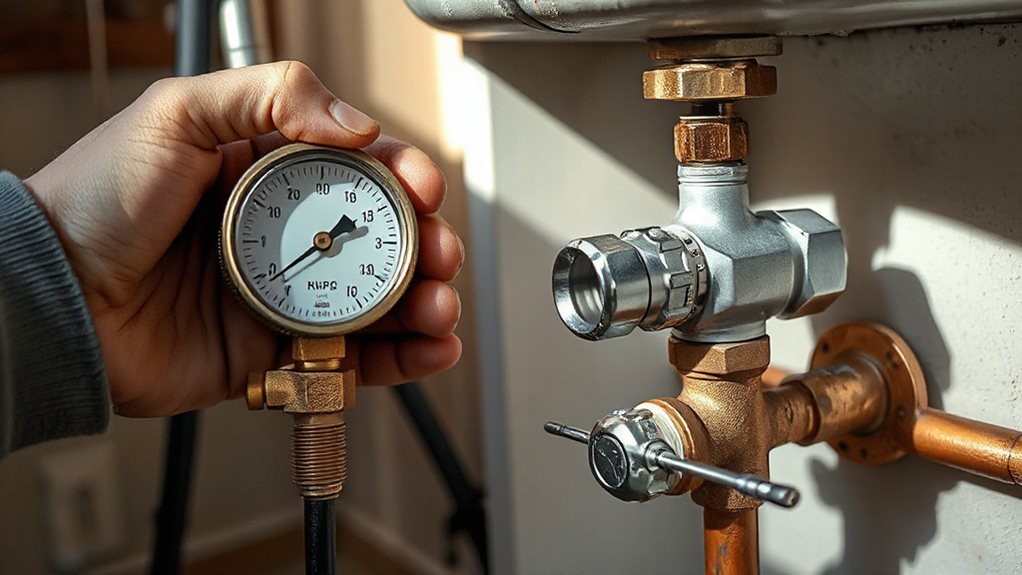
Ever wondered how to figure out why your shower feels more like a drizzle than a downpour? Grab a pressure gauge with female threads, slap it on the outdoor hose bib near your meter, tighten it, then open the faucet fully and watch the black needle settle—static pressure, while the red needle spikes for peaks. If it reads under 40 PSI, turn the PRV screw clockwise a notch, retest, and enjoy a stronger flow, like camping with a high‑pressure hose. Check the cistern refill time to spot low pressure. Also inspect nearby shutoff valves for signs of corrosion that can restrict flow and lower pressure.
Clean Shower Heads to Boost Shower Pressure
Usually, the first thing you notice when a shower head is clogged is that the water feels more like a light mist than a revitalizing cascade, and that’s because mineral deposits have turned the tiny nozzles into tiny roadblocks. Soak the head in vinegar for 30 minutes to overnight, scrub stubborn spots with a toothbrush, rinse with hot water, and you’ll restore a strong, even spray—perfect for serving guests and keeping the bathroom vibe lively. Many household fixtures benefit from regular maintenance and choosing energy-efficient LEDs for other home systems can reduce overall energy use.
Remove Flow Restrictors for Higher Shower Pressure
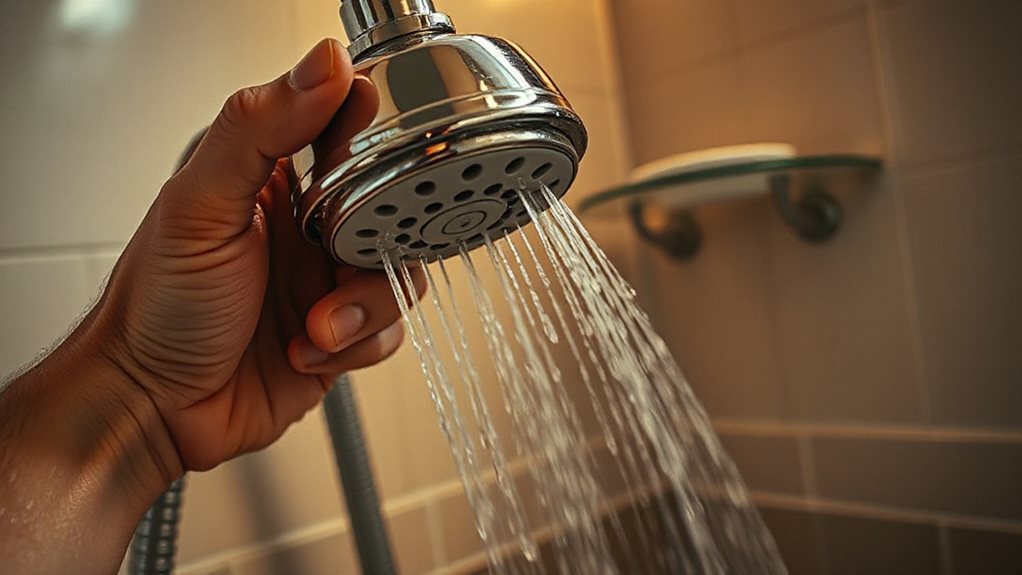
Ever wondered why your shower feels like a gentle drizzle instead of a roaring waterfall? You can enhance flow by pulling out the tiny plastic restrictor hidden near the head’s threads—just unscrew the head, grab a needle‑nose plier or paperclip, and gently twist the disk and its O‑ring away. After you re‑tape the threads and tighten everything, you’ll notice water surging like a campsite river, delivering hotter, stronger streams without extra pressure. Be aware that removing flow restrictors can increase wear on fixtures and may reduce their longevity.
Replace Kinked Shower Hoses or Upgrade to a High‑Pressure Shower Head
Why settle for a soggy shower when you can turn your bathroom into a mini‑river?
First, check for kinks—those twisted metal or plastic bends can slash pressure by half. Turn off water, unscrew the hose, replace it, then tighten with plumber’s tape.
If you still crave power, swap in a high‑pressure head like Speakman Hotel Anystream; you’ll feel the rush instantly.
Cold-hardy vegetables like Kale can tolerate freezing temperatures and become sweeter after cold exposure.
Install a Shower Booster Pump for Low Shower Pressure (Last‑Resort)
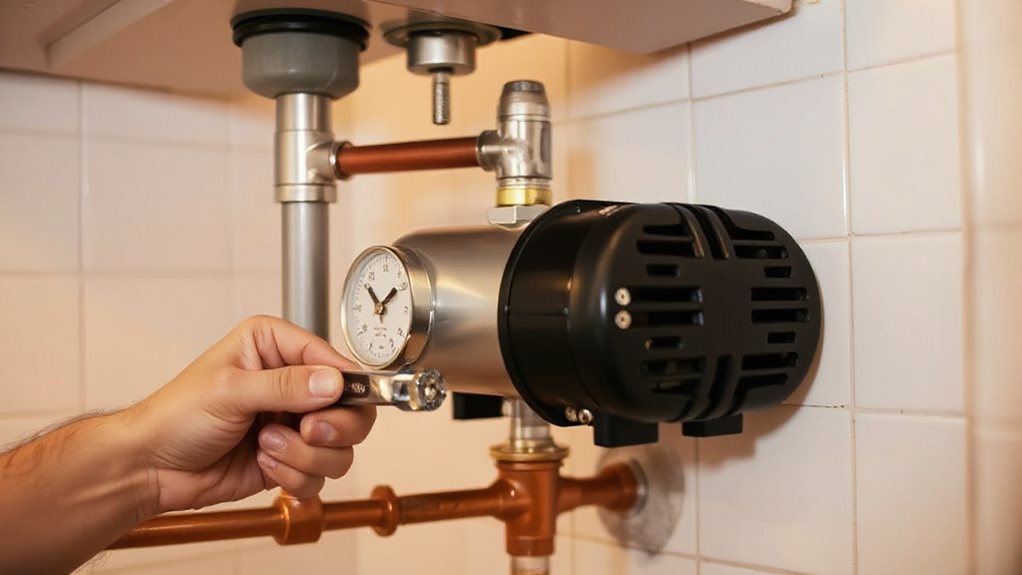
If you’ve already tried swapping hoses and heads and still feel like you’re showering under a drizzle, it’s time to bring in a shower enhancement pump—the ultimate “last‑resort” weapon for turning a weak stream into a torrent.
Shut the main, gather tools, measure pressure, pick a dry, ventilated spot, install a non‑return valve, connect with PTFE‑taped fittings, prime the pump, wire safely, then watch PSI climb from 40 to 60, delivering a glorious, camp‑ready cascade. Regular maintenance and checking for valve stem damage can prevent leaks and keep the pump working efficiently.
Overall
Now you’ve got the tools to turn a drippy shower into a powerhouse, so why not test each fix and feel the rush? Start with the easy steps—measure, clean, and strip out restrictors—then decide if a high‑pressure head or a booster pump is your next adventure. Remember, a stronger spray can make morning routines feel like a mini‑camping trip, and who doesn’t love a splash of excitement? Go ahead, tweak, rinse, and enjoy that invigorating flow!