Why Do Moths Gather Around Porch Lights?
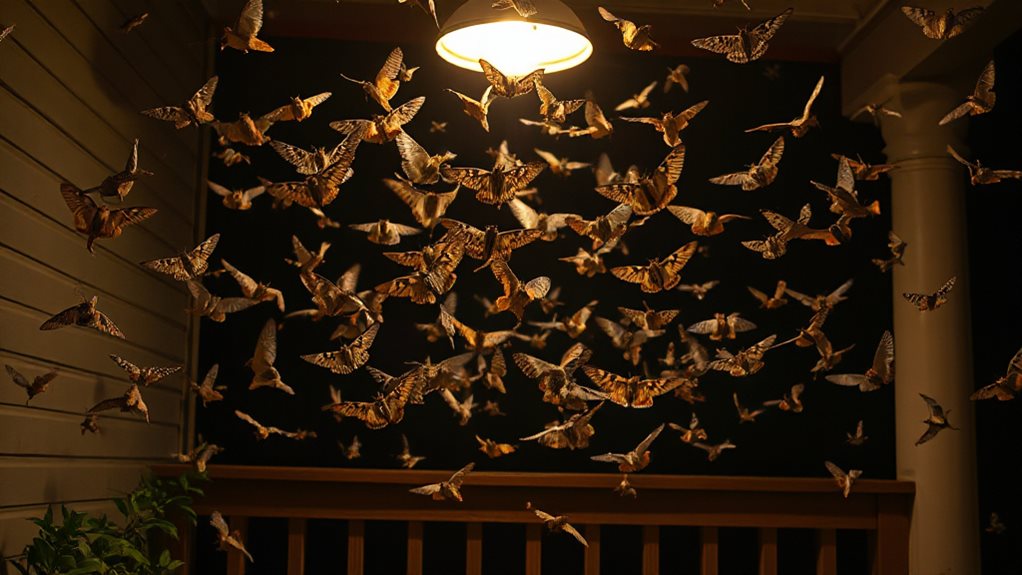
You see moths buzzing around porch lights because they think the bright glow is a night‑sky landmark, a trick they use to keep a steady angle to the moon and stars, but the artificial glare drowns out those celestial cues and even mimics UV‑rich food and mate signals, so they end up spiraling toward it, wasting wingbeat energy and getting confused. Their magnetic compass gets overloaded, too, making the light a false north. If you keep reading, you’ll determine how to outsmart this glowing trap.
TLDR
- Moths mistake bright porch lights for distant celestial cues used for navigation.
- UV and blue wavelengths in many bulbs strongly attract moths’ photoreceptors.
- Artificial lights overwhelm natural sky cues, causing moths to spiral and hover around them.
- The light’s glare creates a constant re‑orientation signal, leading moths to circle rather than fly away.
- This behavior drains energy, reduces feeding/mating time, and increases mortality risk.
Why Moths Fly Into Lights – The Short Answer
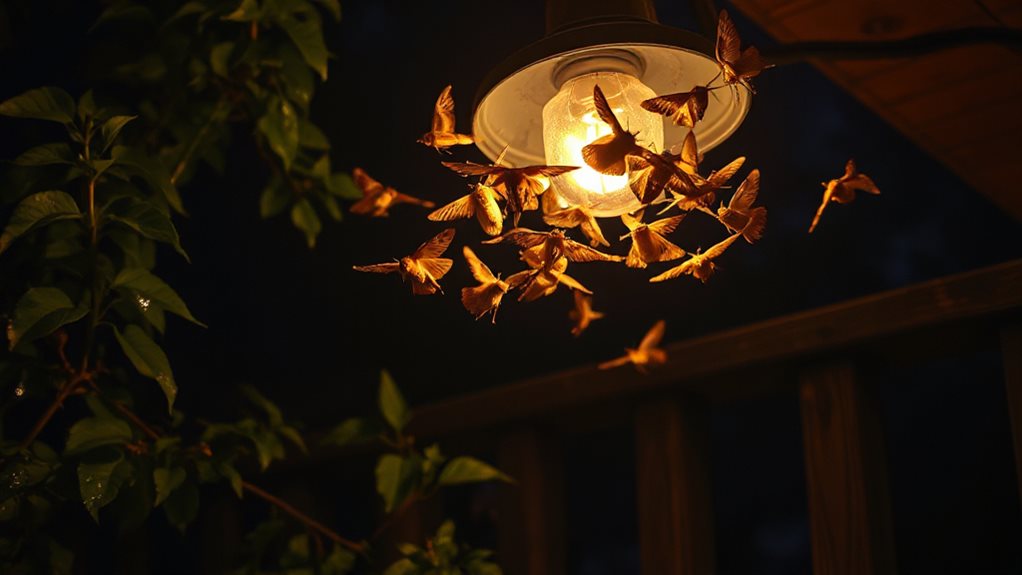
A moth’s love affair with a porch light is basically a case of mistaken navigation, and it’s way more fascinating than you might think—imagine you’re out camping, trying to follow the moon’s steady glow to keep your bearings, but suddenly a bright flashlight pops up right in front of you and throws your sense of direction into a spin. You’ll see moths tilt their backs, chase non‑parallel rays, spiral inward, and get trapped because artificial lights mimic distant moons, confusing their dorsal orientation and UV‑sensitive eyes, turning a simple night walk into a bewildering, looping dance. This attraction is especially strong when the light emits ultraviolet wavelengths. Native shrubs with late-season blooms can also attract night-flying insects like moths, providing multi-season interest in the landscape.
How Moths Navigate Using Moon & Stars
Ever wondered why a moth seems to know exactly where to go when you’re camping under a star‑filled sky? You’ll love how they read the Milky Way like a map, using specialized brain cells that fire when they face south, and they even back‑up with Earth’s magnetic field. Males spot the moon’s position, adjust elevation, and zip toward mates faster—nature’s GPS, right there in the night! Painting a concrete patio offers more color variety and can hide imperfections, making it a popular choice for updating outdoor spaces with weather-rated paint.
How Artificial Light Overwrites Moth Navigation Cues
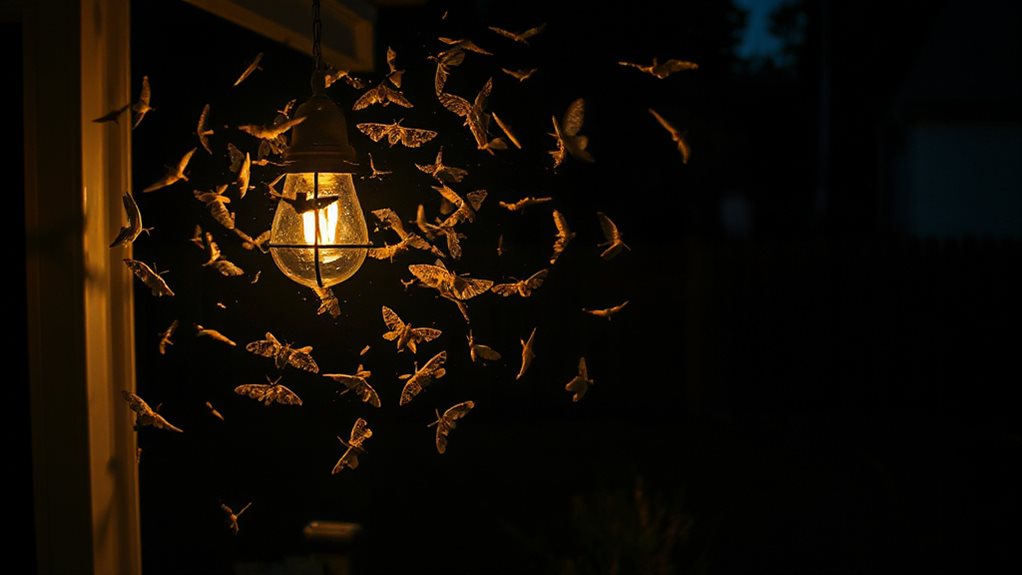
So, what happens when a bright streetlamp replaces the moon in your night‑time expedition? You’ll notice moths scrambling because the lamp’s glare drowns out celestial cues, forcing their visual‑magnetic compass into conflict; their flight paths twist, tortuous, and they wobble, trying to reconcile sky‑ward expectations with ground‑level glare, turning a simple stroll into a bewildering aerial maze. This disruption resembles how improper timing can derail natural navigation rhythms and lead to chaotic outcomes.
Why Moths Back‑Tilt Toward Light
Ever wonder why a moth seems to turn its back on a porch light instead of flying straight toward it? You’ll notice it tilts dorsally, a reflex that once helped it keep a steady angle to distant moons, but now the bright point‑source forces constant re‑orientation, creating looping, fluttery orbits.
This ancient navigation hack, evolved for far‑away stars, becomes a trap under artificial illumination. In small gardens, features like nearby UV‑protected lights or bright tumblers can increase nighttime illumination and attract even more moths.
How Light Messes With a Moth’s Magnetic Compass
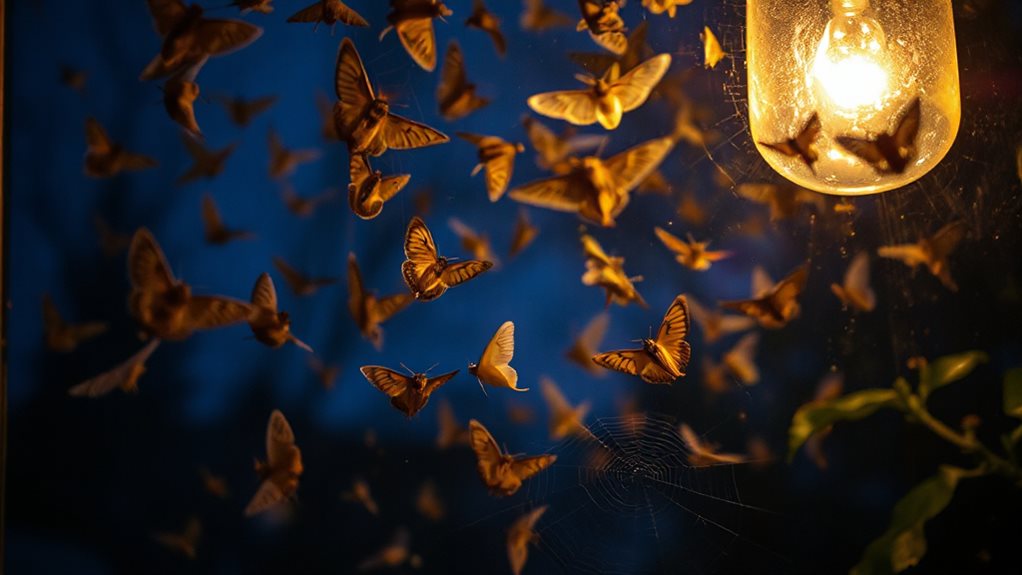
You’ve probably noticed that moths don’t just wobble around a porch light because they’re attracted to it; the bright glow also throws off the tiny magnetic compass hidden in their bodies, the same one they use to keep a straight line under a starry sky. Artificial lighting overwhelms magnetite‑based sensing, scrambles cryptochrome signals, and forces moths to chase light instead of trusting geomagnetic cues, leaving them disoriented and wandering. Many garden plants, like night‑blooming flowers and native spring shrubs, rely on moths and other nocturnal pollinators, so lighting that disrupts their navigation can reduce pollination in nearby landscapes.
Why Evolutionary Instincts Misread Modern Lights
You’ve probably noticed that a moth’s ancient “follow‑the‑moon” trick ends up as a comedy of errors when it bumps into a porch light, because its brain still thinks the bright bulb is a distant celestial cue and tries to keep the same fixed angle it once used for the moon. Does this mean its magnetic navigation system gets overloaded, mixing up the false light with the real magnetic field it relies on for long‑distance travel?
Next time you set up a campfire or a tent lamp, remember that those little flyers are basically trying to navigate a night‑sky GPS that suddenly got a neon sign in its path—so maybe keep the lights dim and let the moths enjoy their own version of stargazing.
Celestial Cue Misinterpretation
So, why do moths get so confused by our porch lights when they’re just trying to follow the moon? You see, their ancient compass locks onto distant, parallel celestial rays, so a point source feels like a sky‑ward beacon they must chase, causing spirals and orbiting. When you set up a campfire or lantern, remember they’re misreading that bright cue as a friendly guide, not a trap.
Magnetic Navigation Overload
Ever wonder why a moth’s tiny compass goes haywire when you crank up a porch light at your campsite?
Your bright bulb sends radial rays that clash with the moth’s ancient fixed‑angle navigation, so its magnetic sense overloads, spiraling it inward like a confused traveler.
You can help by dimming lights, letting natural moonbeams guide both insects and campers safely.
How Light Mimics Food and Mating Signals
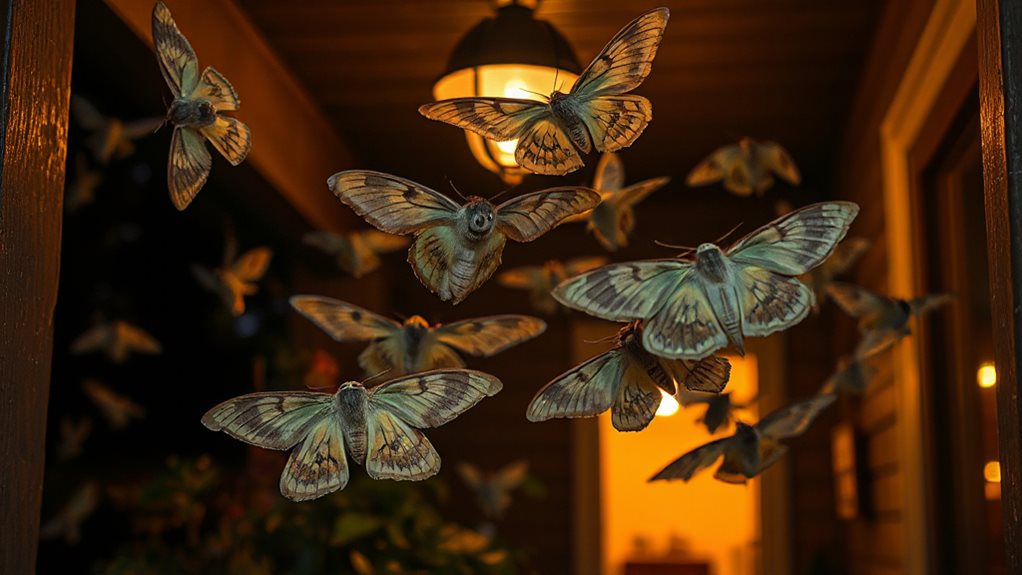
What if I told you that a simple porch light can feel like a glowing buffet and a love‑letter rolled into one for moths? You’ll see them treat UV‑rich glows as flower guides, chasing imagined nectar, while males mistake the same spectra for pheromone flashes, so the light becomes both a dinner invitation and a romantic signal, pulling them in like camp‑fire curiosity.
Which Moth Species Are Most Attracted to Porch Lights
Ever wondered which moths turn your porch into a midnight dance floor? You’ll see ultraviolet‑loving species flocking to any UV‑rich lamp, especially blue‑white LEDs that act like glittery beacons, while mercury vapor bulbs pull a wild mix of moths, the “king” of attractors.
Oleander hawkmoths, however, barely bother—they fly straight over lights without spiraling, resisting most artificial glows.
How Spiraling Drains Energy & Increases Mortality
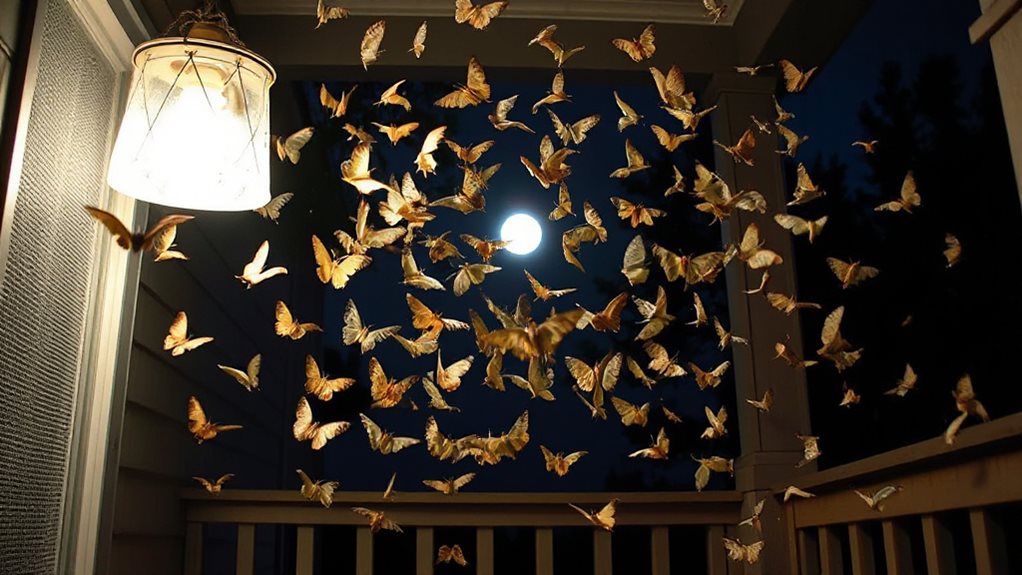
You’ve already seen how moths zip around porch lights like tiny, glitter‑covered dancers, but those spirals aren’t just a pretty show—they’re a full‑on energy drain that can spell trouble for the insects.
Their wingbeats crank up to cubed frequencies, so inertial power spikes, elastic storage can’t keep pace, and fatigue piles on, making exhaustion and death far more likely.
Simple Home Changes to Reduce Moth Deaths
You can start by swapping your regular bulbs for yellow‑light ones, which are like a moth‑friendly nightlight that keeps those little pollinators safe while you binge‑watch your favorite series; have you ever noticed how a warm amber glow feels cozier than a harsh white glare?
Next, seal any gaps around fixtures with caulk or foam—think of it as plugging the tiny “doorways” that let unwanted light escape, just like you’d block a leaky tent when you’re camping under the stars.
Finally, install motion‑sensor lighting so the lights only pop on when you need them, turning your house into a smart, moth‑savvy sanctuary that still lets you wander outside at night without scaring the critters away.
Install Yellow‑Light Bulbs
Why not swap your porch lamp for a yellow‑light bulb and watch the moths disappear like magic?
You’ll notice fewer flutterers because yellow LEDs filter out blue and UV, the wavelengths moths love, and they stay cool, so they’re less tempting. It’s a simple screw‑in change, cheap, and keeps your patio bright enough for friends while protecting delicate insects.
Seal Gaps Around Fixtures
A quick look around your porch light and you’ll spot tiny cracks, missing caulk, or even a loose screen that’s practically shouting “welcome” to moths, so sealing those gaps is like giving the bugs a polite “no‑entry” sign while you keep the area cozy for friends. Check each fixture, brush out cobwebs, then apply silicone caulk or foam—small gaps get Gaps & Cracks, larger voids need spray foam and flash; you’ll block moth highways, protect neighbors, and feel like a campsite‑hero keeping nature safe.
Use Motion‑Sensor Lighting
Ever wondered why a porch lit all night feels like a moth‑magnet carnival? Switch to motion‑sensor lighting and you’ll only glow when someone walks by, cutting down the endless glow that lures moths, mosquitoes, and even spiders. Install sensors 6‑8 feet high, point them away from wind, set short timers, and enjoy lower bills, safer nights, and happier nocturnal insects—all while feeling like a camp‑fire hero protecting the backyard.
Overall
You’ve seen how moths mistake porch lights for moonlight, how they tilt back, spiral, and waste energy, and how even their magnetic compass gets confused—so next time you’re camping under a starry sky, remember that a simple LED or a shielded fixture can keep those delicate flyers safe. Try turning lights off at night, using yellow bulbs, or adding a little screen; you’ll still enjoy the glow without turning your backyard into a moth‑motel. Happy stargazing!