Do Snakes Know Their Owners? Myth or Reality
You’ll be thrilled to learn that snakes don’t “love” you like a dog, but they absolutely recognize your scent and handling style—think of a rattlesnake sniffing camp‑fire smoke to know you’re nearby, and a corn snake calming when it smells your familiar perfume and feels your gentle grip. Your regular, relaxed visits create a chemical map in their Jacobson’s organ, cutting down tongue‑flicks and defensive coils, while a stranger’s odor spikes stress and coiling. If you keep the vibe chill and the scent consistent, the snake will stay curious, not scared, and you’ll uncover even more tricks to build that trust.
TLDR
- Snakes recognize familiar humans primarily through scent, not visual cues.
- Regular, gentle handling creates habituation, reducing defensive behaviors and increasing calm exploration.
- A keeper’s scent memory can last weeks to a few months, especially with consistent exposure.
- Stranger scents trigger increased tongue‑flicks, coiling, or refusal to eat, indicating stress.
- Recognition does not imply affection; it reflects learned familiarity and reduced perceived threat.
Snake Detection of Human Scent
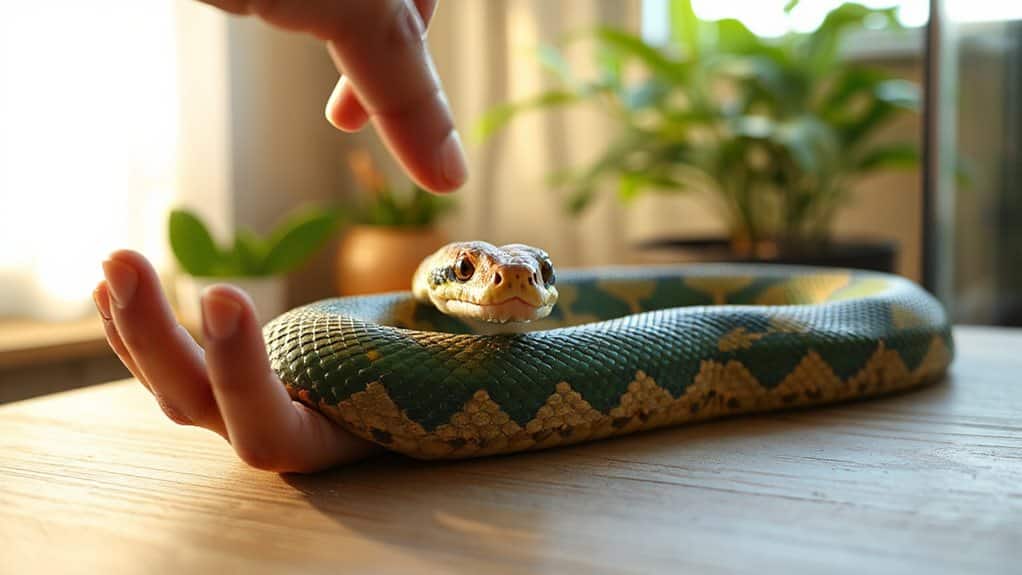
Ever wonder how a snake can sniff you out even before you see it slither past?
You’ll love that its forked tongue scoops scent particles, then sends them to the Jacobson’s organ, which builds a chemical map of you—your sweat, skin oils, even your camp‑fire smoke.
That map lets the snake tell you apart from a rabbit, a squirrel, or a passing hiker, so you’re never truly invisible. Snakes rely on scent rather than vision for recognition. They can also detect and respond to human scent trails left on vegetation and ground surfaces.
How Familiar Caregivers Influence Snake Recognition
You’ll notice that when you stick to a regular handling schedule, your snake starts to recognize your scent and the way you move, so it’s less likely to coil up in defense and more likely to chill out like it’s on a lazy camping trip.
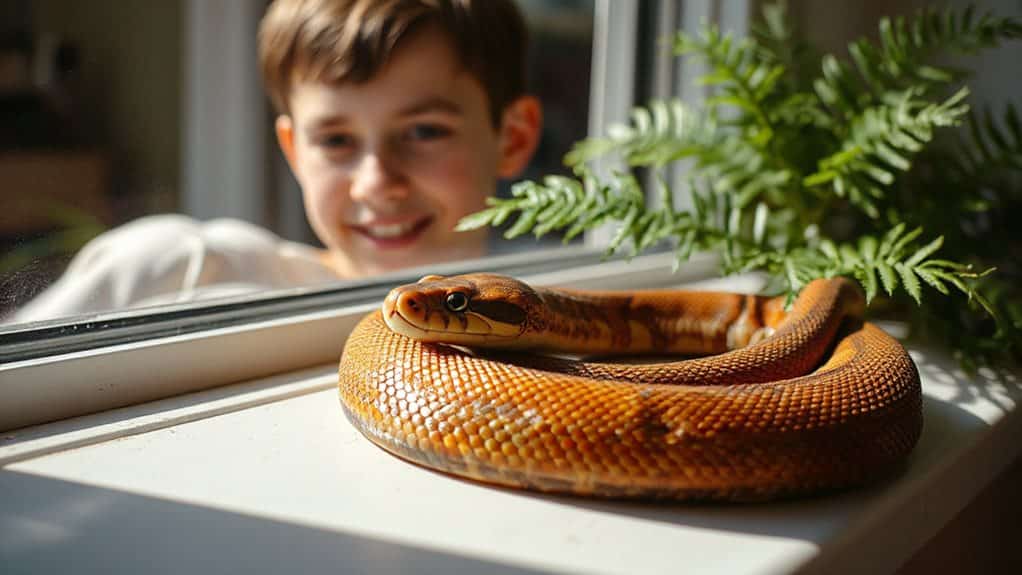
Have you ever watched a corn snake lift its head and inspect slowly as you approach, then snap back into a defensive posture the moment a stranger walks in?
Keep the routine steady, stay gentle, and you’ll see the reptile’s tolerance grow, turning those once‑tense moments into a relaxed, almost buddy‑like hangout.
Regular, gentle interaction also reduces stress and helps prevent issues like environmental stress that can negatively affect behavior and health.
Scent‑Based Familiarity
Imagine you’re setting up a campfire under a star‑filled sky, and your trusty snake—let’s call it Slither—just slithers over to you, not because it recognizes your face, but because it smells the familiar scent of your hiking boots, the soap you use, and the faint hint of pine that clings to your jacket.
You’ll notice Slither’s tongue flicks calm, body relaxed, and stress fading whenever your scent lingers, because studies show snakes like corn and garter types rely on chemical cues, not faces, to gauge safety and feeding, turning scent into a comforting signal.
Routine‑Driven Tolerance
When you stick to a regular feeding schedule, your snake starts acting like it’s got a pocket watch—cruising the tank, flicking its tongue, and even getting a little more excited as the clock ticks toward your arrival, because it’s learned that your presence means dinner, not danger.
You’ll notice it calms down during routine checks, tolerates handling better, and even greets you with extra flicks, showing that consistent caregiver habits, not personal identity, drive its friendly vibe.
Recognizing vs. Stress Behaviors in Snake Recognition
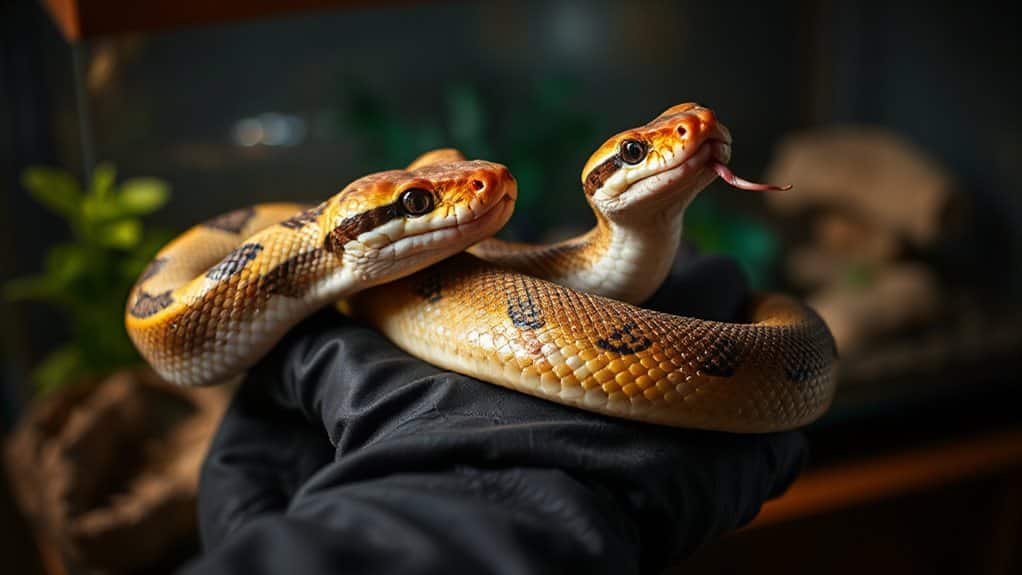
The truth is a mix of scent‑based recognition and stress cues: a snake that’s been handled by the same person for weeks will usually flick its tongue less, stay more relaxed, and probe the enclosure without darting to hide, whereas the same species confronted with a stranger’s scent will ramp up tongue flicks, coil, or even refuse food.
Recognizing these patterns lets you tell if your reptile friend feels safe or is on edge, helping you keep the habitat calm and the journey fun. A careful keeper should also document everything about changes in behavior to protect both the snake and themselves.
How Long Snakes Remember a Person’s Scent for Recognition?
Most of the time, a snake’s memory of a person’s scent sticks around long enough to make a real difference in its daily vibe—think weeks, sometimes even a few months, as long as you keep showing up with the same earthy perfume of your hands and the same gentle handling routine.
You’ll notice calmer, exploratory behavior after repeated sessions, especially if you handle twice weekly, because the snake links that scent to safety and food, not emotions.
Sealing up basement entry points and maintaining a clean, clutter-free environment can also reduce stress for captive snakes by minimizing unexpected encounters with pests or other disturbances.
Debunking Myths About Snake‑Owner Recognition
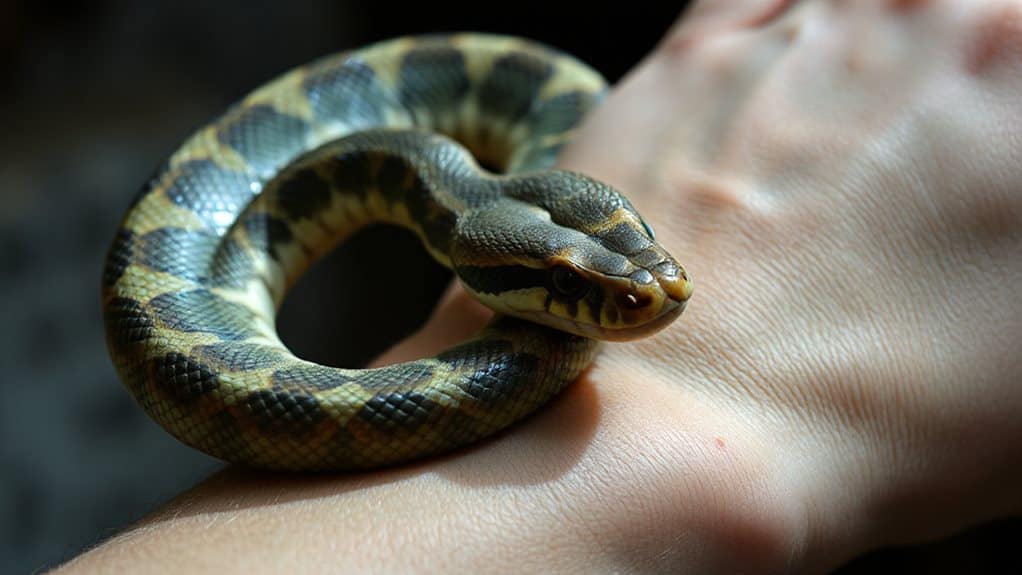
Snake‑owner recognition myths get tossed around like campfire stories, but let’s set the record straight before they turn into wild legends. You’ll learn that snakes don’t wag tails or lick hands; they simply stay calm when you’re familiar, thanks to scent and habituation, not love.
Different species vary—corn snakes sniff you, others don’t—so don’t expect universal affection, just consistent, gentle care. Snakes are also influenced by their environment and will avoid areas with strong odors from repellent plants or essential oils.
Building Trust: Improving Snake Recognition Without Expecting Love
You’ll notice that a consistent scent‑conditioning routine, like the “shirt trick,” makes your snake start to recognize you long before any cuddly moments, and you can keep the vibe upbeat by sticking to a regular handling schedule that feels as familiar as a campsite routine;
have you ever tried pairing a favorite hoodie with a gentle, timed session to see how quickly the reptile’s curiosity spikes?
Try setting a simple calendar, keep the sessions short and sweet, and watch the snake’s confidence grow—just like packing the right gear for a weekend trek, the right scent and timing turn a nervous reptile into a curious *adventurer*.
Consistent Scent Conditioning
When you slip a worn‑in t‑shirt or a pair of old socks into your snake’s terrarium, you’re basically handing the reptile a scented “welcome mat” that says, “Hey, I’m not a threat, just a friendly human,” and the science backs it up: snakes use their Jacobson’s organ to sniff out chemical cues, and they’ve been shown to flick their tongues longer at familiar odors, calming down and dropping defensive postures.
Consistently leaving that scent, pairing it with feeding, and avoiding new soaps builds trust, so your snake relaxes, *investigates*, and even greets you with a slower, calmer flick, proving scent conditioning works.
Routine Handling Schedule
If you set a regular handling schedule, your snake will start treating your visits like a favorite camp‑out routine rather than a surprise ambush, and that consistency is the secret sauce for building trust without expecting any cuddles.
Keep sessions short—ten to fifteen minutes—using slow, smooth moves, feed at the same time daily, and watch defensive strikes fade as your reptile learns you’re a reliable guide, not a predator.
Stress Signals When a New Handler Approaches
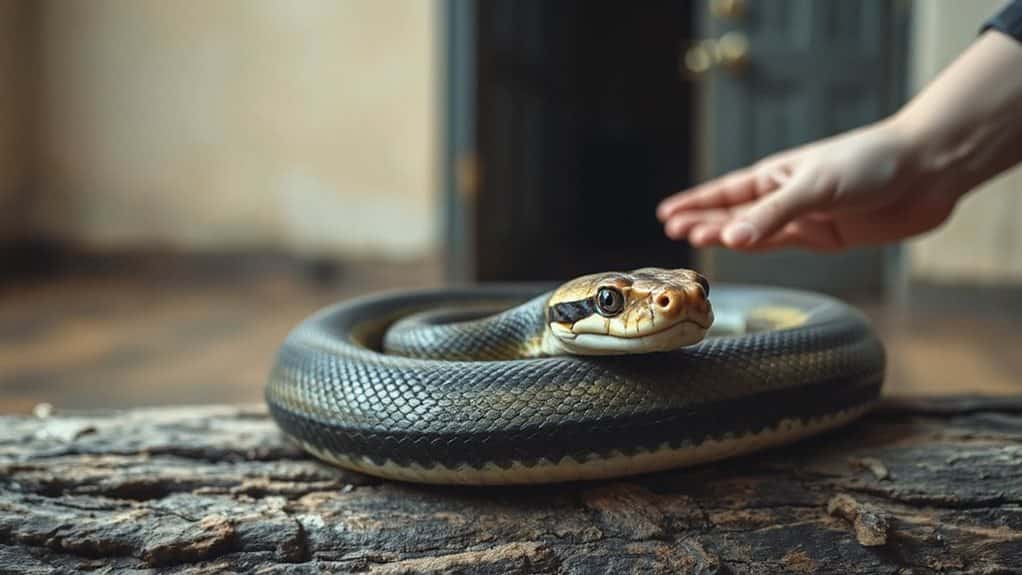
Even if you’ve never held a slithering buddy before, you’ll notice the moment a new handler steps close that the snake’s body language flips from chill to “ready‑to‑run.”
You can spot the early mild stress signs in a flash: the reptile darts faster, its tongue‑flicks drop, and those muscles tighten like a spring, gripping the handler’s wrist with a grip that says “don’t touch me.”
It’s easy to mistake that frantic movement for curiosity, but the reality is the snake’s trying to escape, not investigate—think of it as a tiny, scaly version of a startled squirrel.
And Finally
So, you’ve learned that snakes can sniff out a familiar scent, but they don’t exactly “love” you like a dog—think of it as a cautious nod rather than a wagging tail. Next time you handle a snake, remember calm calm, consistent scent cues help them feel safe, and they’ll chill out instead of hissing. Keep the vibes relaxed, respect their space, and you’ll both enjoy the outing—no need for dramatic love stories, just a solid, sniff‑approved partnership.