Best Time of Day to Water Your Lawn in Summer
Water your lawn between 5 AM and 9 AM—yeah, that early‑morning window when the air’s cool, winds are calm, and evaporation barely starts, so each drop soaks deep, fuels roots, and avoids the soggy, fungus‑prone evenings that waste water and money; the cooler temps let nutrients reach the soil before the sun hits, and you’ll see healthier grass without crazy water bills, plus you’ll dodge the afternoon heat that can evaporate up to 30 % of what you spray—if you keep an eye on soil moisture and adjust for rain, you’ll nail the perfect balance and learn even more tricks.
TLDR
- Water early between 5 AM‑9 AM when air is cool and winds are calm to minimize evaporation and spray drift.
- Early watering lets nutrients reach roots before peak heat, promoting deeper root growth up to 6 inches.
- Aim for a total weekly water supply of 1‑1.5 inches, using half‑inch sessions or two half‑inch sessions per day.
- Check soil moisture at 6‑8 inches depth with a finger test or meter; skip watering if the soil is still damp.
- In heat waves, split irrigation into two short sessions 30 minutes apart and adjust based on cumulative rainfall.
Morning Watering Benefits in Summer Heat

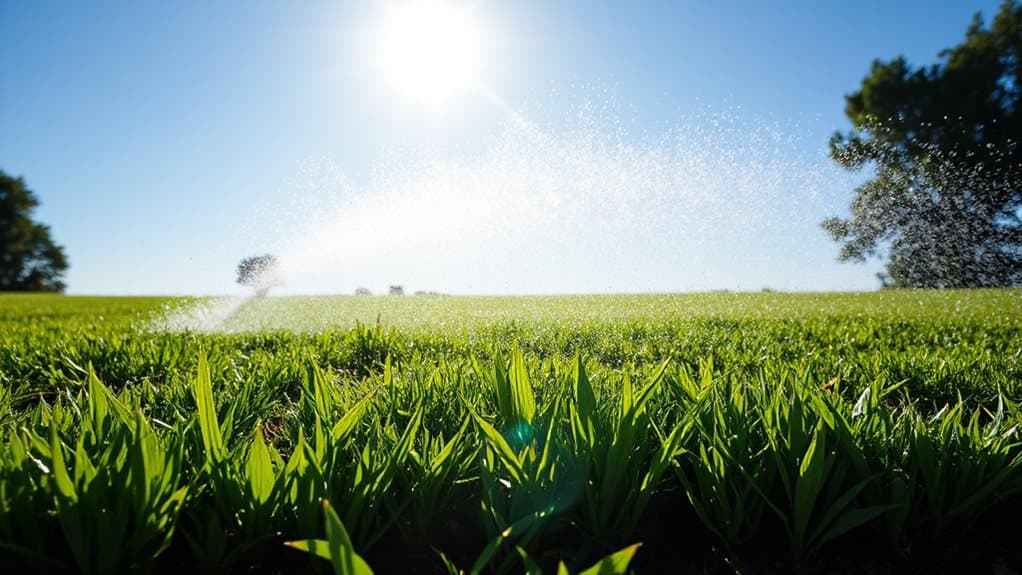
Ever wondered why sprinklers seem to work magic when you fire them up at sunrise? You’ll notice cooler air cuts evaporation, so water sinks deep instead of vaporizing, giving roots a 3‑4‑inch enhancement and keeping turf greener—plus minimal wind means every drop lands where you want it, and the quick dry‑out stops fungal parties, letting you serve a healthier lawn all summer. Aim for 1 to 1.5 inches of water per week from irrigation and rainfall combined. Morning watering also helps prevent mold and mildew by allowing foliage to dry quickly.
Why 5 AM – 9 AM Is the Sweet Spot for Watering
You’ll notice that watering from 5 AM to 9 AM lets the cooler air keep evaporation low, so every drop actually soaks into the soil instead of vanishing into the heat. Isn’t it great how the early‑morning calm winds stop the spray from drifting away, letting nutrients reach the roots before the sun kicks in?
Give it a try and watch your lawn thrive—just like a well‑planned campsite where everything’s set up before the day’s journey begins. Early inspection of outdoor plumbing can prevent hidden leaks from wasting water and undermining your watering efforts.
Cooler Air Reduces Evaporation
Ever wonder why the early morning feels like the perfect time to water your lawn? Cooler air between 5 AM and 9 AM slows evaporation, so droplets sink into soil before the sun heats up, and calm breezes keep water from blowing away.
You’ll see roots drink more, grass stay greener, and you’ll waste less—just like packing snacks for a sunrise hike.
Nutrients Reach Soil Early
Why not think of your lawn as a backpack waiting for sunrise supplies? You water at 5 AM‑9 AM, and nutrients sprint into the soil while roots are wide‑awake, soaking six‑inch depths before the sun blazes. Imagine a camper filling a water bottle early, then hiking—your grass drinks, grows deeper, resists drought, and stays disease‑free, all because you timed the trek right.
Calmer Winds Prevent Drift
Ever wonder why the early‑morning breeze feels like a gentle camp‑fire whisper instead of a gusty tornado? You’ll love that at 5‑9 AM wind calms, so droplets stay on target, not drifting onto sidewalks.
Cooler air slows evaporation, letting roots soak up water before heat spikes.
Strong pressure then shoots evenly, so you can water efficiently and protect neighbors’ yards—no wasted spray, just happy, hydrated grass.
How Early Hours Cut Evaporation & Boost Nutrients
Ever wonder why watering your lawn at sunrise feels like giving it a secret super‑boost? You’ll see evaporation drop because temperatures are low, humidity high, and the wind’s calm, so water stays put—up to 30% less loss.
Roots drink nutrients eagerly when the sun’s just waking, boosting growth 15‑25%.
Schedule 5‑9 AM, and you’ll save water while feeding the grass like a camp‑fire feast.
Afternoon Watering Drawbacks

Ever notice how watering your lawn at noon feels like tossing a glass of water onto a sizzling skillet? You’ll see up to 30 % evaporating before it even reaches roots, leaving the grass thirsty while your bill spikes; the heat vaporizes water, prevents deep soil soak, and stresses turf, so you waste time, money, and risk runoff that harms nearby streams, making afternoon watering a real flop. Regular core aeration and proper fertilization improve soil health and help turf better resist issues like low soil nitrogen.
How Much Water Should I Apply to My Summer Lawn?
So, how much water does your summer lawn actually need to stay happy and green? You should aim for about one inch weekly, which you can deliver in a single deep soak or split into two half‑inch sessions, depending on your grass type.
Warm‑season varieties usually get away with one or two waterings, while cool‑season may need three, so adjust for rain, soil, and sun. Test runoff, avoid puddles, and keep roots thriving. A proper drainage system under nearby structures can help prevent excess water pooling and protect foundations, so consider improving drainage and ventilation where runoff collects.
Weekly Summer Lawn Watering Schedule to Match Heat

You’ll notice that watering early in the morning lets the grass soak up every drop before the sun turns up the heat, so you get a lush lawn and save water—have you tried the 6 AM window?
When a heat wave hits, split the irrigation into two short sessions 30 minutes apart and add a third day, which cuts runoff and keeps roots happy, kind of like setting up a campfire in two quick rounds instead of one long burn.
And remember, skip the evening waterings; the damp night air can invite fungal “camp‑bugs,” so let the grass dry out under the stars like a well‑packed tent ready for tomorrow’s journey.
Peat moss can help retain moisture around seedlings when overseeding, so consider a light peat moss topdressing to keep seeds consistently damp during germination.
Morning Watering Benefits
Ever wonder why the best time to water your lawn is early in the morning? You’ll love how the cool air before 9 AM lets water soak deep, up to six inches, giving roots a drink before the heat hits. Morning breezes keep droplets where they belong, and the day‑long drying slashes fungus and pests, so your grass stays healthy and you feel like a garden hero.
Midday Heat Adjustments
Wondering how to keep your lawn cool when the sun’s blazing like a campfire at noon? You can set a timer for a quick 5‑minute sprinkler burst between 11 a.m. and 1 p.m., which drops soil temperature and eases stress without over‑watering.
In 90°F+ heat, aim for half‑inch every two days, checking cans to fine‑tune runtime, and keep the schedule tight to protect thirsty grass.
Evening Drying Strategies
Evening watering might sound tempting, but it’s basically inviting a fungal party to your lawn, and nobody wants that.
Instead, schedule your sprinklers for 4‑6 p.m., letting blades dry before darkness, and use a cycle‑soak method on clay: 13 minutes on, 30 minutes off.
This timing cuts disease risk, keeps pests away, and still gives your lawn the moisture it craves.
Measuring ½‑Inch Summer Lawn Watering Sessions

A good way to know if you’re giving your lawn the right amount of water in the summer is to measure a half‑inch of rainfall with simple containers—think milk cartons, soup cans, or even a tuna can because its depth is roughly an inch, and set them at least four feet away from the sprinkler heads so you’re not just catching the spray. Place a few cans in a grid, run sprinklers 15 minutes, then check the water depth; average the readings, double the time for a full inch, and adjust your schedule so each zone gets exactly that half‑inch, ensuring uniform hydration for everyone’s enjoyment.
Checking Soil Moisture for Summer Lawn Watering
Ever wondered how to tell if your lawn’s thirst is just a rumor or a real emergency? You can squeeze a handful of soil 6‑8 inches deep; if it crumbles, water 0‑1 inch now, but if it sticks together, wait.
A meter reads 5 on a 1‑10 scale, so check ten spots, wipe the probe, and trust the numbers before you water.
Spotting Under‑ and Over‑watering in Your Summer Lawn
How can you tell if your lawn’s getting too much love or not enough? Look for wilted, droopy blades, brown patches, or hard, compacted soil—those scream under‑watering, while soggy spots, yellow mush, and fungal patches signal over‑watering; check soil depth with a probe, notice shallow roots, and remember that a uniform green carpet means you’ve nailed the balance, so adjust watering schedule accordingly.
Adjusting Summer Lawn Watering After Rain or Drought Alerts
You’ll want to check the soil moisture first—feel the ground with your fingers or a simple stick, and if it’s still damp from yesterday’s rain you can skip a day or two, saving water and time.
Then, adjust your watering frequency based on the total rainfall you’ve logged this week; a quick rain‑gauge or even a tuna‑can test will tell you whether you’ve hit that 1‑inch target or need a few extra minutes.
Finally, keep a running tally of every inch of rain and irrigation, because when a drought alert hits you’ll cut back to half the usual schedule, but you’ll know exactly when to crank it up again if the grass looks thirsty.
Assess Soil Moisture
So, when the sky finally lets up after a summer thunderstorm or you get that dreaded drought alert, you’ve got to check whether your lawn actually needs more water or can take a breather—otherwise you’ll end up over‑watering like you’re trying to fill a kiddie pool or under‑watering and watching the grass turn into a desert. Try the finger test, stick probe, or a cheap meter; probe a few spots, compare dry versus clinging soil, and aim for a “5” on the meter. This quick check saves water, keeps neighbors happy, and lets you brag about your lawn‑care savvy.
Modify Frequency Accordingly
Ever wondered why your lawn sometimes looks like a thirsty desert after a heat wave but suddenly turns soggy after a sudden storm?
When rain hits 0.5 inches, skip a session, and after a drought, enhance to daily short cycles until color returns.
Use a hand probe at 4-5 inches, keep sessions brief, and adjust for soil type—sandy needs more frequent, loamy less.
Track Cumulative Rainfall
After you’ve tweaked how often you water based on the heat, the next step is to keep an eye on the rain that actually lands on your yard, because a sudden downpour can completely flip your watering schedule.
Track cumulative inches with a simple log; if you hit ½‑inch three times a week, pause sprinklers for two days.
Notice puddles, not just wet blades, and remember heavy rain can wash away nutrients, so adjust fertilizing accordingly.
Watering Checklist for a Drought‑Resistant Summer Lawn
Ever wonder how to keep your lawn thriving when the summer heat feels like a desert trek? Check your timer for 4‑8 AM watering, set ½‑¾ inch per session, skip if rain hits ½ inch, adjust for sandy or clay soil, water 2‑3 days weekly, raise mower height, and use a tuna‑can test—your lawn will thank you, and you’ll feel like a campsite‑ready hero.
Overall
So, you’ve got the perfect watering window locked down—early morning, when the sun’s still yawning and the air’s cool enough to let every drop sink in. Skip the scorching afternoon, because who wants a soggy lawn that evaporates faster than your ice cream? Keep an eye on soil moisture, adjust after rain, and you’ll see a lush, drought‑tough yard that practically thanks you. Happy watering, and enjoy the green vibes!