Why Are My Cucumber Leaves Turning White?
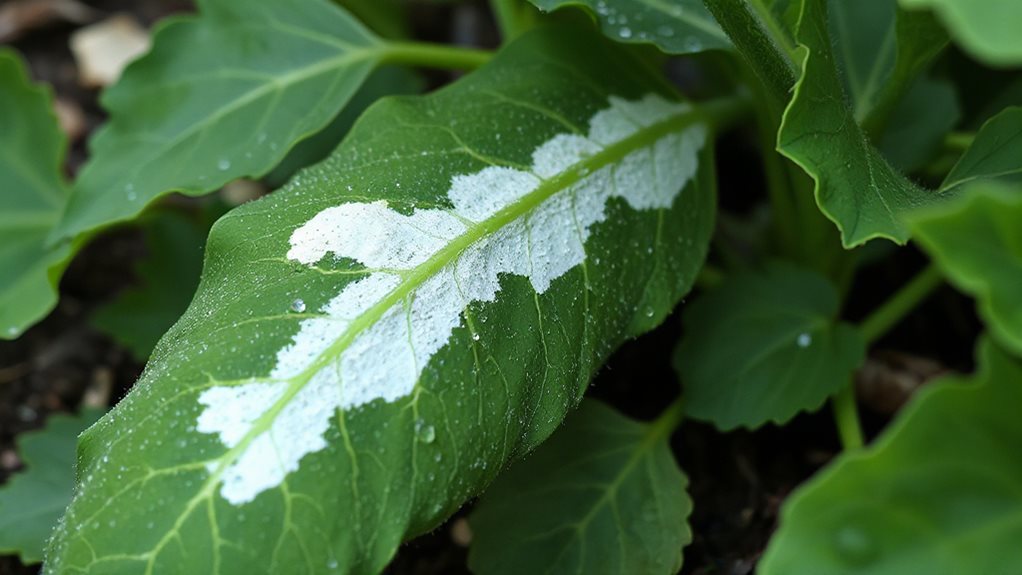
You’re probably seeing powdery mildew, that fluffy white dust that loves cucumber leaves, especially on the undersides, because the fungus thrives when it’s warm, humid, and crowded—think of a campsite after a rainstorm where everyone’s huddled together. Over‑fertilizing with nitrogen makes the foliage thick and sugar‑rich, giving the spores a perfect buffet, while splashing water from heavy rain or careless watering spreads them like confetti. Try spacing plants, using slow‑release feed, and watering at the base, and you’ll see the white patches fade fast—keep going and you’ll uncover even more tricks.
TLDR
- Powdery mildew, caused by *Podosphaera xanthii*, appears as white, powdery spots on cucumber leaf undersides and spreads upward.
- Dense planting and poor airflow create humid microclimates that favor fungal growth and rapid spread.
- Over‑fertilization with high nitrogen produces lush, humid foliage that traps moisture and attracts the fungus.
- Water splashing onto leaf undersides during heavy rain or overhead watering can transport spores, increasing infection risk.
- Distinguish from spider mites or viruses by checking for moving dots, webbing, or leaf curling; treat powdery mildew with fungicidal sprays or improved airflow.
Identify Powdery Mildew on Cucumber Leaves
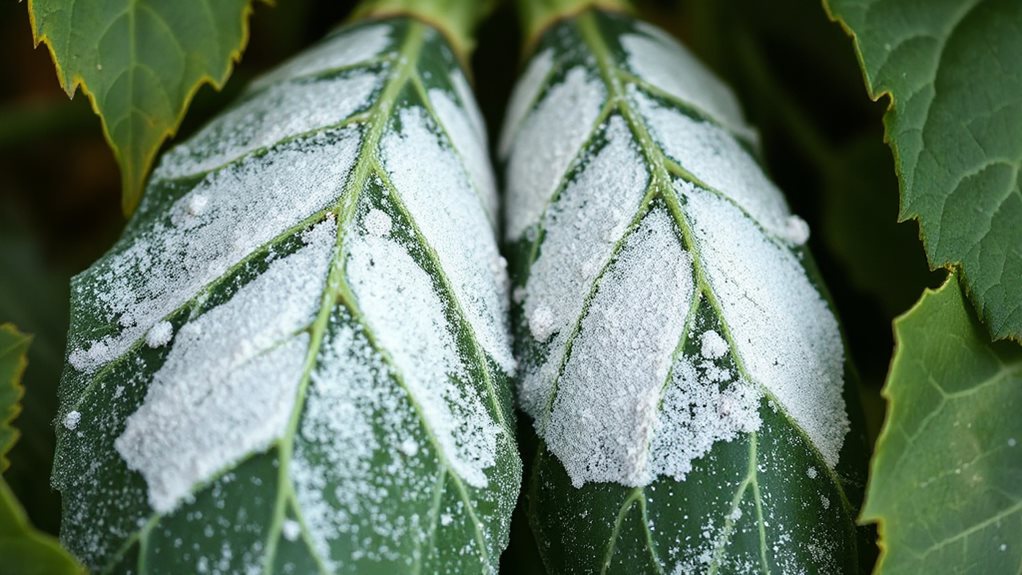
Ever wonder why your cucumber leaves sometimes look like they’ve been dusted with flour? You’ll spot white, powdery spots first on the undersides of older leaves, then spreading up, resembling a dusting of flour on a campsite table; the fungus thrives in 60‑80°F, humid air, so check for circular patches, dull chlorotic leaves, and a papery texture—remove and prune promptly to keep your garden thriving. This disease is identified by white, powdery spots on the leaf surface.
Why Crowding and Poor Airflow Trigger Powdery Mildew
You’ve probably noticed that those fluffy, flour‑like spots love to pop up when your cucumber patch gets packed tighter than a campsite tent at a music festival, and that’s no accident—crowding crank up the humidity and shut down the airflow, creating a perfect little lounge for powdery mildew spores to kick back and multiply.
When leaves can’t breathe, moisture lingers, spores settle, and the micro‑climate stays damp, so you’ll see rapid spread, stunted growth, and stressed plants screaming for space and fresh air. Keeping plants well spaced also helps prevent issues like moisture buildup that encourage fungal growth.
How Over‑Fertilization Fuels Powdery Mildew
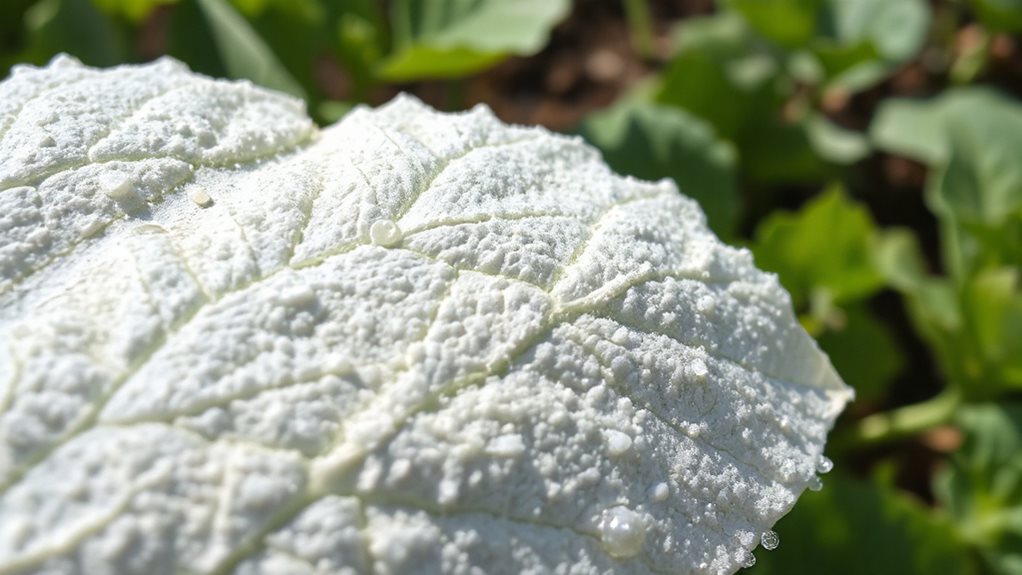
So, why does loading your cucumber patch with a ton of nitrogen turn it into a powdery‑mildew playground? You’ll see soft, rapid leaves that trap humidity, perfect for spores, while dense foliage blocks airflow, and high sugar draws the fungus in.
Use slow‑release feed, space plants, add silica, and keep temps cool—your cucumbers will stay healthy and your guests happier.
How Watering Mistakes Spread Spores to Your Cucumbers
Why do you keep seeing those tiny white specks on your cucumber leaves after a sudden downpour? You’re splashing soil water onto leaf undersides, ferrying spores like Podosphaera xanthii straight into cozy, damp hideouts, especially when foliage hugs the ground.
Base‑watering or mulching blocks that splash, keeping leaves dry, reducing infection risk, and letting you protect your garden while sharing the bounty. Legal consequences can arise when actions harm others, so always prioritize safe, nonharmful practices and consider intent when resolving disputes.
Spot‑Check Bugs, Mites, and Viruses to Rule Out Look‑Spots
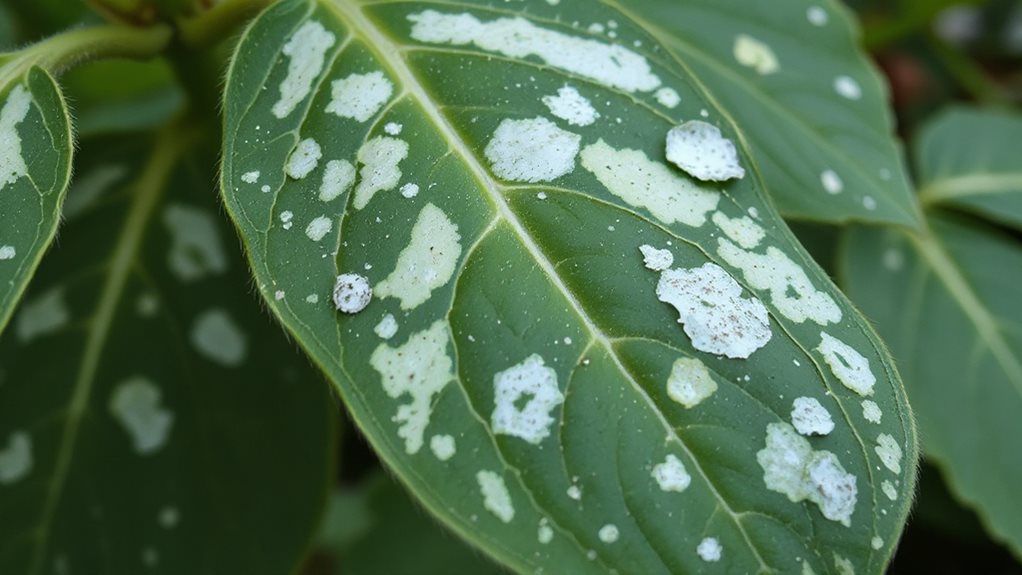
Even before you grab your magnifying glass, it helps to remember that tiny white specks aren’t always powdery mildew—they could be the work of hungry spider mites, sneaky viruses, or even a few mischievous bugs, so start by scanning the undersides of the leaves for fine webbing or little moving dots, check if the spots are yellow‑white stippling that might coalesce into larger patches, and look for any curling or distortion that hints at a viral infection, because catching the right culprit early lets you treat it with soapy water sprays, insecticidal soap, or simply a good rinse, and trust me, spotting the difference feels as satisfying as finding a perfect campsite after a long hike. Consider planting alliums nearby to help mask cucumber scent from aphids and attract beneficial hoverflies.
Overall
You’ve got this! Spotting powdery mildew, fixing crowding, dialing back fertilizer, and watering right will keep those cucumber leaves green and thriving. Check for bugs or viruses just in case, but most of the time it’s simple garden TLC. So, give your plants space, fresh air, and balanced feeding, and you’ll be back to harvesting crisp cucumbers in no time—just like a perfect camping trip where every detail matters, but the fun never stops.