Why Do Zucchini Plants Flower but Not Produce Fruit?
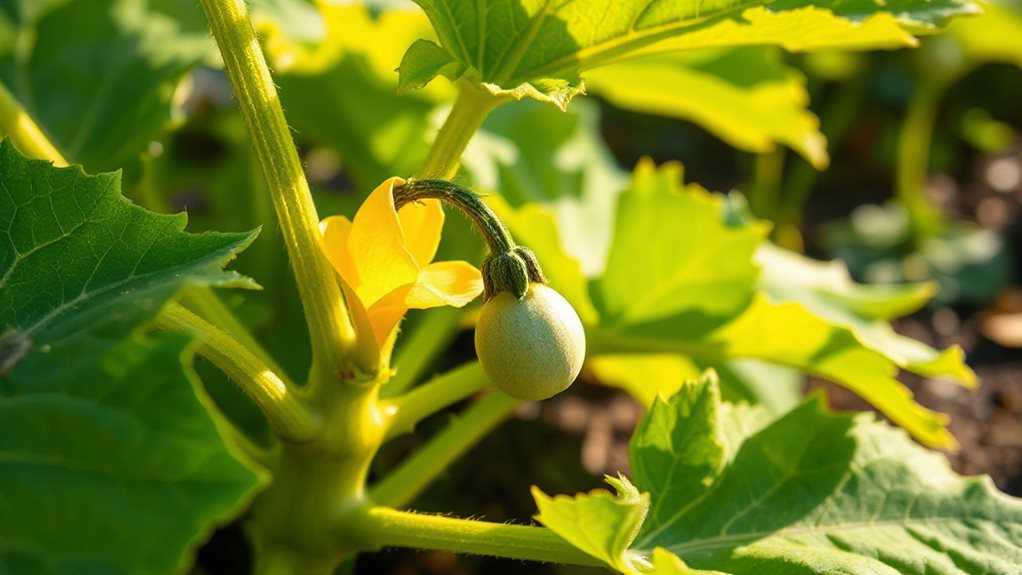
You’re seeing zucchini blossoms but no zucchinis because the plants are getting the wrong vibe – scorching days or chilly nights can stop fruit from forming, while too little sun makes the vines weak and the flowers lonely; excess nitrogen fuels leafy growth at the expense of fruit, and a lack of phosphorus or potassium stalls the flower‑to‑fruit conversion, plus uneven watering or pesky beetles can stress the plant and abort the buds, so fixing temperature, light, nutrients and water will get those fruits rolling, and if you stick around you’ll discover the exact steps to rescue them.
TLDR
- Insufficient pollination: lacking active bees or other pollinators prevents pollen transfer from male to female flowers.
- Extreme temperatures: nighttime lows below 50 °F or daytime highs in the 90s inhibit fruit set and cause flower abortion.
- Inadequate sunlight: low light reduces photosynthesis, leading to weak flowers and poor fruit development.
- Nutrient imbalance: excess nitrogen promotes foliage, while phosphorus and potassium deficiencies hinder fruit formation.
- Water stress and pests: uneven moisture or beetle/aphid damage can cause flower drop and prevent fruit set.
Why Zucchini Often Fail to Set Fruit – The Core Reasons
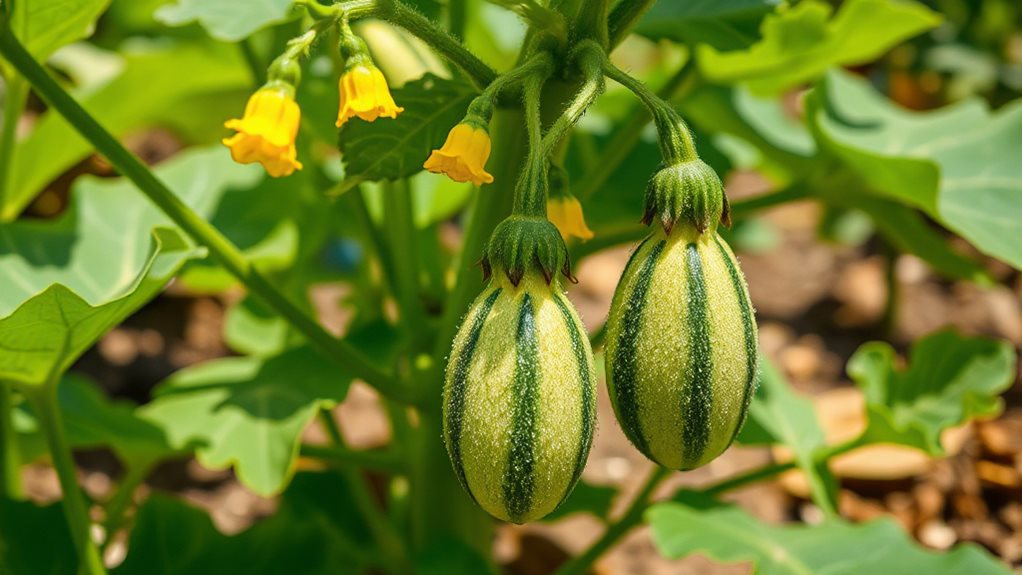
Why do your zucchini plants keep flowering but never hand you those buttery‑gold squash? You’re probably missing pollinators, starving the plant of nitrogen, or shading it like a campsite tent; without bees, weak pollen drops, and energy‑poor vines skip female flowers, leaving empty stems. Fix soil, invite bees, give five‑plus sunlight hours, and watch those golden fruits finally appear. High nighttime temperatures can also prevent fruit set despite abundant flowers. Standing water removal also helps by reducing mosquito‑attracting habitats that interfere with evening garden activity and pollinator visits, so clear puddles and containers to encourage more active pollinators.
Extreme Temperatures That Block Zucchini Fruit Set
Even if you’ve got bees buzzing and the soil humming with nitrogen, a scorching day or a frosty night can still snatch the fruit right out of your zucchini’s hands.
When daytime temps hit the 90s, flowers wilt and tiny fruits abort; nighttime dips below 50°F stall development too.
Keep both day and night steady 65‑75°F, water well, and your zucchini will finally reward you with tasty harvests.
Planting aromatic herbs like rosemary or basil nearby can help deter pests and support pollinators, making a healthier garden overall and reducing stress on plants like zucchini aromatic herbs.
Low Sunlight Limits Zucchini Fruit Set
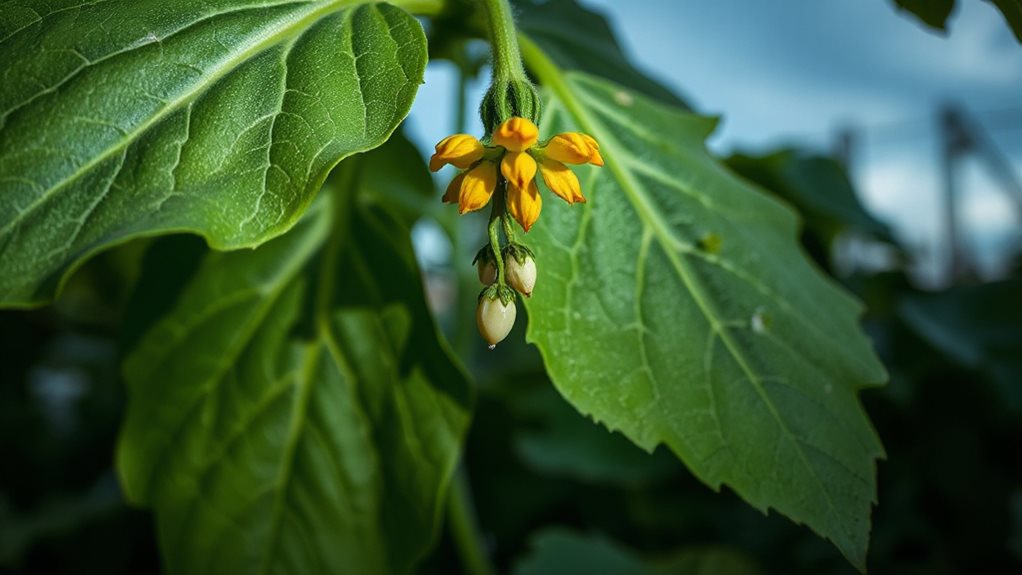
When the sun only peeks in for a few hours, your zucchini plants start acting like sleepy campers who missed the sunrise—leaves turn pale, stems stretch out like lanky tent poles, and the flowers barely get the energy they need to turn into tasty squash.
You’ll notice weak growth, fewer fruits, and limp pollinators; move them to full‑sun spots, use grow lights, or train vines to chase daylight, and watch the harvest bounce back. Improving overall plant health also means checking soil moisture and drainage to prevent overwatering and root stress.
Nutrient Gaps That Prevent Zucchini Fruit Set
Ever wonder why your zucchini plants can throw a party with blossoms but never hand out the squash? You’re probably feeding them too much nitrogen, which fuels leafy growth and starves fruits, while skipping phosphorus and potassium that enhance flower‑to‑fruit conversion.
Add bone meal or kelp, side‑dress when flowers appear, and sprinkle seaweed for calcium, magnesium, and zinc to close those micronutrient gaps. A careful cutting line and proper removal technique can also help when replacing or modifying raised beds and edging that affect root space and drainage.
Water & Pest Hacks to Rescue Zucchini Fruit Set
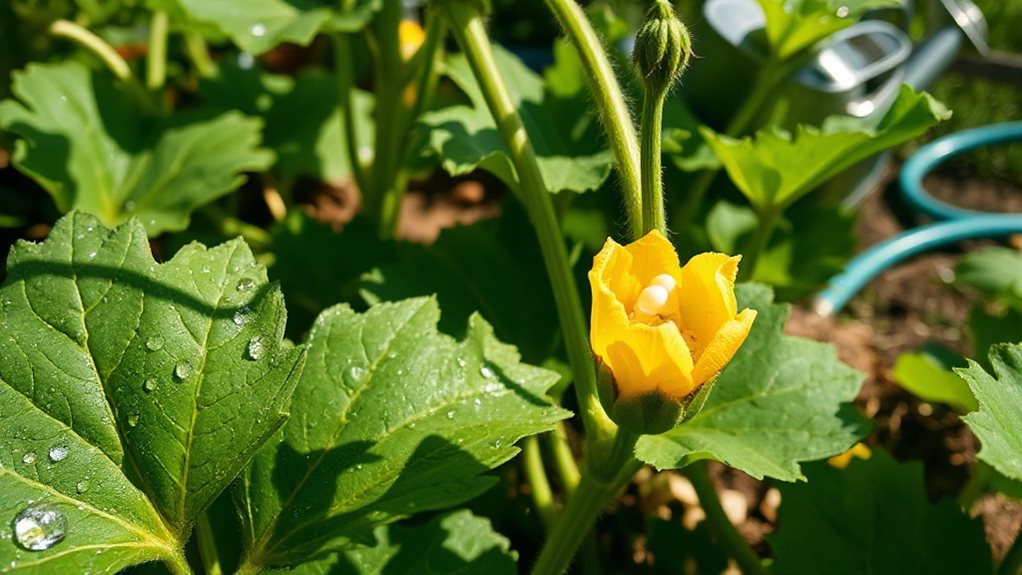
After fixing the nutrient gaps, the next thing to watch is how you water and keep pests at bay, because even a perfectly fed zucchini won’t set fruit if it’s thirsty or under siege.
Keep soil uniformly moist—no dry spells—so spider mites and squash bugs stay away; hand‑pick beetles and aphids into soapy water daily, and use floating row covers until bloom, then remove them for buzzing bees.
Mulch regularly to help hold moisture and suppress weeds, reducing plant stress and watering needs.
Overall
Now that you know why zucchini sometimes just flower and skip the fruit, you can turn those “oops” plants into a tasty adventure—think of it like planning a camping trip where you check the weather, pack the right gear, and avoid the pesky bugs. So, keep an eye on temperature, give them plenty of sun, feed them balanced nutrients, and water consistently; then watch those blossoms turn into juicy zucchinis, ready for your next garden feast!