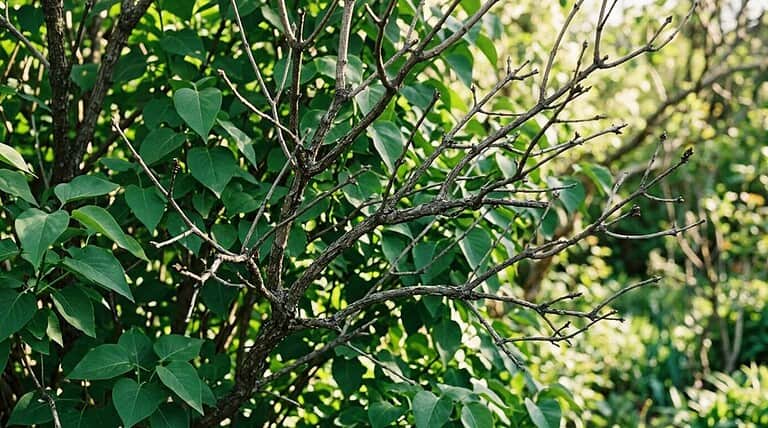
Why Do Weeds Grow Faster Than Grass?
You see weeds sprint ahead because they’ve got deep taproots that sip hidden water, while most grass stays near the surface, then they spread like underground highways with aggressive rhizomes, and their fast‑cycle seed production pumps out thousands of new plants in weeks, plus those broadleaf canopies throw shade on your turf, stealing the three hours of sunlight it needs; if you keep going, you’ll uncover even more tricks they use to dominate your lawn.
TLDR
- Deep taproots let weeds tap water from deeper soil layers, while turfgrass roots stay shallow and rely on surface moisture.
- Weeds tolerate acidic, compacted soils better; liming, aerating, and adding organic matter favor turfgrass over weeds.
- Aggressive rhizomes enable weeds to spread horizontally and regenerate from fragments, outpacing grass expansion.
- Fast‑cycle reproduction lets weeds produce thousands of seeds in weeks, maintaining continuous presence and rapid population growth.
- Broadleaf weeds form dense, shade‑casting foliage that reduces sunlight for turf, limiting grass photosynthesis and growth.
Deep Taproots Give Weeds a Water Edge Over Turfgrass
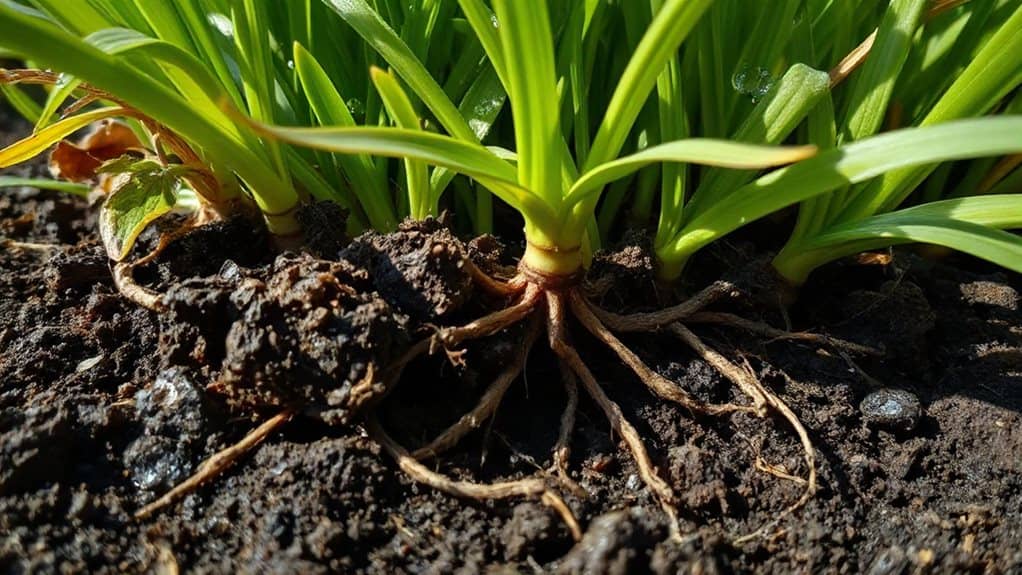
Ever wondered why a dandelion can sprout like a superhero while the grass in your backyard takes forever? You’ll love how its deep taproot plunges straight down, grabbing water from the stable table, while grasses sip only surface rain. Imagine camping—taproot’s like a sturdy tent pole, anchoring the weed, letting it thrive even when the soil dries, outsmarting turf’s shallow network. This advantage comes from its ability to access deep water that remains available during droughts. Many common turfgrass species have roots mostly in the top few inches, unlike weeds with deep taproots that reach moisture far below.
Improving Soil Structure to Favor Turfgrass Over Weeds
So, ever wonder why your backyard lawn feels like a soggy campsite after a rainstorm while the weeds just keep marching in? You can boost turf by liming acidic soil to a pH of 6‑7, core‑aerating to loosen compaction, adding compost for organic matter, and top‑dressing with sand for drainage; these steps give grass the nutrients and breath it needs, keeping weeds at bay. Using full‑spectrum LED grow lights can help shaded turf recover more quickly in low‑light conditions.
Aggressive Rhizomes Enable Rapid Weed Spread

Why do some weeds seem to sprint across your lawn like a pack of campers racing to the next campsite?
Their aggressive rhizomes act like underground highways, sending out horizontal stems that sprout new shoots whenever they hit a node, so each fragment you leave behind can regenerate a whole new plant.
You’ll see Bishop’s weed, goutweed, mint, and purple loosestrife forming dense, unstoppable colonies that out‑compete grass in minutes.
These plants often outgrow turf because their rhizome spread and vigorous root systems let them colonize space and access nutrients more quickly than grass.
Fast‑Cycle Reproduction Lets Weeds Win the Season
After you’ve seen how underground rhizomes turn a single weed into a sprawling carpet, the next trick up nature’s sleeve is its lightning‑fast life cycle—think of it as a race car that never has to pit. You’ll love how weeds sprint from seed to seed in weeks, dumping tens of thousands of seeds, then germinate again, outpacing grass and keeping the field alive for your next camping excursion. Edge grass often gets an early start thanks to pavement heat warming nearby soil and promoting earlier greening.
Broadleaf Height and Architecture Block Light for Turfgrass

Ever wonder why a lone dandelion can turn a sunny lawn into a shady jungle faster than you can set up a campsite? Broadleaf weeds grow tall, spread wide, and lay horizontal leaves that snatch sunlight before turfgrass even sees it.
Their mat‑like mats, up to four feet across, cast shadows, starving grass of the three hours of direct sun it needs to stay strong. Combining physical barriers and timely maintenance, like routine maintenance, can help keep invasive broadleaf patches from taking over.
Diverse Adaptability Lets Weeds Thrive in Tough Conditions
You’ll notice how weeds send their roots deep into the soil, like a camper digging a sturdy tent stake, so they can pull water and nutrients even when the surface dries out, and you might ask yourself whether that same trick works for broadleaf plants that seem to spread out more flexibly.
Imagine a weed’s seed bursting open and launching a fleet of tiny pioneers that can survive in rocky, acidic, or sandy ground, while its reproductive system stays on high gear—producing countless seeds that hitch rides on wind, animals, or even your backyard dog’s fur.
Deep Root Exploration
A weed’s root system as a daring investigator with a trusty compass, diving straight down through the earth like it’s on a never‑ending hiking trail.
You’ll see taproots plunge deep, grabbing hidden water, while fine hairs and exudates scout tough soil, recruiting microbes that break nutrients, and thigmotropism lets you feel resistance, making every underground trek a resilient journey.
Broadleaf Growth Flexibility
Why do some weeds seem to bounce back like a seasoned camper after every storm?
You’ll notice broadleaf weeds boast deep taproots that dig for water, while their allelopathic chemicals sabotage grass neighbors, and their life cycles—annuals, biennials, perennials—keep them popping up season after season, thriving in compacted, dry, or shady spots, out‑lasting any lawn caretaker’s efforts.
Resilient Reproductive Strategies
Ever wondered how weeds seem to pop up faster than a campsite tent after a sudden rainstorm? You’ll see them scatter thousands of seeds, some waking at the first light, others waiting till the soil’s soggy, and a few lying dormant for years—so when you plant, they’re already racing ahead, rooting deep or spreading shallow, thriving where grasses stumble, all thanks to clever, resilient reproductive tricks.
Targeted Management Tactics to Neutralize Weed Advantages
Ever wondered why a single dandelion can take over your lawn faster than a campfire spreads a story? You can outsmart it by spot‑spraying with a backpack sprayer, using 2,4‑D for broadleaf invaders, then timing pre‑emergents like Barricade when soil hits 55°F.
Keep mowing high, water deep, and overseed thin patches, so the grass wins the camping‑trip showdown.
Overall
So, you’ve seen why weeds sprint ahead of grass—deep taproots, aggressive rhizomes, rapid seed cycles, and that sneaky broadleaf shade. Now envision yourself on a camping trip, spotting a stubborn weed thriving while the lawn struggles; it’s like nature’s own obstacle course! If you want lush turf, tackle those advantages head‑on: water wisely, enhance soil health, and use targeted controls. Ready to outsmart the weeds and enjoy a greener backyard? Let’s get started!