Why Grass Is Greener Along Sidewalk Edges Than the Rest of Your Lawn
Ever notice how the grass by the sidewalk looks like it’s showing off? That lush green edge isn’t magic—it’s nature’s VIP treatment! Paved surfaces warm the soil, giving edge grass a head start, while runoff sneaks it extra water. Looser dirt lets roots stretch out, and hey, bonus buffet: clippings and nutrients pile up there like lawn snacks. You get more sunlight, less foot traffic, and seriously, it’s like that grass is camping in first class. Think this is cool? Just wait—there’s even more fun science hiding in your yard!
TLDR
- Pavement radiates heat, warming nearby soil and triggering earlier, faster grass growth along sidewalks.
- Shallow viewing angles make edge grass appear denser and greener by hiding bare soil between blades.
- Less soil compaction at lawn edges allows roots to grow deeper and access more nutrients and oxygen.
- Runoff from sidewalks naturally irrigates perimeter grass, providing consistent moisture without extra watering.
- Organic debris and clippings accumulate along edges, enriching soil fertility and boosting grass vigor.
Why Grass at Lawn Edges Looks Greener

While you’re out there admiring how lush and green the grass looks right along the sidewalk, you might be surprised to learn it’s not because that patch is getting special treatment—no secret fertilizer or VIP watering schedule.
It’s actually springing to life faster from radiant heat off the pavement, like tiny solar panels warming the soil, giving it a head start—though, fair warning, that early lift often leads to a tough summer ahead. Soil temperature from paved surfaces create microclimates that trigger earlier greening in adjacent grass.
Temperature variations from paved surfaces create microclimates that trigger earlier greening in adjacent grass.
Your Viewing Angle Makes Distant Grass Seem Lusher
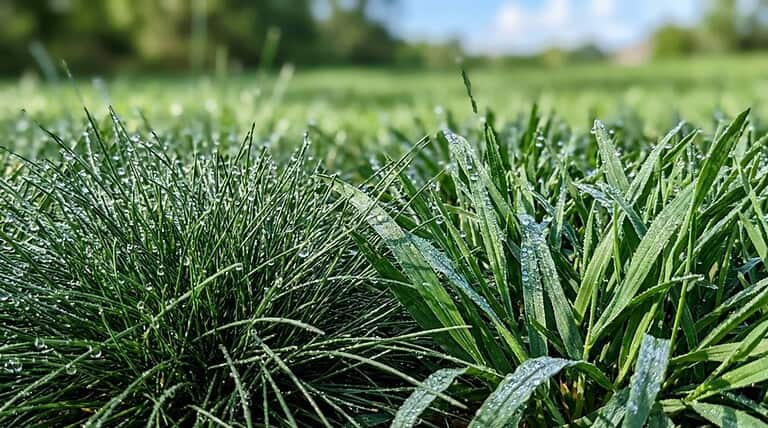
Ever notice how grass way off in the distance looks super lush and green, like a perfect camping spot waiting to happen? That’s ’cause your viewing angle’s doing a sneaky trick—those shallow sightlines let more grass blades stack up in your vision, blocking the dirt like tiny green bodyguards. This optical effect can be influenced by lawn condition and turf density, which makes distant grass appear fuller.
Grass Density At Distance
You’ve probably noticed it on hikes or during road trips—those far-off patches of grass along the sidewalk or at the edge of a field always seem weirdly lusher, like nature hit copy-paste and cranked up the green. That’s your brain tricked by texture gradients—more grass elements packed together in the distance, making it look denser.
Cool, right? Next time you’re camping, squint and see the illusion vanish!
Angle Blocks Soil View
When you crouch down to tie your shoe on a camping trail, you’re not just avoiding a muddy patch—you’re accidentally running a science experiment on grass illusions!
Lower your angle, and suddenly, soil vanishes beneath a sea of green; blades at eye level block the bare spots, making even patchy grass look lush.
Pretty cool trick, right? Try it next time—you’ll see the world, and your lawn, totally differently!
Shallow Sight Enhances Green
Though you mightn’t realize it, the way you look at grass totally changes how green it appears—seriously, it’s like a magic trick your eyes play without asking permission!
When you’re walking by, your shallow view packs the scene with blades, blocking dirt and enhancing that lush green vibe. Ever notice how grass near sidewalks looks richer? That’s no accident—it’s geometry showing off, making your lawn look like a postcard with zero effort on your part. Pretty cool, right?
Looser Soil at Edges Helps Grass Grow Stronger
You know how grass right by the sidewalk often looks thicker and healthier? Well, that’s because the soil there’s usually looser—thanks to folks adding compost or aerating to fight compaction from foot traffic and snow plows, which means roots can stretch out like they’re camping in a roomy tent instead of squished in a tiny backpack.
Try tossing in some compost yourself, and boom: you’ll give your grass the VIP treatment it deserves! Nutrient-rich topsoil helps explain why those edge strips often outperform the rest of the lawn.
Looser Soil Enhances Root Expansion
You know how some grass right along the sidewalk looks thicker, greener, and just *happier*—like it went to summer camp while the rest of the lawn stayed cooped up inside?
That’s because loose soil at the edges gives roots room to stretch, breathe, and investigate—no cramped quarters here!
You’re basically rolling out the welcome mat for strong, deep root systems that drink up water and nutrients like pros.
Reduced Compaction Boosts Grass Health
That lush, bouncy grass hugging the sidewalk isn’t just showing off—it’s thriving because it’s got the VIP treatment when it comes to space and comfort.
You see, cars avoid the edges, so the soil stays loose, roots stretch out happily, and grass breathes easy—unlike the compacted, stressed-out center.
Edging regularly keeps things fresh, fights weeds, and lets your lawn shine where it matters most: right up front, looking *good*.
Edge Soil Promotes Denser Growth
While the rest of your lawn might be busy playing bumper cars with foot traffic and lawnmowers, the grass along the edges is basically living its best life—think of it like the VIP lounge of your yard, where the soil’s loose, the roots have room to stretch, and nobody’s constantly stepping on their toes.
You give those edge roots space, and boom—they grow deeper, stronger, and way more dramatic, like they’re prepping for a nature documentary. Loosen up, and watch your grass thrive!
Sidewalk Runoff Keeps Edge Grass Naturally Watered
Envision this: after a good rain, instead of your sidewalk turning into a mini swimming pool, the water quietly slips off the sides and sneaks right into the grass along the edges—like nature’s own built-in irrigation system.
You’re basically giving your lawn a free, automatic drink! Sidewalk runoff flows outward, soaking the perimeter, so edge grass stays lush without extra watering—talk about a smart, self-serving lawn hack that keeps things green and grateful. Building a simple rain garden or improving drainage in nearby spots can help manage excess water and prevent muddy patches elsewhere.
Natural Fertilizers Collect at Lawn Edges

You’ve already seen how sidewalk runoff gives your lawn edges a free drink every time it rains—like nature’s sneaky sprinkler system—but guess what? Those same edges catch natural fertilizers too!
Organic matter clumps up along sidewalks, slowly feeding your grass like a slow-cook meal. Clippings, compost, and even Milorganite settle there, breaking down into nutrients that enhance growth—no waste, all win! Composting those materials adds organic matter that improves soil structure and fertility, supporting healthier turf growth and microbial activity improves soil structure.
Edge Grass Gets More Light and Less Damage
When the sun’s finally out and your grass is stretching toward the light like it’s trying to catch some rays on a beach vacation, guess who’s getting the front-row seat? You guessed it—edge grass!
It basks in unobstructed sunlight while the middle’s stuck in the shade, like your tent under trees during a camping trip.
Plus, mounded edges block cars, so your lawn’s perimeter stays springy, not squished—total MVP status.
Overall
So, next time you’re out mowing—or dodging grass clippings like a ninja—remember, that lush green edge isn’t magic, it’s science with a side of sidewalk sass! You’re basically staring at nature’s VIP section: better light, free drinks (thanks, runoff!), and fluffier soil. I once tried camping in my backyard and nearly tripped over it—twice! Give those edges some love, and hey, maybe your whole lawn can throw a green party too. Who knew sidewalks were secret lawn coaches?