Why Do Houseplants Grow Toward Windows?
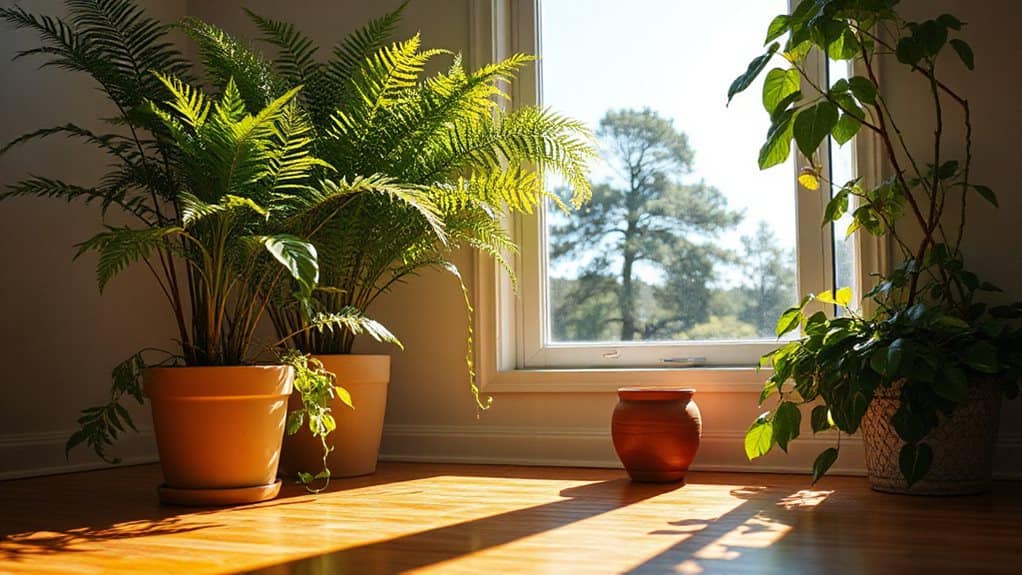
You’ve probably noticed your fiddle‑leaf fig leaning toward the sunny pane, right? That’s because blue light hits phototropins in the tip, sending a signal down the stem that makes the PIN3 transporter dump auxin on the shaded side, where it loosens cell walls and the cells stretch, pulling the plant toward the light—just like a camper chasing sunrise for the perfect view. The tip’s signal is the real “GPS,” and the auxin gradient is the engine that powers the bend, so if you keep an eye on it you’ll see why the plant’s orientation changes, and there’s plenty more to explore about light direction, glass risks, and rotation tricks.
TLDR
- Blue light activates phototropins, triggering a growth response that directs stems toward the light source.
- The shaded side of a stem accumulates auxin via PIN3 relocalization, loosening cell walls and causing faster elongation.
- Differential cell expansion creates curvature, bending the plant toward the brighter window.
- Plants orient toward windows to maximize photosynthetic photon flux, enhancing energy capture.
- Regular rotation and supplemental LED lighting can balance growth and prevent uneven leaning.
Why Houseplants Bend Toward Light: Phototropism Explained
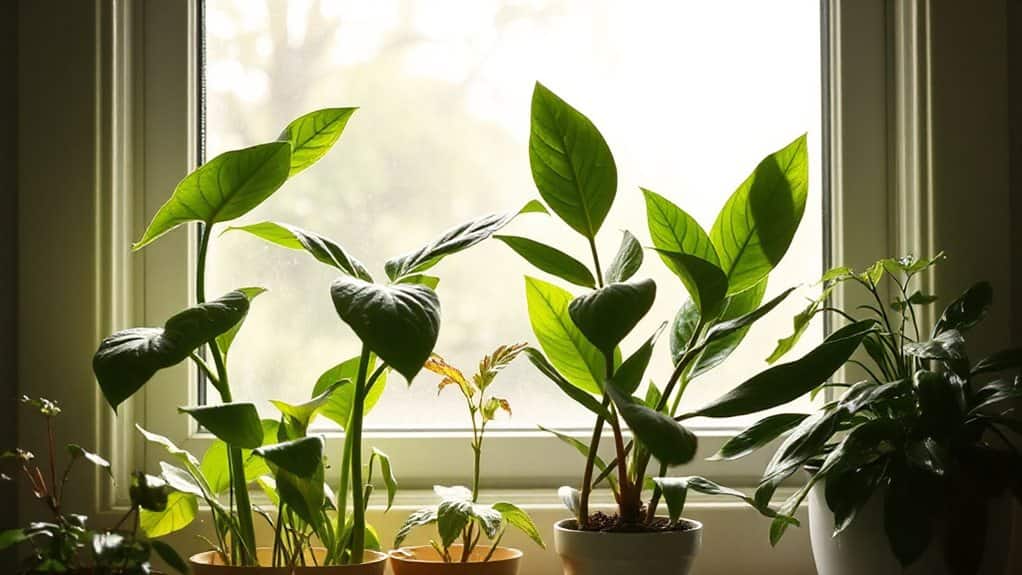
Ever wondered why your leafy roommate always leans toward the window like it’s trying to catch a sunset on a road‑trip? You’re watching phototropism in action—blue light triggers phototropins, the shaded side’s cells acidify, expand, and push the shoot toward the sun, just like a camper seeking the perfect campsite. Many indoor plants also track windows where the full-spectrum light is strongest to maximize photosynthesis.
Remember Darwin’s tip experiments? They proved the tip sends the signal, so your plant leans, maximizes photosynthesis, and happily serves your space. The PIN3 auxin transporter relocalizes to the dark side, creating the auxin gradient that drives differential growth.
How Auxin Drives Houseplant Phototropism Toward Windows
Why does your houseplant act like a tiny camper searching for the perfect campsite on your windowsill? Light hits one side, activates phototropins, and shuffles PIN transporters so auxin piles up in the shade.
That extra auxin loosens cell walls, making shaded cells stretch longer, while sunlit cells stay tight—so the stem leans toward the window, just like you’d set up a tent where the sun shines. Propane tanks should always be transported upright to prevent liquid withdrawal and related hazards.
What Light Direction Means for Different Window Orientations
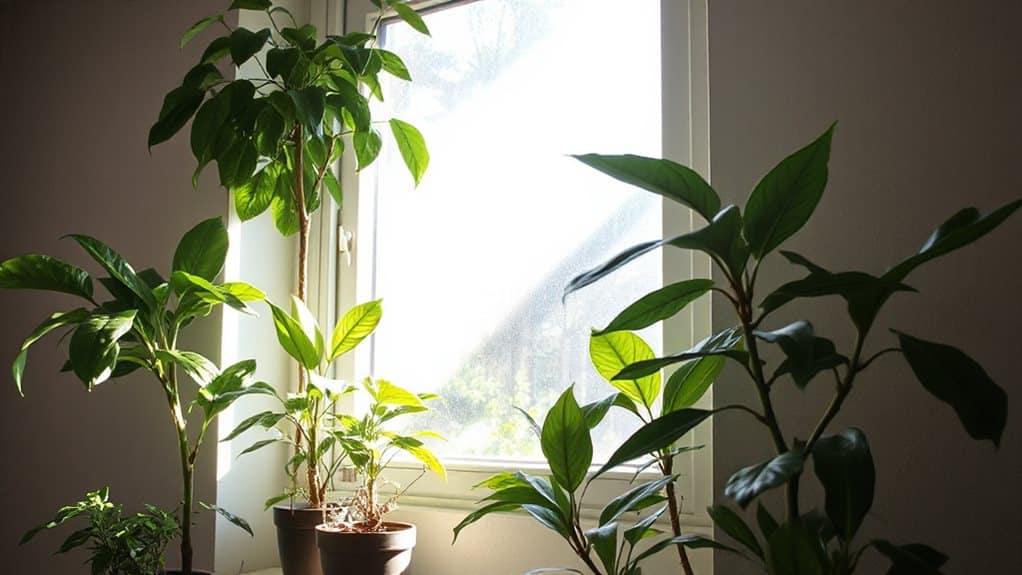
North gives shade, so keep low‑light pals close and rotate them; east offers gentle morning sun, perfect for herbs; south blasts bright, hot light, demanding drought‑tolerant, high‑light species; west delivers late‑day heat, ideal for part‑sun bloomers, but watch thin‑leaf ferns.
Rotate weekly, and your green campers thrive.
LED grow lights provide targeted wavelengths to supplement natural window light when needed, especially to boost photosynthetic photon flux for plants in lower-light orientations.
Risks of Plants Pressing Against Glass
Ever wondered why your leafy camper sometimes ends up glued to the window like a tent‑pole in a storm? When leaves press against glass, they get frost‑bite at night or scorch in summer, because the pane becomes a cold or hot bridge; drafts sneak in, shocking tropical plants, and the damaged cells invite mites, scales, and fungi, turning your green friend into a crispy, droopy camper. Edge microclimates created by the window can also change temperature and moisture levels, causing localized stress that alters growth.
How to Avoid Those Risks
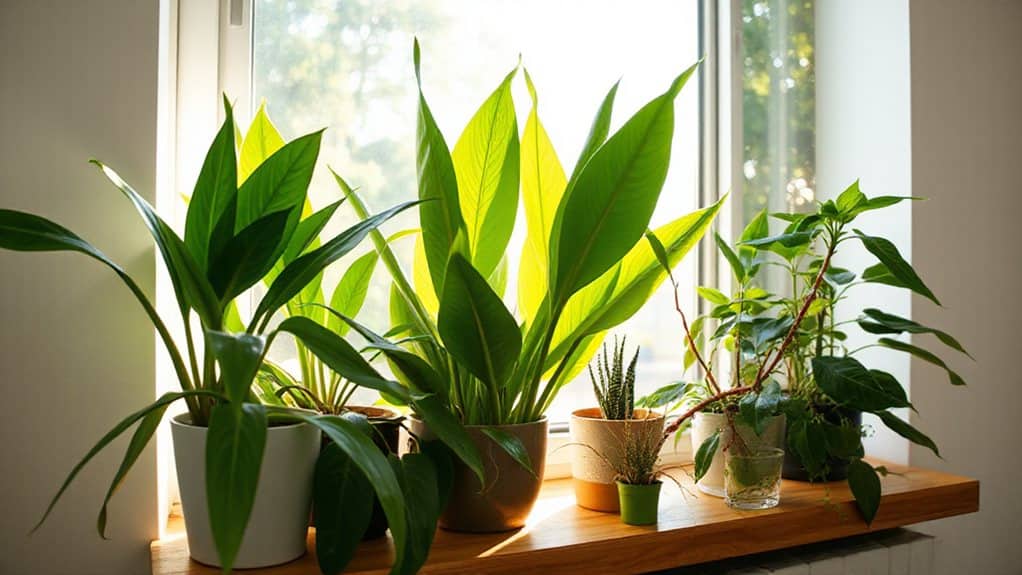
You’ll keep your greens safe by rotating them every few weeks, just like you’d turn a campsite tent to catch the sunrise, and that prevents one‑sided leaning that can smash the glass. Keep a comfortable gap between the pot and the window—think of it as a “no‑touch zone” that lets the plant stretch without smacking the pane, and if the sunlight’s shy, pop on a supplemental LED grow light to give it the boost it needs. By mixing regular rotation, a safe distance, and extra lighting, you’ll avoid those risky glass‑bumps while still enjoying the bright, happy vibe of a sun‑kissed room. Improve overall plant vigor by ensuring proper soil nutrition to help plants grow evenly and resist stress.
Rotate Regularly
A solid rule of thumb is to give your plant a quarter‑turn every time you water it, which keeps growth balanced without overloading its “memory.”
Why does that matter? You’ll catch uneven leaves early, avoid lopsided stems, and keep photosynthesis humming, so your green buddy stays healthy, happy, and ready for the next light‑shift journey.
Maintain Safe Distance
So, why keep your leafy friends at least a foot away from the window? You’ll prevent frost‑bite in winter, scorch in summer, and drafts that stress roots, because glass acts like a temperature bridge. Keep plants 50 cm–1 m back, check growth regularly, and adjust as they lean—your garden stays healthy, and you avoid accidental leaf‑burn disasters.
Use Supplemental Lighting
Ever wondered why a simple LED strip can turn your living room into a mini‑greenhouse without scorching the curtains? You pick full‑spectrum LEDs, set a timer for 12‑16 hours, and keep intensity low enough to avoid heat stress, then adjust PPFD with extra fixtures if seedlings need a boost.
Remember to limit UV and blue exposure, protect eyes, and enjoy thriving plants while you’re camping indoors!
How to Rotate Houseplants for Even Growth
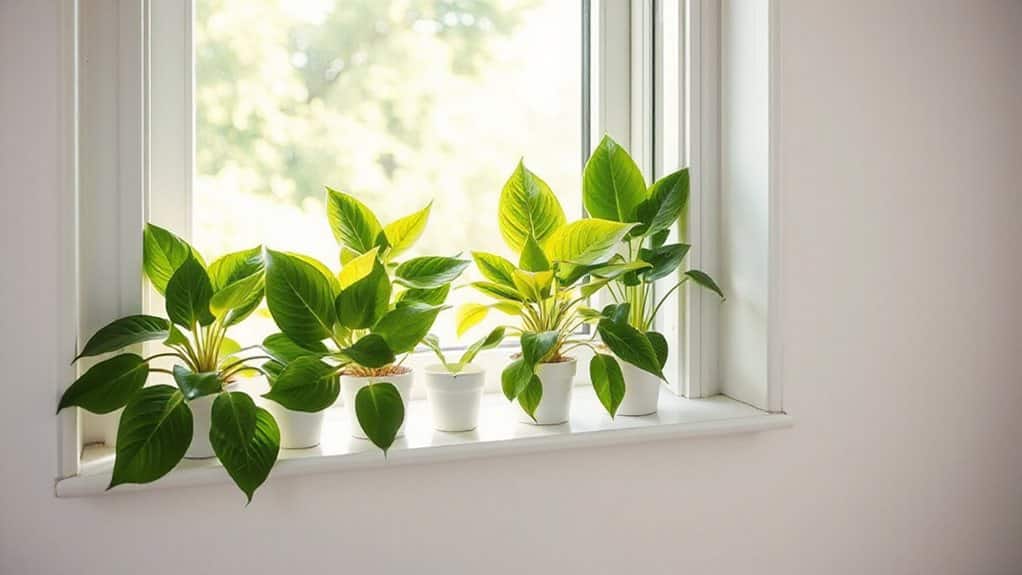
You’ll want to set a rotation schedule—usually every one to two weeks—so your plant doesn’t end up leaning like a camper’s tent pole after a long hike, and you can tweak that timing if it’s a low‑light lover or the season changes.
When you turn the pot, aim for a 45‑degree angle or so, giving each side a fair share of sunshine, just like you’d rotate a sleeping bag to avoid a cold spot in the woods.
Try it out, watch the stems straighten, and you’ll see the whole canopy fill out evenly, making your indoor jungle look as balanced as a perfectly pitched tent.
Set Rotation Frequency
Wondering how often you should give your leafy buddy a spin? Rotate every one to two weeks for most plants, but if you water daily, a quick quarter‑turn each session works wonders.
In bright light, monthly spins suffice; in dimmer spots, aim for a few weeks.
Do it in the morning or early afternoon, avoid peak sun, and handle gently—your plant will thank you with balanced, bushy growth.
Optimal Rotation Angles
So, how do you actually turn a plant without turning it into a dizzy mess? You’ll want to give it a quarter‑turn at each watering, or a gentle eighth‑inch tweak if you prefer slower changes; rotate opposite directions every few weeks, matching light levels—bright spots need fewer spins, dim corners demand more. This keeps stems strong, foliage balanced, and avoids staking later.
Using Supplemental Grow Lights to Reduce Window Dependence
Ever wondered why your leafy friends seem to huddle by the window, as if they’re waiting for the next sunrise? You can ditch that drama by adding LED grow lights—energy‑efficient, full‑spectrum, and customizable.
Position them 2‑4 feet away, set a 12‑16‑hour timer, and choose blue for roots or red for blooms; your plants stay happy, healthy, and less window‑obsessed.
Why Your Plant Gets Spindly and What to Do About It
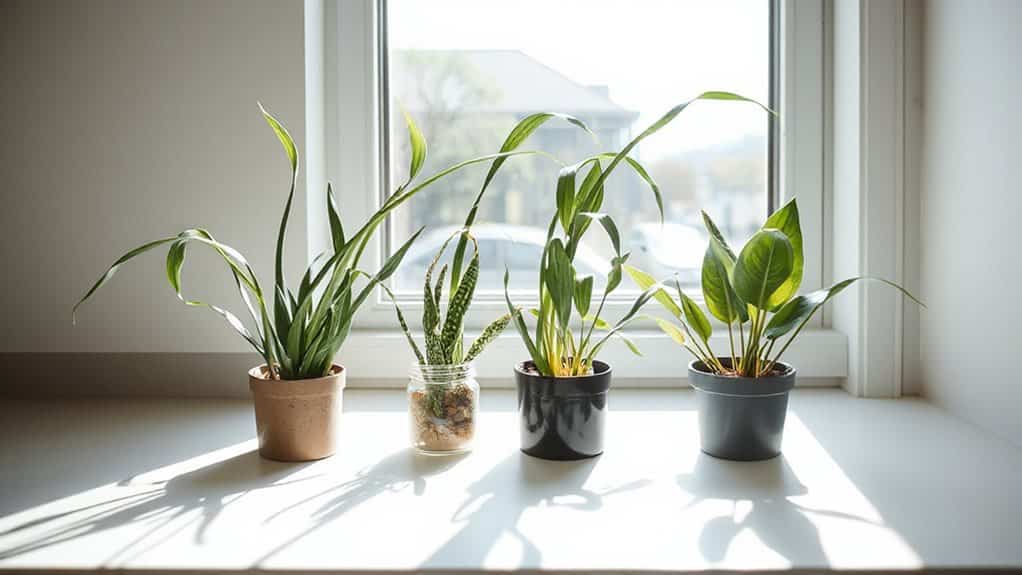
Even after you’ve set up those LED grow lights, you might still notice your leafy buddy turning into a lanky, spaghetti‑like stalk, and that’s usually a sign the plant’s crying for more than just light.
Light’s too dim, water’s soggy, temperature’s off, or nutrients are missing—each pushes stems to stretch.
Fix it by brightening the spot, letting soil dry between drinks, stabilizing temperature, and feeding balanced fertilizer, then prune and stake for support.
Quick Checklist for Healthy, Evenly Grown Houseplants
Ever wondered why some houseplants look like they’ve just returned from a backpacking trek through the jungle while others stay neat and tidy?
Check light daily, rotate pots weekly, water when soil’s damp, use tepid water, and ensure drainage.
Choose sterile mix, repot when roots peek, keep humidity 40‑60%, mist, and mist, clean leaves, fertilize weekly, prune dead foliage, and monitor pests for thriving, evenly‑grown companions.
Overall
So, next time you catch your fiddle‑leaf fig stretching for the sunny spot, remember it’s just a tiny explorer hunting light, not a drama queen. Keep rotating those pots, give the glass a little breathing room, and toss in a grow‑light if the window’s shy—your plants will thank you with sturdy, happy stems instead of lanky, glass‑stuck limbs. And hey, watching them thrive feels a lot like planning a perfect camping trip: a little prep, the right direction, and the reward is a thriving, vibrant adventure right in your living room.