Wilting Plants Even When Soil Is Moist Explained
You’re watering your plants, but they still look sad and droopy—what gives? Turns out, soggy soil can suffocate roots, so even though there’s plenty of moisture, your plant can’t drink it properly, kind of like trying to sip a smoothie through a tiny straw. Heat and wind can also make leaves lose water faster than roots can keep up, causing a midday meltdown. Sound familiar? Well, the real fix might surprise you—stick around, and you’ll see how a few simple tweaks can turn those droopy frowns upside down.
TLDR
- Soggy soil blocks oxygen, causing roots to suffocate and wilt even when moisture is abundant.
- Overwatering leads to root rot, impairing water uptake despite wet soil conditions.
- Poor drainage in compacted or clay soils limits root aeration and promotes wilting.
- Shallow watering keeps roots near the surface, reducing access to oxygen and deeper moisture.
- Temporary wilting from heat or wind often resolves at night; persistent droop signals root or soil issues.
Why Your Plants Wilt Even When Soil Is Wet
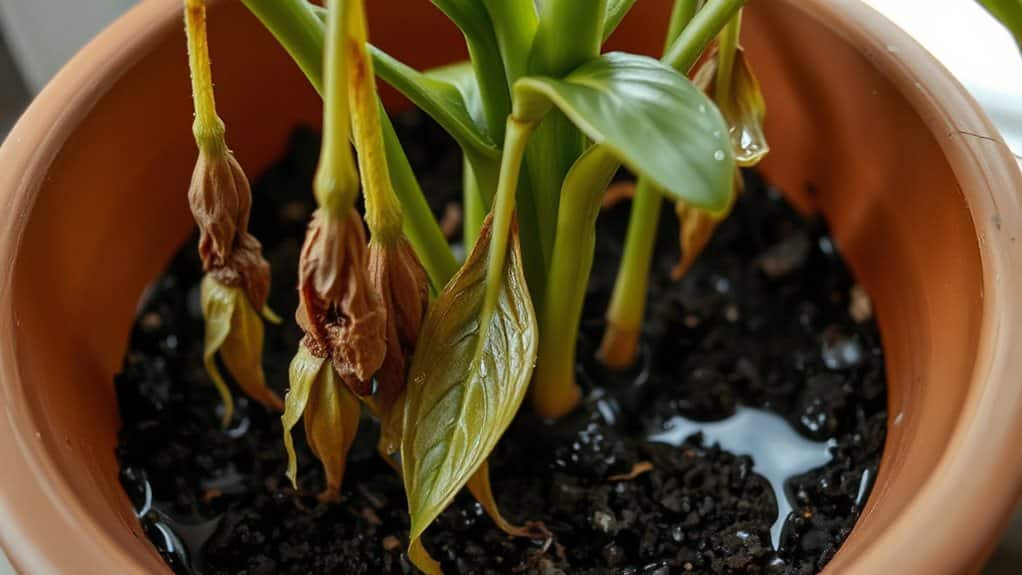
So, you’ve been watering your plants like a champ—maybe even a little too much—and you’re totally baffled when they start drooping like they’re begging for a drink, even though the soil’s still damp? Yep, your plant’s roots might be drowning!
Soggy soil cuts off oxygen, causing root rot—roots turn mushy and black, can’t drink, and leaves wilt. Think of it like wearing wet socks forever—gross, right? Check drainage, let soil dry, and give roots some breathing room! This often happens in waterlogged soil where roots are deprived of oxygen and can’t function properly. Mulching with organic layers like wood chips can help improve soil structure and reduce surface compaction.
Heat Stress: Why Leaves Dry Out Faster Than Roots Can Replenish
When the sun’s blazing like it’s trying to win a heatwave championship, your plants might start looking like they’ve given up on life—leaves drooping, sad and crispy—even if you just watered them yesterday.
That’s because heat stress cranks up transpiration, so leaves lose water faster than roots can replace it, kind of like sweating buckets on a summer hike with an empty water bottle—tough, right? Keep them shaded and hydrated!
Pine-covered sites can worsen this because dense shade, needle layers, and root competition create reduced water availability for understory plants.
Hot Winds and Temporary Wilting: Even With Moist Soil
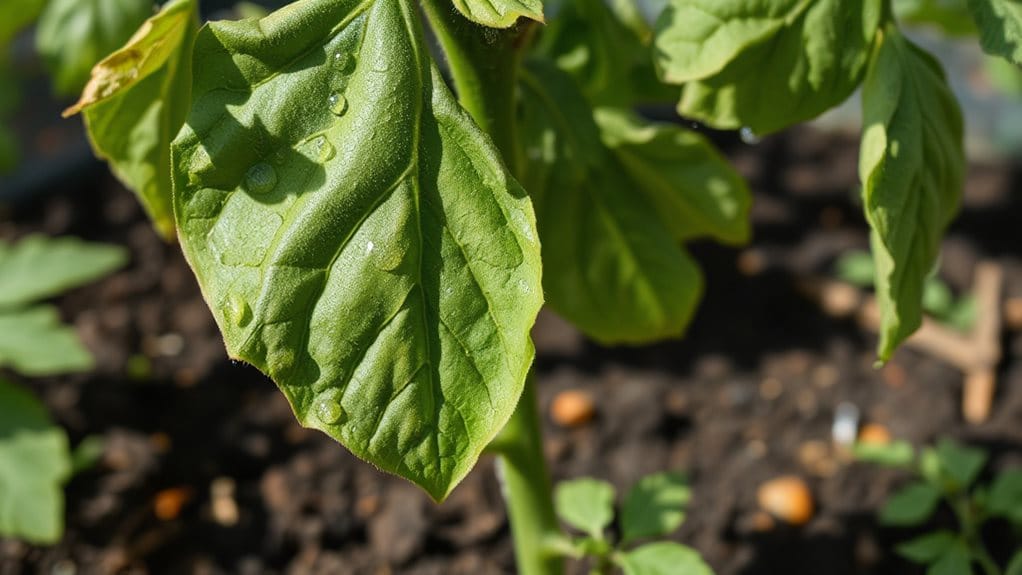
Feeling like your garden’s throwing a midday drama fit even though you swear you watered it?
Hot, drying winds can make plants wilt fast—even with moist soil—by pulling water from leaves quicker than roots can keep up.
But don’t panic and overwater!
They’ll often perk up by evening, like campers cooling off after a blazing hike.
Just add mulch, check deep moisture, and let nature balance it out.
Also consider working compost or aged manure into the top few inches to improve water retention and help plants recover.
Midday Droop: When Sunlight Overwhelms Water Uptake
Sometimes, your plants pull a total drama queen move right around lunchtime, flopping over like they’ve been caught in a heatwave survival show—even when you *know* the soil’s still damp. That’s midday droop—sun’s blazing, leaves lose water faster than roots can keep up, so they dramatically wilt to save themselves.
But don’t panic! It’s like their built-in sunscreen. Just add mulch, shade, or a midday sip, and by evening, they’ll perk right back up—nature’s version of “I’m not dead, just thirsty!” Gradually introducing plants to bright conditions and providing gentle wind exposure during acclimation helps build stronger stems and reduces midday droop.
Extreme Heat and the Plant’s Natural Wilting Response
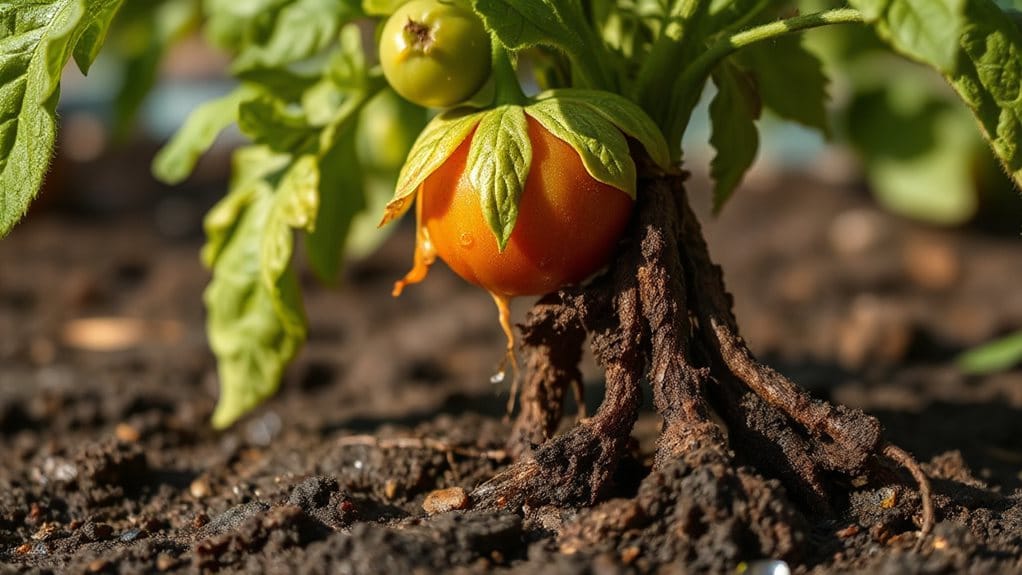
Sweating it out under the summer blaze? So are your plants! When it’s scorching hot, they close their stomata to save water—even if the soil’s wet—like holding your breath to save oxygen.
But without evaporative cooling, leaves overheat, photosynthesis sputters, and turgor drops, causing wilting. It’s their natural survival move, kind of like you napping in the shade with a cold drink. Smart, right?
Native plantings also help support pollinators by providing season-long resources and habitat connectivity across gardens.
Overwatering: Why Wet Soil Starves Roots of Oxygen
Even though your plant’s feet are soaking in water, they’re basically screaming for air—yeah, roots need to breathe too, just like you when you’re scrambling up a hill on a camping trip and suddenly realize you forgot your inhaler (kidding… mostly).
Waterlogged soil squishes out oxygen, suffocating roots so they can’t absorb water, even though it’s everywhere.
They turn brown, go mushy, and basically throw in the towel—kind of like when your socks stay wet for three days straight on a backpacking trip. Yuck.
Save your plant—let the soil dry out, use well-draining mix, and don’t let it sit in a puddle like it’s soaking in a tiny, sad bathtub.
Clay Soil and Poor Drainage: How Soggy Roots Fail
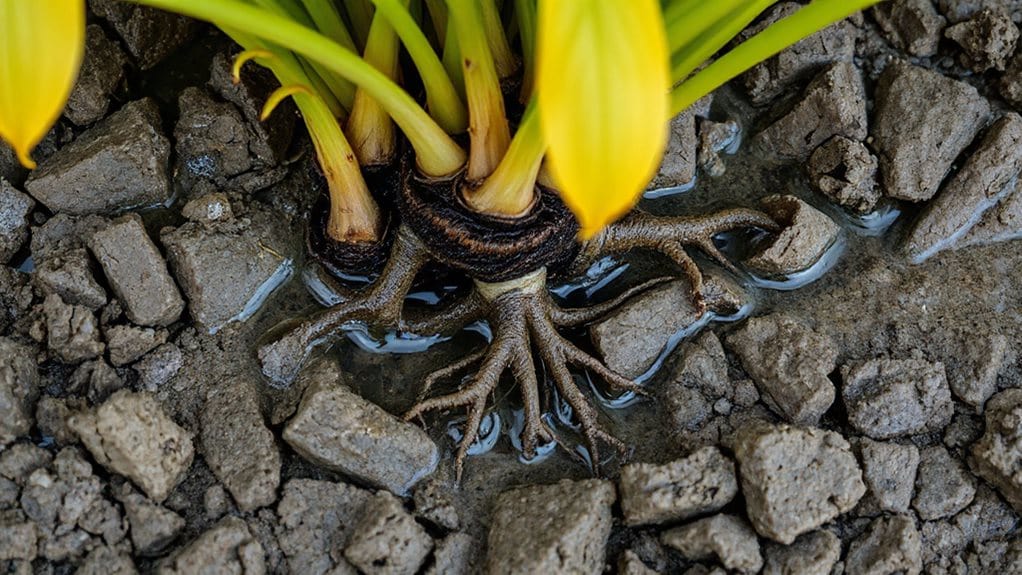
You’re out camping, excited to see your garden thrive like a lush forest, but instead your plants are wilting—even though the soil’s soaking wet, thanks to clay that holds water like a sponge in a rainstorm.
That soggy soil’s actually suffocating the roots, because all that moisture pushes out the oxygen they need to breathe, kind of like trying to sip lemonade through a clogged straw.
Let’s fix this mess before your garden turns into a sad, muddy puddle nobody wants to pitch a tent near!
Soggy Soil Suffocates Roots
When the soil’s soaked but your plants are drooping like they’re begging for water, it’s easy to think you’re not watering enough—plot twist, you’re probably doing the opposite! You’re drowning their roots!
Soggy soil blocks oxygen, so roots can’t breathe, kind of like trying to sip a smoothie through a clogged straw. They suffocate, weaken, and invite nasty pathogens.
Poor drainage, especially in clay, makes it worse—like camping in a tent without a rainfly. Fix the flow, and your plants will perk up fast!
Clay Holds Too Much Water
So your soil’s wet, your plants are drooping, and you’re scratching your head like, “Didn’t I just water these guys?”
Well, here’s the sneaky truth—your soil might be *too* good at holding onto water, especially if it’s packed with clay. Those tiny pores trap water like a sponge on a camping trip gone wrong—sure, it’s holding moisture, but roots can’t suck it up!
Even though the soil feels damp, plants wilt because the water’s locked away, stuck so tight in fine clay pockets they can’t reach it. It’s like having a full water bottle you can’t open—frustrating, right?
Poor Drainage Causes Root Rot
While your plants are begging for help with droopy leaves and yellowing tips, the real drama might be happening underground—where soggy soil is throwing a full-on party for nasty pathogens that *love* a good swamp. You’re basically serving *Pythium* and *Phytophthora* a five-star meal!
No drainage? That’s like camping in a flood zone—roots drown, fungi multiply, and your plant’s toast. Fix those holes, skip the gravel, and let roots breathe!
Shallow Watering: Why Frequent Sprinkles Cause Deeper Problems
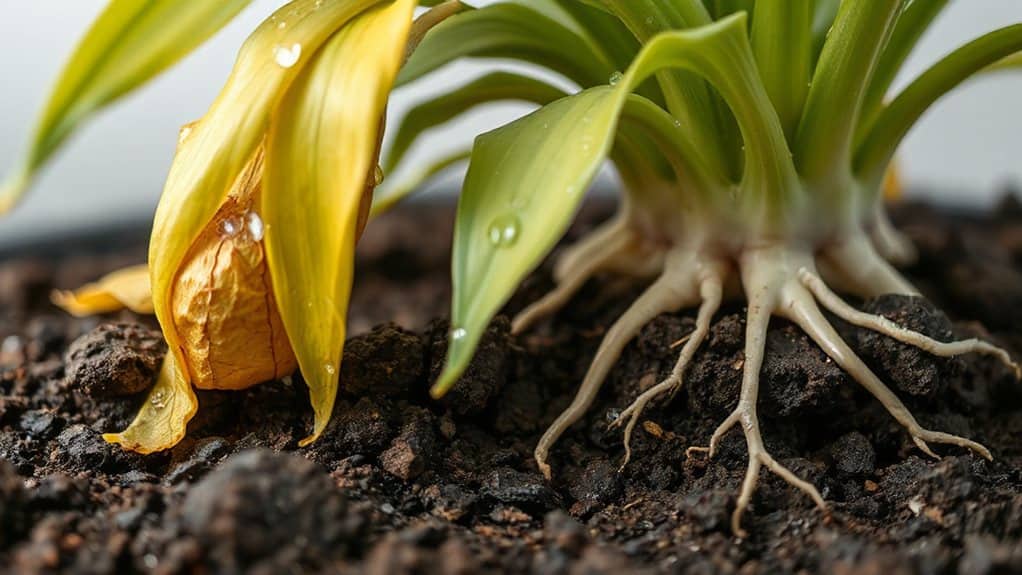
You’re watering every day, but your plants still flop over like they’re begging for a drink—sound familiar?
Here’s the kicker: those quick sprinkles are like giving your plants junk food, keeping their roots lazy and stuck near the surface where they can’t reach the deep water and nutrients they really need.
Think of it like camping with a flimsy tent—fine in calm weather, but when the storm hits (or the sun really beats down), everything falls apart, and suddenly you’re stuck in the mud, wishing you’d packed better gear.
Shallow Watering Trap
Think of your plant like a camper who never ventures beyond the picnic table—sure, they’ve got snacks and a comfy seat, but the moment it rains or the wind kicks up, they’re totally unprepared.
You’re giving quick waterings, right? That’s like handing them a juice box instead of teaching them to forage. Roots stay shallow, weak, and helpless—poor anchoring, zero drought game.
Break the cycle! Soak deeply, let soil dry, and watch roots grow brave, strong, and ready to roam like true voyagers. Your plants will thank you when storms hit!
Root Zone Deprivation
When you’re out camping and only dig your tent stakes an inch into the ground, you know what happens—one gust of wind, and *whoosh*, breakfast is in the trees.
Shallow watering’s like that: your plant’s roots stay near the surface, gasping for oxygen and missing deeper nutrients.
Even if the topsoil’s damp, roots can’t breathe or drink properly—hello, wilting!
Skip the sprinkle, go deep, and let roots thrive where they should.
Daily Dribbles Danger
Let’s face it—watering your plants every day might *seem* like the caring thing to do, like giving them a daily high-five, but you’re actually setting them up to be wimpy, drama-prone divas that throw a fit at the first sign of sun.
You’re trapping roots up top, starving them of air, rotting them out, and washing away their food—talk about a camping trip gone wrong! Go deep, less often, and let roots grow strong. Your plants will thank you when the heat hits!
Transpiration Imbalance: Losing Water Faster Than You Can Drink
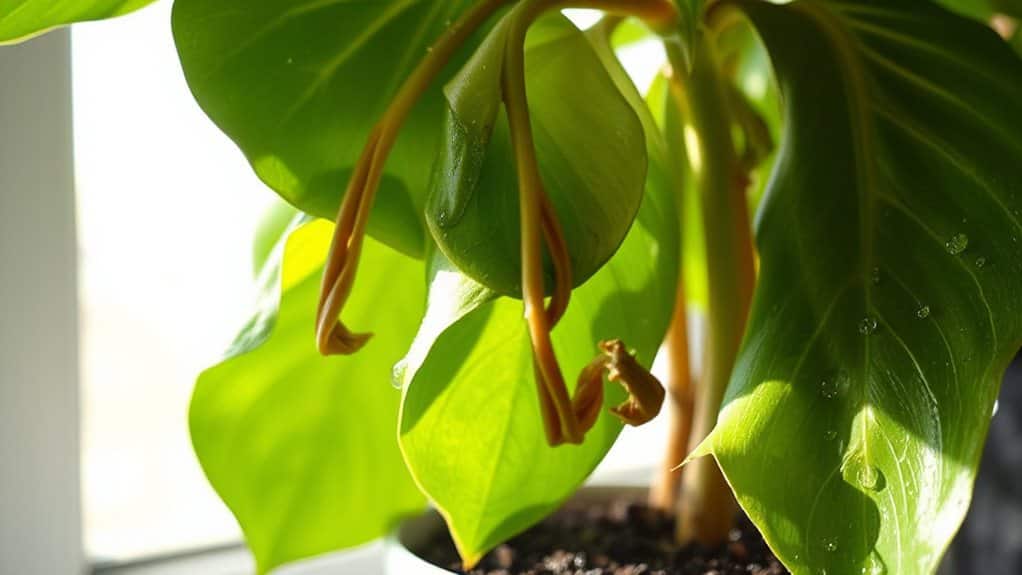
Sometimes, even when you’ve been a total champ about watering your plants, they still droop like they’re auditioning for a sad garden opera—and yeah, it’s extra confusing when the soil’s still damp.
Heat, low humidity, or wind can make your plant lose water faster than its roots can drink, like sweating on a hot hike with an empty water bottle.
Close those stomata, slow down, and give shade—your green buddy’s just trying to survive!
When Wilting Is Normal (And When to Worry)
Okay, so your plant’s doing the sad droop even though you just watered it yesterday—drama queen, right? If it perks up by morning and soil’s still moist, relax! It’s just beat from the heat, like you after a long hike.
But if it stays limp, yellow, or brown inside, uh-oh—something’s really wrong. Time to play plant detective!
How to Check Soil Moisture the Right Way
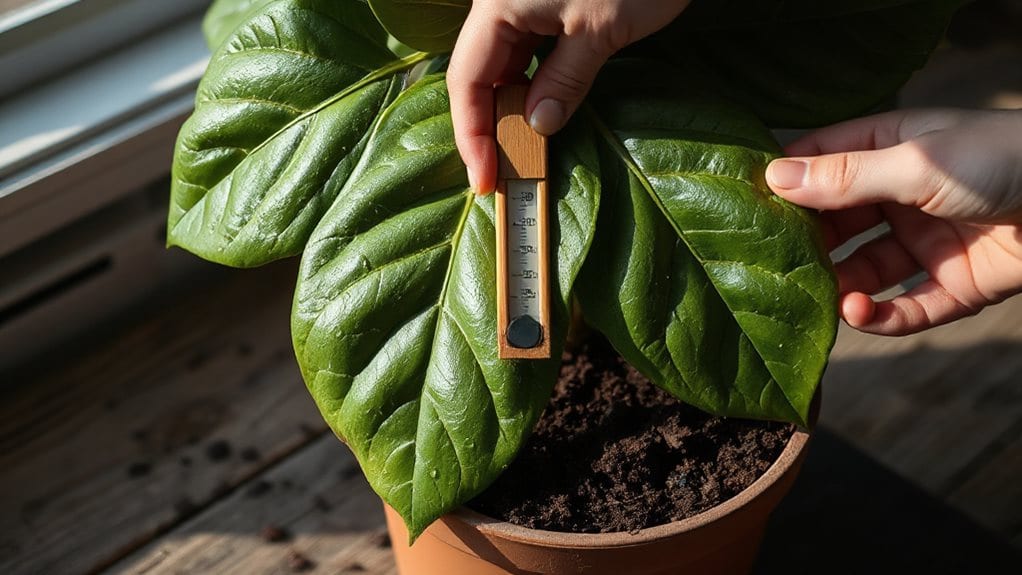
Stick your finger into the soil like you’re testing cookie dough for doneness—except this time, you’re playing detective for your droopy houseplant or garden friend. Feel it, really—moisture hides deeper than you think!
Use a popsicle stick, check color and texture, or go pro with a meter (just calibrate it, okay?). Sample different spots, mix finger tests with measuring for accuracy, and hey—avoid air pockets; they’re sneaky liars.
Water Deep, Not Daily: Preventing Wilting in Wet Soil
Think of your plant’s roots like campers setting up tents deep in the woods—would they stick to the soggy, crowded trailhead or hike farther in to find solid, dry ground? You want them going deep!
Daily watering keeps soil wet on top, suffocating roots and killing good bacteria—talk about bad camping conditions!
Instead, water deeply 1–3 times a week; it’s like giving roots a sturdy basecamp with fresh air, space, and moisture reserves. Your plants will stand tall, stay healthy, and thank you with strong growth—no more wilting drama!
Overall
So, your plant’s drooping even though the soil’s damp? Yeah, it’s weird—kind of like sweating more than you can drink at a summer campfire. Heat, wind, or too much sun can mess with water flow, making leaves sag by noon, even if roots are fine. Don’t panic! Check deep moisture, not just the surface. Water less often but really soak it. And hey, if it perks up at night? Totally normal. Think of it as your plant’s dramatic flair!